An angler goes overboard forty miles offshore. The color of his jacket becomes the single factor separating a 15-minute rescue from a tragedy. The Coast Guard’s data shows high-visibility clothing and fishing gear cuts search-and-rescue time by 40-60%. But the fluorescent orange that could save your life offshore will also scatter fish before your line hits the water on a quiet morning at the lake.
Choosing a fishing safety gear color is a decision tree with real consequences depending on where you’re casting. Whether you’re battling swells forty miles out, sight-fishing along a quiet bank, or keeping tabs on your kid at the local pond, this guide breaks down which colors work for each scenario, backed by real data and real angler experiences.Brands can develop custom Fishing Rain Gear with specific visibility colors for different fishing environments.
Nearshore and Offshore Operations: Why High-Visibility Colors Are Non-Negotiable
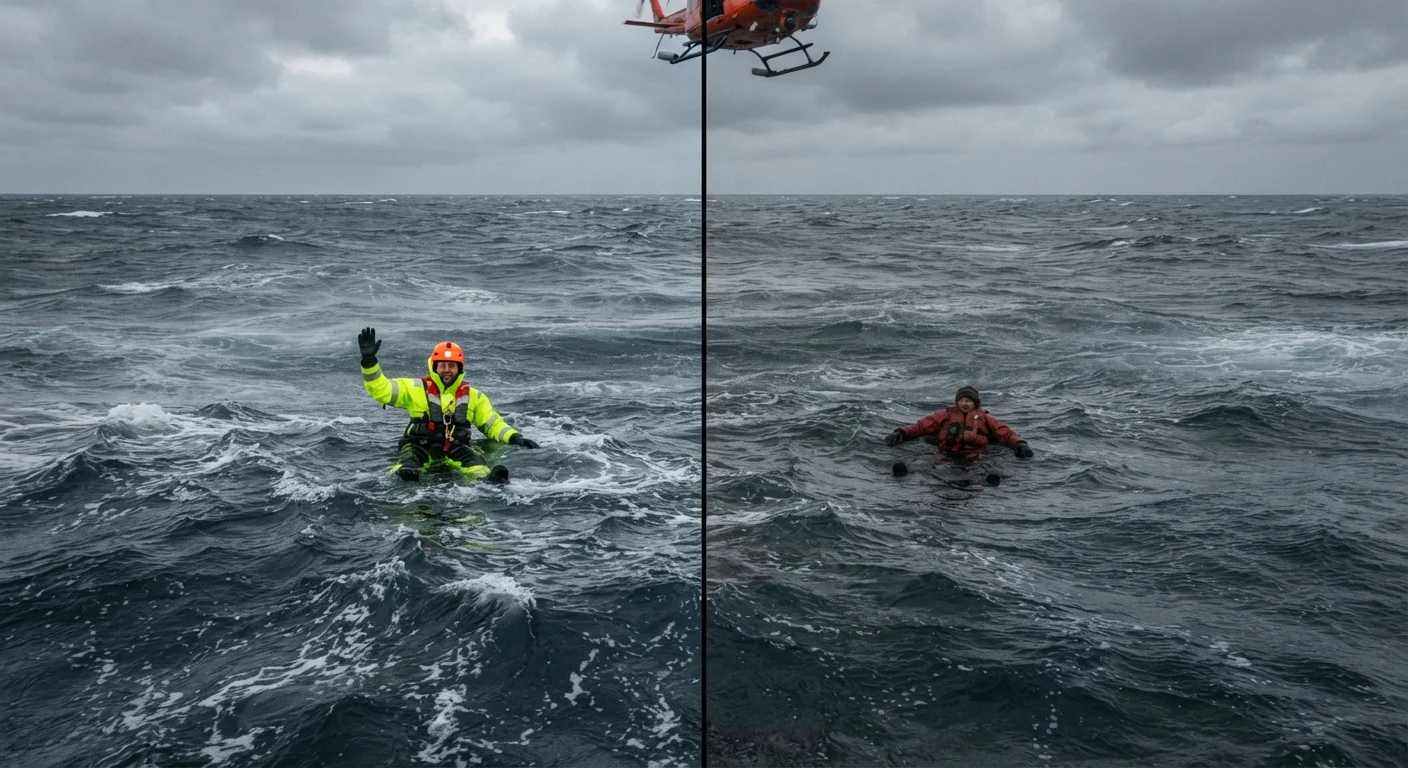
The numbers don't leave much room for debate. Detection distance between the best and worst color choices can differ by 4x. That's the gap between getting spotted at 1,400 meters versus 350 meters. When you're floating in open water, that gap is everything.
What the Research Shows
Mustang Survival and WorkSafeBC ran real open-water tests on floating subjects wearing different colors. The results:
Fluorescent yellow-green: detected up to 1,400 meters away
Fluorescent orange: close second, strong performer in low light
Non-fluorescent yellow: noticeably weaker
Non-fluorescent red: bottom of the list, dropping to just 350 meters
That last point matters because most anglers assume red is a safe, visible choice. Standard red performs the worst of the tested colors in overcast conditions and complex water backgrounds, exactly the scenarios you're likely to face during rough offshore weather.
A specialized Fishing Rain Gear manufacturer can adjust fabric colors, reflective details, and safety features for commercial needs.
A U.S. Coast Guard literature review on lifesaving equipment colors reached a similar conclusion, recommending fluorescent green, fluorescent orange, fluorescent pink, and fluorescent red for future rescue gear testing, while explicitly flagging white and standard yellow as poor choices for primary visibility surfaces.
Land-Based Standards Confirm the Pattern
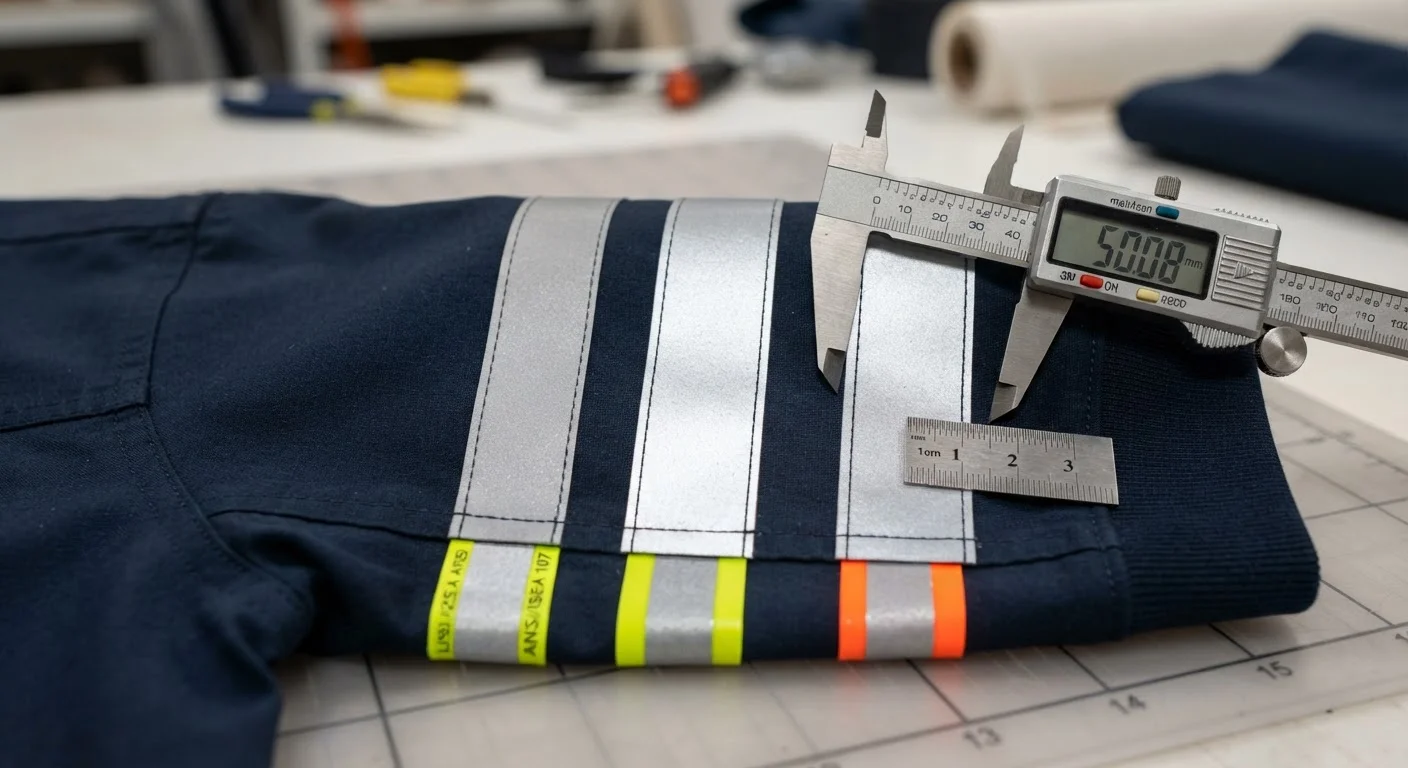
You don't need to work offshore to see how seriously regulators treat this. OSHA requires flaggers to wear orange, yellow, or fluorescent yellow-green during the day, visible from at least 1,000 feet at night. Australia's AS/NZS 4602.1 standard permits only two fluorescent colors for compliant high-vis garments, yellow-green and orange-red, paired with reflective tape circling the torso.
These aren't arbitrary rules. They're built on the same visibility science driving man overboard visibility clothing decisions at sea. If regulators mandate specific colors for road workers standing still on solid ground, that same logic applies tenfold to someone bobbing in open water during a storm.
How the Industry Applies This
Oil and gas operations already build their PPE around this data. Field crews on offshore rigs wear orange coveralls so supervisors and rescue teams can spot them fast in dim, cluttered industrial environments. Reflective strips are standard on any offshore or night-shift gear.
Maritime crews follow the same playbook. Ships and platforms outfit personnel in fluorescent yellow-green or orange-red combined with retro-reflective tape, so visibility holds up under searchlights during emergency musters or MOB incidents.
The Practical Takeaway for Your Rain Gear
If you're fishing nearshore or offshore, here's the color hierarchy that matters:
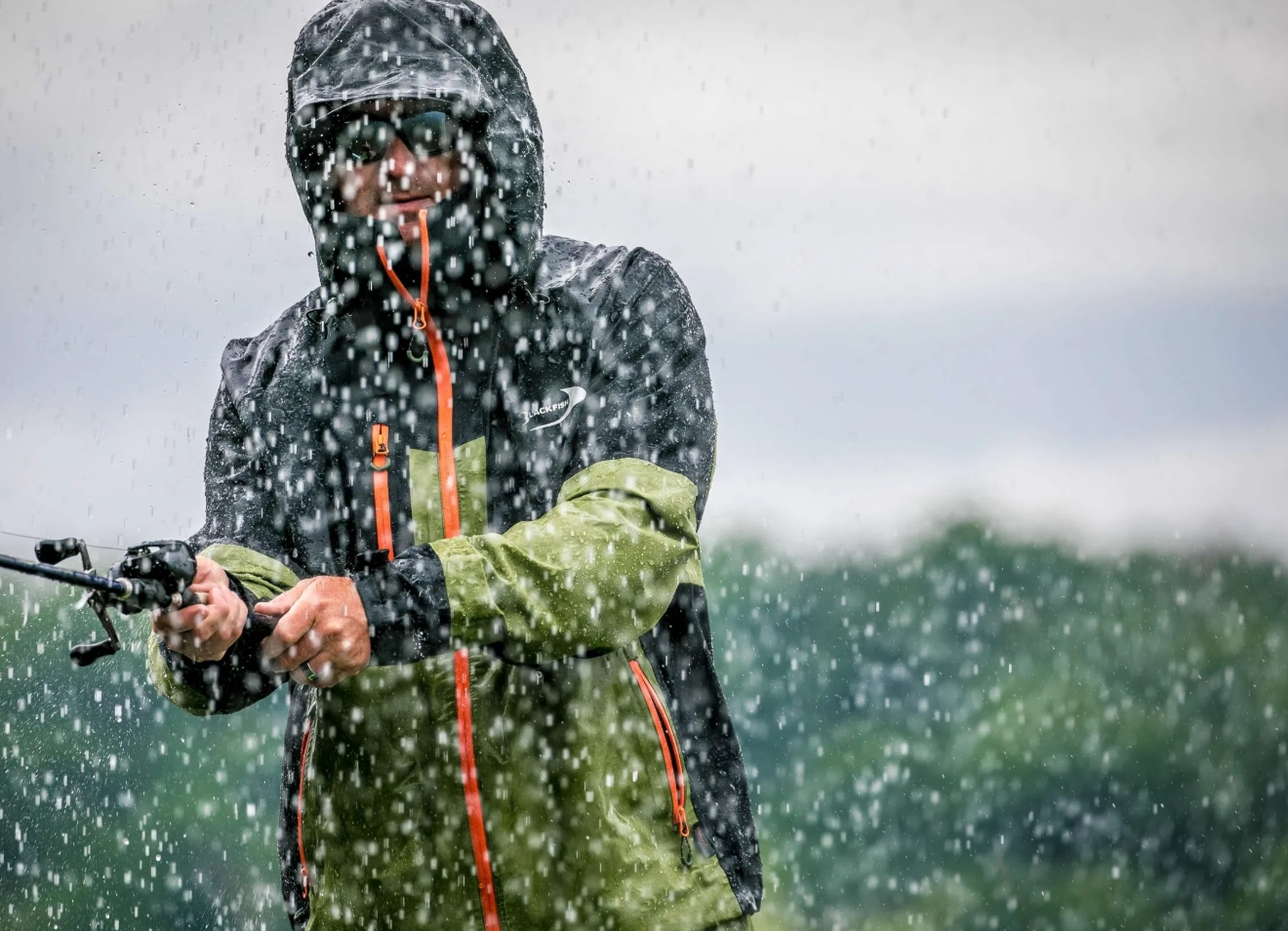
Jackets, immersion layers, PFDs: fluorescent yellow fishing suit options first, fluorescent orange fishing gear second. Skip standard red, yellow, or white.
Deck-level layers: blaze orange fishing gear with reflective tape if you're working in mixed light conditions or heading out before dawn.
Anything you'd wear if things went wrong: always choose fluorescent over standard pigment. The difference in detectability is measurable, and it's not small.
This is why commercial fishing gear standards increasingly mirror what OSHA and maritime safety bodies already mandate.
Stillwater and Shore Fishing: How Camouflage and Low-Profile Colors Affect Fish Behavior
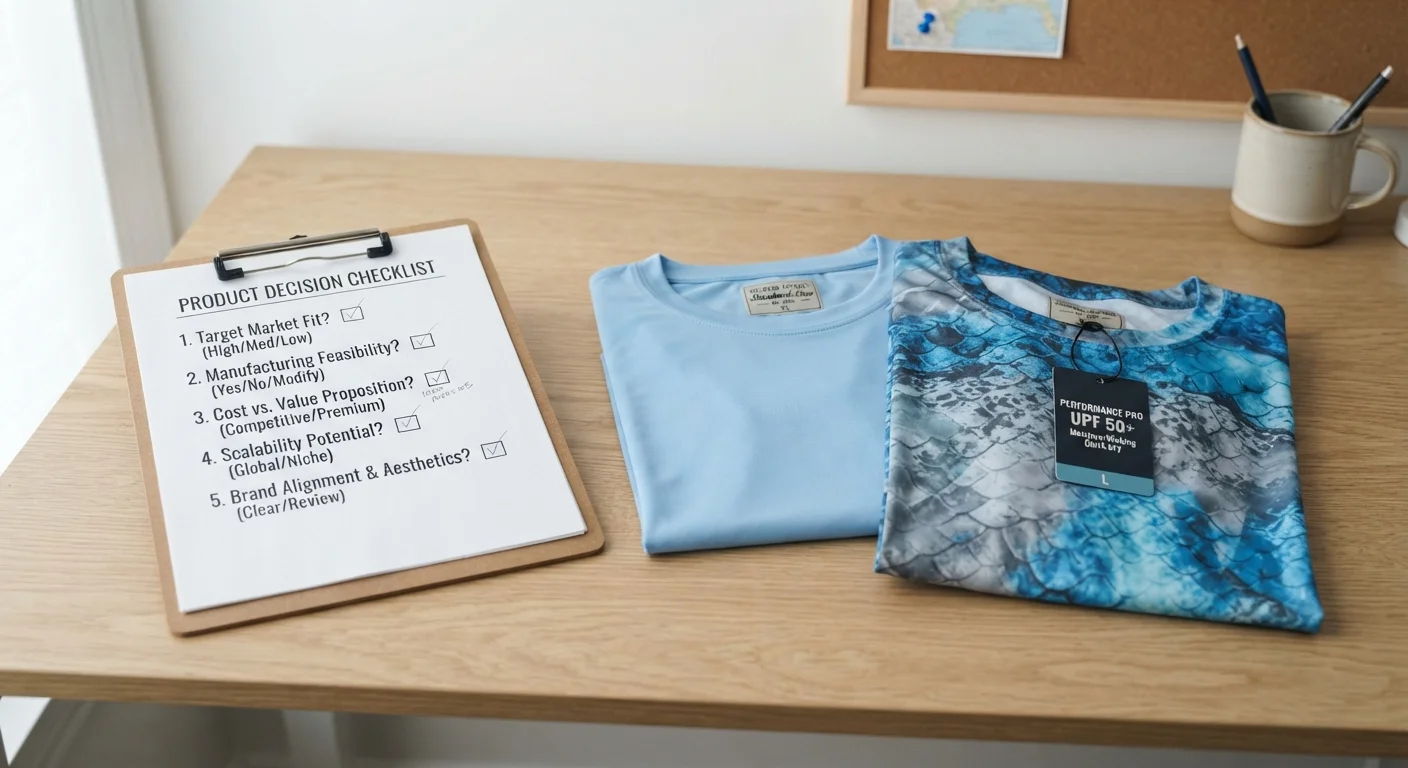
Everything that made you visible offshore now works against you. Captain Dave Thompson tracked over 200 trips comparing Moss Camo braid to bright yellow braid on identical grass flats, same water, same conditions. The camo line produced 23% more redfish hookups. That's the difference between a good trip and a great one, and it comes down entirely to what the fish can see.Fishing gear wholesalers often consider low-visibility designs when selecting products for anglers targeting clear-water species.
Why Camouflage Rain Gear Fishing Works
Fish in clear, shallow stillwater aren't spooked by your lure. They're spooked by you. They're reacting to line shadow crossing overhead in flat, calm water, an unnatural straight track slicing across the surface, and your silhouette against the sky or bank.
Clear camo fly lines solve the first two problems with a translucent, mottled coating that scatters light and breaks up the line's outline. Standard intermediate lines throw a sharp, defined shadow. In flat-calm, clear lakes, that shadow alone can push fish off before your fly even lands. This matters most when trout are cruising 1-2 feet below the surface, exactly where a hard shadow becomes impossible to miss.
Water Clarity Changes the Rules
Camo's value scales with visibility. In clear water with 5+ feet of visibility, camo delivers maximum benefit. Fish have a wide field of view, and refusals here often come from line shadow alone, not the fly itself. In stained water with 2-5 feet of visibility, earth-tone camo still helps but it's less critical. Medium tones like gray or khaki work fine. In muddy water under 2 feet of visibility, the camo advantage drops to nearly zero. Fish are relying on vibration and noise, not sight.
Dressing for Stealth on Shore
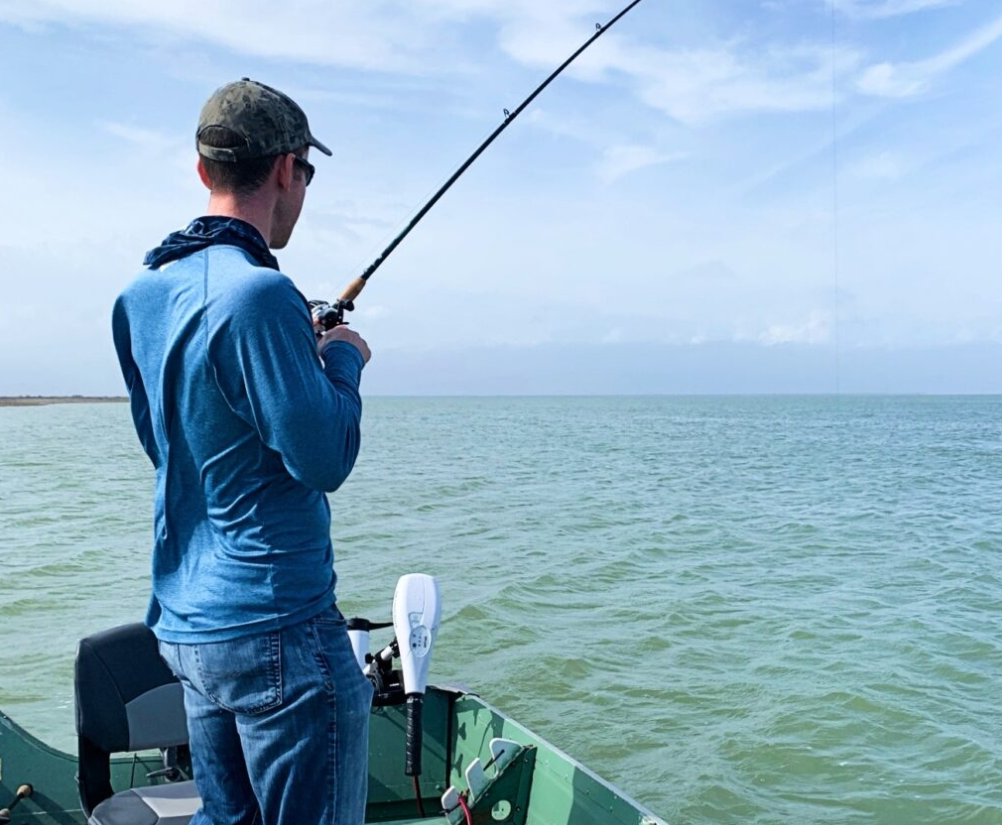
Your waterproof jacket color matters just as much as your line choice when fish can see the bank. Avoid contrast and match the backdrop. Best colors are olive, dark green, navy, brown, and muted camo patterns. Avoid bright white, yellow, or stark black solids that pop against the shoreline. Wear khaki or dark green pants, never black on a light-colored bank. Choose a hat with a dark underside to cut glare and avoid flashing a bright reflection at the water.Buyers often compare Fishing Rain Gear custom wholesale price before placing seasonal bulk orders.
Wet clothing darkens naturally, so a light jacket that seemed fine dry can suddenly stand out against pale banks once it's soaked. Overcast days make camouflage and earth tones even more effective since everything sits closer in brightness, reducing hard contrast.Many outdoor brands work with an OEM Fishing Rain Gear supplier to create weather-specific collections.
The Bigger Predator-Prey Pattern
This applies to spearfishing and diving too. Spearfishers and divers report closing the final 1-2 meters more consistently in dull, muddy camo suits than in solid colors, especially in clear water where shape and color read easily. The same logic applies to redfish and bass holding near shoreline grass or docks. Post-frontal or pressure-heavy conditions make them line-shy, and breaking up your outline, human or line, closes that gap.
If you're getting refusals in shallow, clear stillwater, switch to camo immediately. Keep movements slow. Camouflage only works if you're not giving yourself away with motion.
Keep Your Kid Visible and Dry on Family Fishing Trips
A wet, cold kid gives you 20 minutes before they want to go home. High-visibility design cuts search times by 60-70% during water emergencies. Those two numbers should dictate your buying decision for your child's rain gear.
For a family trip, the balance is safety versus keeping the kid engaged. You need gear that keeps them dry enough to stay happy, and visible enough that you never lose track of them on a dock, jetty, or boat deck.
The Waterproofing Baseline
Most youth rain jackets skip fully sealed seams. That's a problem because a fabric rating means nothing if water leaks through the seams first. Look for:
≥5,000 mm hydrostatic head minimum, with 10,000+ mm as the real comfort benchmark for extended rainy sessions.
Fully sealed or taped seams, not just water-resistant coating.
Waterproof pants or bibs, not splash pants. Skipping this is the number one reason kids end up soaked from the waist down.
Non-slip rubber boots with high shafts for wet docks and boat decks.
Color Choices That Keep Kids in Your Sightline
Skip the dark greens, navy, and black you'd choose for stealth fishing. On a family trip, those colors blend straight into water and rock backgrounds, exactly where you don't want your child disappearing from view.
Choose:
Neon yellow, orange, lime, or chartreuse jackets and pants that contrast sharply against water and shoreline.
Reflective strips or piping at the chest, shoulders, cuffs, and pant hems. This matters most during early morning or foggy sessions when natural light is weak.
High-visibility gear for adults too. If you're the one supervising, bright colors help your kid spot you just as fast as you spot them. It also helps other boaters see your group and reduces collision risk.Retailers can expand their lineup through ODM Fishing Rain Gear programs with tailored designs and functions.
The Numbers Behind Child Water Safety
In one CDC review year, 106 children died in boating-related incidents. For every drowning death, 2 to 10 children were hospitalized, and another 8 to 40 were treated in emergency rooms. Cold water makes this worse. Below 32° f , unconsciousness can hit in under 15 minutes.
High-visibility rain gear won't prevent a fall. But it shortens the time between a stumble and a response, which is often the only variable you control.
A Properly Fitted PFD Over Rain Gear
Bright colors don't replace a properly fitted PFD. Most U.S. states require Coast Guard-approved life jackets sized specifically for children, worn on top of rain gear, cinched so it can't slip over their head if lifted by the shoulders. Adult-size jackets won't work. Pair this with a whistle clipped to the PFD and a phone in a waterproof pouch, and you've got a real safety system.
Conclusion
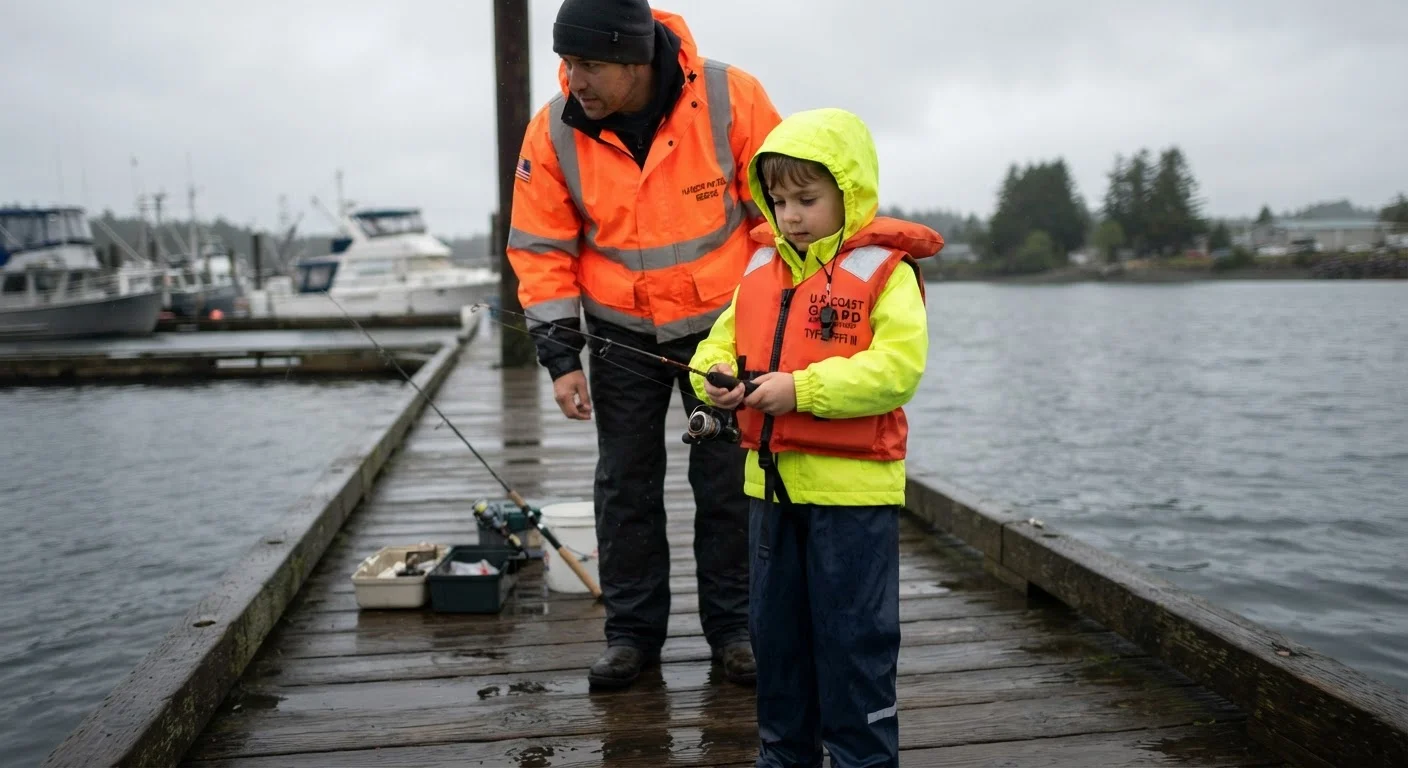
Your rain gear color is a safety and performance decision hiding in plain sight. If you head offshore or fish in rough weather, high visibility gear in blaze orange or fluorescent yellow can mean the difference between a quick rescue and a search-and-rescue nightmare. For quiet water or shore fishing with spooky fish, muted greens and blues keep you invisible to both the fish and the coast guard. And when fishing with kids, visibility becomes the top priority again, but for keeping eyes on them, not on catch rates.
Don’t guess. Run through the 3-step framework (scenario, priority, color match) before you buy. Professional buyers should also review a Fishing Rain Gear supplier’s MOQ before planning new product launches.Pick gear that fits your water, not someone else’s Instagram feed. The right color won’t just look good. It might save your life.