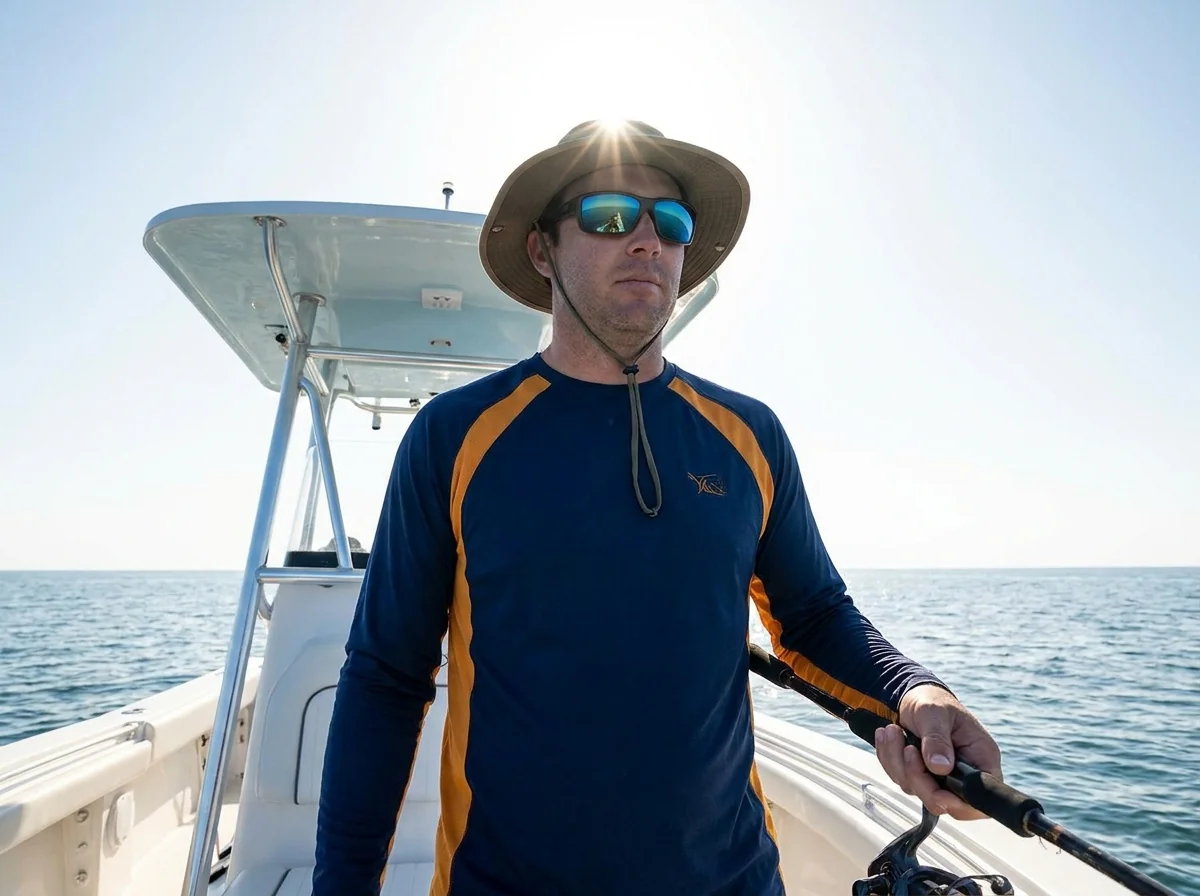
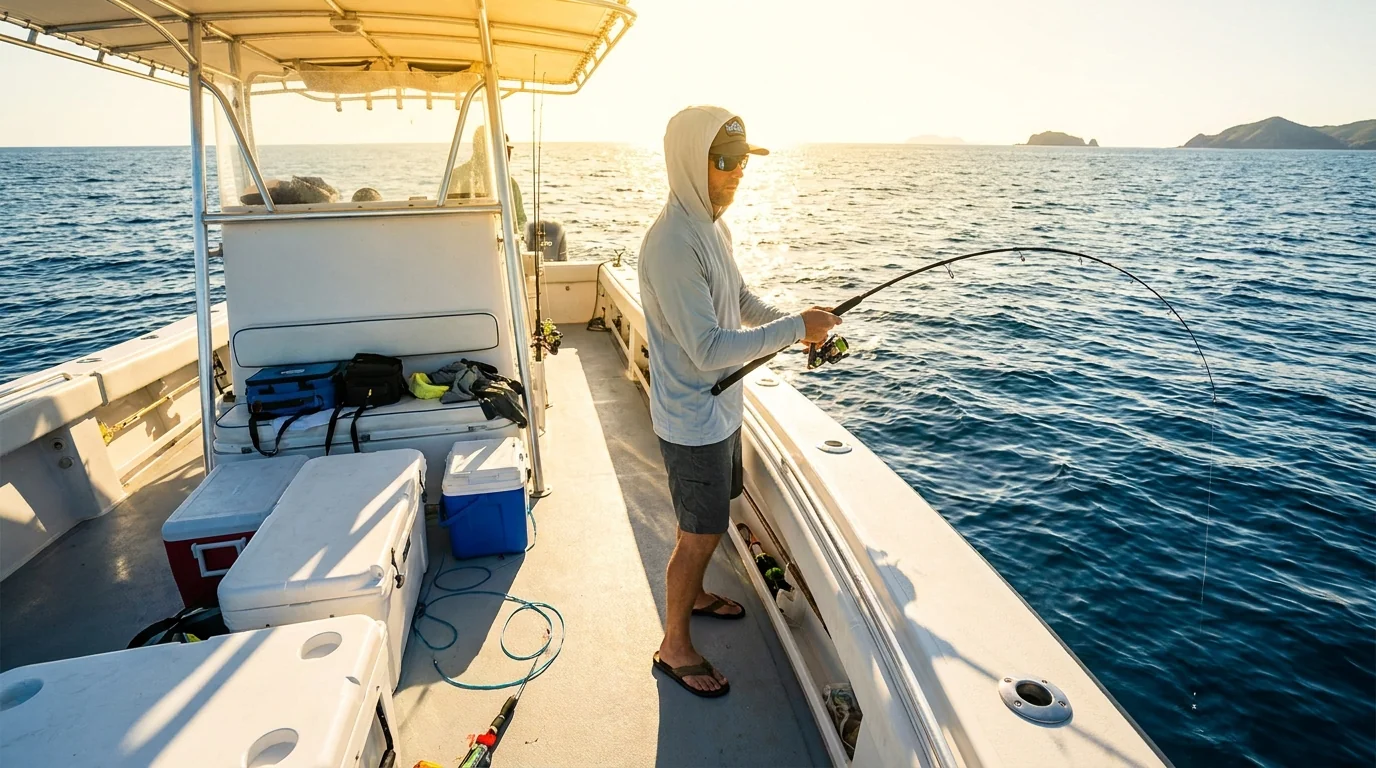
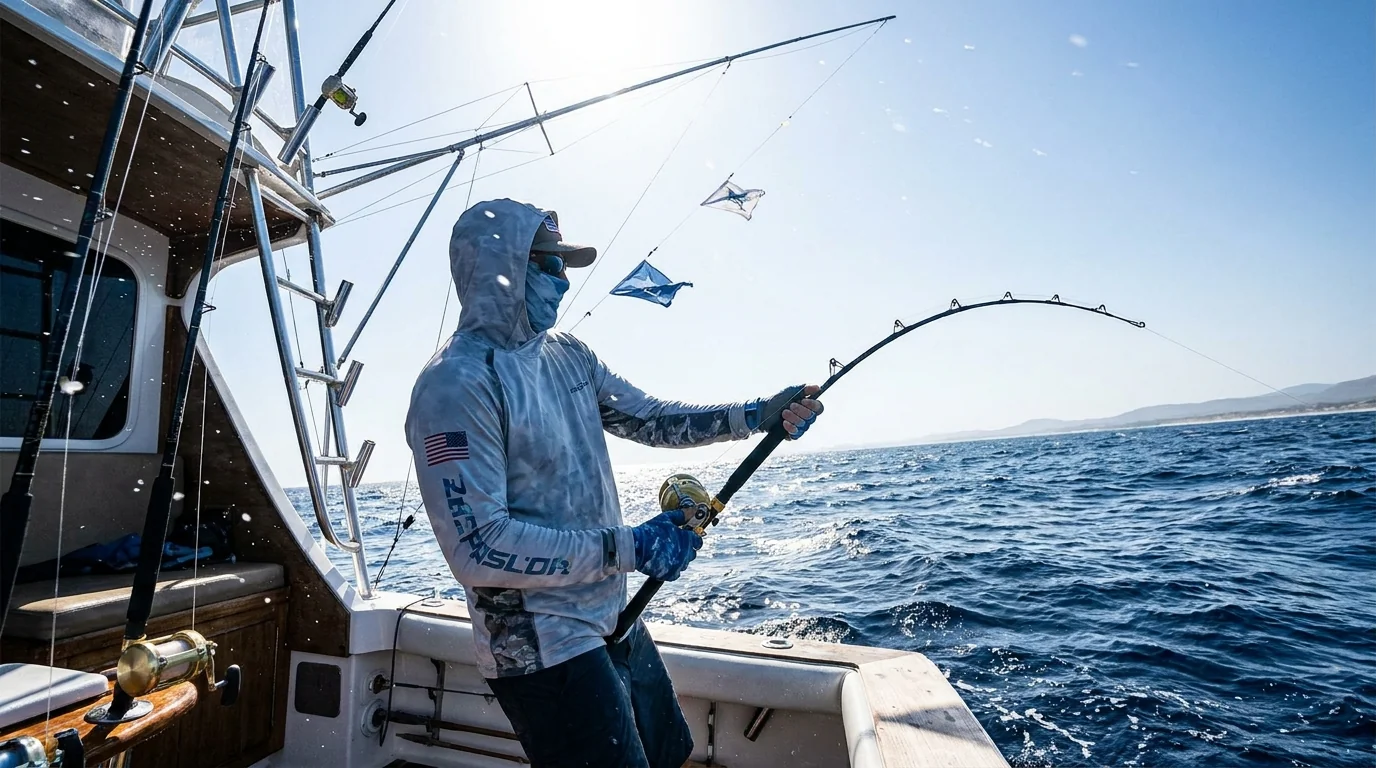
Offshore deep-sea fishing scene under open sky, the exposure a sun protection line is planned against
Building a sun protection line

UPF Fishing Apparel: Choosing Which Pieces Make a Line

A sun protection line is rarely held up by the fabric. By the time a brand starts planning one, the rating question is usually settled, and the open question is the piece list. Which garments go in. Which of them cover skin that another piece already covers. Which zone nobody has covered at all. And what the finished set commits you to before a single unit sells. This page is about that decision, not about the fabric. It sets out how UPF fishing apparel divides a day's exposure between the pieces, which pieces are alternatives to each other rather than additions, what decides protection once they are worn as a set, and what to check before the order goes out.

Send the line you are planning

How a fabric reaches its rating, and how that rating is tested and certified, is a separate subject with its own page; this page assumes it and moves on to selection.


Exposure by zone

UPF 50 Fishing Clothing by Body Zone: What Each Piece Actually Covers

The useful way to lay out a sun line is not by product category. It is by the skin each piece is responsible for, and by how long that skin is in the sun during the kind of fishing your customer does. Sorted that way, the piece list stops being a shopping list and becomes a set of decisions with an obvious order: the zones exposed longest get answered first, and the zones nobody has answered become visible instead of staying hidden behind a full catalogue.

Exposed zones on a seated angler A profile outline of a seated angler with tick marks at the crown, nape and jaw, torso, inner forearm, back of the hand, legs and ankle. The instep carries no tick because no sun protection claim is made for footwear. CrownNape TorsoForearm HandLegs Ankle Instep: none
Zones are marked where skin is exposed through a fishing day. The instep carries no marker because no sun protection claim is made for footwear here.
Zone, how long it is exposed, and the piece that answers it.
ZoneHow long it is exposedThe piece that answers it
Crown and earsAll day, hardest at middayfishing hats
Nape, throat, under the jawAll day, and from two directionsneck gaiters and face masks
Torso and upper armAll day, largest single areacustom fishing shirts, custom fishing hoodies
Inner forearmTurns upward through most of a castcustom fishing shirts
Back of the handContinuously upward while holding a rodfishing gloves
LegsUpward when seated in a boatcustom fishing pants, custom fishing shorts
Ankle and footExposed by a seated posturefishing socks
Instep and footwearNo claim is madeNothing yet, an open decision

A brim answers the sun overhead. It does not answer the light that arrives from below, which is why the underside of the jaw and the throat still burn under a cap. The inner forearm sits in the same position for the same reason, because it turns upward through most of a cast.

One zone in that list does not sit at the same published tier as the rest: the sock that carries a sun claim publishes it a tier below every other category above.

Footwear is the one zone where no sun protection claim exists here at all. Not a weaker claim, and not an unrated mention: nothing. That is an open decision on your line rather than a settled fact about it, and the honest handling is to ask for it rather than to assume either way.

Which zones your line will own
Range architecture

Sun Protection Fishing Apparel Range: How Many Pieces Make a Line

Six pieces bought at the same time are not a range. They become one when each piece has a job the others do not do, and when a buyer can say out loud why the sixth piece is there. The structure that produces that is an anchor plus attachments.

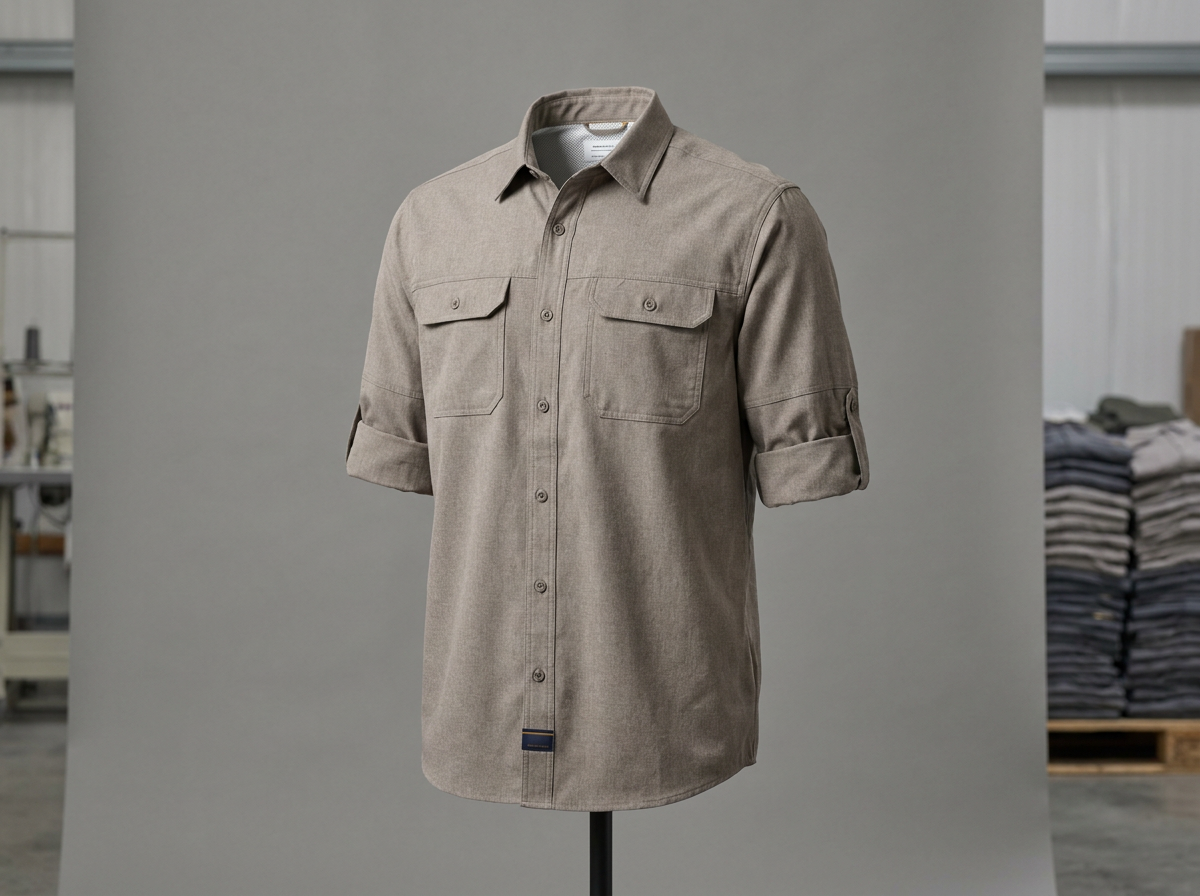
Button-up woven UPF fishing shirt, the anchor piece of a sun protection range
AnchorTorso and upper arm. Carries the fabric, colour and sizing decisions for everything else.
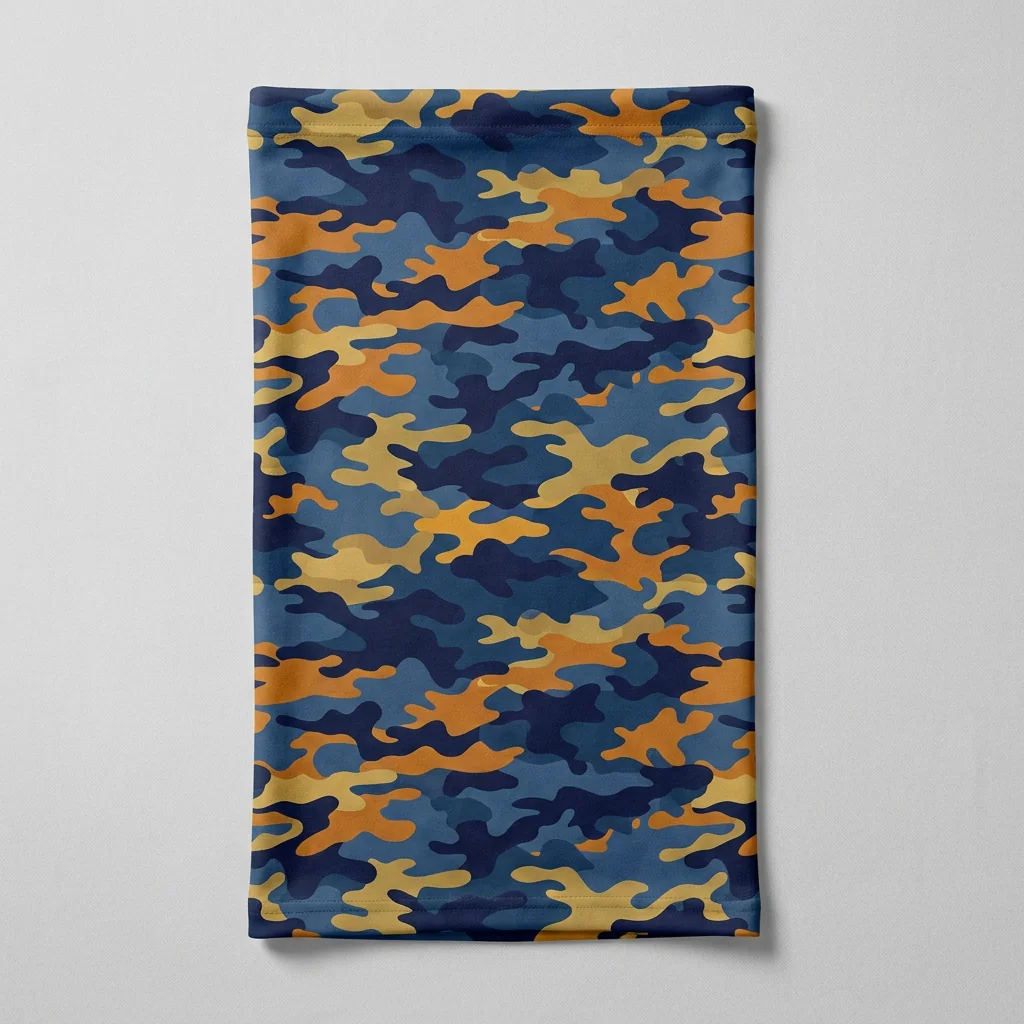
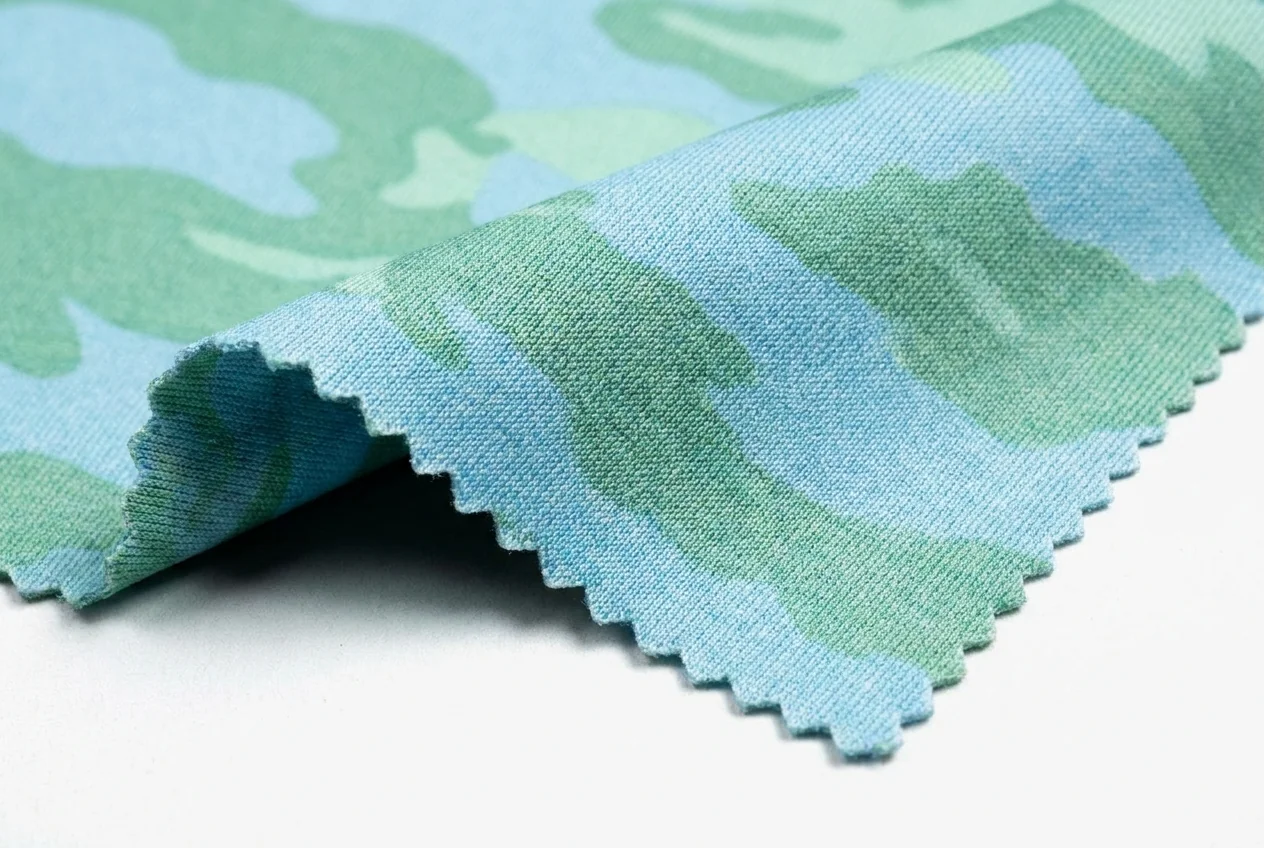
Custom fishing neck gaiter with all-over camouflage print, an attachment piece in a sun line
AttachmentOne zone each, lower price, faster decision.
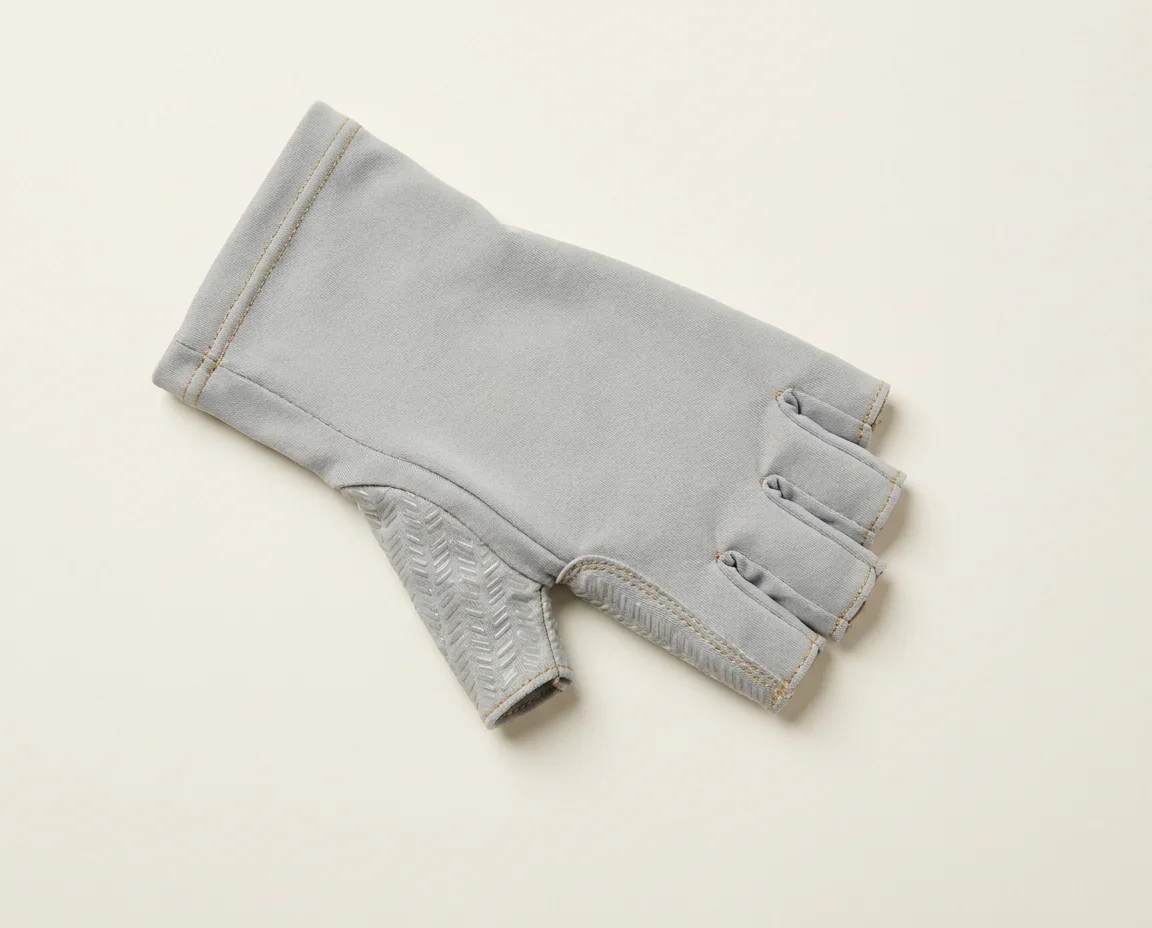
Fingerless UPF fishing glove covering the back of the hand
AttachmentBought alongside the anchor, not instead of it.
Anchor

The anchor is the piece covering the largest area for the longest time, which for almost every kind of fishing is the torso and upper arm. It carries the line's fabric decision, its colour direction and its sizing logic, and everything else is specified against it. Choosing the anchor first is what stops the line becoming six independent purchases that happen to have arrived together.

Attachment

The attachments are the pieces that answer a single zone each, and they behave differently in a range: lower price, faster decision, bought alongside the anchor rather than instead of it. A gaiter, a hat and a pair of gloves are attachments. They are also where zone overlap creeps in, which is the next section.

The count follows from the zones you decided to own, not from how many categories a factory can make. That is the defensible version at sign-off. If your customer fishes short sessions from a bank, the hands and the legs behave differently than they do for someone seated in a boat all day, and the zone list changes with it. A line built this way has a reason for each piece; a line built from a catalogue has a reason for none of them.

Two pieces in most lines overlap
Where a line pays twice

Hooded UPF Fishing Shirts, Gaiters and Hats: Deciding Which One Owns the Neck

Three separate pieces here claim the same skin. The hoodie page claims a laminated hood over the head, the gaiter page claims cover from the crown down to the collarbone, and the hat page claims a detachable neck flap. Each claim is reasonable on its own page, because each page is only arguing for its own product.

Assembled into one line, those three claims collide. A buyer who adds everything that protects ends up paying three times to cover one zone, while the hands or the ankles may still have nothing against them. The line reads padded to a merchandiser and reads incomplete to the customer, which is an unusual way to be wrong in both directions at once.

The fix is to decide which single piece owns the neck, and to demote the other two to alternatives. The test is not which one covers most on paper. It is which one your customer keeps on for the whole session, because a piece that gets pulled off at midday protects nothing from that point on. A gaiter is easy to drop when it is hot and still. A hood is easy to push back when there is wind. A neck flap stays where it is and is also the one most likely to be described as flapping. Which of those three is tolerable depends on the water your customer fishes, and that is a selection question you can answer about your own customer far better than a supplier can.

Once the owner is chosen, the other two stay in the range as alternatives at different session lengths or price points, not as parallel add-ons sold into the same buy.

Some pieces are the wrong answer entirely
Three pieces claiming one zone Three outlined shapes representing a hood, a gaiter and a neck flap, all covering one shared region. The shared region is filled to show that the same skin is paid for three times, while two smaller separate regions labelled hands and ankles stay empty. Paid for 3× Hands: emptyAnkles: empty
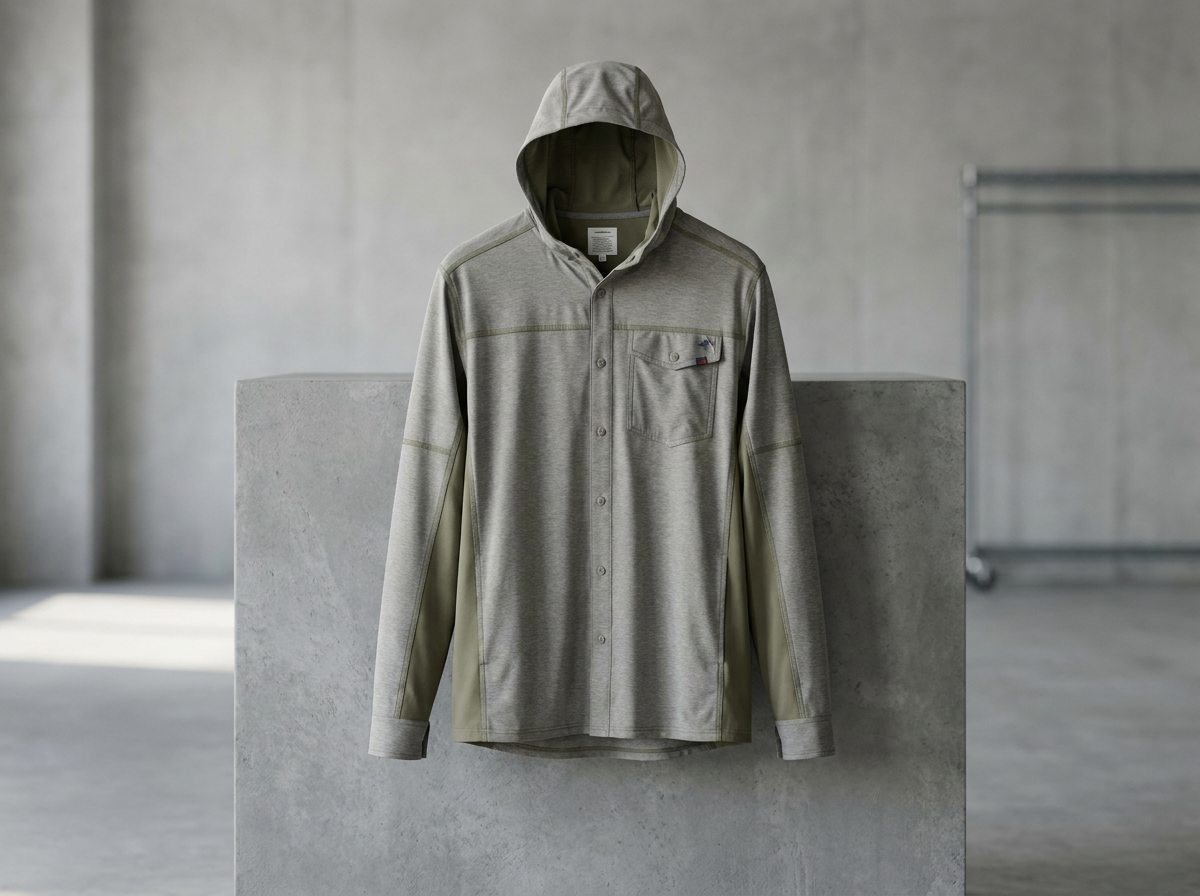
Hooded UPF fishing shirt, one of three pieces that claim the head and neck zone
One of the three claimants. Which of them owns the zone in your line is the decision this section is about.
The honest disqualifiers

UPF Fishing Gloves, Shorts and Waders: When Each One Is the Wrong Answer

No category page can tell you not to buy its category. A cross-category page can, and it is the fastest way to tell whether a supplier is helping you choose or helping you order. Three pieces are worth this treatment, because all three are commonly bought into a sun line for reasons that do not survive contact with how the customer fishes.

Gloves

The back of the hand is exposed about as continuously as anything on the body, which is the argument for putting gloves in the line. The mechanism working against them is handling: tying on, changing a bait, unhooking and handling a fish all reward bare fingers, and each of those is a moment when the glove comes off. A glove in a pocket has a rating of nothing. So the failure is not that the piece underperforms, it is that the piece is absent at the moments the customer is using their hands, which is most of the day for some kinds of fishing and almost none of it for others.

The question to answer before you buy: how much of your customer's session is hands-on-rod versus hands-on-fish?

Trolling and long casts sit at one end, lure fishing with constant re-rigging at the other, and the honest style of glove differs between them. Which styles are actually available for the pattern you land on is a question to put to the factory rather than to assume.

Fingerless fishing glove, the style that keeps fingers free for handling while covering the back of the hand
Fingerless covers the exposed back of the hand and leaves the fingers that do the work.

Shorts

Legs are the second-largest exposed area, and shorts are the piece a brand adds because the range looks incomplete without them. The mechanism is posture. A seated angler in a boat has the tops of the thighs turned upward for the whole session, so the exact area shorts leave bare is the area receiving the most direct light for the longest time. Standing in a river, the same garment behaves completely differently, because the legs are shaded by the body and often in water.

The question to answer before you buy: does your customer fish seated or standing?

The answer sets the ratio of shorts to long-leg pieces in the buy, and getting that ratio backwards is a more expensive error than choosing the wrong fabric, because it is bought in quantity.

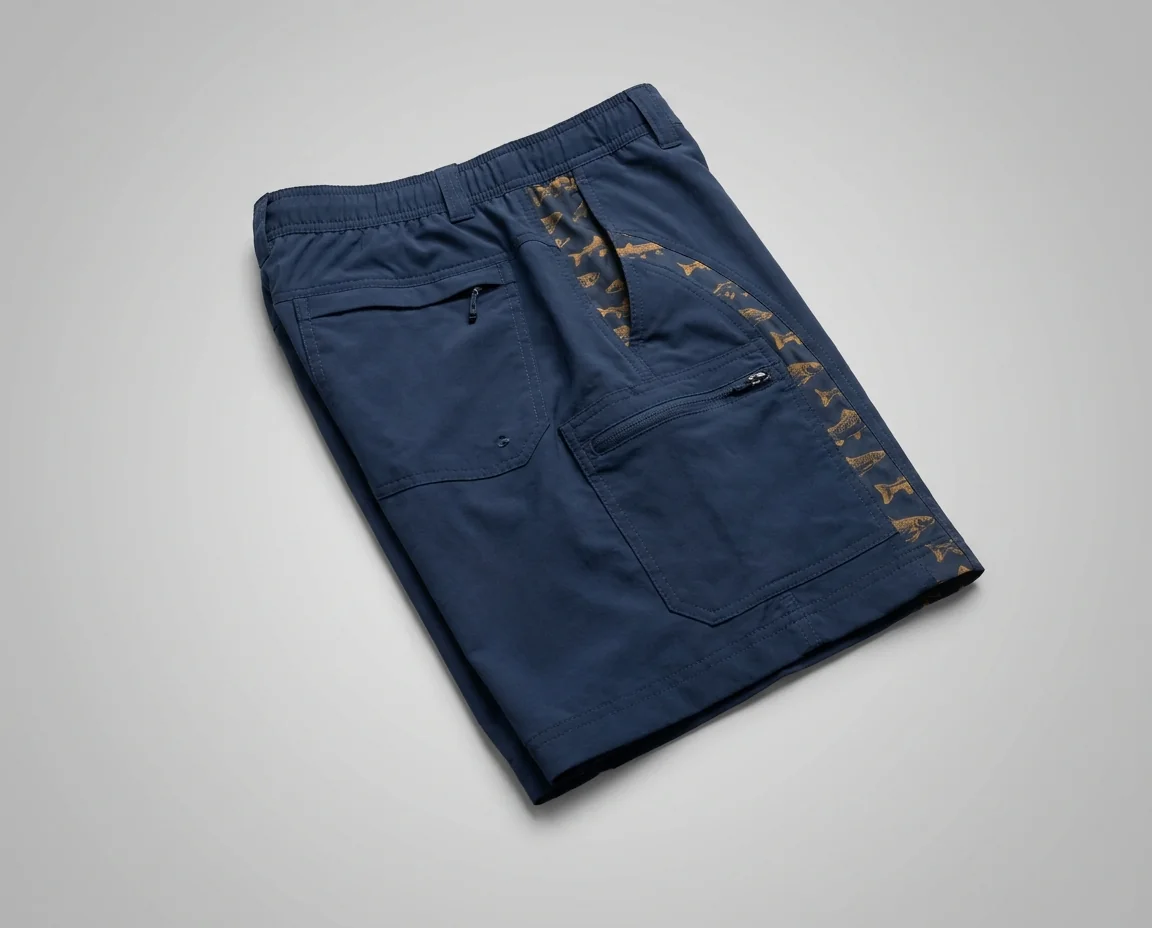
Performance fishing shorts laid flat, showing the leg area they leave uncovered
What shorts leave bare is what a seated angler points at the sun.

Waders

Waders cover the legs completely, which makes them look like the answer to the leg zone on a piece list. They are chosen for water rather than for sun, and they are worn when the customer is in the water rather than through the season. A line that counts waders as its leg coverage has therefore answered the zone on paper and left it open for every trip where the customer is not wading.

The question to answer before you buy: is the leg zone covered year-round, or only when your customer is standing in water?

If it is the second, the leg zone still needs its own answer and the waders belong in the line for a different reason.

What each piece is worth depends on how the set behaves

Set behaviour

A UPF Fishing Clothing Set Is Decided at the Junctions

Every piece in the buy can be individually rated and the customer can still come back burnt. When that happens the complaint arrives as a verdict on the whole line, and there is nothing in any single garment's specification to diagnose it against, because the specification was never the problem.

What fails is the joins, and they fail during movement rather than at rest.

Four junctions that open during movement Four pairs of surfaces shown edge to edge. Each pair is drawn with a broken line between them to mark the gap that opens, labelled cuff to glove, hem to waistband, collar to neck cover, and trouser to sock, with the movement that opens each one. Cuff to glove · the wrist rolls out Hem to waistband · sitting and leaning Collar to neck cover · turning the head Trouser to sock · a seated posture
The gap is the subject. Each pair of surfaces is drawn parted by the movement named beneath it.
  1. Cuff to glove. The wrist rolls outward through a cast, opening a band of skin that is covered when the arm is at rest and uncovered exactly when the arm is up.
  2. Hem to waistband. Sitting down and leaning forward lifts the hem, and the lower back is the zone the customer cannot see and will not think to protect.
  3. Collar to neck cover. Turning the head to follow a cast opens the side of the neck, on the side they turn towards most.
  4. Trouser to sock. A seated posture pulls the trouser leg up, and it is the same posture that points the ankle at the sky. The gap opens and gets aimed at the sun by one movement. The piece on the far side of this join is the sock, which is also the piece in the set publishing the lowest claim.

All four are geometry rather than specification. They are decided by the cut of the two pieces that meet, by how much overlap was allowed at the join, and by whether anyone checked the fit in the position the customer actually fishes in rather than standing still. None of them shows up on a specification sheet, and none of them is fixed by choosing a different fabric.

So the honest question about a set is which skin is covered while the customer is moving. That is answerable by looking at the pieces together, which is the whole reason a line is worth planning as a set rather than as six purchases.

Before you commit, several things need settling
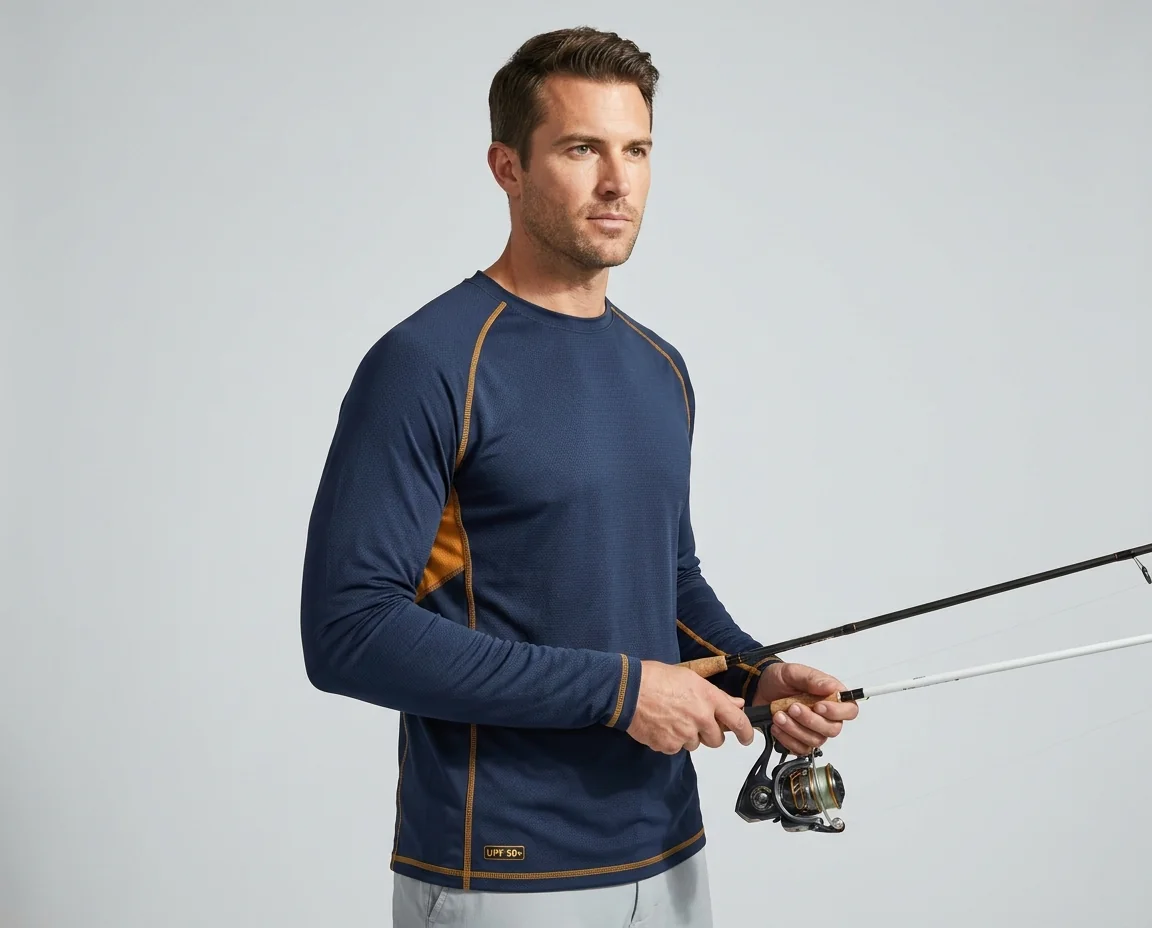
Long-sleeve fishing shirts and hooded tops grouped together as upper-body pieces
Upper-body pieces, seen as a group rather than as separate purchases.
Settle before committing

Merchandising the Set: The Decisions to Settle Before You Commit

A set that cannot be photographed together cannot be sold together, and that is decided before production rather than discovered after it. Four decisions belong to you, and they are worth making deliberately rather than by default.

Which piece anchors the colour

The anchor's colourway is the reference every other piece is specified against. Different pieces in a line are built on different base fabrics, so a colour is a decision about which piece is the reference and how close the others have to be to it, made in advance rather than judged at delivery.

Which sizing logic the line follows

Your existing range already implies one. A set assembled from pieces that each carry their own size logic puts the same customer in two different sizes, and the person who discovers it is the customer.

Which pieces are sold as a set

This decides your photography, your listings, and whether a customer buying one piece is being shown the other five.

Whether every piece can produce its own document

This is the one that reaches furthest back into the buy, and it is the subject of the next section.

What is still open

The answers to the first two are quoted per project rather than published, because they depend on the specific pieces and colours you choose. What matters at planning stage is that they are asked before the buy is committed, not after.

The colour question, in one picture
Polyester microfiber fabric swatch used for fishing neck gaiters
Microfiber
Polyester-spandex stretch fabric swatch used for fishing neck gaiters
Poly-spandex
Bamboo-poly blend fabric swatch used for fishing neck gaiters
Bamboo blend

Three different base fabrics, which is the colour question in one picture: the same colour name does not arrive the same way on all three.

The document check is the last thing before the order
Before the order goes out

UPF Test Reports for an Apparel Order: What to Ask For

Three checks, in this order, before a multi-piece order is placed. They apply to any supplier, including us. How a rating is arrived at and verified is a separate subject, covered on our sun protection and cooling fabric technology page; this section is only about the paperwork a buyer needs in hand.

Ask for the document mapped to the thing you are buying

A report covers a specific fabric at a specific weight in a specific colour. Your line is several categories, in several colourways, at more than one weight. A single report is therefore evidence about one of those combinations, not about the buy. Ask which combination each document covers, and check that list against your actual SKU list rather than against the range description.

Ask how you will know the batch you receive is the batch that was tested

A document describes material that was tested at a point in time. The link between that material and the goods arriving at your warehouse is a separate question, and it is a fair one to ask before the order rather than after a complaint.

Ask whether the rating is even across the whole line

This is the check almost nobody runs, and it is the one a cross-category buy creates. Across the categories on this site the published claim is a 50+ rating, with one exception that sits inside a typical sun line: the sock card states 30+.

That has a direct commercial consequence. "Our UPF 50+ sun protection line" is not a true statement about a line containing a piece claimed at 30+. A buyer who advertises the set at the highest figure in it has a substantiation problem on the lowest piece, and it surfaces when a retailer or a marketplace asks for the claim per SKU, usually after the goods have landed.

The handling is straightforward once you know: write the line's claim to the lowest-rated piece in the set, or keep that piece outside the claim and label it on its own. Either is defensible. Advertising the set at a figure one of its pieces does not carry is not.

This is also the clearest illustration of why a line is not planned from a category page. Uneven rating is invisible from inside any single category, because a category page only has one rating to talk about. It only becomes visible when the pieces are laid out together.

What the order itself commits you to
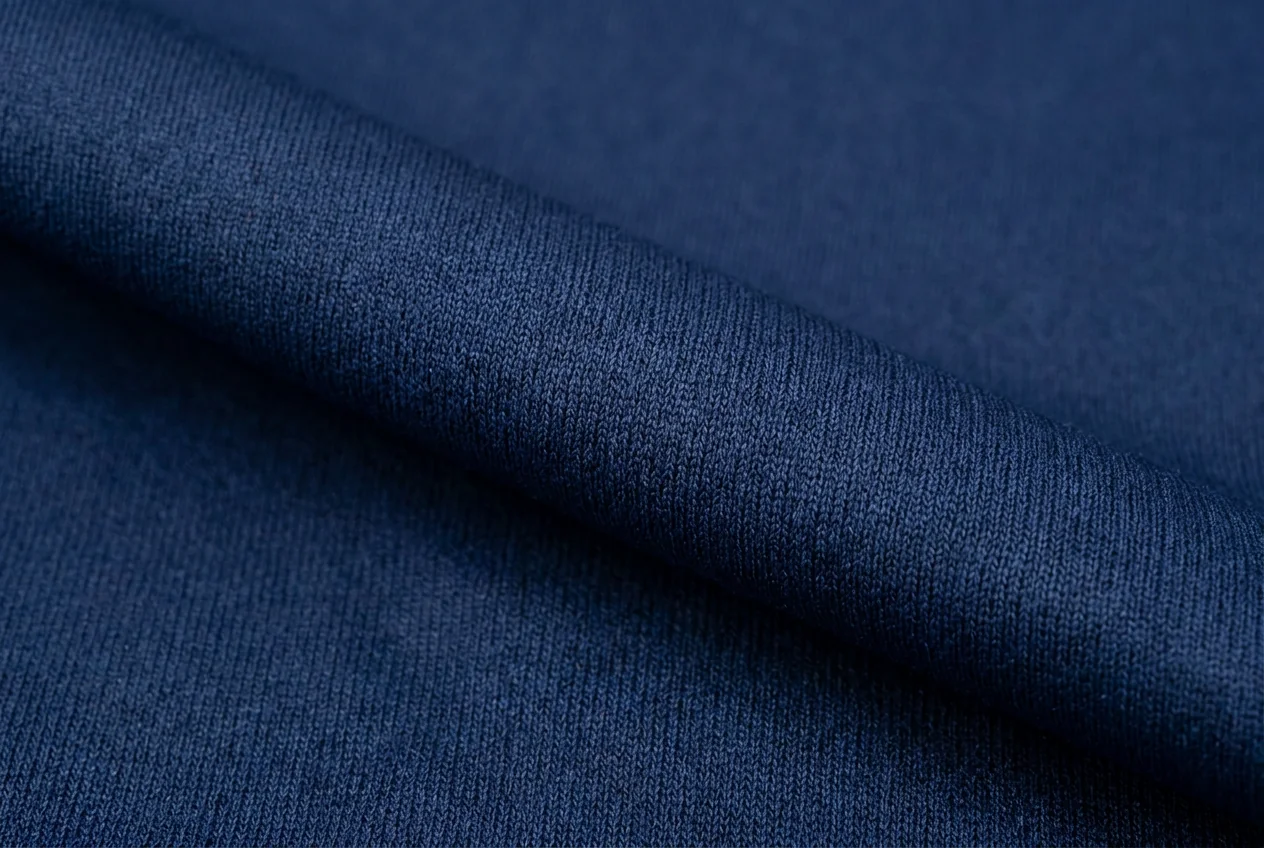
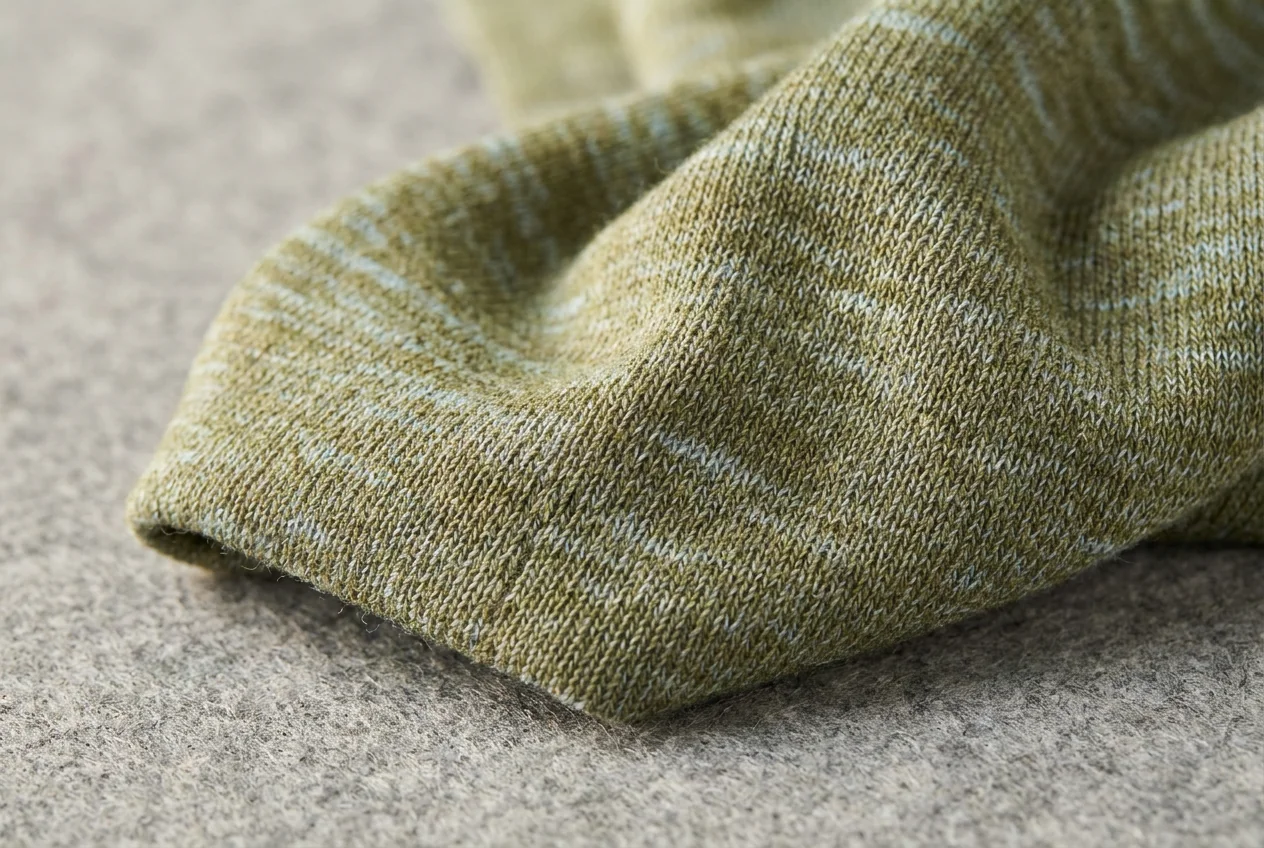
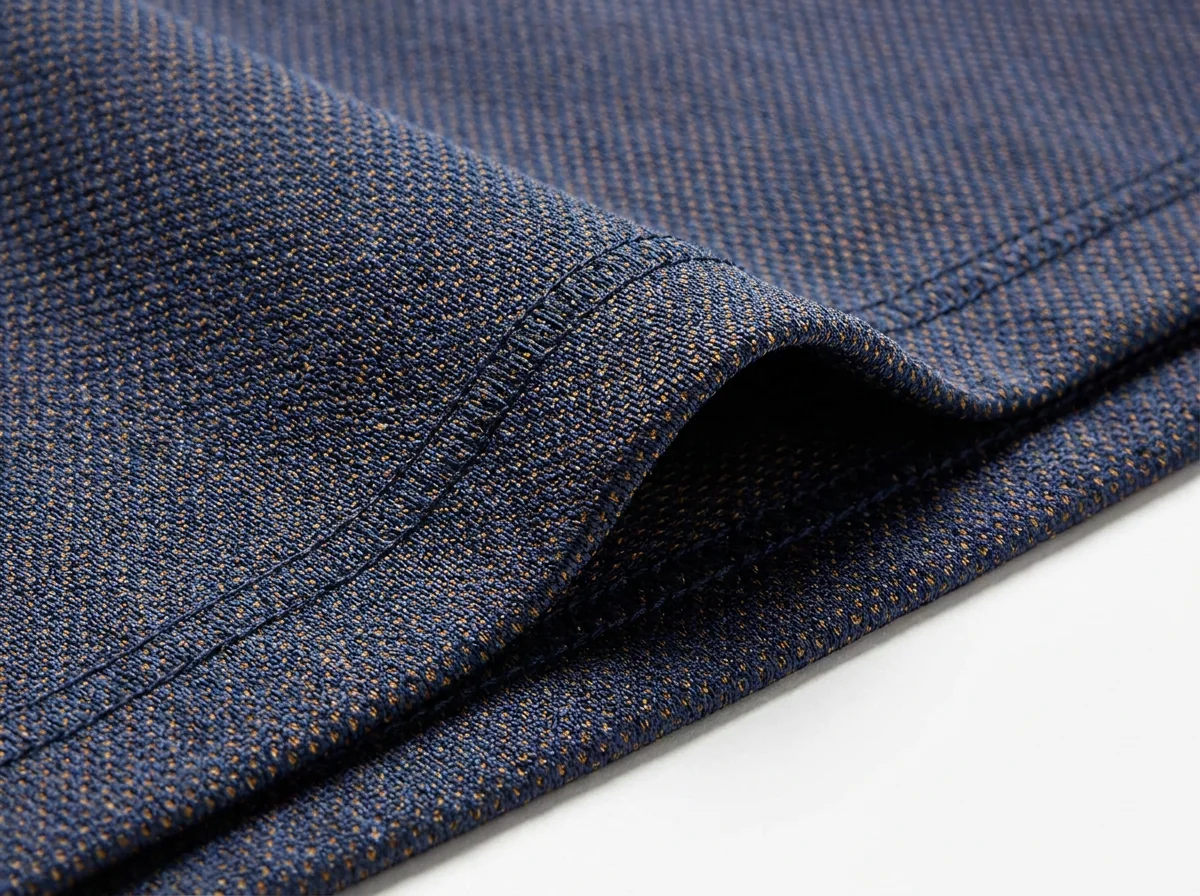
Close view of the fabric at textile level, the layer a rating certificate is issued against
The rating is issued against the fabric; the piece list is what decides how much skin it reaches.
Order arithmetic

Minimum Order for a Multi-Piece Line: How the Arithmetic Works

A fully custom design carries a minimum of 100 pieces per style. That figure is per style, which is the part that decides whether a multi-piece line is affordable at launch: a line is not one order at one minimum, it is as many minimums as it has styles, and the commitment scales with the number of pieces you decided to own earlier on this page.

That is the honest headline, and it is the reason the zone work earlier on this page pays for itself. Every zone you decide not to own yet is a style you are not committing to in this launch. A line can start narrow and be extended once the pieces have sold, and a narrow line chosen on purpose is a different thing from a narrow line chosen by budget.

How your particular line counts against the minimum is confirmed with your quote. Whether a mixed total is assembled across styles within a category or across the categories in your line is exactly the sort of thing that should come back to you as a number rather than as an assumption, and it depends on the pieces you choose.

Second tier: stock garment, logo added

There is a second tier in our published position, which applies to a stock garment with a logo added rather than to a fully custom design: from 20 pieces per style, with a mixed total reaching 100. Whether that route is open for the specific categories on this page is not something this page will assert, because the stock range's coverage is not settled. If your plan depends on it, ask, and ask before you build the plan around it.

Before committing: sample from one piece

There is also a route to validate before committing: a sample can be made from a single piece, so a design can be seen and approved before the line's full commitment is made. What that costs and how it applies across several categories is quoted with the rest of the line.

How a minimum applies across a multi-piece line A diagram showing that a fully custom line is counted style by style: each style carries its own minimum of one hundred pieces, so the commitment grows with the number of styles. A separate row shows the published second tier of twenty pieces per style with a mixed total reaching one hundred, and a sample from a single piece. Fully custom: counted per style 100100 100100 style 1style 2 style 3style 4 Published second tier From 20 per style, mixed total 100 Stock plus a logo. Ask if it is open. Before committing Sample from 1 piece
The commitment is counted style by style, which is why the zone decisions earlier decide the size of the launch.
Who carries the gaps between the pieces
A run of long-sleeve fishing shirts in several colourways
Each colourway is counted separately when the minimum is worked out.

Who is answerable

One Line, One Source: Where the Responsibility Sits

A sun line split across four suppliers can have every supplier meet its specification in full and still fail as a line.

Colour

Colour is the clearest case. Supplier A's navy matches supplier A's colour card. Supplier B's navy matches supplier B's card. Both are inside specification, both would pass their own inspection, and on a shelf beside each other they are not the same navy. Nobody has breached anything. Nobody's contract required them to agree with a company they have never dealt with. The mismatch is real, it is visible to the customer, and it belongs to no one, because the space between two garments is not inside either scope of work.

Calendar

The calendar has the same shape. A line becomes sellable on the date the last consignment arrives, not on the average of the four. Three suppliers delivering exactly as promised does not move that date, and none of those three is accountable for the one that missed, because none of them agreed to a date that depended on the others.

Four separate edges resolving into one Four short broken lines on the left, each ending without meeting the others, converge towards the right into a single continuous line. four scopes one scope

Made in one place, that space is inside a single scope of work rather than between four. Single sourcing does not make an individual garment better than the same garment made elsewhere. What it changes is that the gaps between the garments have somebody's name against them.

Tell us which pieces you are considering
Boat fishing deck under extended sun exposure across a working day
One day, one exposure, and a piece list that has to answer all of it.
Send your piece list

Send the Line You Are Planning

Send the pieces you are considering and roughly how many of each, and you will get back the arithmetic for that specific list: how it counts against the minimum, which pieces carry which claim, and where the zones you have chosen still leave skin uncovered. If you have not settled the piece list yet, send the fishing your customer does and the zones you know you want to own, and start from there.

Either way, what comes back is a piece-by-piece view of the UPF fishing apparel line you are planning.

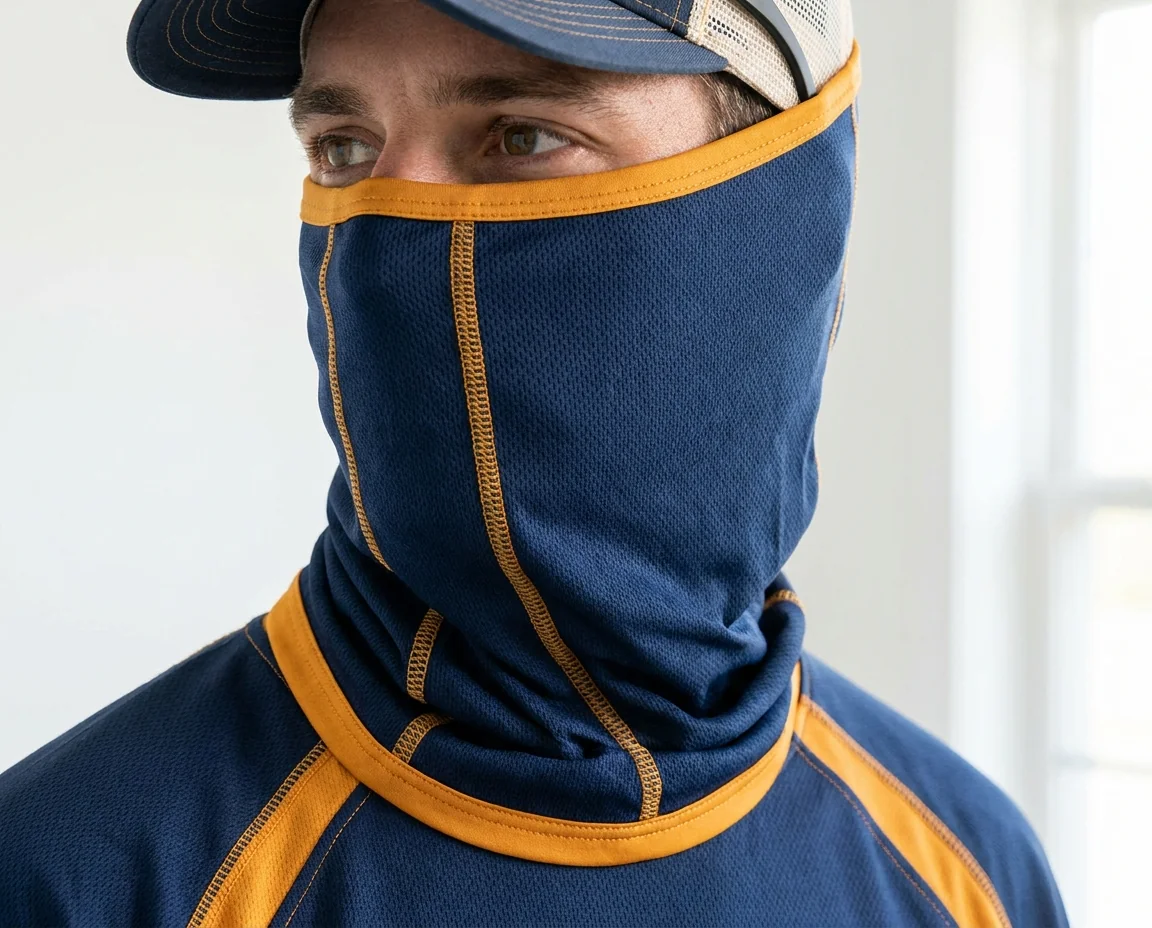
Neck gaiters covering throat and lower face
Send the pieces you are planning; the gaps show up when they are listed together.