Wholesale Fishing Apparel: The Terms You Would Be Buying On
- MOQ 100 pcs/style
- Sample 1 pc
- 4–6 weeks from sample approval
- Since 2009 factory
- Shipping to Australia, the US & Europe
The standing terms for wholesale fishing apparel, before you scroll. Full custom production and an already-made garment carrying your logo both open at 100 pieces per style and colourway, and a sample is 1 piece. Bands are quoted against your own specification, never off a chart. Production runs 4–6 weeks, timed from sample approval, and you choose whether handover happens FOB, CIF or DDP. Everything below is how each behaves once a real order is put against it: the minimums, the band, the second order, the production clock, the handover.
Applies when: the garment is already specified. Deciding what it should be comes first.
What a Wholesale Buyer Is Actually Negotiating
Not capability. Quantity, repeatability and handover.
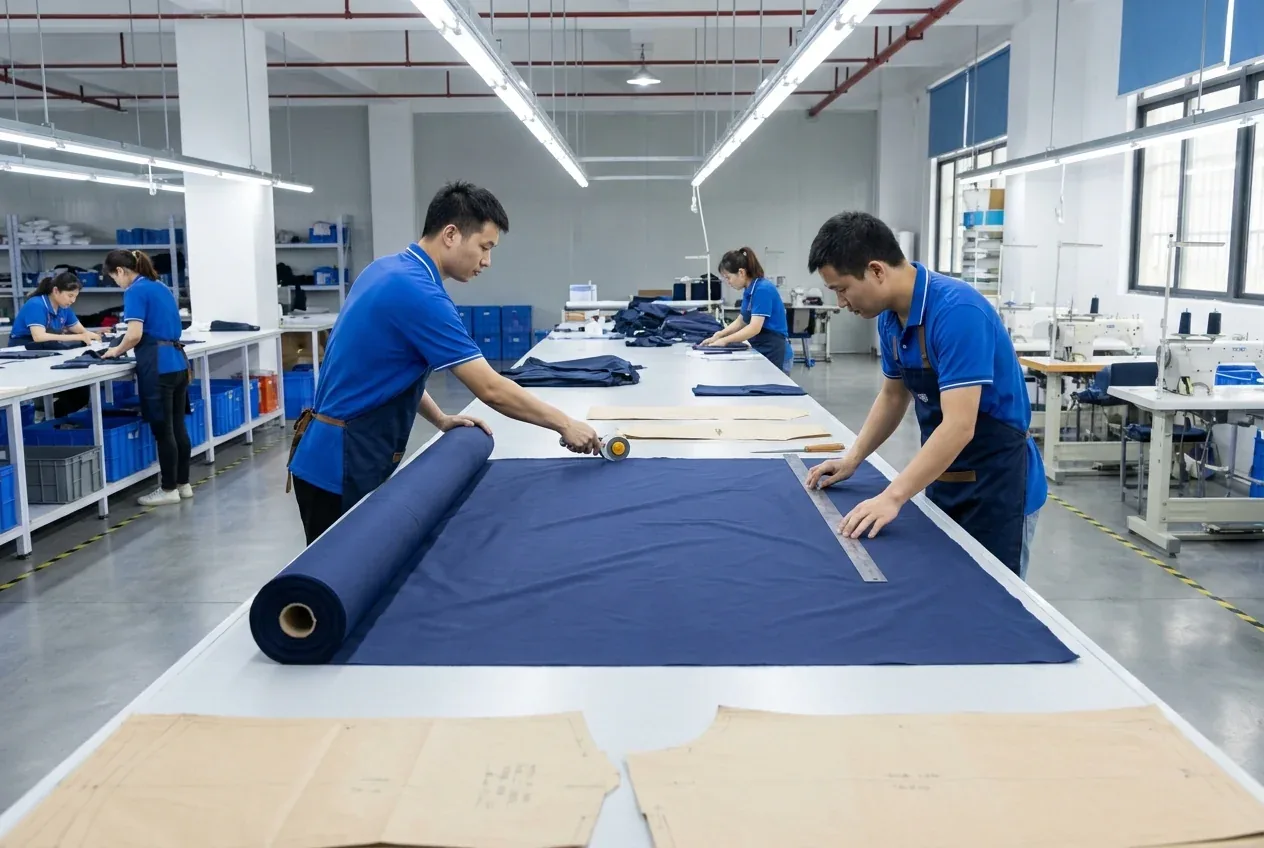
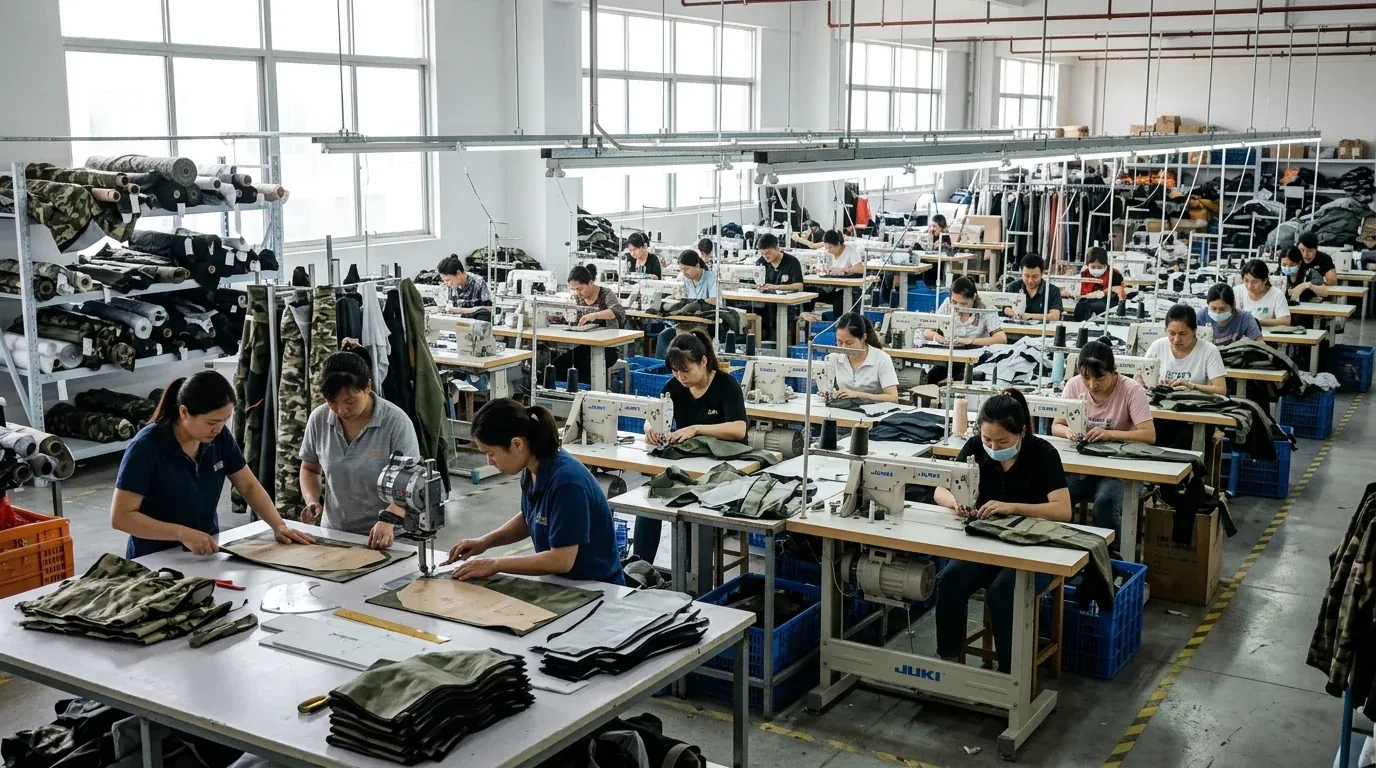
A distributor and a development client are buying from the same factory and negotiating almost nothing in common. A development client is negotiating capability and timeline: can this be made, to what standard, by when. A wholesale buyer has already accepted the answer to that and is negotiating three other things — how little can be committed at once, whether the second order is as much work as the first, and at which point in the journey the shipment becomes theirs to control.
That is the whole subject of this page. If the garment still has to be worked out, the capability conversation comes first and is handled on our OEM and ODM page or on custom fishing apparel solutions; it is worth finishing before quantity is discussed at all.
Development client (above the line) vs. wholesale buyer (below)
Order Minimums Across a Season's Assortment
The figures are simple. Buyers get caught applying them across a season's assortment.
Nobody buys one style. A season's order is a spread — several styles, each in more than one colour, sized across a run — and the MOQ does not apply to the order, it applies to each line inside it.
The ladder starts at 1 piece. A sample is not a formality: it is the object every later term on this page is measured against — the specification a repeatA repeat order against the same style and colourway — see the reordering section below. is produced to, and the approval the production clock starts from.
Above the sample, both full custom production and a stock garment finished with your logo are counted per style and per colourwayA colour of a given style — counted as its own line, not folded into the style's total.: two colours of the same shirt are two lines rather than one line of double the quantity, and each of them opens at 100 pieces. An assortment that looks conservative on the total can therefore sit well above what the buyer intended. Colour count, not style count, is what usually moves a first order out of reach — and it is the part of a range plan that is easiest to trim without losing the range.
One purchase these minimums do not cover: everything above assumes the goods carry your brand when they leave us. Buying goods with no branding applied at all, to be decorated somewhere else, is a different purchase with its own specifications, colour and size ranges, and its own minimums covered on blank fishing apparel; the terms on this page do not reach it.
Fabric, Set-Up and Packing Move the Price Band
Most of the band is decided before anyone counts the pieces.
That a price depends on fabric, quantity and how much customisation is involved is already set out on custom fishing apparel solutions. It does not tell a buyer planning a bulk purchase which parts of that are theirs to move. Those run from the mill outwards, and they are worth taking in that order.
The Mill
Cloth is woven or knitted to mill minimums, not to garment counts. A style whose fabric is already running behind other orders sits differently from one that needs a run opened for it, and that difference is invisible from the outside. Two apparently similar quotations can come back apart on that alone.
Cutting & Set-Up
Committed per style, not per order. The same total behaves one way spread across many styles and another concentrated in a few — consolidating an assortment into fewer styles with more depth in each is the one lever on this list that costs a buyer nothing to pull.
Packing
Where a warehouse programme and a shop-floor programme stop being the same order. Case-pack ratios, individual bagging, retail-ready labelling, barcoding — each is handling, and handling is counted per piece, so it lands inside the band rather than on a line of its own.
Product Range, and Where Its Specifications Live
Nothing in the range narrows because the order is wholesale.
A wholesale programme draws on the same production as everything else, and the specifications sit with the products rather than here. The full listings are on the wholesale fishing apparel range and the wholesale accessories range. Individual programmes keep their own specification pages: fishing shirts and hoodie programmes, wader programmes, and on the accessory side fishing hats, glove programmes and neck gaiters and face masks.
Use those pages to decide what to order. The terms on this page — the minimums, the band, the repeat and the handover — do not change with the choice.
Reordering a Style You Have Already Run
Same minimum, shorter runway, and a clock that starts somewhere else.
A reorder carries the same minimum as the first order: 100 pieces per style and colourway. It is not softened for repeats, and it is better planned around than discovered.
The front half of the process has already been done once. The same style in the same colourway is produced against the pre-production sample you already approved, so it does not go back through sampling, and the tooling made for it — screens, moulds, woven and printed labels — is kept on file for reuse rather than remade.
That changes where the clock starts. A first order is timed from sample approval, as the next section sets out; a repeat is timed from the moment you confirm it against that already-approved sample — there is no second approval to wait for, because the thing that would be approved has not changed. The clock then runs to production scheduling at the time you place it — a window we put a date on when you ask, not one this page can fix in advance. A repeat is still produced. It is not drawn from a shelf, and it needs a real runway.
Already done, kept on file
Still to run
Lead Time Runs From Sample Approval, Not From the Order
The clock starts where the specification stops moving.
Production takes 4–6 weeks after sample approval. The clock starts at approval rather than at the order because until the sample is signed off the specification can still move, and while it can move the fabric is not committed. An order placed against an unapproved sample has no meaningful production date attached to it, whatever anyone writes on the confirmation.
In front of that sits sampling itself, which takes around 7 days. Behind it sits transit, which depends on the route and the handover you choose — the next section.
For planning, work backwards from the date the goods have to be on the shelf rather than forwards from today: transit for your route, then the production window, then your own approval turnaround — that last one is usually the least predictable part of the calendar, because it sits with you and not with us — then sampling. Buyers ordering to a season generally start that count a season ahead.
Sampling
≈7 days
Sample Approval
Clock starts here
Production
4–6 weeks
Transit
Depends on route & handover
Handover and Shipping: Who Arranges What, and Where Risk Changes Hands
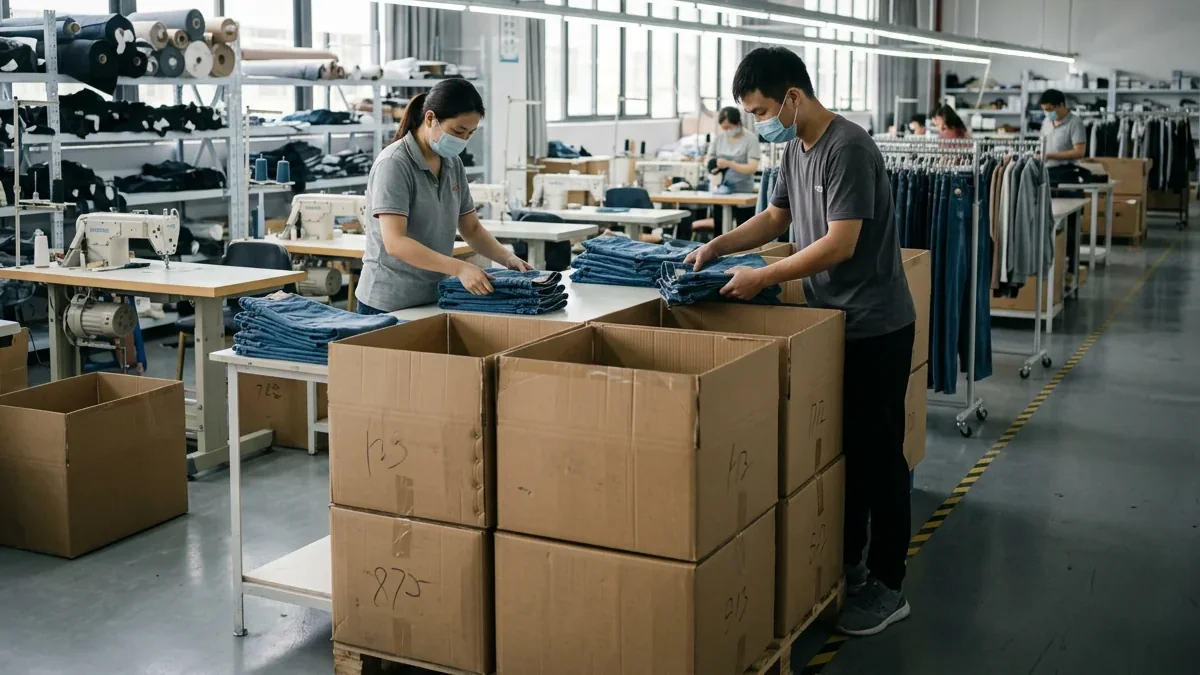
You choose how far we carry the shipment. That choice also fixes where it stops being ours.
FOB
We produce, we handle export clearance, and we deliver the goods onto the vessel at the port of loading. Risk changes hands there, and from that point the shipment moves under your control and your nominated carrier. Our loading ports are Ningbo and Guangzhou.
Risk: at loadingCIF
We arrange the ocean carriage and insurance cover through to the destination port you name. Risk still changes hands at origin, when the goods are loaded — with CIF the point where risk transfers and the point where our carriage ends are deliberately not the same place, which is the single most misread thing about it.
Risk: at loadingDDP
We arrange the whole movement through to your delivery address and we perform the import clearance at destination — that clearance step is what separates DDP from a term that delivers to the same address without it. Risk changes hands when the goods are placed at your disposal there.
Risk: at deliveryWhichever applies, we work with your nominated freight forwarder where you have one, and we issue the export documentation that travels with the shipment, so your side clears against a complete set rather than chasing paperwork after arrival. We ship to 50+ countries.
The term you buy on is also what decides where freight and duty fall — that is set out on the quotation, order by order, against your actual route. Not every term is available into every market. Name the destination and we confirm which of the three your route can take.
How to Ask for a Wholesale Quotation
Three answers are enough to quote against. Everything else can follow.
A quotation is built against a specification. Send one and an RFQ comes back answered; send an enquiry without one and any wholesale supplier, us included, can only send a question back. The form carries selects for the product line and the quantity band; the detail that turns those into a quotation goes in the message:
- Which styles. This fixes the specification, and with it the fabric and any set-up.
- How many per style and colourway. The minimum and the band are read against these, not against a single total; a total on its own does not show how the order splits, and the split moves the figure.
- Where it is going. A destination port or city decides which handover term can be quoted, and quoting one that does not suit the route wastes a round.
The quotation that comes back states the applicable minimum, the handover term and the production window against that specification, so you can price your own line from it rather than from an estimate.
The standing enquiry desk for wholesale fishing apparel orders takes the same details if you would rather send them there.
Prefer to talk directly? WhatsApp +86 177 0272 7677 · Email [email protected]