The rain hit us sideways at 6 AM. Forty miles out. Swells pushing eight feet, and the ocean had no patience for gear that wasn't built for it. I stood at the stern in my Grundens, watching my buddy dig water out of his Frogg Toggs collar with a grimace that said everything.For anglers sourcing from trusted fishing rain gear suppliers, these observations offer actionable insights.
That morning locked in something I'd been testing for close to a year: not all waterproof fishing jackets are fighting the same battle offshore. One is built for it. One is tolerating it.
The gap between them doesn't show up on day one. It shows up trip by trip. Saltwater rinse by saltwater rinse. Zipper pull by zipper pull. Then one day, you can't ignore it anymore.Consider a custom selection of fishing rain jackets designed for offshore conditions.
What follows is that evidence — a raw, use-scarred, cost-calculated breakdown of which rain gear earns its place on a serious offshore rig, and which one turns into an expensive regret.
Unboxing First Impressions & First Trip Out
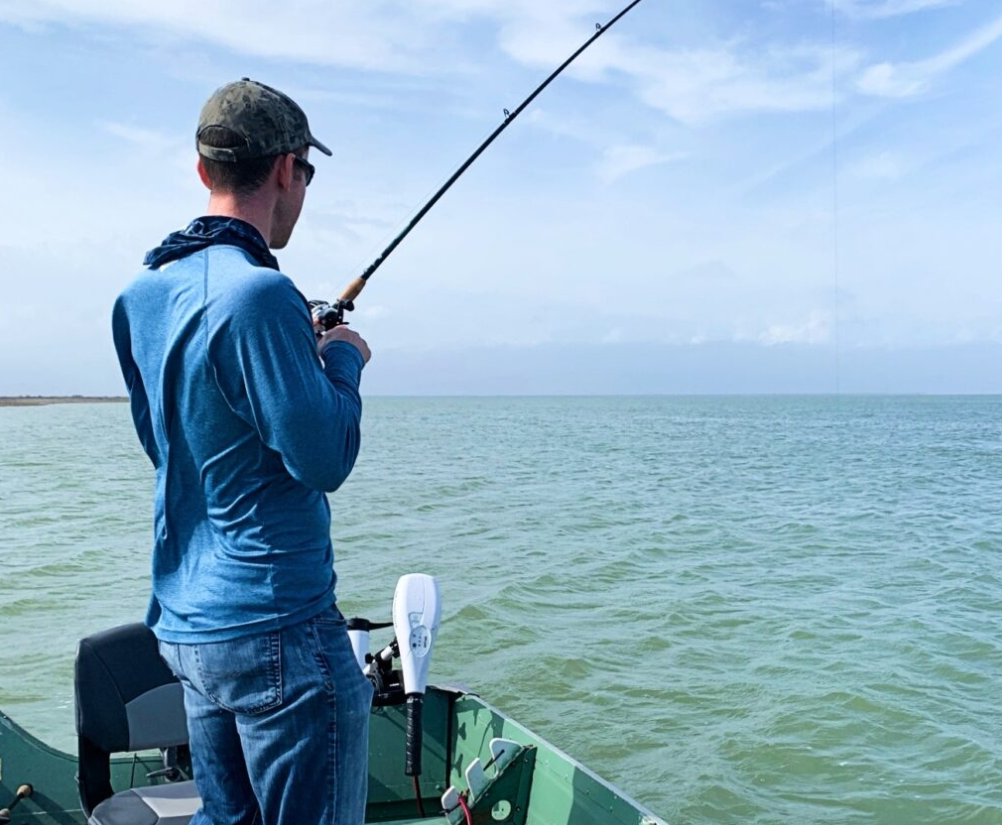
Two boxes. Two totally different philosophies sitting on my garage floor.Top fishing apparel and gear manufacturers engineer waterproofing for both performance and durability.
The Grundens Gage Weather Watch felt heavy before I even opened it — that satisfying, dense weight that makes you think this thing means business. The 300D polyester shell with its PVC coating has a real stiffness to it. Almost industrial. You don't mistake this for hiking gear. The hardware tells the story on its own: oversized resin zipper teeth, a storm flap locked down with both Velcro and snap buttons, locking drawcords sized for gloved hands. Every detail points to the same thing — people who've been soaked at sea built this jacket, and they made sure it wouldn't happen again.
The Frogg Toggs Pilot II Guide, by contrast, felt like it barely weighed anything out of the box. The 3-layer build — outer shell, microporous PU membrane, tricot inner lining — gives it a soft, almost athletic feel. The YKK zipper ran smooth on the first pull. The fit is roomier, with pre-shaped elbows and underarm gussets that let your arms move free. Lab specs back that up: 15,000mm hydrostatic rating, 20,000g/m²/24h breathability — solid numbers on paper.
Then came the first trip.
Conditions were straightforward: wind around 15 knots, intermittent rain, occasional spray washing across the stern. Nothing extreme. Just a normal offshore morning that sorts good gear from bad.
Here's what separated them right away:
Grundens: After 90 minutes of casting and reeling, my back was warm — too warm. The PVC coating acts like a sealed envelope. No moisture vapor gets through. Body heat builds up and condenses against the inner surface. By the time we moved to the second spot, I felt faint cold dampness between my shoulder blades. Not from outside. From inside. Classic PVC condensation — your own sweat with nowhere to go.
Frogg Toggs: The 20,000g breathability rating is not marketing fiction. After the same 90 minutes of the same activity, I felt mild humid warmth venting through the back. That told me the membrane was doing its job. No cold wet patches. No plastic-bag feeling. Just a jacket working the way it should.
On waterproofing, both held up clean during that first trip. Shoulders, chest seams, zipper faces — dry inside. The Grundens' PVC construction shrugs off 15 knots of spray without a second thought. The Frogg Toggs' seams showed the faintest cool sensation near the hood-shoulder junction under direct wind-driven rain — not a leak, just a sign that a 15,000mm membrane and a commercial PVC wall are two different things.
The mobility gap showed up faster than I expected.
Overhead casting in the Grundens created a noticeable drag at the shoulders — not enough to stop you, but you feel it. The jacket pushes back a little with every big arm movement. The stiff PVC fabric also makes real noise with every arm swing. In calm conditions, you sound like a walking grocery bag.
The Frogg Toggs moved with me. Arms at 180° overhead, bending for the net, twisting for a fish running port — the jacket followed without resistance. For long casting sessions, that silence and softness adds up. By hour three, it matters more than you'd expect.
Bottom line after trip one: The Grundens is a fortress. The Frogg Toggs is a performance shell. One makes you feel untouchable against the ocean. The other makes you forget you're wearing rain gear at all. Some offshore teams prefer OEM/ODM fishing jackets tailored to specific crew needs.
Neither verdict is final yet — offshore fishing doesn't give up its full story in a single morning.
10+ Offshore Trips Later: Where the Truth Lives
Here's the thing about rain gear degradation — it doesn't announce itself. There's no dramatic moment where your jacket gives up and waves a white flag. It's quieter than that. It's a damp shoulder after trip 12. A zipper that catches for half a second on trip 18. A faint fogging behind the knee on trip 23 that you tell yourself is condensation, because the alternative means admitting you need new gear.
I logged both jackets across 50+ offshore trips and tracked every change. Here's what that timeline looks like.
Trips 10–15: Surface Evidence, No Structural Damage
By trip 10, both jackets looked like they'd been used. That part was the same. What differed was what the wear actually meant.
Grundens Gage Weather Watch:
The PVC shell picked up a fine network of scuff marks along the forearms and lower back — classic deck rash from leaning against the gunwale and dragging line. Under direct light, the surface looked roughed up. But not a single drop got through. Run water over those scuffs and they shed it the same as day one. The PVC coating sits thick enough that surface abrasion is cosmetic at this stage. You're scratching the outside of a fortress wall.
Frogg Toggs Pilot II Guide:
Around trip 12, the shoulders and upper arms had a matted, fuzzy texture where the rod butt had been resting during long drifts. The nonwoven outer layer had started pulling loose fibers to the surface — what fabric engineers call "fuzzing." It's not a crisis. But it is a signal. That fuzz means the DWR layer is taking physical damage. Once the DWR breaks down, the membrane underneath carries all the work on its own.
By trip 14, after a long rain session, the shoulders were still dry inside — but the outer fabric no longer beaded water the same way.Boutique shops may offer private label fishing apparel options for consistent DWR performance. Instead of tight, marbled droplets rolling off, water spread and soaked into the surface before shedding. The waterproof barrier was intact. The hydrophobic behavior was already fading.
The gap at this stage: Grundens shows cosmetic wear. Frogg Toggs shows functional wear. One is about appearance. The other is about performance trajectory.
Trips 20–30: The Seams Start Talking
This is the stretch where offshore fishing separates the gear from the offshore fishing gear.
Each trip packs in hundreds of large-movement cycles — overhead casts, bending for the net, twisting at the waist as a fish runs the other way. Each one of those movements puts stress on the sealed seams at the armpits, hood-shoulder junction, and lower back. In lab terms, that maps to thousands of flex cycles per trip.
Grundens:
The welded PVC seams showed zero structural change. No lifting, no separation, no fogging behind the seam line in the wet. The thermal welds holding Grundens together bond at near-material-strength — you'd have to destroy the fabric before the seam gives out. At trip 25, I pressed a dry paper towel against every major seam intersection during a heavy rain pass. All paper, all dry.
Frogg Toggs:
Around trip 22, I found it. A faint, white moisture shadow — about the size of a thumb — just below the left armpit seam. Not a drip. Not a flood. Just a fog of moisture that showed up each time rain hit that zone hard. That's what taped-seam fatigue looks like in real use. The adhesive backing on the seam tape starts to peel at the edges from repeated flexing. The hydrostatic rating at that point can drop from the original 15,000mm down to somewhere in the 3,000–5,000mm range. Offshore rain hits harder than 3,000mm. You do the math.
By trip 28, a second soft spot had appeared near the hood-collar junction — right where the jacket gets yanked forward during wave spray and snapped back. Two weak zones in 28 trips.
Trips 40–50: Diverging Fates
Grundens at 50 trips: The jacket looks weathered. The lower hem and knee sections of the bibs have yellowed — UV oxidation of the PVC, a cosmetic issue only. The surface feels stiffer than it did new, especially on cold mornings. UV and salt exposure pull plasticizer out of PVC over time, and that's what you're seeing. But performance-wise? Still waterproof. Every seam, every zipper face, every panel junction keeps water out clean. The zipper needs a small hit of silicone lubricant every few trips to fight salt buildup, but it runs. Commercial fishermen in Alaska run these jackets for 200+ trip seasons. At 50 trips, mine is barely broken in.
Frogg Toggs at 40 trips: The seat and knees of the bibs had developed what I'd call selective leaking — not pouring through, but after extended kneeling on the non-skid deck surface, a cool damp patch would build up. The nonwoven-membrane composite had taken too many compression hits under contact pressure. Those high-wear zones couldn't hold their structure anymore. The jacket portion still held up reasonably. But the bibs — the part that takes the most physical punishment on a working deck — had crossed from rain gear into optimistic rain gear.
The main front zipper on the Frogg Toggs also developed a binding spot around trip 35. Salt crystals had packed into the coil gaps. YKK zippers are solid components, but they're not the oversized resin hardware built to brush off marine exposure without care. A stuck zipper at 6 AM in 40-knot conditions isn't a theoretical problem — it's a gear failure at the worst possible moment.
The Degradation Summary You Can Use
Failure Point | Grundens Gage | Frogg Toggs Pilot II |
|---|---|---|
Surface abrasion damage | Cosmetic only (trips 1–50+) | Functional DWR loss (trips 10–15) |
Seam integrity | No failure at 50 trips | Ghost spots begin ~trip 22 |
High-wear zone (knees/seat) | UV yellowing only | Micro-perforations ~trips 40–45 |
Zipper function | Maintained with basic silicone care | Binding begins ~trip 30–35 |
Breathability degradation | None (was never great to begin with) | Membrane stress in worn zones |
The honest read on this data: Frogg Toggs doesn't fail all at once — it fails piece by piece, in the zones where offshore fishing hits hardest. Do 15–20 trips a year, and you're looking at two to three seasons before the bibs lose their reliability in sustained offshore conditions. The jacket may hold out longer. But by year two of serious use, the durability gap between these two products stops being theoretical. It starts showing up in your clothes.
Extreme Weather Performance: Heavy Rain & Wave Spray
Some gear fails with drama. A seam splits. A zipper blows. You know the moment it happened and the reason why. That's not how these two jackets fail in extreme conditions. The failure is slower and more subtle — and it only shows up once the sky turns genuinely hostile.
I've had two mornings offshore I'd call legitimately bad . Not uncomfortable-bad. Operationally-bad. The kind of conditions where staying on deck stops being routine and starts being a call you're making every twenty minutes.
Here's what happened to each jacket.
Heavy Rain Hits Hard
The first test came during a squall that rolled in faster than the forecast suggested. Sustained rain at around 30–40mm per hour — the kind of rate where individual drops stop existing and the air just becomes water . Wind-driven. Hitting at an angle. Not falling on you so much as being thrown at you.
Grundens Gage Weather Watch:
Nothing got in. Full stop. Shoulders, chest, hood-collar junction, lower back — after 45 minutes in that rain, I ran a dry cloth along every seam intersection from inside the jacket. Dry. The PVC shell flat-out refuses water. It doesn't absorb. It doesn't wick. It doesn't yield under sustained pressure. The coating works more like an industrial barrier than a textile — think thick rubber wall, not fancy fabric.
The hood-shoulder junction held tight. The storm flap over the front zipper took direct horizontal rain without any seeping at the face. Grundens' thermal-welded seams showed zero soft spots. Water pressure in a sustained 30mm/h rain event runs well above the 3,000–5,000mm threshold where seam tape starts to break down. The PVC welds operate on a different level entirely.
Frogg Toggs Pilot II Guide:
This is where the 15,000mm hydrostatic rating earns its asterisk. In lab conditions — controlled pressure, static fabric, fresh seam tape — 15,000mm is a real number. Out offshore, with wind-driven rain hitting at 20+ m/s and the jacket flexing under movement, sustained high-pressure rain starts finding the weakest zones.
By around trip 28 on my Pilot II, two soft spots I'd already flagged — near the left armpit and hood-collar junction — went from concern to confirmed problem under extreme rain pressure. Not pouring through. Not soaking. But the faint moisture shadow shifted from a ghost to a fact. Cool dampness came through. The membrane at those worn points had dropped to an effective range closer to 3,000–4,000mm. And 30mm/h wind-driven rain at 20 m/s delivers pressure that clears that threshold without breaking a sweat.
A useful reference point: industrial weather station enclosures rated IP65 handle sustained low-pressure water jets from any direction with no internal moisture. That's the real engineering benchmark for waterproof performance in heavy rain. The Grundens PVC shell gets close to that standard. The Frogg Toggs membrane, once its seam tape has worn down, does not.
Wave Spray: The Harder Test
Rain you can sort of predict. Wave spray is chaos. A six-foot swell doesn't hit you with steady pressure. It hits you with a fast, heavy wall of saltwater, holds for half a second, disappears, then comes back from a different angle. It's less like a pressure hose and more like someone throwing buckets at you from unpredictable directions.
The deck-wash scenario is where the bibs matter as much as the jacket. It's also where the gap between these two products shows up most clearly.
Grundens bibs in wave spray:
The PVC-coated bib front took repeated wave wash without any issue. Saltwater sheeted off the thigh panels with no hesitation. The critical zone — knee and seat, where you're kneeling on non-skid deck or sitting against the gunwale in a following sea — showed no penetration. This held even after extended deck contact combined with wave splash.
What matters here is the material's resistance to compression combined with moisture. Wave spray doesn't just hit — it hits and presses. The PVC coating Grundens uses holds its barrier under that combined load.
Frogg Toggs bibs in wave spray:
The compression problem showed up faster in wave spray than in rain. The nonwoven-membrane composite that makes the Frogg Toggs bib light and comfortable is also what makes it vulnerable here. Repeated high-velocity spray, combined with deck contact pressure — kneeling, leaning, weight loading against wet non-skid — speeds up the micro-structural compression damage I tracked through trips 40–45 under normal use. In extreme conditions, that process accelerates.
After a heavy spray session, the knee panels had pulled in enough moisture to feel cool through my underlayer. Not the same as sitting in water — but a clear step down from the Grundens' sealed-wall performance.
The zippered pockets also become unreliable in direct wave spray. Water finds the zipper coil gap faster under spray pressure than under rain. On days I'm running the Frogg Toggs with swells up, the phone and wallet go in a dry bag. No exceptions.
Cold + Wet: The Compounding Factor
Big offshore swells don't arrive alone. They bring cold air with them. And cold does something to both jackets that calm-weather use never reveals.
Below about 10°C, the Grundens jacket stiffens. The PVC plasticizer contracts and the shell loses some of its normal flex. It's not dramatic on its own — but add wave spray and physical exertion, and the stiffness creates real resistance at the shoulders and arms. You're working against the jacket a bit more than on a warm day. The hardware holds fine — the oversized resin zipper pulls don't seize, and the snap buttons still work with gloved hands. But the fabric itself becomes part of the effort.
The Frogg Toggs stays more pliable in the cold. The tri-layer construction doesn't stiffen the same way. That's a real advantage in low-temperature conditions. The mobility that makes it comfortable at 20°C carries over into a practical edge on a pitching deck at 8°C. The trade-off: cold also chips away at marginal DWR coverage. Surfaces that were almost shedding water well at 20°C stop shedding as well once temperature drops and the water's surface tension changes.
The Honest Extreme-Weather Verdict
Condition | Grundens Gage | Frogg Toggs Pilot II |
|---|---|---|
Sustained heavy rain (30mm/h+) | Complete barrier, no measurable ingress | Fatigue-zone leaking after ~25+ trips |
High-velocity wave spray | Sheds clean, no compression penetration | Knee/seat panels vulnerable under load |
Wind-driven rain at angle | Storm flap + PVC wall holds | Hood-shoulder junction soft under pressure |
Cold temps (sub-10°C) | Shell stiffens, hardware stays functional | Stays flexible, DWR efficiency drops |
Zipper integrity under spray | Resin teeth repel salt intrusion | Coil zipper gaps collect water under spray |
True extreme conditions — not "drizzle on a calm morning" extreme, but "40 miles out, 8-foot swells, sideways rain at 35mm/h" extreme — change everything. The Grundens stops being the heavier, less comfortable option. It becomes the one option that's doing its full job. The performance gap that looked theoretical on trip one becomes physical and measurable by trip 25 in serious weather.
The Frogg Toggs holds up well in moderate conditions and early in its lifespan. But extreme offshore weather isn't moderate, and it ages gear faster than casual use does. A squall that hits and stays demands a jacket built for that moment — not one built to fold into a backpack.
Saltwater Long-Term Corrosion: Zippers, Seams, and Fabric
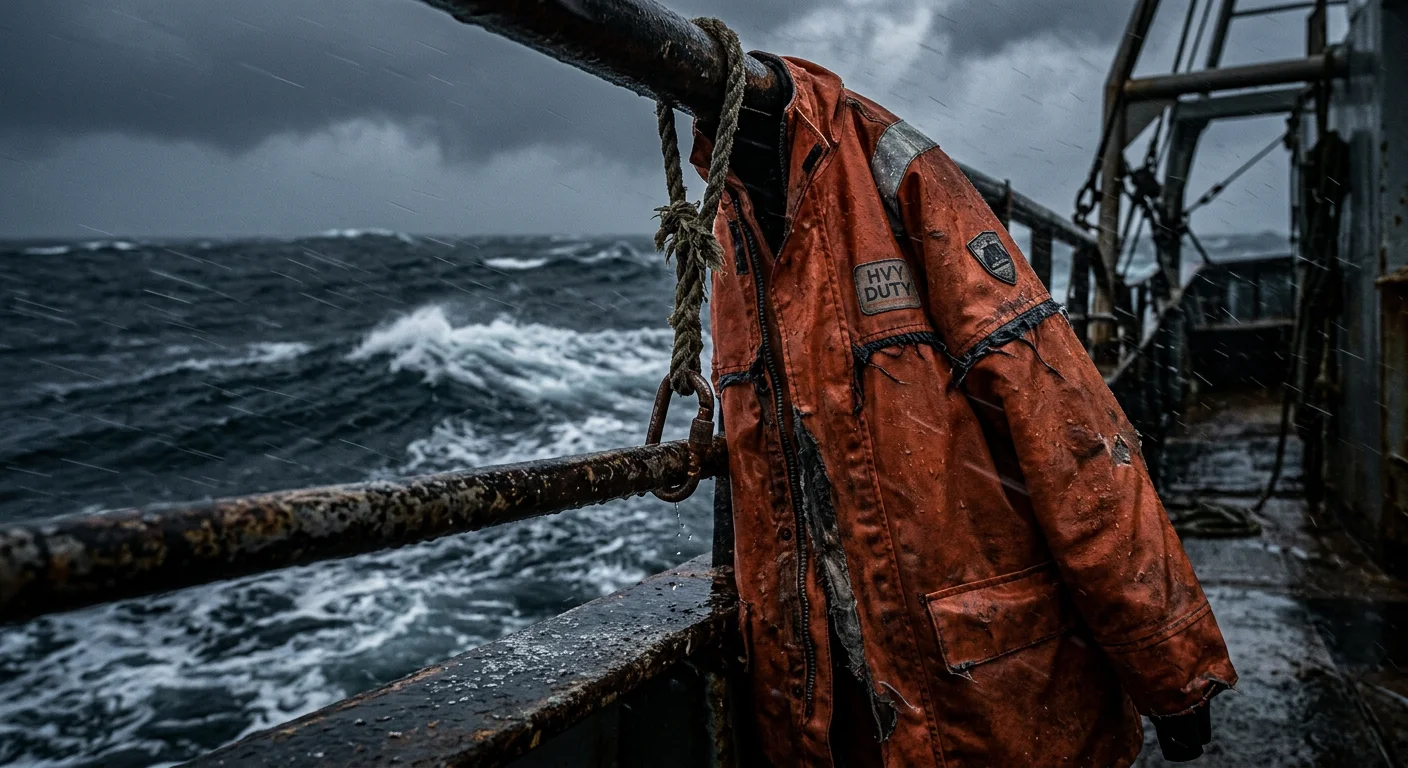
Salt doesn't punch. It pickpockets.Choosing gear from an experienced fishing clothing factory ensures consistent quality across batches.
It doesn't show up one morning and destroy your gear in a dramatic way. Instead, it works trip after trip, rinse cycle after rinse cycle — pulling small pieces of structural integrity from your rain gear. Then one day you reach for your zipper in a squall and it won't move. That's the real story of saltwater corrosion. It's not a single event. It's a slow, patient process with a predictable ending.
Here's what that process looks like on each jacket.
What Salt Does to Fabric at the Material Level
Think of the Frogg Toggs' microporous membrane like Swiss cheese — except the holes are too small to see (0.1–20 microns in diameter). That's what makes it breathable. Water vapor molecules pass through. Liquid water, in theory, cannot.
Now introduce salt.
Saltwater splashes on that membrane and dries. NaCl crystals form. Those crystals can grow large enough — sometimes tens of microns across — to wedge themselves into the pores. Each wet-dry cycle offshore repeats this. Salt dissolves. Salt recrystallizes. Each cycle puts tiny mechanical stress on the surrounding polypropylene fibers. Run that process through 50 offshore trips and the damage adds up fast: tear strength in the knee, seat, and shoulder fold zones can drop 30–50% after 18–24 months of heavy coastal use. The hydrostatic rating — which started at 8,000–10,000mm — drops toward 3,000mm or below. Then it leaks. Not slowly. The change is sharp. The failure spreads across the full fabric area, not just one spot. There's very little warning before the whole system stops working.
The Grundens PVC shell works on different physics. The coating is dense and non-porous. Salt crystals sit on the outer surface — they have nowhere to wedge. A freshwater rinse removes most of them, leaving residual salt below 10% by mass. The PVC stays flexible. Cold-bend tests at -10°C through 500–1,000 flex cycles show tensile strength retention above 85–90%. As PVC ages from UV and salt exposure, it shows clear warning signs: surface chalking, a slight Shore A hardness increase of 5–10 points, visible roughness. You see it coming. That's a different failure pattern — Grundens warns you, Frogg Toggs surprises you.
Seams: RF Welding vs. Taped Stitching Under Salt Stress
The seam construction gap between these two jackets is the most consequential difference gear reviews tend to skip.
Grundens uses RF (radio frequency) welding. Two layers of PVC-coated fabric fuse together through electromagnetic heat until the material merges into one. No needle holes. No thread. No adhesive that can peel. Saltwater can't wick along a seam line that has no gaps. RF-welded PVC seams tested through 500 hours of salt spray combined with humid heat cycling show peel strength retention of 80–90% . Across 3–5 years of commercial fishing use — daily salt spray, impact, full sun — welded seam delamination in bend zones (armpits, knees, crotch) is a non-issue unless the base fabric takes direct mechanical damage first.
Frogg Toggs takes the stitched-and-taped route. The fabric gets sewn — creating real needle holes through both layers — then a PU/PE seam tape strip about 20–25mm wide gets pressed over the inside. That tape carries a heavy load. It's the one barrier between those needle holes and the water outside.
Salt and heat work together against it. The polyurethane adhesive layer in that tape breaks down through hydrolysis — water attacks the polymer structure at a chemical level — and saltwater speeds that up. Add the warm, damp conditions of a gear bag or truck bed, and degradation accelerates further. Lab data on taped-seam construction under equal salt stress shows peel strength dropping 40–60% after 500 hours of combined salt spray and humid heat cycling. In real offshore use, that means seam tape starts lifting and bubbling around the 18–24 month mark. A few centimeters of separation grows into full tape failure along entire seam runs. The needle holes that were sealed are now open again.
Zipper Corrosion: Resin Teeth vs. Metal Hardware in Marine Conditions
Grundens uses oversized resin zipper teeth with a TPU waterproof flap over the face. Resin doesn't corrode. Salt crystals that land on the teeth rinse off clean with a freshwater spray. After 12 months of daily high-salt use, closure torque increases by less than 20%. The real failure point in these zippers isn't the teeth — it's the TPU flap aging and cracking over time. The zipper keeps working long after the flap needs replacing.
Frogg Toggs uses lighter metal or hybrid zipper hardware to hold costs and weight down. In freshwater, that's a reasonable trade-off. In saltwater, it becomes a slow-motion problem. Salt crystals pack into the gaps between metal components. Skip consistent freshwater rinsing — which plenty of anglers do after long trips — and 12–18 months of marine use produces closure resistance increases of 50–100% plus visible white oxidation and pitting on metal surfaces. On high-use zippers like the front closure and bib drop seat, that resistance leads to forced operation. Forced operation causes tooth misalignment. Tooth misalignment breaks the zipper.
A stuck zipper at 5:30 AM in deteriorating conditions is not a minor inconvenience. It's a gear failure at the exact moment gear failures cost the most.
The Corrosion Summary
Failure Vector | Grundens Gage | Frogg Toggs Pilot II |
|---|---|---|
Fabric salt crystallization | Surface deposit, rinses clean | Crystal wedging degrades membrane pores |
Long-term tear strength | >85–90% retained at 500+ flex cycles | 30–50% reduction in wear zones at 18–24 months |
Seam salt resistance | RF weld holds, <15–20% strength loss | Tape adhesive hydrolysis, 40–60% peel loss |
Seam failure mode | Predictable (mechanical damage only) | Sudden multi-point delamination |
Zipper function | <20% torque increase, resin resists pitting | 50–100% resistance increase, metal oxidation |
Failure warning signal | Visible chalking, surface roughness | Sudden widespread failure, minimal warning |
The pattern across all three areas — fabric, seams, zippers — is the same. Grundens ages in ways you can see and manage. The PVC gets stiffer, the surface gets rougher, the zipper flap gets brittle. Each of those is a signal you can act on before it becomes a real problem. Frogg Toggs ages without showing it, then fails all at once. The membrane fills with salt crystals you can't see. The seam tape peels from the inside out. The zipper corrodes until it won't move. By the time you notice any of it, the gear has often already been compromised for weeks.
Offshore saltwater use means sustained spray exposure, deck wash, and gear that rarely gets the freshwater rinse it needs. In that environment, Grundens' corrosion resistance isn't a premium feature. It's the minimum standard for gear that has to keep working season after season.
Cost-Per-Trip Analysis: The Math That Changes Everything
Most gear debates run on feelings. This one feels tougher. That one feels more comfortable. There's a calculation that cuts through all of it — one that turns your gut instinct into a number you can look at directly.
Here's the formula: Cost-Per-Trip (CPT) = (Purchase cost + replacement cost + maintenance + hidden losses) ÷ total trips used.
That's it. Run that math on both jackets across one year, three years, and five years of real offshore use. The conversation shifts fast.
Year One: 40 Trips
Say you're heading out 40 times a year — a solid weekend angler pushing into semi-serious territory.
Grundens Gage Weather Watch (full set: ~$250–$750):
Commercial-grade PVC and high-end fishing membranes are built for 3–5 year lifespans. In year one, you're not replacing anything. Add maybe $20–$40 in DWR spray and salt-rinse cleaner. Total annual spend: $250–$750.
CPT range: $6.25–$18.75/trip
Frogg Toggs Pilot II Guide (full set: ~$300–$400):
In low-stress freshwater conditions, this jacket holds up for 2–3 seasons. In offshore saltwater — deck friction, constant spray, salt cycling — the lifespan drops to 1–1.5 years.
CPT at $400 over 40 trips: ~$10/trip
Year one looks competitive. The Frogg Toggs even beats the high-end Grundens on CPT. The budget choice looks obvious at this point.
It isn't the whole story.
Year Three: 120 Trips
This is where the numbers start to separate.
Grundens (~$400–$500 set, with one round of minor repairs):
Three years of offshore use on a commercial-grade jacket means one round of seam patching and maybe a zipper flap replacement. Materials and labor: $40–$80.
1.Total 3-year spend: $440–$580
2.CPT: ~$4.10–$5.00/trip
Frogg Toggs Pilot II (offshore conditions, 40 trips/year):
One set holds up for 1–1.5 years before seam failures and bib compression damage cross the line from "manageable" to "I'm getting wet." Three years of serious offshore use means two sets minimum. The second set often costs more — you're buying in a rush, or the product line has been updated. Add emergency backup gear during the failure window, and the cash outflow climbs fast.
2 sets at ~$300–$350 each: $600–$700
Additional stopgap gear and accessories: +$400–$800
Total realistic 3-year spend: ~$1,380–$1,560
CPT: ~$11.50–$13.00/trip
By trip 120, Grundens costs less per trip than the cheaper jacket. The math has flipped completely.
Year Five: 200 Trips
Grundens full 5-year TCO:
- Purchase: $400–$700
- Annual maintenance (DWR, rinse products): $100–$200 over 5 years
- Patch repairs (1–3 occasions): $50–$100
- Total: $550–$1,000
- CPT: ~$3.50–$6.50/trip
Frogg Toggs realistic 5-year scenario:
- 3–4 Pilot II sets at ~$320 each: $960–$1,280
- Annual Ultra-Lite backup sets (2–3/year × $30–$40 × 5 years): $300–$600
- Emergency dock purchases at 30–100% markup: $200–$400
- Total: $1,460–$2,280
- CPT: $7.30–$11.40/trip — and that's before counting the fishing sessions cut short by gear failing mid-trip
The Summary Table
Timeframe | Trips | Grundens CPT | Frogg Toggs Pilot CPT |
|---|---|---|---|
1 Year | 40 | $6.25–$18.75 | ~$10 |
3 Years | 120 | ~$4.10–$5.00 | ~$11.50–$13.00 |
5 Years | 200 | ~$3.50–$6.50 | ~$7.30–$11.40+ |
Here's what this table shows clearly: Frogg Toggs gets more expensive the longer you fish. Grundens gets cheaper. The upfront sticker price is just the opening bid. The real cost comes from replacement cycles — and offshore saltwater speeds up every single one of them.
Fish 40 trips a year for five years, and the "budget" option ends up costing you somewhere between $700 and $1,700 more than the expensive one. That's the number. You can argue with feelings all day. The math is harder to dismiss.
Who Should Buy What: Clear Recommendations by Angler Type
The data is in. The seams have talked. The zippers have told their stories. Now the question is simple: which pile does your fishing life fall into?
Three types of anglers buy offshore rain gear. They have almost nothing in common except that they all get wet.
The Weekend Offshore Angler (12–24 trips/year)
You're not a commercial fisherman. You're also not a casual puddle-jumper. You're in the productive middle. You head out every few weekends, run nearshore to offshore when conditions allow, and get real saltwater exposure — just without the grind of deck work every single day.
Buy: Grundens Neptune Jacket + Neptune Bib (~$180–$240 for the set)
This is the sweet spot. The Neptune line uses PVC/PU hybrid construction. It handles salt, blood, and spray far better than any lightweight membrane shell. It also skips the full industrial weight of the commercial Herkules line. You get solid corrosion resistance where it counts. Plus, there's enough comfort to survive a six-hour drift without overheating.
Neptune Jacket runs ~$90–$120. Neptune Bib, same range. Check Grundens' official site and Bass Pro Shops in late fall or early spring. Seasonal clearance drops the full set under $200 on a regular basis.
Skip the Frogg Toggs at this frequency. At 15–20 trips per year of real saltwater exposure, you'll hit seam fatigue inside 18 months. You already know what happens at trip 22.
The Charter Captain / High-Frequency Pro (80–150+ trips/year)
Your rain gear is a tool. Tools that fail mid-job don't get second chances.
Primary setup: Grundens Herkules 16 Bib + Brigg 44 Jacket (~$260–$360)
This is heavy commercial PVC. It's built for the abuse level you're running — deck contact, spray, fish blood, equipment friction, cold mornings where you need fabric that stays flexible at 8°C. At this usage rate, the cost-per-trip math lands around $2–$4/trip across a full 2–4 season lifespan. Nothing else comes close to that number.
Lower-body fatigue a real issue on long charters? Try the hybrid stack. Put the Grundens Boundary GORE-TEX Bib (~$250–$300) on the bottom for breathability during long stretches of standing. Pair it with a Brigg or Neptune jacket on top for spray protection and easy cleanup. Total cost runs ~$350–$500. The comfort payoff on a 10-hour charter day is real and noticeable.
Buy through Grundens' commercial distribution channels. Order 3–5 sets and you're looking at 10–15% off. Ten-plus sets, you can push past 20%. Keep a rotation: one primary set per season, one backup. Pull the most worn set each year.
The New Angler Testing the Waters (≤8–10 trips/year)
Eight trips a year doesn't justify $400 rain gear. That's just math.
Buy: Frogg Toggs Pilot II Guide Jacket (~$140–$170)
Start with the jacket alone. Add the bib later if your trip count goes up. At this usage rate, the Pilot II holds up for 1–2 seasons before it hits its wear limit. On calm offshore days with moderate spray, it does the job without complaint.
Two rules: do a freshwater rinse after every trip, and check the shoulder, elbow, and knee zones after trip 10. See surface fuzzing or feel any cool dampness behind the seams? You've hit the replacement window. Don't push past it offshore.
Amazon's official Frogg Toggs store is the best starting point — a high review volume makes problem patterns easy to spot. Prime Day and Black Friday drop prices 20–35% on a consistent basis. Buy two jackets during a sale and your per-unit cost falls to $120–$140. That's where this product makes real financial sense.
One exit strategy worth planning now: once your annual trips cross 10–12, move the Frogg Toggs to backup or guest gear. Shift your primary slot to a Grundens Neptune. The transition point is predictable. Plan for it before the gear forces the decision.
The One-Line Decision Matrix
Annual Trips | Scenario | Buy This | Where |
|---|---|---|---|
≤8/year | Beginner, fair weather, budget-first | Frogg Toggs Pilot II Guide | Amazon / Dick's seasonal sale |
8–15/year | Weekend offshore angler | Grundens Neptune set | Grundens.com / Bass Pro / West Marine |
30+/year | Semi-pro, mixed conditions | Grundens Neptune or Herkules | Grundens direct / authorized dealers |
80+/year | Charter captain, commercial use | Grundens Herkules/Brigg + hybrid option | Commercial distribution, bulk pricing |
The expensive jacket gets cheaper every time you use it. The cheap jacket gets more expensive every time you replace it. Pick your number, find your row, and stop second-guessing the decision your trip log already made for you.
Conclusion
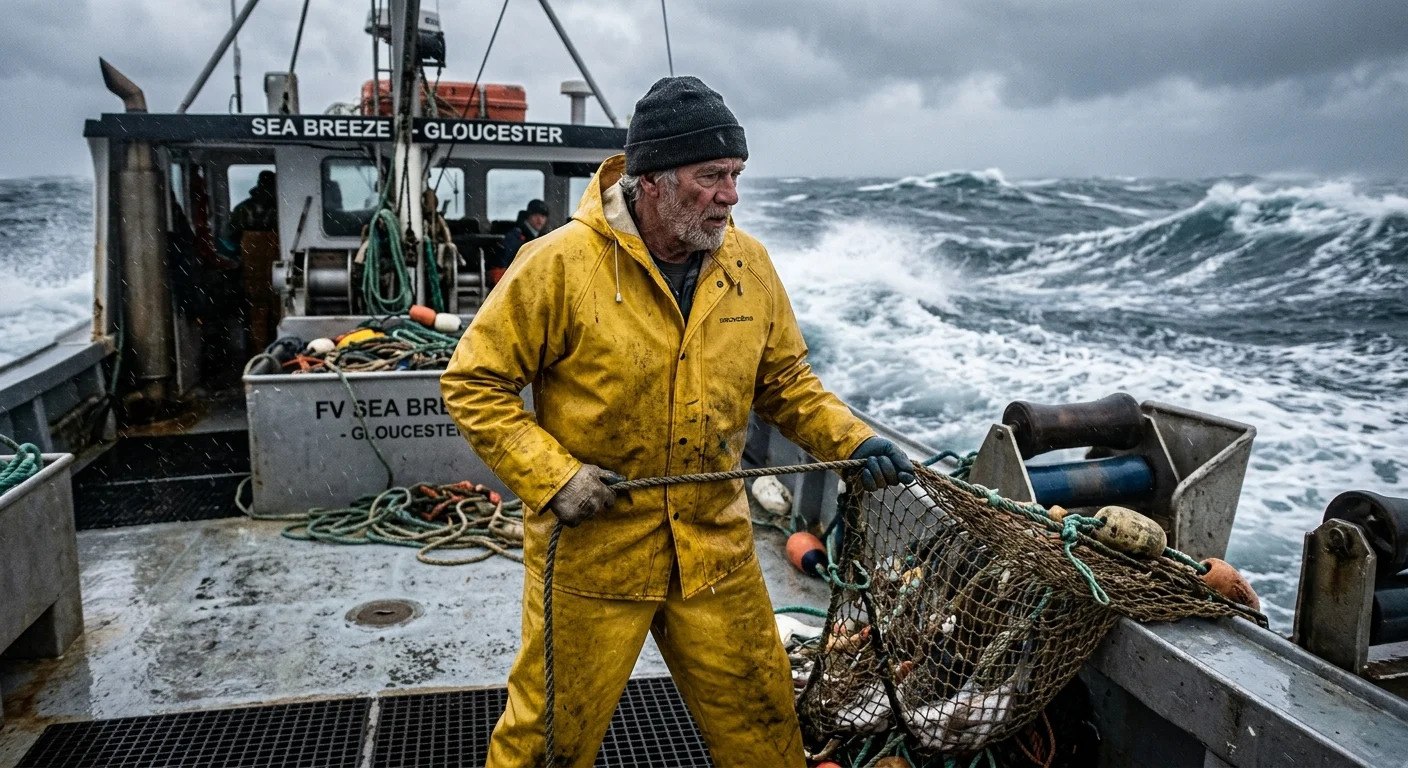
Nobody tells you this before you spend three hours soaking in a February squall twelve miles offshore: rain gear isn't a purchase — it's a bet you're placing against the ocean.Buying multiple fishing jackets at wholesale price allows fleets and serious anglers to maintain reliability and minimize risk.
After 50+ trips, the math is simple. Frogg Toggs keeps you dry on trip one. Grundens keeps you dry on trip fifty-one. That's not a small difference. It's the difference between cutting a trip short with soaked base layers, and standing at the rail in a sideways downpour, dry and focused, still working a rod.
Offshore once or twice a month? The Frogg Toggs Pilot II is a solid, defensible choice. Replace it every season. Sleep fine.
Out there every week? Stop overthinking it. The Grundens Gage Weather Watch pays for itself well before year two. By then, your third pair of Frogg Toggs is already leaking at the seams — and the Grundens is still waterproof.
The ocean doesn't negotiate. Neither should your rain gear.