Every angler knows that moment — fingers numb from the cold, a lure to tie, and gloves so bulky it feels like you're working with oven mitts. Or the flip side: bare hands scorched red after a full day on open water, wishing you'd packed UV protection. The glove question runs deeper than it looks.
Fingerless or full-finger isn't just a preference. It's a real decision. The choice shapes your fishing glove dexterity , your grip strength, your comfort level, and whether you're still casting sharp at hour six. Get it right, and you fish better all day. Get it wrong, and you're fighting your gear instead of the fish.
This breakdown covers both glove types across the scenarios that count:
Cold early mornings
Blazing tropical flats
Surf casting
Fly fishing
Everything in between
Pick the wrong glove, and it's a minor annoyance. Pick the right one, and you'll wonder how you ever fished without it.Professional fishing glove manufacturers often compare these same performance factors before developing new product lines.
Head-to-Head Comparison: Fingerless vs. Full-Finger Across 6 Key Dimensions
Six dimensions. Two glove types. No fluff.
The table below gives you a quick snapshot. But the real story is in the details — the gap between these two options shifts a lot depending on the category. Some dimensions show a small edge. Others aren't close at all.
Dimension | Fingerless | Full-Finger | Winner |
|---|---|---|---|
Tactile Sensitivity | Exceptional | Moderate | Fingerless |
Hand Protection | Limited | Full coverage | Full-Finger |
Warmth | Moderate | High | Full-Finger |
UV Protection | Partial | Complete | Full-Finger |
Grip (wet/high-load) | Reduced | Superior | Full-Finger |
Operational Dexterity | High | Limited | Fingerless |
Now let's break down what each of these means out on the water.
1. Tactile Sensitivity — Fingerless Wins, and It's Not Subtle
Direct skin contact can't be replaced. Many guides also prefer custom fishing gloves that leave the thumb and index finger exposed for better lure control.Fingerless gloves give you bare fingertips on the line. You feel the knot seat. You pick up the lure's vibration as it moves through the water. That feedback is everything for techniques like fly fishing or finesse bass work.
Full-finger gloves put a fabric layer between your skin and what you're touching. How much sensitivity you lose depends on fabric thickness. But even a thin full-finger glove dulls the signal. Try tying a #18 dry fly in a crosswind with muted fingertip feel — that loss of feedback costs you.
Practical difference:
- Knot tying with fingerless gloves? Fast and clean.
- With full-finger gloves — thick cold-weather neoprene in particular? You're adjusting your whole technique, not just executing it.
2. Hand Protection — Full-Finger, and the Gap Is Significant
This one isn't close. Full-finger gloves cover the knuckles, fingertips, and the entire top surface of your hand. Fingerless gloves protect your palm. Everything else stays open.
The risks on the water are real:
- Fish spines
- Hook points
- Braided line at full tension
- Rough gunwale edges
A hard-running fish on 50 lb braid can give you what anglers call a rope burn — a fast, deep cut across bare fingers. Full-finger gloves with reinforced palm panels deal with that. Fingerless gloves cover the palm and nothing more.
Bottom line: Handling aggressive species, fishing heavy line, or working around sharp tackle? Fingerless gloves leave your fingers open to real injury. Full-finger is the clear answer for high-contact, high-risk fishing.
3. Warmth — Full-Finger, Especially Below Freezing
Fingerless gloves keep your palm warm. Your fingers — the parts most exposed to wind and cold water — stay bare.
That works fine on a cool October morning. At 28° f on an ice fishing setup, it's a real problem. Bare fingers in sub-zero conditions lose dexterity and blood flow fast. The difference fingertip coverage makes in cold weather isn't small. It's the gap between fishing for hours and fighting frostbite after twenty minutes.
Cold threshold:
- Above freezing — fingerless often works fine
- Below freezing — full-finger gloves with neoprene, fleece, or a windproof shell are the practical call for cold weather fishing
4. UV Protection — Full-Finger Covers What Fingerless Leaves Exposed
Eight hours on open tropical flats under direct sun hits differently than most anglers expect. Full-finger sun gloves block UV across your whole hand. Fingerless leave the tops of your fingers and the back of your hand open — and those surfaces face the sun all day long.
The math is simple. No sunscreen on those exposed areas means steady, cumulative UV damage to the most vulnerable spots on your hands. For saltwater anglers spending long days in high-UV conditions, full-finger UV protection fishing gloves are the smarter long-term choice for skin health.
5. Grip — Full-Finger Has the Edge, Especially When Things Get Wet
Dry conditions? Fingerless often feel better. Bare fingertips on a cork grip or rod handle give you solid, natural purchase.
Add saltwater spray, fish slime, or heavy sweat, and that changes fast. Full-finger gloves with textured or silicone-reinforced palms hold friction where bare skin starts to slip. Surf casting, offshore trolling, any high-load line work — grip consistency matters in all of it.
Wet-condition reality: Fingerless aren't useless in wet conditions. They're just less dependable than a well-built full-finger grip fishing glove under real pressure.
6. Operational Dexterity — Fingerless, by a Clear Margin
Precision tasks favor fingerless, full stop:
- Threading tippet
- Adjusting split shot
- Working small swivels
- Tapping a touch-screen fish finder
Full-finger gloves cut the fine motor control your fingers can deliver. Thick cold-weather versions make small tackle handling feel like you're wearing oven mitts. You lose sensation fast, and your fingers just can't work as precisely.
The honest tradeoff:
- Full-finger gloves give you more protection and warmth. You trade off tactile feedback and fine-motor precision.
- Fingerless gloves give you your hands back. You trade off coverage and exposure protection.
The Honest Summary
Neither glove type wins across every category. Fingerless takes the precision-heavy situations. Full-finger takes protection, warmth, UV coverage, and wet-grip performance.
The real question isn't which glove is better overall. It's which tradeoffs fit the specific way you fish .
Which Glove Wins by Fishing Style & Scenario?
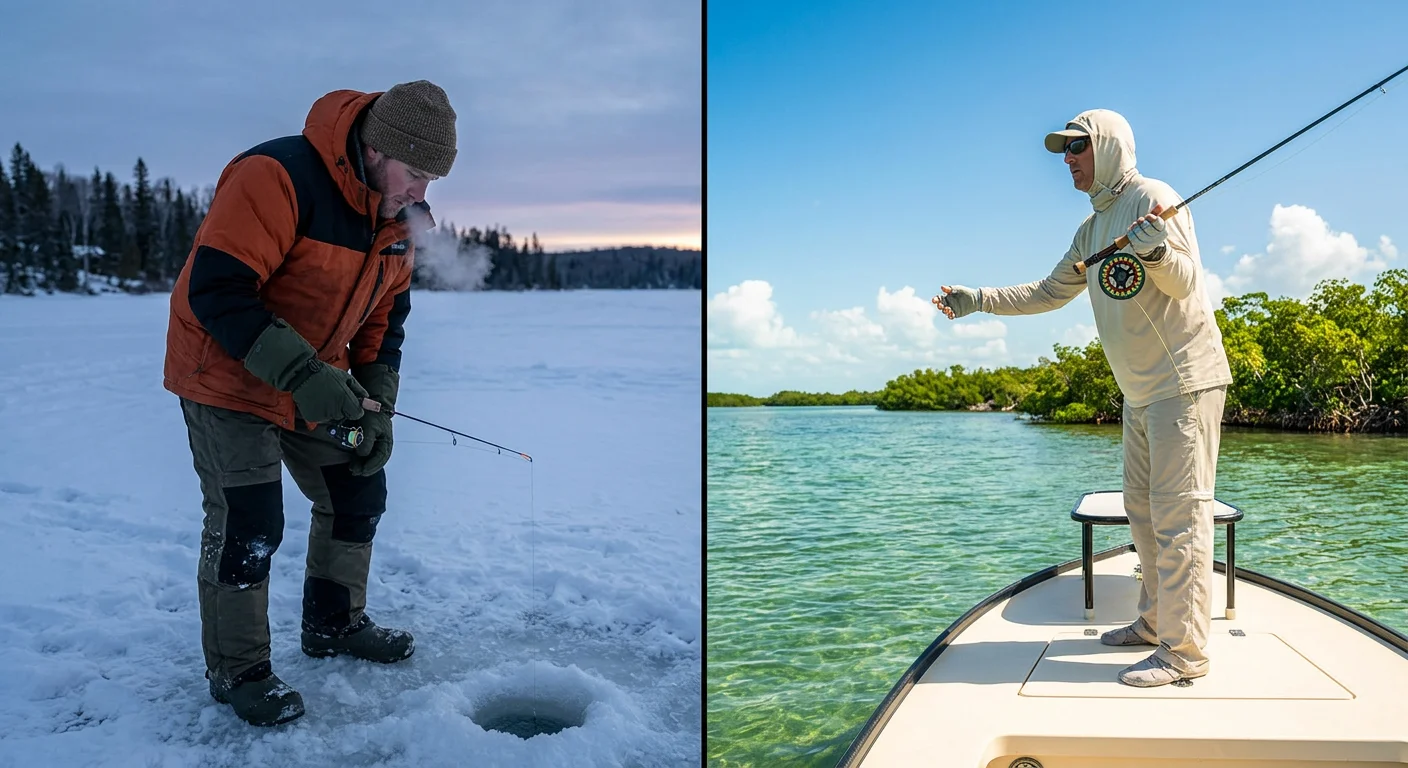
The head-to-head comparison tells you how the two gloves stack up on paper. But fishing doesn't happen on paper. It happens at 6 a.m. on a frozen lake. At noon on a tropical flat. On the back deck of an offshore boat with 50 lb braid cutting through your fingers. The scenario is everything. Here's how each glove type performs where it counts.
Fly Fishing, Light Lure, and Finesse Work: Fingerless Takes It
Fly fishing and finesse techniques are high-frequency, high-precision work. On a full day of lure fishing, you're making 500 or more casts. You're retying, adjusting, swapping. That pace demands direct tactile feedback — and fingerless gloves deliver it.
The exposed fingertip design isn't just about comfort. It's functional. Your index finger and thumb stay free. Knot-tying speed goes up fast — anglers using fine tippet (0.12–0.18 mm leaders) cut their knot time by 20–40% compared to full-finger gloves. Threading a #18 dry fly in a crosswind? That margin makes a real difference.
For material, fly anglers do well with a lightweight polyester-spandex fingerless glove in the 20–40 gram range per hand.Experienced fishing glove factories usually recommend matching fabric weight to the intended fishing style. Light enough that you stop noticing it after five minutes. For lure fishing where wet grip is a real concern, go with 1–2 mm neoprene fingerless gloves with textured palms. They give you a friction boost of 30–50% over bare wet skin. You keep the sensitivity. You don't give up the grip.
Also worth knowing: quality UPF 50+ sun protection gloves in a fingerless cut block 98% or more of UV radiation on your palm and hand dorsum. On long days out on open water, that coverage matters — even with your fingertips exposed.
Offshore, Heavy Braid, and Ice Fishing: Full-Finger Wins Clean
Move to the deep end — offshore targeting 30–80 lb fish, or ice fishing at -10°C — and the math shifts.
Heavy braid is the main reason full-finger gloves exist for offshore work. PE line at 0.20–0.30 mm diameter under 10–15 kg of load doesn't forgive bare fingers. The cut happens fast and goes deep. Full-finger gloves rated to EN388 Level 3–5 cut resistance — capable of withstanding 5–20 N of cutting force — are the right tool for that environment. Kevlar-reinforced or heavy PVC-palmed full-finger gloves handle that load without drama.
Ice fishing is a different problem. Below -5°C, bare fingertips lose functional dexterity within 5–10 minutes of cold water contact. 2–3 mm neoprene full-finger gloves , paired with chemical hand warmers (6–10 hours of sustained heat per pack), extend your workable time on the ice by 30–50%. That's not a small gain — it's the difference between a full morning session and packing up early.
On open-water offshore boats, wind compounds the problem. At 15–20 knots of apparent wind, the air temperature drops 5–10°C on your skin. Waterproof, windproof full-finger gloves keep your hands working even when the conditions are pushing back hard.
The Scenario Matrix
Stop guessing. Match your fishing to the right tool.
Fishing Style / Scenario | Recommended Glove | Why It Wins |
|---|---|---|
Fly fishing (stream/lake) | Fingerless, UPF 50+ lightweight | High cast frequency + precision knotwork; 20–40 g keeps fatigue low |
Light lure / finesse bass | Fingerless or convertible | Frequent lure changes, pliers work; fingertip feel essential |
Nearshore light spin | Fingerless | Net handling, line tension sensing; 0.20–0.28 mm line reads better bare |
Offshore heavy target (30–80 lb) | Full-finger, cut-resistant | EN388 Level 3–5 protection; reinforced palm for braid control |
Ice fishing (-5°C and below) | Full-finger insulated, waterproof | 2–3 mm neoprene + hand warmers; extends session time 30–50% |
Spring/fall with big temp swings | Convertible (flip-top) | Cover up during downtime, flip open to cast; switch takes under 3 seconds |
The Two-Glove Strategy (For Anglers Who Refuse to Compromise)
Some fishing days don't fit into one column. A morning chasing bass in 10°C air, then an afternoon on a charter boat heading offshore — that's two separate glove requirements in one trip.
The fix is simple: carry both.Many fishing apparel brands expand these combinations through OEM/ODM fishing glove services.
Combo A — Light technique + cold weather boat fishing:
- One pair of UPF 50+ fingerless sun gloves (40–80 g total) for midday casting and precision work
- One pair of full-finger waterproof insulated gloves (2–3 mm neoprene) for the early morning hours or rough-weather stretches
Combo B — Nearshore light spin + offshore heavy work:
- One pair of thin fingerless or convertible gloves for inshore finesse, net handling, and pliers work
- One pair of full-finger cut-resistant offshore gloves with reinforced palm for fighting big fish and handling braid under load
The switching routine is easy to build. Before you leave the dock, set your switchover point. Most anglers manage two or three glove changes per day — you stop noticing it once it's part of your pre-fish routine. Keep a dry backup pair sealed in a dry bag on cold or rainy days. A soaked insulated glove loses most of its thermal value. Swapping it out takes thirty seconds and costs you nothing.
The right glove for the right moment. That's the whole game.
The Convertible Option: When You Can't Choose Just One
Some fishing days refuse to stay in one column. The morning starts at 28°F — cold enough that bare fingers go numb within ten minutes of touching the water. By early afternoon, the sun is up and you're running precision work: retying, swapping lures, adjusting split shot. No single glove type covers both ends of that day.
That's the exact problem convertible gloves — also called flip-top or mitten-shell gloves — were built to solve.
Here's how the design works. The base is a fingerless glove. A hinged mitten cover sits over it, attached by Velcro, snap, or magnetic closure. That cover folds back onto the top of your hand when you need your fingers free. Flip it closed: you're in full-mitten mode, fingers sharing a single insulated heat pocket. Flip it open: fingertips exposed for knotwork, tackle adjustments, or reading a fish finder. The whole switchover takes one second, one-handed.
The sweet spot sits in a specific temperature range: -5°C to 5°C. In that window, convertibles earn their place. A 2–3 mm neoprene base with a DWR-treated shell cover and a textured PU palm delivers real warmth during the slow stretches. The moment precision work starts, you get solid tactile feedback. Typical weight runs 60–90 grams per glove — light enough that you stop noticing it between casts.
But convertibles have real limits. Below -10°C in high wind, the structural seams at the finger bases act as heat bridges. Warmth bleeds out faster than a true mitten. At that point, a thick insulated full-finger glove plus hand warmers is the smarter call. On the other end, in 30°C tropical heat, the insulated shell becomes dead weight — hot, clammy, and pointless. Those conditions call for a lightweight UPF 50+ sun glove, not a convertible.
The honest positioning: convertible gloves suit the angler who refuses to specialize. Think the guy fishing a cold spring morning into a warm afternoon, or the one whose day demands both warmth and dexterity at different hours. They're not the best mitten. They're not the best fingerless glove. They're the most practical single glove for days where the conditions won't hold still.
Key Buying Factors: What to Look for Beyond Glove Type
Glove type gets you in the right neighborhood. Material, fit, construction, and cuff design get you to the right door.
Most anglers stop at "fingerless or full-finger" and call it research. That's like buying a rod based on color. The glove type framework narrows your field. These four factors determine whether the glove you buy holds up on the water — or falls apart by the third trip.
Match the material to the conditions, not your preference.A reliable fishing glove wholesaler should clearly explain the differences between neoprene and lightweight UPF fabrics.
Neoprene is the cold-water and wet-condition material. It insulates when wet, seals out water, and holds its shape through repeated soaking. Ice fishing, surf casting in winter, working a boat deck in November — neoprene is the correct starting point. Not a preference. A functional requirement.
Synthetic UPF fabrics — lightweight polyester-spandex blends — belong in warm-weather, high-sun environments. They breathe, block UV, and dry fast. For saltwater flats fishing or long summer days on open water, these fabrics do the real work. Reinforced palm materials — textured synthetics, PU leather overlays, silicone grip dots — are the right call when your hands stay under load. Think surf casting, fighting big fish, hauling line.
Fit is a performance variable, not a comfort detail.
A glove that's too loose kills grip precision. It also lets fabric bunch at the fingertips during knotwork. Too tight, and circulation drops. Your hands fatigue faster and lose dexterity before the fish stop biting. The practical check is simple: make a full fist. No pinching across the knuckles, no slack bunching at the palm, fingertips snug but not compressed. That's the fit you want.
Construction signals durability before you ever wet the glove.
Two areas tell you most of what you need to know:
Stitching at high-flex zones — knuckles, thumb webbing, the finger bases. Double-needle stitching holds up under stress. Single-line stitching in those areas is a failure point waiting to happen.
Fingerless opening edges — on any half-finger design, the cut edge should be flat, clean, and free of loose threads. Rough edges at high-friction zones cause the glove to break down fast. This is one of the clearest build quality signals you can check before buying.
Cuff and wrist closure determine whether the glove stays put.
A glove that slips during a hard cast — or shifts while fighting a fish — is worse than no glove. It gets in your way. Look for an adjustable Velcro or hook-and-loop closure with at least 1–2 inches of overlap range. That range lets you dial in fit across different hand sizes and layering setups. Elastic cuffs work fine in light conditions. For repeated hard movements or wet hands, an adjustable wrist closure is the more reliable pick.
The fast-check sequence when comparing options:
Does the material match your main fishing condition — neoprene for cold/wet, UPF synthetic for warm/sunny, reinforced palm for high-grip work?
Does the fit pass the fist test — no pinching, no bunching, fingertips snug?
Is the stitching double-needle at flex points, with clean edges at any fingerless openings?
Does the cuff have an adjustable closure with real overlap range?
Get all four right, and the glove type you chose delivers. Miss one, and the best glove design in the world becomes a liability on the water.
Our Verdict: The Right Glove for the Right Angler
No single glove is better than all others. The right glove depends on how you fish. That's it.
Strip it down to the core logic:
Want feel and precision? Fingerless.
Want warmth and protection? Full-finger.
Want grip control on heavy fish? Full-finger.
Want dexterity on the fine work? Fingerless.
That's the whole decision. Everything else is just context.
Match the glove to the angler:
Summer lure angler — Fingerless, first choice. Less heat buildup, sharper feedback on every cast and retrieve.
Fly fisher or finesse specialist — Fingerless. The precision work demands it.
Ice angler — Full-finger, no debate. Below freezing, warmth is the one priority that counts.
Heavy-target or rough-species angler — Full-finger. Spines, rough gill plates, thick braid under load — bare fingertips don't belong there. One slip and you're dealing with a real cut or puncture.
The angler who fishes everything — Own at least two pairs. Get a lightweight fingerless for warm weather and detail work. Get an insulated full-finger for cold days and close contact with hard-fighting fish.
For clubs and retailers, comparing fishing glove wholesale prices across different materials is often more useful than comparing brands alone.
Size to fit, not to preference. Measure your dominant hand across the knuckle line. Then check the brand's size chart. Too tight cuts circulation. Too loose kills grip precision. Neither works.
The bottom line is simple: feel drives the fingerless case. Protection and warmth drive the full-finger case. Figure out which one your fishing needs most — then buy that one.
Conclusion
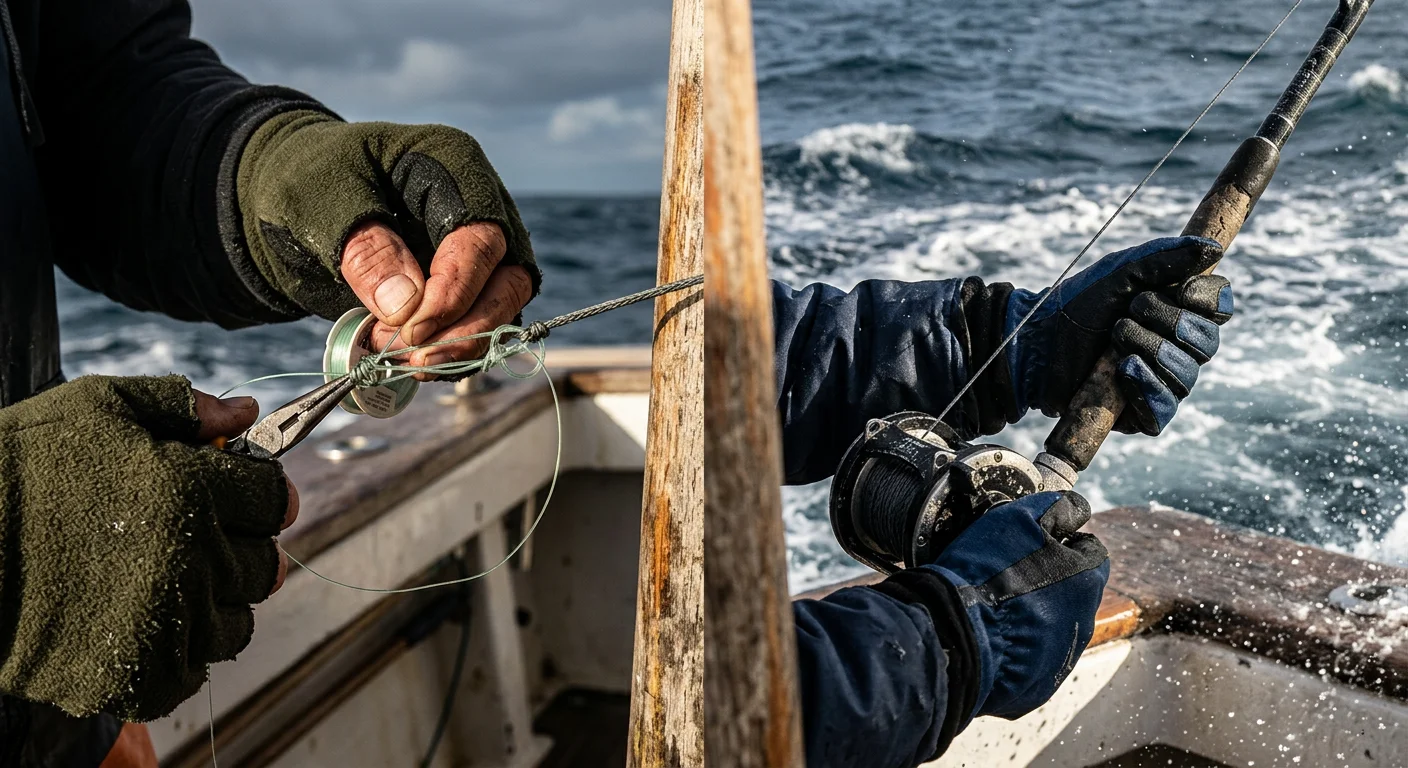
The right glove won't make you a better angler — but the wrong one will make you a worse one. Cold, clumsy, sunburned hands don't catch fish.
Here's the short version:
Fingerless gloves — great for dexterity and sensitivity. Tying knots, working lures, feeling the line. These are your go-to.
Full-finger gloves — built for brutal conditions. Cold water, harsh sun, rough-handed species that fight back hard.
Convertible gloves — can't predict the day ahead? These split the difference. No trade-offs needed.
Gear decisions feel complicated only when you're guessing. Now you're not.
Browse RunFish Apparel 's fishing glove collection and find the right pair before your next trip. The best angler hand protection is the kind you want to keep wearing all day long.
Get out there. Fish smart. Protect your hands.