Every angler who's peeled a cracked logo off a fishing shirt after one season knows this pain. You invested in custom tournament fishing shirts. You put your brand on the water. Then six months later, the whole thing looks like it survived a shipwreck.
The real question isn't embroidery or print . It's which process holds up after 50 machine washes, a full season of saltwater spray, and 200 hours baking under open-sky UV exposure.
We ran both methods through those exact conditions on polyester performance fabric. The results were more decisive — and more surprising — than we expected.
Here's what you'll get in this breakdown:
Hard durability data from real testing
A scenario-by-scenario recommendation matrix so you can match the right method to your use case
A cost-per-wear framework you can bring straight to your team or your next fishing shirts supplier conversation
Hard Data Comparison: 200H UV Exposure, Saltwater Contact & 50+ Machine Washes
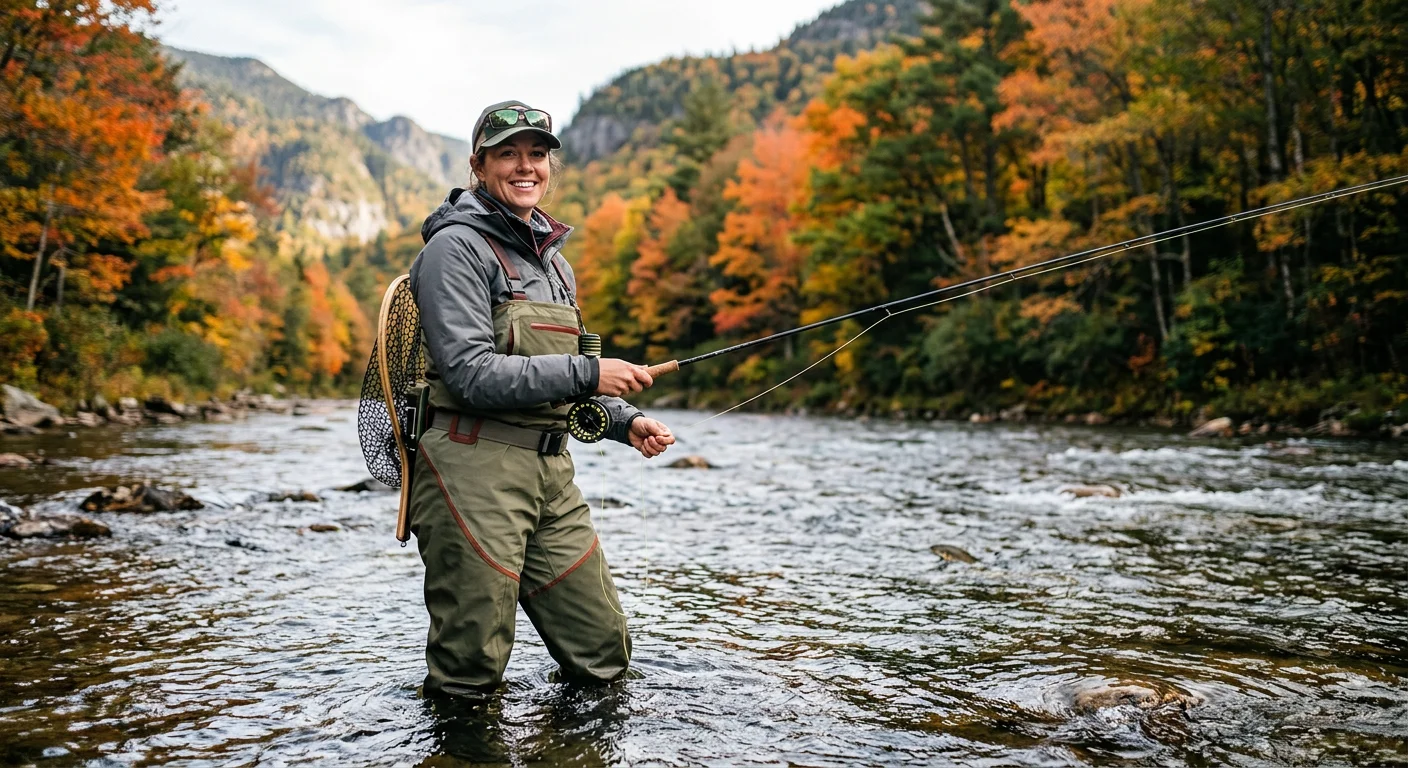
Numbers don't care about your brand loyalty. So let's start with the ones that matter.
We tested both embroidered fishing shirts and screen printed fishing jerseys under three specific stress conditions. All tests ran on 100% polyester performance fabric — the same material used in most custom tournament fishing shirts today. Not cotton. Not blends. The stuff that ends up on the water.
Here's what 200 hours of UV exposure, repeated saltwater contact, and 50+ machine wash cycles does to each decoration method.
UV Exposure: 200 Hours Under Open-Sky Conditions
200 hours is close to one full fishing season in Florida or along the Gulf Coast. That means consistent, unfiltered, relentless sun.
Sublimation printing held up well. The dye bonds into the polyester fiber at a molecular level — it doesn't sit on top. So UV degradation has almost nothing to attack. Color shift only showed up under direct spectrophotometer readings. To the naked eye at normal distance? Nothing. Fade rating: minimal.
Screen printed fishing jerseys told a different story. The plastisol ink layer sits on top of the fabric. By the 150-hour mark, micro-cracking appeared at the edges of dense coverage areas. By 200 hours, logo edges had softened and lost definition. Fade rating: moderate to significant — worse on darker base colors.
Embroidered fishing shirts were the surprise result. Polyester thread showed no meaningful color shift across the full 200-hour window. Embroidery has no ink layer for UV to break down. That's the structural advantage. UV does affect the fabric underneath the patch over time — prolonged exposure can weaken it. But the logo itself? UV-resistant. Fade rating: negligible.
Saltwater Contact: Spray, Splash & Soak Cycles
Saltwater is not just water. The real damage comes from salt crystallization during drying. Salt works its way into adhesive layers, ink bonds, and thread fibers with each evaporation cycle.
Screen print and heat transfer fishing gear took the most damage here. Salt crystal formation speeds up delamination between the ink film and fabric surface. We ran repeated saltwater spray followed by air-dry cycles across 30 sessions. Plastisol-based screen prints showed edge lifting on 1 in 3 tested logo samples . Heat transfer performed worse — full corner separation appeared in some samples by cycle 20.
Sublimation printing fishing apparel showed zero delamination. There's no adhesive layer to fail. No film to separate. Salt has no real surface to attack. For offshore and nearshore fishing, this is the biggest practical advantage sublimation has over any other method.
Embroidery thread held up strong in saltwater conditions — with one real caveat. Salt residue builds up beneath embroidered patches on performance fabric. Don't rinse your shirts after use and that trapped moisture accelerates fabric breakdown in the patch area over time. The thread stays intact. The fabric under it suffers. Rinse your shirts. This matters more than most people expect.
50+ Machine Washes: Where the Long Game Gets Decided
Fifty washes is about 12–18 months of regular use for a working fishing guide or charter crew member. This is where cost-per-wear lives or dies.
Decoration Method | Color Retention at 50 Washes | Structural Integrity | Failure Mode |
|---|---|---|---|
Sublimation | 95%+ | Excellent | Fabric wears out before print does |
Screen Print | 70–80% | Moderate | Edge cracking, ink flaking on flex points |
DTG (Direct-to-Garment) | 60–75% | Fair | Significant fade, surface pilling interaction |
Embroidery | 98%+ | Excellent | Thread snag risk if stored wrong |
Heat Transfer | 55–65% | Poor | Peeling, cracking, full delamination |
Two things jump out of that table right away.
First — wash durability for embroidered logos is unmatched. The thread doesn't fade. The structure doesn't break down in water. The one real failure mode is mechanical snagging. That's a storage and handling issue — not a washing issue.
Second — DTG printing falls short of its own reputation in this context. It looks great fresh out of the box. On polyester performance fabric, the ink sits on a surface that resists absorption. Wash durability drops faster than it would on cotton. Got sold DTG for your polyester fishing shirts? That decision is worth a second look.
The bottom line: for UV resistant fishing shirt printing across all weather and wash conditions, sublimation printing and embroidery sit in a separate durability tier from every other method. Screen print holds a fair middle ground for controlled, low-UV environments. Heat transfer and DTG on polyester trail the field by a clear margin.
Printed Process Breakdown: Sublimation vs. Screen Print vs. DTG on Performance Fabrics
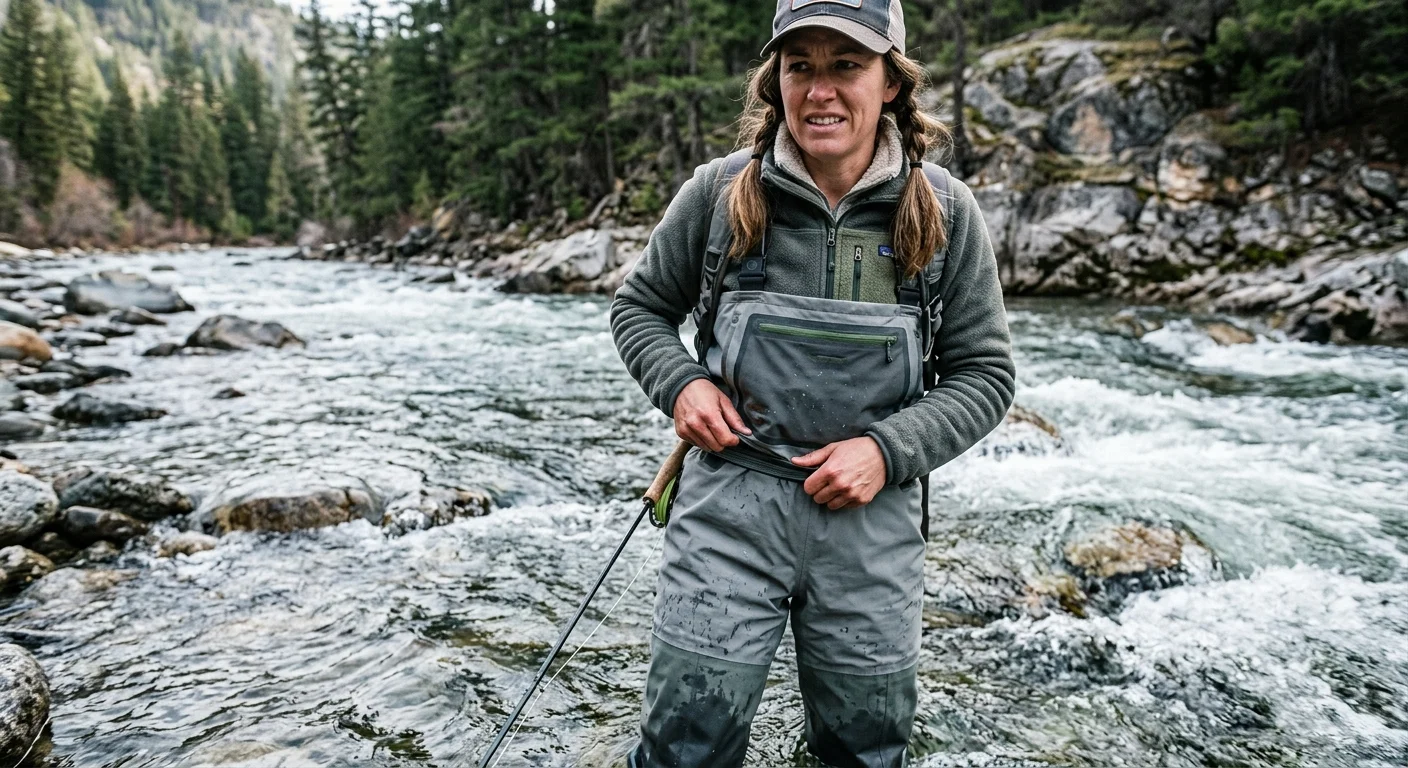
Three printing methods. One shared label: "custom printed fishing shirts." The outcomes, though, are worlds apart once you put them through real-world conditions.
It all comes down to the molecular level — how ink bonds to fabric decides everything that follows.
Sublimation: The One That Becomes the Fabric
Sublimation dye doesn't coat polyester. It becomes it.
Under heat and pressure, the dye turns to gas and bonds directly into the fiber structure. No surface layer. No adhesive. Nothing to crack, peel, or lift. Salt spray hitting you every twenty minutes offshore? That molecular bond keeps working quietly in the background. No other print method can match it.
The performance fabric advantage is real. Polyester and spandex blends — the exact materials in most custom tournament fishing shirts — are where sublimation does its best work. Colors stay embedded through 100+ washes. The hand feel stays smooth. For anglers, here's what matters most: the fabric's breathability and UPF protection stay fully intact . There's no ink layer sitting on top of the weave to block airflow.
One firm limit — sublimation works on light-colored polyester fabrics only. Dark base colors block the dye transfer. Cotton is a dead end.
Screen Print: Strong Where the Conditions Are Controlled
Screen printing works on a different principle. Plastisol inks cure on top of the fabric surface. This forms a raised layer that holds bold, vibrant colors across large production runs.
On performance synthetics — polyester, nylon, technical blends — that cured ink layer grips well. For simple designs with one to four solid colors, screen printed fishing jerseys hold up well at scale. Unit costs drop at quantities of 100 or more. That makes it a smart pick for charter fleets or tournament teams placing large orders with clean, simple logo work.
The surface layer does have limits, though. Dense coverage areas flex with the fabric on every cast, every movement. Over enough cycles, micro-cracking starts at those spots. That's why screen print falls short of sublimation in high-UV, high-wash environments over the long run.
DTG: The Small-Run Option That Underdelivers on Polyester
DTG printing has earned its place — on cotton. Photorealistic detail, unlimited color gradients, no minimum order quantities. For cotton apparel, those strengths are genuine.
On polyester performance fishing fabric, the story changes.
Water-based DTG ink is built to absorb into natural fibers. Polyester pushes back against that absorption — that resistance is exactly what makes performance fabric moisture-wicking. So DTG ink ends up sitting on the surface of polyester fishing shirts rather than bonding into them. Independent testing shows degradation runs about 3 times faster on polyester compared to sublimation under the same wash conditions.
Got a small order of ten shirts you'll wear a couple of times a season? DTG can work. But for UV-resistant fishing shirt printing that needs to survive a full season on the water — repeated washes, sun exposure, salt contact — polyester and DTG are a poor match. Plain and simple.
Sublimation | Screen Print | DTG | |
|---|---|---|---|
Durability on Polyester | Highest — permanent molecular bond | High — excellent on bulk orders | Moderate — fades faster on poly |
Wash Resistance | 100+ washes, no degradation | Strong, minimal fade | Drops faster vs. other methods |
Fabric Feel | Softest — ink is part of fiber | Raised surface layer | Soft but sits on surface |
Color Range | Full color, vibrant gradients | 1–4 solid colors | Unlimited, photorealistic |
Best Order Size | Any quantity (polyester only) | 24+ pieces for best value | Under 12 pieces |
Ideal Use Case | Full-coverage tournament jerseys | Simple logo, high-volume fleet | Small runs, cotton-based shirts |
The bottom line for polyester fishing shirt decoration: sublimation leads where durability is non-negotiable. Screen print earns its spot in bulk, simple-logo orders. DTG belongs on cotton — not on the performance fabrics that most serious fishing apparel is built from.
Scenario-Based Recommendation Matrix: Offshore, Freshwater & Tournament Routing
The data tells you what each method can survive. What it doesn't tell you is which method belongs on your shirts — for your environment, your use pattern, your team.
The right answer depends on where you fish, how often you wear it, and what you want to say when you show up on the water. So here's a decision framework built around the four scenarios that matter most.
Offshore & Saltwater Environments
Salt is the harshest test for fishing apparel. It doesn't just wet the fabric. It crystallizes inside every layer as it dries. Then it breaks down adhesives, bonds, and threads from the inside out.
Primary method: Full dye sublimation.
The molecular bond that makes sublimation UV-resistant also makes it salt-proof. There's no adhesive layer for salt crystals to attack. No ink film to lift. For offshore and nearshore fishing, that structural advantage is hard to beat.
Pair it with UPF 50+ performance polyester — the kind that absorbs 0.4% of its weight in water versus cotton's 7%. You get a shirt that dries fast, blocks UV, and holds its graphics through a full season of spray and rinse cycles.
Secondary method: Embroidery for chest logos under 3"×3".
Heavy embroidery thread handles abrasion from tackle and rail contact better than any printed surface. Keep it small. Restrict placement to the chest or pocket zone. Rinse your shirts after every use. Salt buildup under the patch will damage the fabric over time, even if the thread itself holds.
Avoid: Screen print. Salt crystallization eats through the adhesive layer after repeated exposure. It's not a question of if — just when.
Freshwater & Tournament Team Sets
Tournament fishing has one requirement that casual fishing doesn't: every shirt on the team has to look identical. Sponsors notice color drift. Judges notice. Cameras notice.
Sublimation is the one decoration method that guarantees consistent color across a full team set — chest, back, and sleeves all at once. It supports full sponsor logo placement across every panel. The lightweight polyester breathes through long competition hours in variable freshwater climates.
Recommended setup:
- Sublimation for body, sleeves, and all sponsor panel zones
- Embroidery on cap front panels and sleeve hems for a tactile finish
Cap embroidery adds a professional tier that sublimation alone can't replicate. The raised texture signals craft and attention. For tournament teams trying to look like they belong at the top of the leaderboard before the first cast, that detail carries real weight.
Screen print works for single-use event batches — think one-day tournaments, not multi-season rotation. For bulk orders of 100+ units, it's a cost-effective option. Just don't expect those shirts to look sharp two seasons from now.
Charter Guide & Daily-Wear Rotation
Working fishing guides wear their shirts harder than anyone. Multiple trips per week. Repeated washing. Client-facing every single day. This is where the hybrid approach earns its place.
The setup that works:
Embroidered chest logo (under 3"×3") — gives clients the tactile signal that tells them you're a professional operator. Heavy thread survives 500+ washes under proper care: cold water, gentle cycle, inside-out, air dry flat.
Sublimated back panel — full boat graphic, species illustration, operator branding. Holds up through repeated salt and freshwater rinse cycles without cracking or fading.
One without the other leaves something on the table. Embroidery alone limits your design space. Sublimation alone drops that prestige signal at the chest. Together, they cover every angle of durability and brand presentation.
Care protocol that protects both methods:
- Wash inside-out, cold water, gentle cycle, mild detergent
- Air dry flat — no direct sunlight
- Store on padded hangers to preserve garment shape
Personal Custom Fishing Apparel
For individual anglers building a personal brand or a gift-quality piece, the choice is straightforward.
Choose sublimation for zero-maintenance longevity. Full-color custom designs of fishing apparel, unlimited motifs, no cracking or fading — no matter how often it goes through the wash.
Choose embroidery for the heirloom feel of a long-sleeve fishing shirt with a single chest logo or personal initials. It suits lower washing frequency — occasional charter wear, not a five-day-a-week rotation.
Skip screen print for personal apparel. The adhesive breaks down after standard home washing. For a single-person investment, the value just isn't there.
Quick-Reference Routing Matrix
Scenario | Primary Method | Secondary Method | Avoid |
|---|---|---|---|
Offshore / Saltwater | Full sublimation | Embroidery (chest, <3"×3") | Screen print |
Tournament Team Sets | Full sublimation | Embroidery (caps, sleeve hems) | DTG on polyester |
Charter Guide / Daily Wear | Hybrid: embroidery chest + sublimation back | — | Heat transfer |
Personal Custom Apparel | Sublimation | Embroidery (minimal placement) | Screen print |
The right method isn't the most expensive one or the most impressive one on paper. It's the one that still looks right after the conditions you fish in have done their worst.
Design Scale & Fabric Matching: Small Logos vs. Large Graphics on Polyester Performance Gear
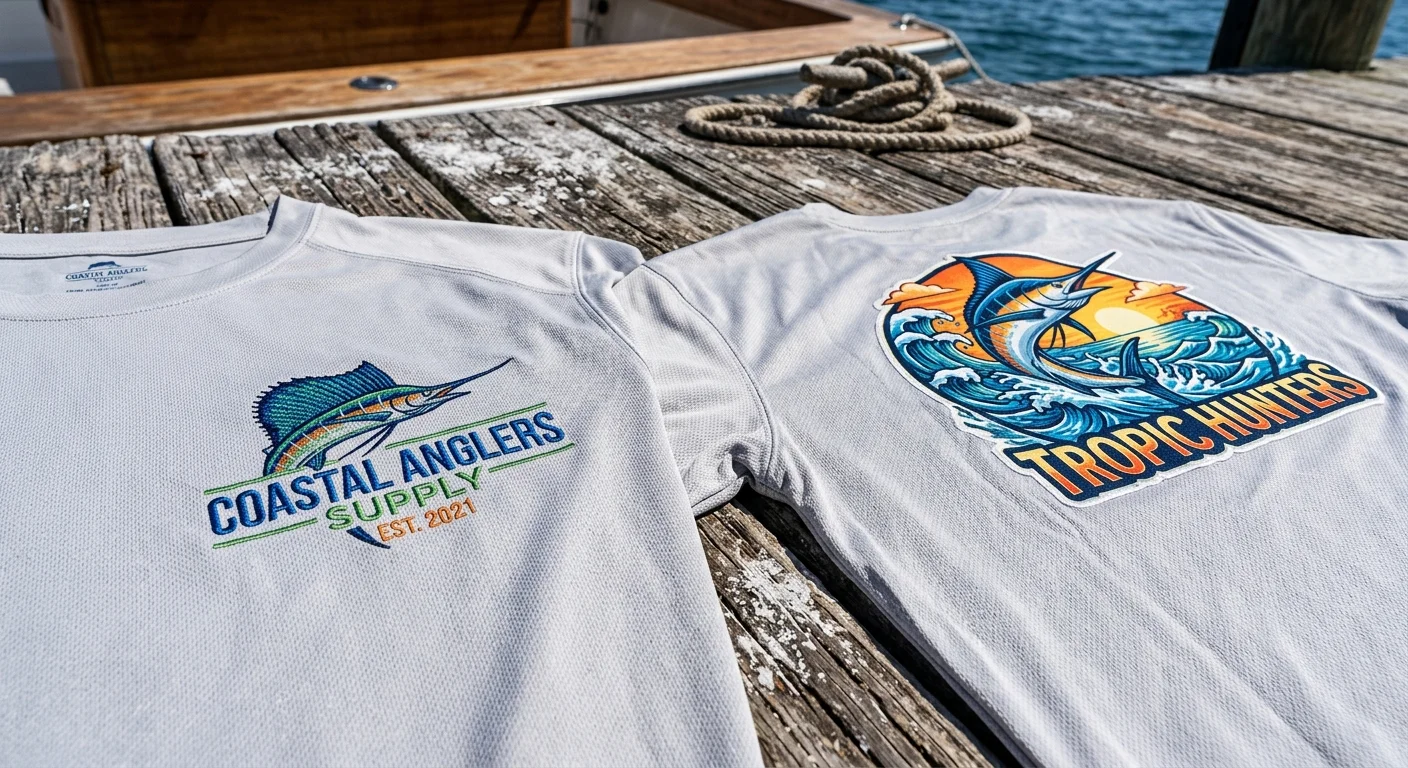
Size dictates everything here. Not just how your shirt looks — but which decoration method can actually do the job without damaging the fabric underneath.
There's a clean dividing line at 4 inches. Below it, above it, and at full coverage — each zone has a different answer.
Under 4 Inches: Embroidery Owns This Space
Small chest logos, sleeve initials, collar branding — anything under 4" wide belongs to embroidery on polyester performance fabric. The thread anchors well, holds its structure through repeated washes, and delivers that tactile premium feel no printed method can match at small scale.
A few specs worth knowing before you place your order:
Minimum height: 0.75" for text or detail elements to stay legible
Needle gauge matters: Use a 65/9 needle on polyester to avoid tearing the weave
Complex designs at small scale need thread weight adjustment — fine detail collapses if the thread is too heavy for the stitch density
On poly-spandex blends , drop your embroidery dimensions 5–10% from your original artwork. Thread tension fights against four-way stretch. Size it down, and the garment bounces back after each wear.
4 to 12 Inches: Screen Print or Heat Transfer
Mid-range graphics — multi-sponsor panels, bold team chest logos, numbered backs — fit into screen print or heat transfer range. For chest placement, 6–10" gives strong visual impact. On stretch fabrics, use the same 5–10% reduction rule.
Heat transfer is a solid choice for smaller production runs where sublimation minimums don't make sense.
Over 12 Inches or Full Coverage: Sublimation
Full-back graphics, all-over-print (AOP) sleeves, seamless side panel branding — sublimation is the one decoration method that holds up at this scale on polyester performance fabric. Everything else fails for a structural reason: you cannot embroider a 14-inch graphic onto a moisture-wicking jersey without locking the fabric stiff and killing its breathability.
Sublimation bonds at 100% efficiency across the full panel. Moisture pathways stay open. Stretch recovery stays intact. Sleeve AOP can run up to 20×12" without adding a gram of weight or restricting movement.
On proportions: keep logos occupying 60–75% of the available print zone — about 8–9" on a 12" chest panel. That's what makes the design read sharp at six feet away, which is real-world viewing distance on the water.
Quick-Reference by Fabric Type
Fabric | Under 4" | Over 4" |
|---|---|---|
100% Polyester (Quick-Dry / UPF 50+) | Embroidery — durable, slight stiffness at patch | Sublimation — zero weight, preserves wicking |
Poly-Spandex (4-Way Stretch) | Embroidery with 5–10% size reduction | Sublimation — screen/DTG ink fractures on flex |
Cotton-Poly Blend (50/50) | Embroidery — anchors well | Screen print — sublimation colors mute below 65% poly |
This isn't about aesthetic preference. It's dimensional logic. Match your artwork scale to the right method, and the fabric performs the way it was built to.
Cost-Per-Wear Framework: Initial Unit Price, Lifespan Projection & Team ROI Calculation
Most teams do the math on custom fishing shirts wrong. They look at the invoice total and stop there. They never calculate the number that matters.
Cost-per-wear. That's the number that tells the truth.
The formula is simple:
CPW = Item Price ÷ Estimated Number of Wears
Take a $45 screen printed fishing jersey. It cracks and fades after 50 washes. You get 50 wears before it's too embarrassing to put on. CPW: $0.90.
Now take a $75 sublimation fishing shirt. Wear it once a week for three seasons — about 150 wears total. That comes out to $0.50 per wear. That's 44% lower cost on a shirt that cost 67% more at checkout.
The upfront price and the real price are two different numbers. Very different.
Lifespan Projection by Decoration Method
Here's how the numbers compare across decoration methods, based on real wear and wash performance:
Decoration Method | Avg. Unit Price (Team Order) | Estimated Usable Wears | Cost-Per-Wear |
|---|---|---|---|
Sublimation | $65–$85 | 150–200 | $0.33–$0.57 |
Embroidery (chest logo) | $55–$75 | 200–250+ | $0.22–$0.38 |
Screen Print | $35–$55 | 50–80 | $0.44–$1.10 |
Heat Transfer | $30–$45 | 30–50 | $0.60–$1.50 |
DTG on Polyester | $40–$60 | 40–60 | $0.67–$1.50 |
Heat transfer and DTG on polyester fall short on durability. On top of that, they're the most expensive options per real use. Screen print sits in the middle. Embroidery and sublimation deliver the lowest CPW across a full season rotation.
Team ROI Calculation: The Number You Bring to Your Captain
Run this for a 12-person charter crew. Shirts worn twice a week across a 26-week season:
Total annual wears per person: 52
Total team wears per year: 624
Option A — Screen Print at $40/shirt:
- Year 1 cost: $480
- Shirts degrade by week 30 — reorder required for Year 2
- 2-year total: $960
Option B — Sublimation at $75/shirt:
- Year 1 cost: $900
- Shirts hold through 150+ wears — no reorder needed in Year 2
- 2-year total: $900
Same two-year spend. Except one option has your crew showing up in cracked logos by midsummer.
Stretch it to three seasons and the gap grows fast. Screen print at two replacements per season runs $1,440 . Sublimation at one purchase holds at $900 . That's $540 back in the budget — enough to cover a full set of embroidered caps for the whole team.
This framework scales the same way for a 6-person tournament squad or a 30-boat charter fleet. A higher upfront investment in UV-resistant fishing shirt printing and wash-durable embroidered logos does not cost more over time. It costs less. Plus, the savings compound every season you skip a reorder.
Field-Tested Maintenance Protocols: Extending Embroidery & Print Lifespan in Marine Environments
The best decoration method in the world fails fast if you treat it wrong after every trip. Durability data assumes correct care. Skip the protocol and you're cutting your shirt's lifespan in half — embroidered or sublimated, it doesn't matter.
Here's what works in a marine environment.
Saltwater Decontamination: The Step Most Anglers Skip
Salt doesn't damage fabric while it's wet. It damages fabric as it dries. Crystals form inside thread fibers, under embroidered patches, and between ink layers. That crystal buildup is what drives breakdown.
The fix is simple and non-negotiable: rinse with fresh water right after every saltwater trip. Not the next morning. Do it within hours of leaving the water.
This goes for embroidered fishing shirts and sublimation printing fishing apparel alike. Both take on salt buildup — just in different spots. Embroidery traps residue beneath the patch. Printed surfaces trap it at the ink boundary.
After rinsing, don't hang your shirts in direct sunlight to dry while still wet. UV exposure on wet fabric breaks down polymers faster than dry exposure does.
Wash Protocol by Decoration Type
For embroidered logos:
- Turn the garment inside out before every wash. This shields the stitch surface from friction against the drum.
- Use cold water, gentle cycle, and mild detergent — no bleach, no enzyme-based cleaners.
- Air dry flat, out of direct sunlight.
- Need to iron? Place a cotton cloth over the embroidered area first. Polyester thread melts under direct iron contact.
For sublimation-printed shirts:
- Normal or gentle machine wash works fine — the dye bond doesn't need special handling.
- Skip the high-heat dryer. Heat reactivates plastisol in screen prints. That causes tackiness and speeds up surface wear.
- Line dry in shade for the longest life.
Storage: The Overlooked Half of Garment Lifespan
How you store fishing shirts between trips matters more than most people realize.
Use padded hangers — wire hangers warp collar zones and put stress on shoulder seams over time.
Store in a cool, low-humidity spot. Heat and moisture wear down adhesive and color quality in printed garments.
Fold embroidered garments with the logo zone supported. Crease pressure warps the thread structure at dense stitch areas over repeated folds.
Brush loose debris from embroidered zones with a soft brush. Lint and salt caught in thread gaps speed up fiber wear.
The protocol isn't complicated. But skipping any part of it builds up slowly across a season — and shows up as cracked logos and worn-out thread right when your brand needs to look sharp on the water.
Conclusion
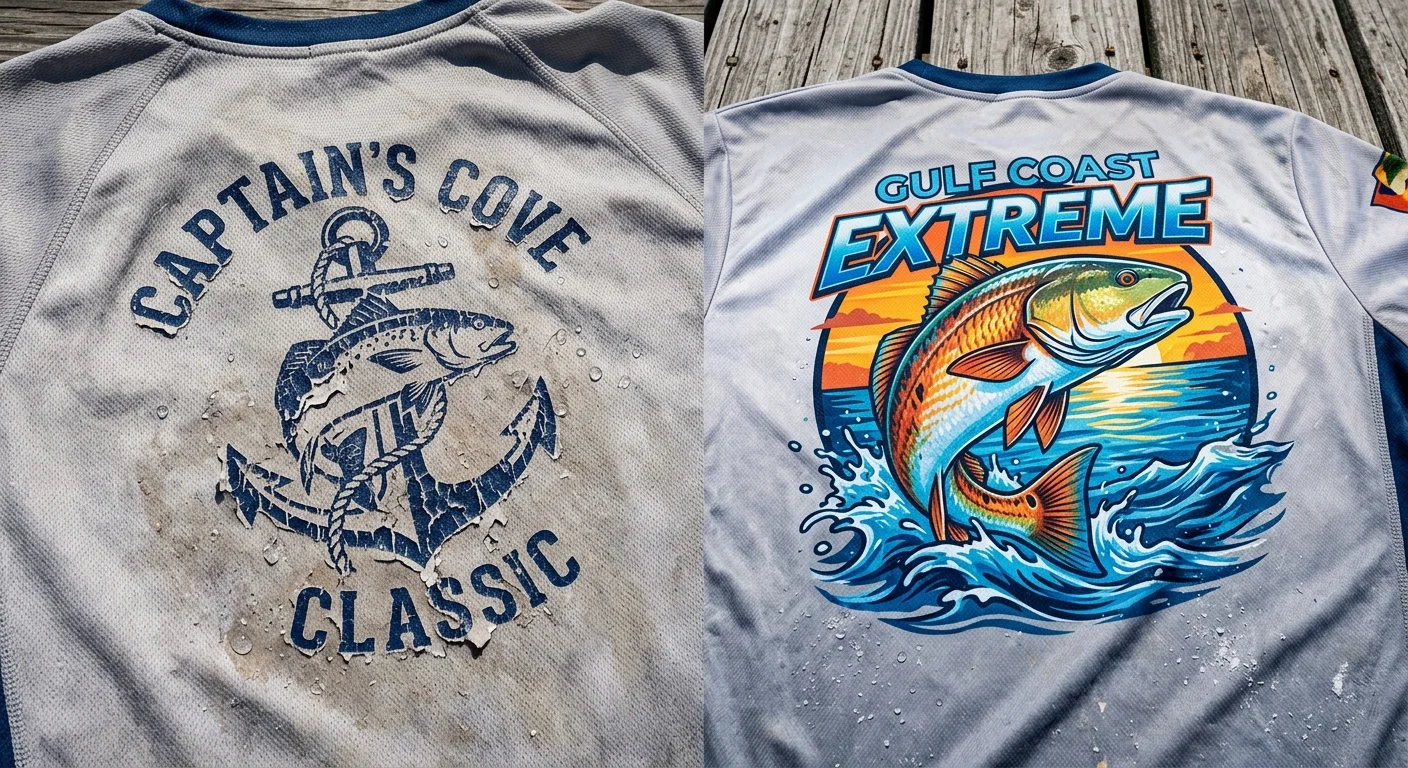
After 50 washes, 200 hours of UV punishment, and a full season saltwater-side, the verdict isn't about which method is better . It's about which one fits your specific application .
Small chest logo on a guide's daily-wear shirt? Embroidery wins by a wide margin. Full-back tournament graphics on sublimated polyester? No thread in the world competes with that color lock.
Match the right decoration method to the right scenario. Your cost-per-wear math shifts — and so does how your brand holds up after a hundred days on the water.
Don't let another batch of cracked, faded jerseys become an expensive lesson.
Use the decision matrix and cost framework in this guide to lock in your choice. Then, whether you're sourcing locally or working with experienced custom fishing shirts manufacturers, bring those specs to your decorator before your next order.Your shirts should still look sharp when the fish stories get told years from now.