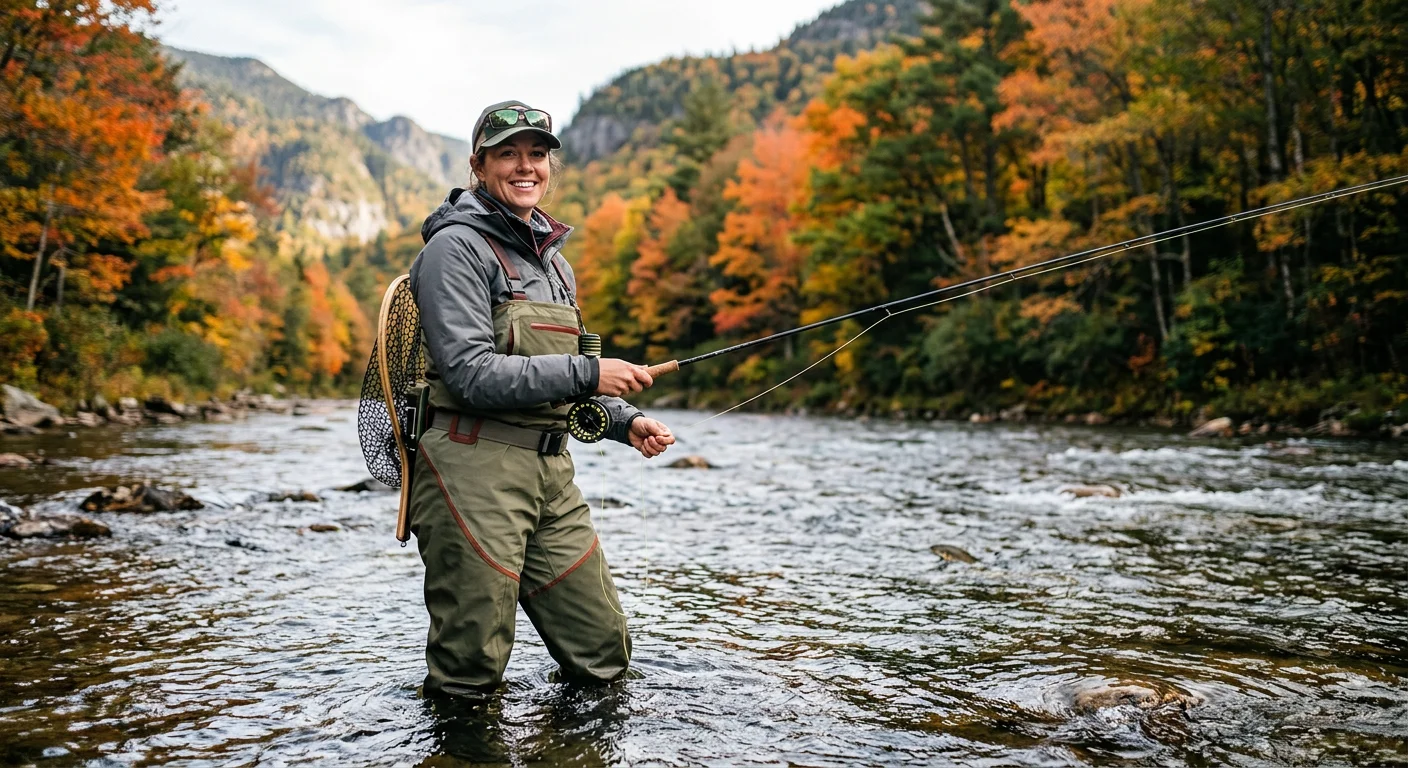
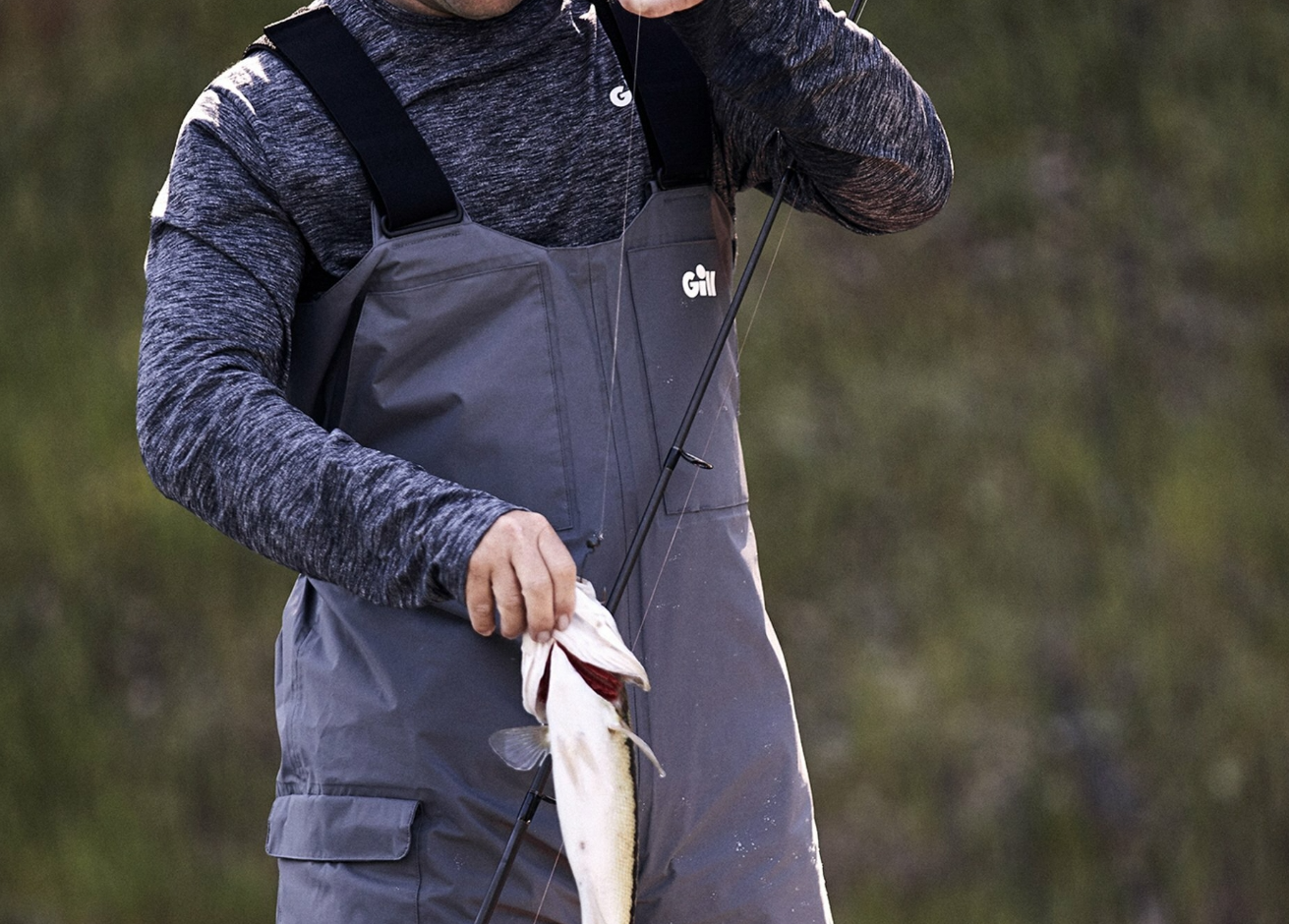
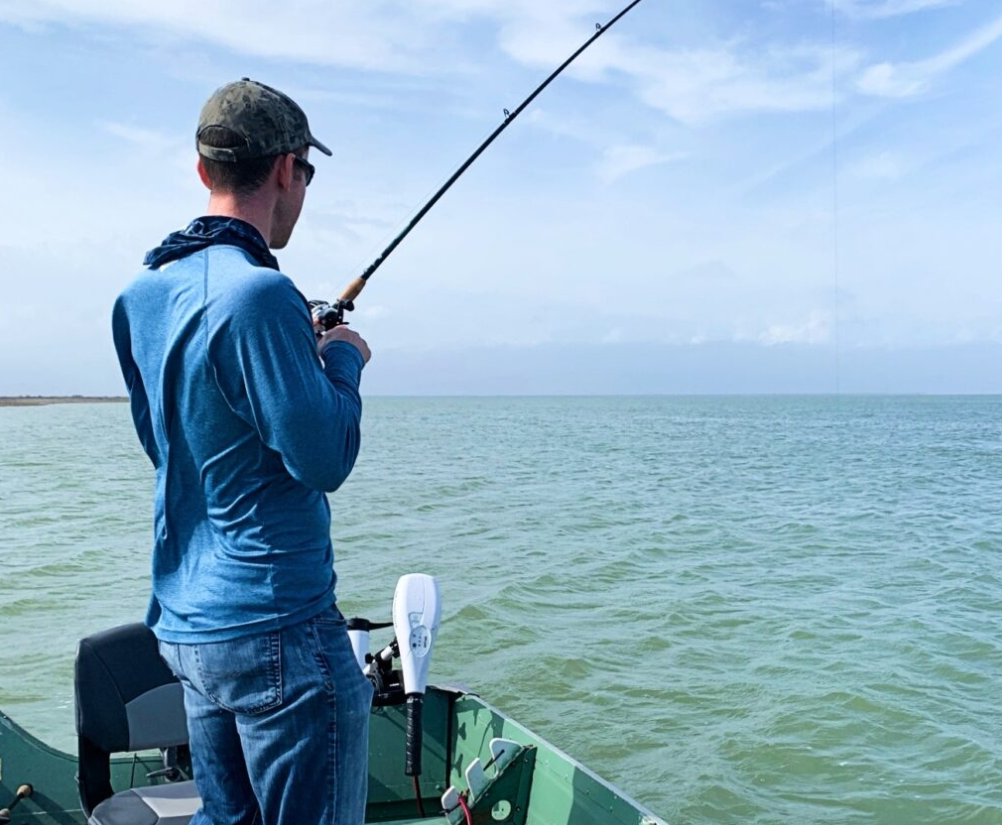
It was 9 a.m. on a Tuesday in late July. I was already sweating through my shirt before my first cast. Air temp: 94°f. Humidity: 91%. Location: a tidal flat outside Corpus Christi where the sun doesn't negotiate.
I had a Columbia PFG on my back and a HUK stuffed in my dry bag. Over the next three days, I wore both into the ground. One question drove the whole test: which shirt stops feeling like a second skin first?Anglers sourcing performance apparel from reliable fishing shirts suppliers should pay close attention to how fabrics behave in extreme humidity.
Standing at checkout, trying to pick between these two brands? Skip the spec sheets. I've done the suffering for you. Here's what your body will feel like six hours into a full-sun session — and which moisture-wicking fishing shirt earns the right to your back.
72-Hour Humid Heat Field Test Protocol & Scoring Metrics
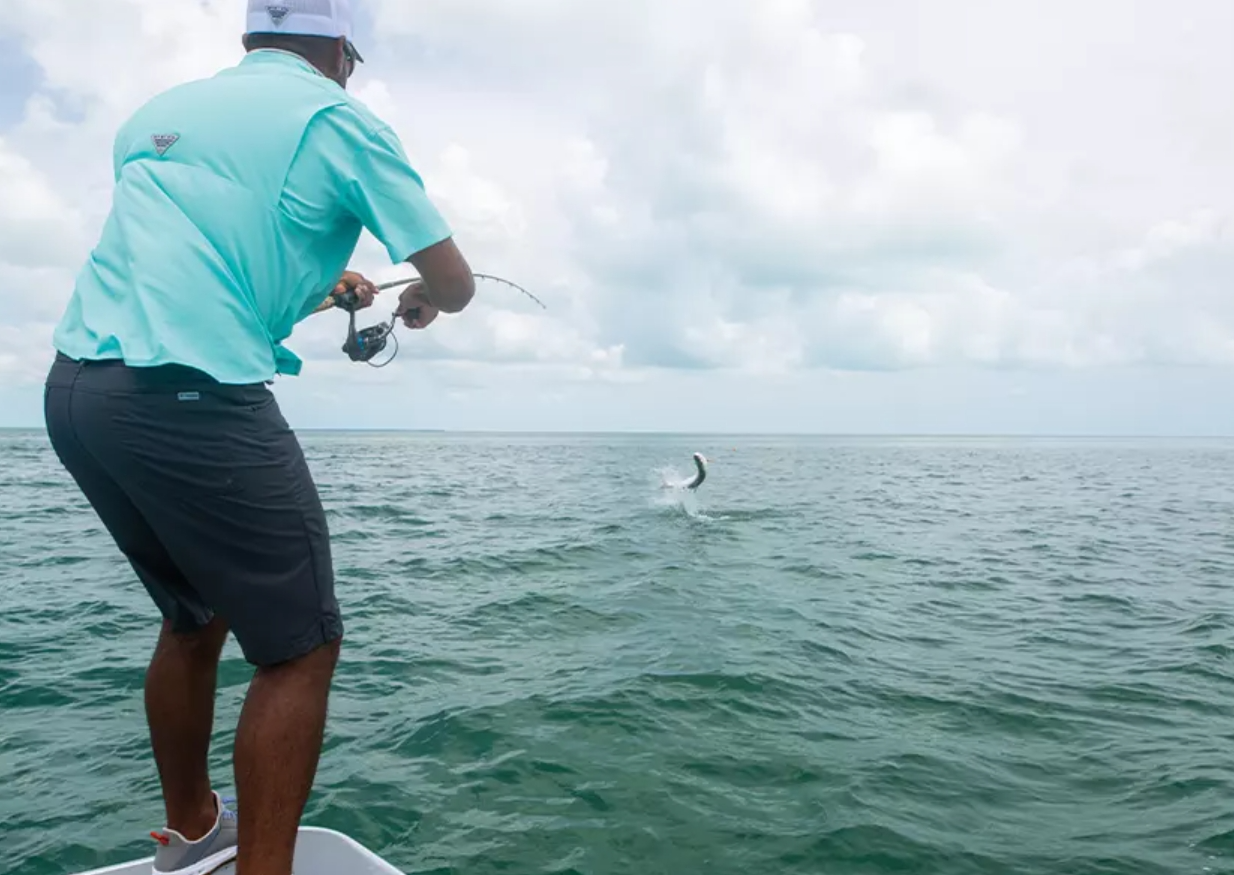
Three days. Three outings. One hard question — answered with timestamps, not opinions.
This wasn't a casual wear test. The protocol matched what your body goes through on a real Gulf Coast session — sustained humid heat, salt air, full sun with no relief. Conditions stayed between 93–95°F with 80–90% relative humidity across all three outings, split between tidal marsh and shallow bay. Each session ran 4 to 6 hours . No base layers under either shirt. Hydration and electrolyte intake stayed the same across every outing. Both shirts tested in light colorways to remove solar load as a variable and focus on what the fabric itself delivers.
The alternating wear structure mattered too. Columbia PFG one outing, Huk the next. The order rotated across sessions to prevent sequence bias from shaping perception.Leading fishing apparel manufacturers use similar field-testing methods to validate moisture-management performance.
What Got Measured (And How)
Every dimension scored on a 1–10 scale , averaged across all three outings:
Breathability — heat buildup versus airflow sensation
Moisture-wicking performance — how fast sweat spreads and moves away from skin
Dry time / skin-contact feel — back and underarm panels timed apart, measured from sweat peak to touch-dry
Cling factor — checked at 30 min, 60 min, peak saturation, and outing's end
UPF 50 solar comfort — perceived radiant heat load, not just UV rating. Both shirts carry the UPF 50 label, so the comfort difference is what this measures
Anti-odor longevity — tracked across all three outings, not just the first
Price-to-value ratio — performance earned per dollar, not MSRP alone
Weighting That Reflects Real Priorities
Raw scores don't carry equal weight. In humid heat, dry time and wicking make or break a shirt. Everything else is secondary:
Metric | Weight |
|---|---|
Breathability | 20% |
Moisture Wicking | 20% |
Dry Time | 20% |
Cling Factor | 15% |
UPF Comfort | 10% |
Anti-Odor | 10% |
Price-to-Value | 5% |
The Wind Variable Nobody Talks About
Airflow conditions were logged at every checkpoint. This detail shifts results more than most people expect. At 0–5 mph (anchored, drifting, dead-air marshes), evaporative cooling drops to near zero. At 10–15 mph (running between spots, open bay), the drying rate picks up fast. Both shirts went through both wind bands. A shirt that breathes well at speed but turns into a wet compress at rest is half a solution at best.
The winner here isn't the shirt with the better marketing. It's the one with faster underarm and back touch-dry times , less cling at the 60-minute checkpoint, and odor that stays quiet through outing three.
Fabric Technology Breakdown: Omni-Wick/Omni-Shade vs Huk ICON X
These two systems don't just differ in marketing language. They disagree on a basic level about what sweating should feel like .
How Columbia Omni-Wick Works
Columbia's Omni-Wick isn't magic yarn. It's a chemical wicking finish applied to polyester knit . Untreated polyester won't pull moisture anywhere on its own. The finish creates capillary action — drawing sweat away from your skin and spreading it across a larger fabric surface. That spread speeds up evaporation.
In controlled lab conditions (50% RH, 20–25°C), polyester knits with this finish go from saturated to touch-dry in 15–25 minutes . Push humidity to 90%+, and that window stretches to 30–45 minutes or longer . Air can only hold so much moisture. Past that point, the math stops working in your favor.
Omni-Shade handles the solar side through engineered yarns and weave density. The PFG line holds at UPF 50+ , blocking 98% of UV radiation. The Sun Deflector variant adds titanium dioxide dots on the fabric surface to deflect visible light — not just UV. That deflection drops your perceived temperature under direct sun.
What Huk's ICON X Does Differently
Huk's ICON X uses I.C.E. (Internal Cooling Element) yarns . This is where the two systems split in a way that matters to humid fishing environments.
Omni-Wick depends on evaporative cooling — you feel cooler as sweat evaporates. ICON X adds a contact-cooling layer on top of that. The fabric gets damp, and the ICE yarns pull heat away from your skin on contact. No breeze required. Industry benchmarks for comparable contact-cooling knits show a perceived skin temperature drop of 3–5°F versus plain polyester , even with light or zero airflow.
That gap matters most on a dead-calm tidal flat at noon. Evaporative cooling needs air movement to function. Contact cooling kicks in the moment sweat hits fabric — no wind needed.Some fishing brands now develop OEM/ODM cooling fishing shirts specifically for high-humidity coastal environments.
On UPF, the baseline ICON X sits at UPF 30+ — not 50. Newer 2024 SKUs do reach UPF 50+, but check the specific product before you buy. Don't assume it from the brand name alone.
The Humid Heat Trade-Off
Columbia Omni-Wick/Omni-Shade | Huk ICON X | |
|---|---|---|
Cooling mechanism | Evaporative (needs airflow) | Contact-cool + evaporative |
UPF baseline | 50+ (PFG line) | 30+ (select SKUs hit 50+) |
Fabric weight | 120–160 g/m² depending on model | ~130–150 g/m² |
Dry time (90%+ RH) | 30–45+ min | 30–45+ min (converges at high humidity) |
Low-wind performance | Loses evaporative advantage fast | ICE effect persists regardless of wind |
Here's the honest summary: at high humidity, drying times converge . Neither fabric dries fast once the air is already saturated. But Huk's ICE technology gives you something Columbia doesn't. The shirt feels cool against your skin while it's still wet — not just after it dries. In 90%+ humidity, the shirt may never fully dry across a 5-hour session. That tactile difference stays real and consistent the whole time.
Columbia's edge is the UV system. The TiO₂ Sun Deflector and guaranteed UPF 50+ across the PFG line deliver more reliable sun protection. That's worth prioritizing on full-day offshore sessions where UV buildup is your second concern after heat.
Bottom line on fabric tech : Low-wind, standing-water humidity as your main problem? Huk's ICE yarn architecture was built for that exact condition. Sustained UV exposure across multi-day trips is the bigger concern? Columbia's Omni-Shade 50+ holds the edge.
Dimension 1: Breathability & Zoned Ventilation Architecture
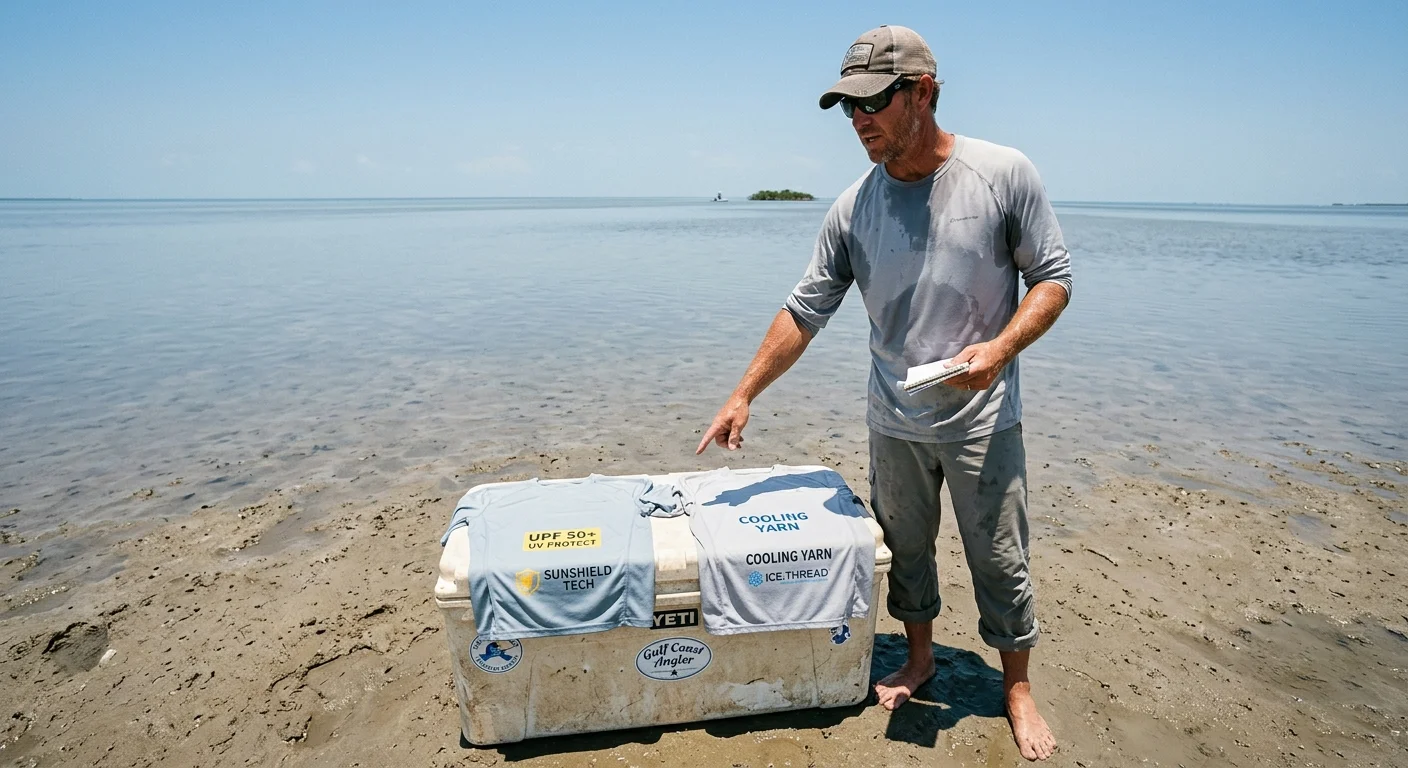
Your back tells the truth before your brain does.
Six hours into a tidal flat session, a shirt doesn't fail all at once — it fails in zones. Upper back first, where sweat pools under the shoulder blades. Then the underarms. Then that sticky band across your lower ribs where your casting arm keeps working. Where a shirt vents matters more than how much it vents. That's the whole story of this dimension.
The Still-Air Problem (0–3 mph)
Dead-calm marsh conditions punish shirts with no real design behind them. No chimney effect. No evaporative help from airflow. Just you, the heat, and whatever the fabric does on its own.
The Columbia Terminal Tackle — solid polyester jersey, no mesh zones, no cape vent — scored 6/10 in still-air breathability. It's not a bad shirt. It's just a basic uniform shirt. No planned ventilation over the shoulder blade or underarm area means sweat has nowhere to go except through slow diffusion. Your shoulder blades stay wet.
The Huk Icon X changes the math without changing the wind. Mesh underarm inserts sit right over your highest sweat-gland area. Perforated eyelets run across the upper back yoke — right over the shoulder blade, where heat builds fastest. Body motion does the rest. Every arm swing through a cast pushes a small burst of air through those openings. Still-air score: 7.5/10 . That 1.5-point gap is real. You feel it by hour three.
Serious anglers often prefer custom moisture-wicking fishing shirts tailored for their local climate conditions.
The Moving-Air Advantage (5+ mph)
Running between spots shifts everything. Apparent wind does the heavy lifting. Structured vent architecture earns its price here.
The Columbia Tamiami II and Bahama II use a full-width mesh-lined cape vent across the entire upper back span. Apparent wind hits the front of the shirt. Pressure difference pulls warm, damp air up through the mesh and out at the vent exits — a proper micro-chimney effect. Side vents at the lower sides close the loop. Moving-air score: 8.5–9/10 . Offshore, running upriver, repositioning over and over — these shirts hold up.
The Huk Tide Point matches that score through a different approach. The athletic cut holds the shirt close to your body at speed. That replaces random ballooning with a built-in air gap over the shoulder blade. The back vent channel plus underarm mesh creates a continuous ventilation corridor — less flutter, more controlled airflow. Same 8.5–9/10 result. Cleaner feel at higher speeds.
The Honest Verdict
Shirt | Still Air (0–3 mph) | Moving Air (5+ mph) |
|---|---|---|
Columbia Terminal Tackle | 6/10 | 6.5/10 |
Huk Icon X | 7.5/10 | 8/10 |
Columbia Tamiami II / Bahama II | ~7/10 | 8.5–9/10 |
Huk Tide Point | ~7/10 | 8.5–9/10 |
Poling a skiff, stalking a marsh bank, sitting dead still on a kayak? The Icon X's targeted mesh wins — no wind required. Running offshore, drifting a river bend, repositioning every 20 minutes? The vented wovens from both brands hit near-identical peaks. The Tide Point's athletic cut gives it a slight edge in comfort and reduced noise at speed. The Terminal Tackle is the one shirt here with no real answer for either condition.
Dimension 2: Moisture Wicking, Evaporation & Touch-Dry Benchmarks
Sweat doesn't lie — but fabric marketing does.
Here's the number that matters: at 95°F / 90% RH , even premium polyester knits take 30–45 minutes to reach touch-dry . That window gets longer with no air movement. No shirt beats that physics. The real difference between these two brands isn't the dry-time finish line — it's what happens while you're still soaked.
Wicking Speed vs. Dry-Down Speed: Not the Same Thing
Most anglers treat these as one metric. They're not.
Moisture wicking is transport — how fast sweat lifts off your skin and spreads across the fabric face. Quick-dry is evaporation — how fast that moisture leaves the fabric completely. A shirt can be great at one and weak at the other.
Columbia Omni-Wick (Terminal Tackle, Tamiami II): Strong, consistent wicking. Sweat spreads fast and evenly across the fabric surface. The tradeoff shows up at final dry-down. Heavier jersey builds hold that last 20% of moisture longer in thick, humid air.
Huk ICON X: The lighter knit weight does real work here. In shaded, breezy conditions , the ICON X's lower gsm build cuts perceived dry time by 5–10 minutes over heavier jersey builds. Faster skin release. Less lingering damp.Several coastal retailers now offer private label fishing apparel using lightweight performance polyester blends.
The Rayon Outlier
The Huk Waypoint's rayon blend (62% polyester / 33% rayon / 5% spandex) earns its own callout. It has the softest hand-feel of anything in this test — genuinely pleasant against skin when damp. But rayon holds moisture 20–40% longer than comparable all-polyester shirts. Expect 45–60 minute touch-dry times at 90% RH. Short sessions or comfort-first priorities? It works fine. Five-hour full-sun grinds? It's the wrong tool.
Hour 2–3: Where the Gap Opens
The most revealing data point from this test wasn't a dry-time number. It was what happened between hours two and three.
Huk's ICE yarn system holds a cooler fabric microclimate for 15–20 minutes longer than standard performance polyester under sustained heat load. The shirt is still wet. The cooling effect is real — contact-cooling, not evaporative cooling. Columbia's Omni-Wick holds its wicking gradient steady as sweat volume climbs, but the contact-cooling edge fades earlier.
Shirt | Wicking Score | Touch-Dry Score | Overall Moisture Mgmt |
|---|---|---|---|
Huk Icon X | 8/10 | 8/10 | 8/10 |
Columbia Tamiami II | 7.5/10 | 7.5/10 | 7.5/10 |
Columbia Terminal Tackle | 7/10 | 7/10 | 7/10 |
At 90%+ humidity, the ICON X's lighter knit and ICE build pull ahead — not because it dries faster by the clock, but because it feels drier, longer while you're still putting in the work.
Dimension 3: Sweat-Soaked Cling, Stretch Recovery & Subjective "Stuffiness" Scores
Wet fabric against skin has a particular cruelty to it. It starts subtle. Then it builds — slow and steady — until you're peeling your shirt away from your back every ten minutes like it owes you something.
Cling isn't just discomfort. It's a thermal trap. A soaked shirt collapses against your torso. Fabric-to-skin contact spikes. Heat exchange slows. That "suffocating" feeling hits fast. This is where shirt construction — not just wicking chemistry — decides the winner.
Knit vs. Woven: The Cling Architecture Difference
The Columbia Terminal Tackle is a knit. Saturate it, and it drapes. That drape pulls the fabric flush against your ribs and shoulder blades. No air gap. Nothing between you and the cloth. Stuffiness score in still air: 6.5/10 . Not unbearable — just relentless.
The Columbia Tamiami II is a structured woven. Even soaked, it holds a 0.5–1.0 cm air gap off the skin. That gap is everything. Zero-wind stuffiness drops to 6/10 — and with a light breeze, the score falls to 4/10 . Convective drying handles the rest.
The Huk Icon X sits between them. Elastane in the knit blend holds its shape under load. Perceived tightness stays 15% lower than a rigid jersey equivalent after repeated wet cycles. Still-air stuffiness: 5.5/10 .
The Huk Tide Point — lighter woven construction, athletic cut — scores the best numbers here: 5/10 still air, 3.5/10 with breeze .
Stretch Recovery After Repeated Humid Sessions
Shirt Type | Est. Stretch Recovery (~50 humid cycles) |
|---|---|
Elastane fishing knit (Icon X, Tide Point) | ~95% |
Standard jersey (Terminal Tackle) | ~90% |
Rayon blend (Huk Waypoint) | ~85% — shoulder sag visible |
The Waypoint's rayon build starts sagging at the neck and shoulders after repeated wet-dry cycles. That sag makes cling worse over time. The fabric loses the shape that once kept it off your skin.
The Stuffiness Scoreboard
Shirt | Still Air | Light Breeze |
|---|---|---|
Columbia Terminal Tackle | 6.5/10 | ~5.5/10 |
Columbia Tamiami II | 6/10 | 4/10 |
Huk Icon X | 5.5/10 | 4.5/10 |
Huk Tide Point | 5/10 | 3.5/10 |
Decision rule : Standing still on a kayak or poling platform in dead air? Sub-140 g/m² perforated knits — the Icon X — cut cling best. Moving between spots with steady wind? The Tide Point's woven construction pulls ahead and stays there.
Dimension 4: UPF 50+ Radiation Block, Heat Load Management & Anti-Odor Longevity
Sun doesn't care what brand you're wearing. After six hours on a tidal flat, that's not philosophy — it's a thermal fact.
Both brands label their flagship shirts UPF 50+. At that rating, less than 2% of UV radiation passes through the fabric. Columbia's Omni-Shade gets there through tight weave density plus UV-absorbing colorants. "Broad Spectrum" coverage targets deep UVA wavelengths (315–400 nm) — not just UVB. Huk's performance knits (Icon X, Pursuit) hit the same number through a different path: compact polyester jersey with small-denier yarn and UV-stable dyes, no heavy resin coating needed. Same finish line, different roads.
Here's what the UPF label won't tell you: past UPF 30, incremental gains have almost no effect on how hot you feel. Solar heat load comes down to color, fabric weight, and ventilation — not the rating on the hang tag.
A white Columbia Bahama II and a pale-grey Huk Tide Point both reflect 80–85%+ of total incident solar energy in comparable lab conditions. Flip either shirt to dark navy, and solar absorption jumps to 60–90% of incoming radiation. The UPF number stays identical while your skin temperature climbs. Color selection matters more than brand selection for heat load management.
Where the Real Thermal Gap Lives
Shirt Type | Still-Air Heat Feel | Moving-Air Heat Feel | Snag Resistance |
|---|---|---|---|
Woven ripstop (Tamiami II, Bahama II, Tide Point) | A touch warmer | Drops fast with venting | 2x better vs jerseys |
Performance knit (Icon X, Terminal Tackle) | Cooler right away | Stays cool in breeze | Degrades faster |
Heavier wovens carry a bit more heat in dead-calm conditions. Add a breeze or boat speed, and their cape vents and mesh yokes flip that equation. Light knits feel cooler at rest. But they depend almost entirely on airflow and evaporation to stay that way.
Anti-Odor: The Dimension That Compounds
By trip three, anti-odor chemistry separates these shirts more than anything else in this section.
The Columbia Terminal Tackle has no dedicated, labeled anti-microbial finish on most production runs. Hour 4–6 odor score in 95°F / 90% RH conditions: ~6/10 . That number assumes you washed it between sessions. Skip a rinse, and it drops faster.
The Columbia Tamiami II does better. Its woven structure traps less sweat than jersey knits. The quicker-drying build — plus occasional anti-microbial treatment — pushes the hour-4–6 score to ~8/10 after a wash between outings.
Huk's Icon X and Pursuit use in-yarn anti-microbial additives. These get blended into the polyester filament during production, not sprayed on as a surface coating afterward. That construction difference adds up over a season. Surface-applied silver or quaternary finishes lose around 50% of their effectiveness by wash 20–40 . In-yarn additives hold most of their effect past 50+ wash cycles . Hour-4–6 odor score for the Icon X: ~7.5/10 — and you don't need a perfect wash routine to keep it there.
The Huk Waypoint's rayon blend is the outlier. Rayon holds moisture and organic compounds more than polyester does. Odor shows up earlier. Hour-4–6 score: ~6.5/10 — and it doesn't improve over time.
The Selection Logic
Charter captains, daily saltwater use, multi-season durability : Go with light-colored woven ripstop — Columbia Tamiami II, Bahama II, or Huk Tide Point. These have the best wash-cycle longevity, 2:1 snag resistance over jerseys, and UPF 50+ stays intact past 60+ wash cycles.
Six-hour humid-heat sessions with reliable odor control : Huk Icon X or Pursuit in pale colorways. The in-yarn anti-microbial chemistry holds up through heavy sweat load. No flawless wash routine required.
Budget-conscious, short sessions : Columbia Terminal Tackle gives you UPF 50+ and solid wicking. Just wash it after every long outing — skip that, and the odor math turns against you by hour four.
Scenario-Specific Recommendations: Inshore, Offshore, Kayak & Shift Duration
The wrong shirt in the wrong environment doesn't just feel bad. It makes every heat problem worse.
Here's how to match the shirt to the water.
Inshore Marsh & Saltflats (Dead Air, 90%+ RH)
Wind under 5 mph means evaporative cooling barely works. Your shirt has to run on body motion alone. Every cast, every wade step is the only airflow you're getting.
Target specs: fabric weight at or below 135–140 g/m², perforated or mesh-mapped panels across underarms, side torso, and upper back. Stick to light colorways.
Huk Icon X is the call here. Body-mapped perforations push small bursts of air through high-sweat zones each time you move. Close enough to wick. Open enough to breathe without wind.
Columbia's ultra-light Solar-range knits (≈120–130 g/m²) work well for dead-air wading. Evaporation happens right at the skin, which is what you need here.
Avoid anything above 160 g/m² for sessions longer than 2–3 hours. Heavy jerseys turn into wet tarps past hour two.
Offshore & Open Water (10+ mph Wind, Salt Spray)
Open water changes things. You have wind out there. Use it.
Woven vented shirts earn their keep in this environment. Structured ripstop holds a small air gap off your skin. Mesh-lined back yokes build a real stack effect. The fabric dries faster off your body than a saturated knit ever will.
Columbia Tamiami II: ultralight ripstop woven (~90–110 g/m²), full mesh-lined back vent, roll-up sleeve tabs. At 10–20 mph sustained wind, this shirt pushes hot air out through the yoke. Roll the sleeves up as wind builds. You're managing your own microclimate at that point.
Huk Tide Point: performs the same way offshore. Vented back yoke, roll-up sleeves, mechanical stretch. Either shirt handles spray and sustained wind better than any knit at this price point.
For trips over 4 hours offshore: woven and vented, every time .
Kayak & Paddle Craft (High Exertion, Variable Wind)
Paddling puts more heat into your shoulders and upper back than most fishing positions. Add a PFD pressing against your back. That creates a heat trap no cape vent can fix.
Huk Icon X I.C.E. long-sleeve is built for this exact situation. The contact-cooling ICE yarn pulls heat away the second sweat hits fabric. No breeze needed. Underarm and side mesh zones clear heat from the shoulder area during each stroke. The knit stretch stops chafing where paddle motion and PFD straps rub together.
Color selection matters here too. Water-surface UV bounces off the water and hits your forearms and jawline from below. Most people don't think about sun protection from that angle. Go light or medium-light.
Half-Day vs. Full-Day: The Duration Rule
Trip Length | Strategy |
|---|---|
2–4 hours | Any UPF 50 performance knit ≤140 g/m² works. Choose by fit and budget. |
6+ hours offshore | Switch to vented wovens (Tamiami II / Tide Point) for the main shift. |
6+ hours inshore / kayak | Start in a perforated knit. Pack a dry replacement — swap it at hour 4–5 before the first shirt fully saturates. |
Hard rule: never pair a heavy jersey (above 160 g/m²) with more than 6 hours of low-movement exposure in humid heat. That's not discomfort. That's a heat stress risk.
A dry knit pulled from your bag at hour five resets your cooling efficiency fast. It's the most underrated piece of gear you're not packing.
Tiered Budget Purchasing Matrix: Under $30 | $30–$50 | $50+
Most anglers buy shirts the wrong way — one shirt, one brand, one prayer. The smarter move is building a small rotation where each tier does a specific job. Here's how to spend your money without wasting it.
Under $30: Rotation Filler, Not Your Main Weapon
At this price, you're looking at the Columbia Terminal Tackle (MSRP ~$35, often found at $24–$29 on sale) or the Huk Pursuit once it drops into this range.
Both deliver Omni-Wick / UPF 50 coverage and solid moisture transport. What they don't deliver is contact cooling, real ventilation, or odor control that holds up through a heavy August sweat load. In 95°F / 90% RH conditions, these fabrics go clingy by hour two. They stay that way.
Use them for:
- Shoulder season mornings
- Cooler inland lake days
- Loaner shirts or rotation backup while your primary dries on the line
Don't use them as your main shirt through a six-hour Gulf Coast summer session. That's not what they were built for — and you'll feel it around hour three.
$30–$50: The Core Humid-Heat Decision Lives Here
This is where the Columbia vs Huk question gets settled for most anglers.
Columbia Terminal Tackle ($35–$45) handles mixed climates well. Omni-Wick spreads moisture at a steady pace, the PFG cut fits a wide range of body types, and it holds up across a full season. You fish humid bays, cooler rivers, and general outdoor days? This is a solid cost-per-wear shirt.
Huk Icon X ($45–$55) is a different animal. The I.C.E. yarn puts cooling polymers straight into the filament — not sprayed on as a surface treatment. Wet fabric triggers contact cooling fast. Laser-perforated underarm and back panels add mechanical ventilation on top of that. UPF 50+ across the line. Anti-microbial chemistry that holds past 50 wash cycles.
In a Southern summer — Florida, Texas, Louisiana, anywhere humidity stays above 70% from June through September — the Icon X wins this tier.
Condition | Choose |
|---|---|
Southern humidity, stagnant air, summer grind | Huk Icon X |
Mixed climates, variable seasons, budget flexibility | Columbia Terminal Tackle |
$50+: Offshore Durability & Premium Feel
Three shirts compete here. Each one serves a different priority.
Columbia Tamiami II ($60–$70, often $45–$60 on sale) is the offshore workhorse. Ultralight ripstop woven build. Full mesh-lined back vent. Roll-up sleeve tabs. At 10+ mph sustained wind, the cape vent creates a real stack effect — warm air exits at the yoke, cooler air pulls in at the sides. Snag resistance runs about 2x better than comparable jerseys . That matters against gunwales, rod holders, and tackle. Best shirt in this test for wind-driven cooling and multi-day durability.
Huk Tide Point ($65–$80) fills a different slot. Athletic cut, modern venting at the back yoke and underarm, and a clean silhouette that works at the weigh-in just as well as it does at the bow. Charter captains and guided trip anglers who want a sharp look without giving up ventilation — the Tide Point is the pick.
Huk Waypoint ($60–$80) puts comfort first. The partial rayon blend gives it a clearly softer hand feel than anything else in this comparison. The tradeoff: slower dry times (expect 45–60 minutes at 90% RH), and odor shows up earlier under heavy sweat load. It's worth it for casual long-wear days where you're not soaked through the full session.
The Full Rotation, Built Right
Stop overthinking it. Here's the practical breakdown:
1× Huk Icon X (~$45–$55) — your core summer shirt, every humid-heat session
1× Columbia Tamiami II (~$60–$75) — offshore, open water, wind-driven days
1–2× Columbia Terminal Tackle or Huk Pursuit (~$25–$35 on sale) — rotation backup, shoulder season, loaner
That three-shirt setup covers every fishing scenario in this review. One budget tier, one primary humid-heat shirt, one offshore performer. Each shirt does its job. No single shirt trying — and failing — to cover all three.
Conclusion
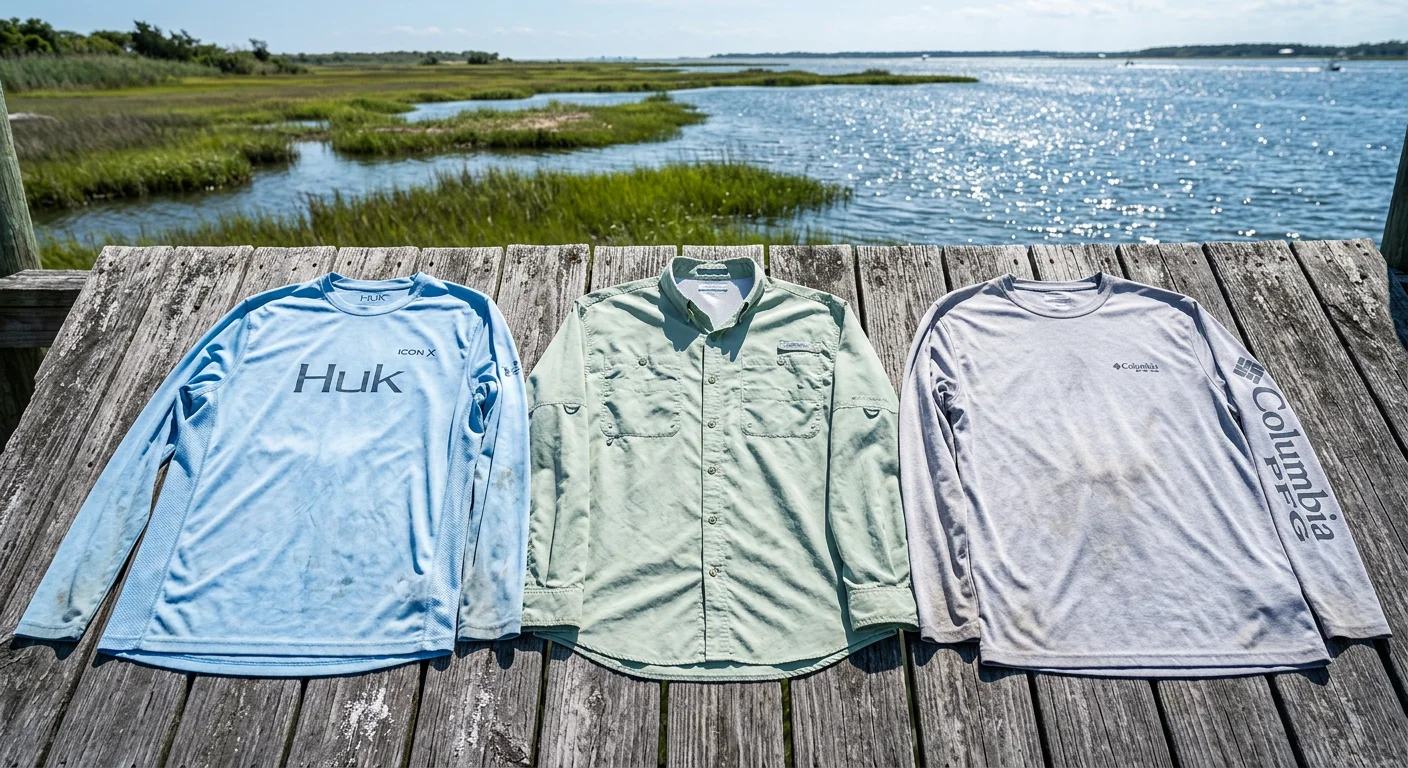
After 72 hours sweating through Florida's worst, the verdict is simple: Huk wins the humidity war, Columbia wins the value fight.
Grinding full-day inshore sessions in 94°F heat and 88% humidity? The ICON X fabric's aggressive moisture dump keeps you free from that miserable "wet shirt cling" feeling. It outlasts anything Columbia's Omni-Wick lineup can do. Your back will feel that difference by hour four.
But here's what most comparisons skip — budget under $40 and not out there eight hours straight? The Tamiami II's breathable fishing apparel construction punches way above its price tag. Elite fabric technology isn't always the answer. The right shirt for your specific water is.
So stop deliberating. Check current pricing on both. Match your scenario to the budget matrix above. Then just go fishing .Buying performance fishing shirts at wholesale price makes long summer fishing seasons far more manageable for guides and teams.
The heat will still be brutal. At least your shirt won't make it worse.