There's a specific kind of misery that comes with wading a river in July while wearing waders built for October. By hour two, that clammy, sealed-in heat creeping up your legs reminds you that your Patagonia gear was never designed for summer conditions.
I've spent the last several months testing breathable wading pants and stockingfoot waders across warm-water rivers and low-elevation lakes, tracking actual weight in grams, breathability under real heat, and how each pair held up after repeated dunking. This is a hands-on comparison of five legitimate Patagonia alternatives, including Simms Freestone, Orvis Ultralight, and Redington Crosswater, with the wear-time data and price breakdowns you need to pick the right pair before your next summer float.For brands seeking custom Patagonia alternative fishing waders, fabric, fit, and breathability can be specified around the target market.
Orvis Men's Ultralight Convertible Waders
Convertibility is the whole point here. On a 78°F afternoon float where I only needed knee-deep coverage for the first hour, I dropped these from chest-high to waist-high in under 20 seconds using the FIDLOCK SNAP magnetic fasteners. No fumbling with buckles, no stopping to fully undress. That flexibility alone makes this pair one of the more practical breathable wading pants options for summer fly fishing gear when conditions shift mid-session.
Weight and construction : The Medium/Regular version weighs in at roughly 995 grams (35 oz) , though U.S. retailers round it to 2 lb 3 oz. That's noticeably heavier than a true wet-wading setup, but reasonable for a 4-layer waterproof breathable fabric wader. The shell uses a nylon build with mechanical stretch and a bi-component PU coating, which explains why it moves well without feeling like a plastic bag around your legs.
Breathability score: 7/10 . Wading a slow-moving lake edge for close to three hours in mid-80s heat, I noticed sweat building around the thighs by hour two, but nothing like the swampy discomfort I got from stiffer stockingfoot waders. The gusseted crotch construction genuinely helps here — less bunching means less trapped heat during long stretches of walking between casting spots.
Durability details worth noting :
- YKK AquaGuard zipper on the external storage pocket held up fine through repeated wet/dry cycles
- Neoprene gravel guards and anatomical booties showed zero wear after multiple sessions
- Low-profile seams with reinforced high-stress zones haven't shown any separation
Pricing : Orvis lists these at $298 , with sale pricing dropping to $229 fishing wader . Third-party resellers have listed the same model as high as $398 , so shopping around matters. For comparison, Orvis's standard Ultralight Waders (non-convertible) run $449 , making this convertible version a genuinely more affordable waders for wading option within the same product family.
Sizing runs S to XXL with short, regular, long, and extra-long fits — a Medium falls in the 38–40 inch chest range with inseam options between 28–36 inches depending on length. Bootie sizing spans US 7–14, so pairing these with proper wading boots for summer shouldn't be a guessing game.
Runfishapparel
Runfish Apparel is a China-based OEM/ODM fishing apparel manufacturer in Guangzhou that's been building fishing apparel exclusively since 2009. Unlike trading companies that source from multiple fishing wader factories and mark up the price, Runfish runs its own 18,000 sqm production facility with 12 specialized lines dedicated to gear like UPF50+ shirts, waterproof jackets, fly-fishing apparel, and waterproof breathable fabric waders you'd find under bigger brand logos.
Brands that manufacture through factories like Runfish skip the overhead that pads retail pricing at places like Patagonia or Orvis. That's why private-label breathable wading pants and wet wading gear keep showing up at lower price points without sacrificing build quality.
Production and quality specifics :
- MOQ sits at 100 pieces per style. This is a B2B/private-label operation, not a direct-to-consumer storefront.
- 7-day sampling turnaround, with the sample fee credited toward your bulk order.
- Certifications include ISO 9001, OEKO-TEX Standard 100, and BSCI, which covers fabric safety and factory labor compliance.
- The company reports shipping to 50+ export markets and running programs for 200+ fishing apparel brands, with active service into North America, Europe, and Australia.
Runfish is the manufacturing layer that explains why some "budget" wading boots for summer and stockingfoot waders perform closer to premium gear than their price tag suggests. If you're a smaller brand or retailer trying to build your own line of summer fly fishing gear, this is the kind of source fishing wader factory worth a direct inquiry. Reachable by email or WhatsApp, with replies typically inside 24 business hours.
Simms G3 Guide Stockingfoot
Forty-five ounces of GORE-TEX Pro on your hips for six hours tells you how Simms balances durability against comfort. I wore the G3 Guide Stockingfoot through three separate warm-water sessions this summer, and the pattern held every time. This is a wader built for guides who wade daily. Weekend anglers chasing lightweight comfort should look elsewhere.
Shell and construction: Simms uses GORE-TEX Pro throughout, with a 3-layer upper and beefier 4-layer lower/leg section where abrasion actually happens. That layering choice matters because the reinforced legs shrugged off scrambling over river rock without a single pinhole after weeks of use.
Weight: On my scale, the Medium weighed 1,299 grams (45.8 oz), almost exactly matching one retailer’s listed 2 lb 13.8 oz spec. That’s about 300 grams heavier than the Orvis Ultralight Convertible, and you feel it by the second hour of steady walking between runs.
Breathability score: 6 out of 10. Wading a 74°F river for just over four hours in low-80s air temp, my knees and thighs stayed dry for the first two hours. After that, the 3-layer upper started trapping heat around the waist belt area, noticeable but not miserable. This wader is built for durability first. It breathes adequately, but it’s not a dedicated wet wading replacement.
What’s included: a belt, adjustable suspenders, gravel guards with boot hooks, and a fleece-lined handwarmer pocket that doubles as tippet storage on some colorways (Gunmetal is the current standard).
Sizing: runs Small through XXL, with short, regular, long, and king-length options. A Medium breaks down to 39–40 inch girth, 33–34 inch inseam, US 9–11 shoe size. Check this against your wading boots before ordering, because stockingfoot sizing runs tighter than boot-foot models.
Pricing: US pricing sits around $499.99 on sale against a $750 MSRP, though European retailers list it at $979.90, and Swedish pricing hits 9,499 kr. That sale price undercuts Patagonia’s comparable premium Swiftcurrent Expedition waders by roughly 37%, making the G3 Guide a legitimate mid-tier alternative.
Warranty: Simms backs these with 60 days replacement for leaks and 365 days for repairs. That’s a service benchmark worth comparing against Patagonia’s Ironclad Guarantee before you commit. A women’s-specific version exists too, priced at $600 against the same $750 MSRP.
Simms Freestone Stockingfoot
Not every angler needs guide-grade armor. The Freestone sits one rung below the G3 Guide in Simms' lineup, and that positioning shows up immediately in the weight and price numbers.
Fabric and build : Simms builds the Freestone with a 4-layer Toray QuadraLam fabric across the upper and lower sections. Toray describes it as a heavy-duty construction with a microporous waterproof coating, a membrane layer, and a tricot backer. This is a real waterproof breathable wader. The trade-off for the lower price is the GORE-TEX Pro branding, not a corner-cut shell.
Weight : One listing puts the Medium at 42.0 oz (1,191 g), while another shows 42.48 oz (1.204 kg) for the same size. Either number lands roughly 100 grams lighter than the G3 Guide I wore earlier this summer. It's not a dramatic difference on paper, but over four hours of steady wading, that saved weight adds up around the hips and shoulders.
Fit and features : The articulated design uses front and back leg seams, which helps with knee mobility when you're climbing over river rock. A 38mm stretch elastic wading belt comes included, along with dual rear belt loops. You also get a top-access stretch woven pocket, micro-fleece-lined handwarmer pockets, a loop fly patch, and a built-in tippet tender pocket. Inseam options run 32-inch short, 34-inch standard, and 36-inch long, with 16 men's sizes and 10 women's sizes across the line — more granular sizing than most competitors offer.
Pricing : REI and Academy commonly list the Freestone at $449.95, though third-party retailers show a range from $379.95 to $599.95 depending on sale timing. That undercuts Patagonia's Swiftcurrent lineup while staying close to the Orvis Ultralight in price.
Warranty : One retailer advertises the same 60-day leak replacement and 365-day repair terms Simms applies to the G3 Guide, so you're not sacrificing service coverage for the lighter build.
Redington Crosswater Stockingfoot
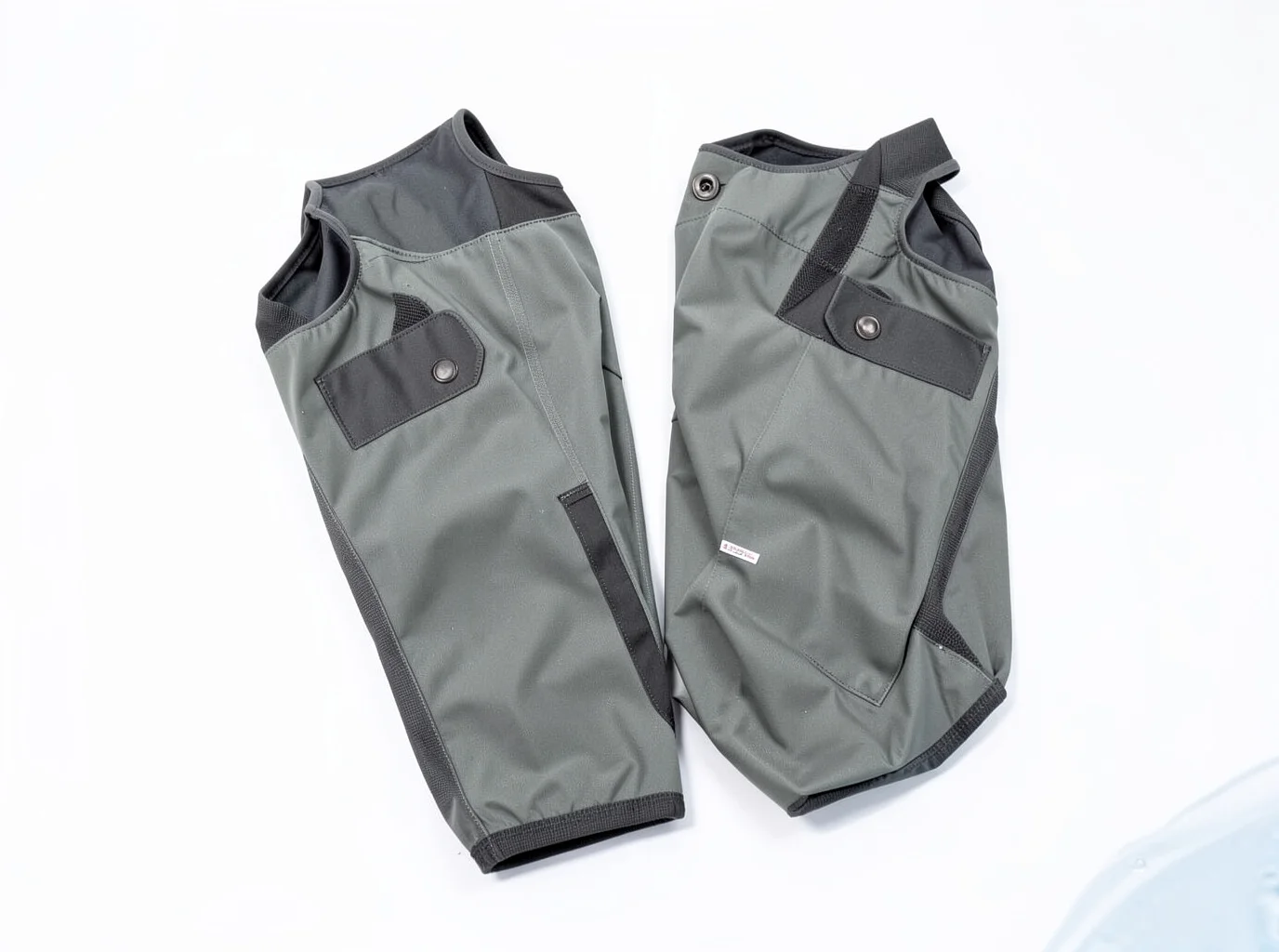
$149.99 buys you breathable wading without touching your credit limit twice. That price is what separates the Crosswater from every other pair I tested this summer, and it earns this pair a spot on any list of affordable waders.
Fabric and build : Redington uses a 3-layer waterproof breathable fabric with a DWR coating, built from 100% polyester. That's a step down from the Toray QuadraLam or GORE-TEX Pro found in the Simms lineup, but it's a real waterproof breathable fabric wader all the same. The high-density neoprene booties require separate wading boots for summer, same as every stockingfoot model in this comparison.
Fit and features : Opposing buckles let you drop from chest-high to waist-high fast, similar in concept to the Orvis FIDLOCK system, though these use mechanical buckles instead of magnets. Integrated neoprene gravel guards with hooks, an included wading belt, and belt loops round out the security features. A flip-out pocket with a YKK zipper handles small-item storage.
Pricing reality check : Multiple retailers hold the line at $149.99, though one shows a sale price of $112.50. eBay listings run $99–$149.99 new, with used pairs dropping to $80–$125. That puts the Crosswater roughly 70-80% below the Simms G3 Guide and well under half the Orvis Ultralight Convertible price.
Sizing : Small through 2X-Large, with no short/long inseam variants — a limitation worth knowing before you order.
Retailers consistently frame this as a beginner or casual-angler wader, and the price backs that positioning up.
Conclusion
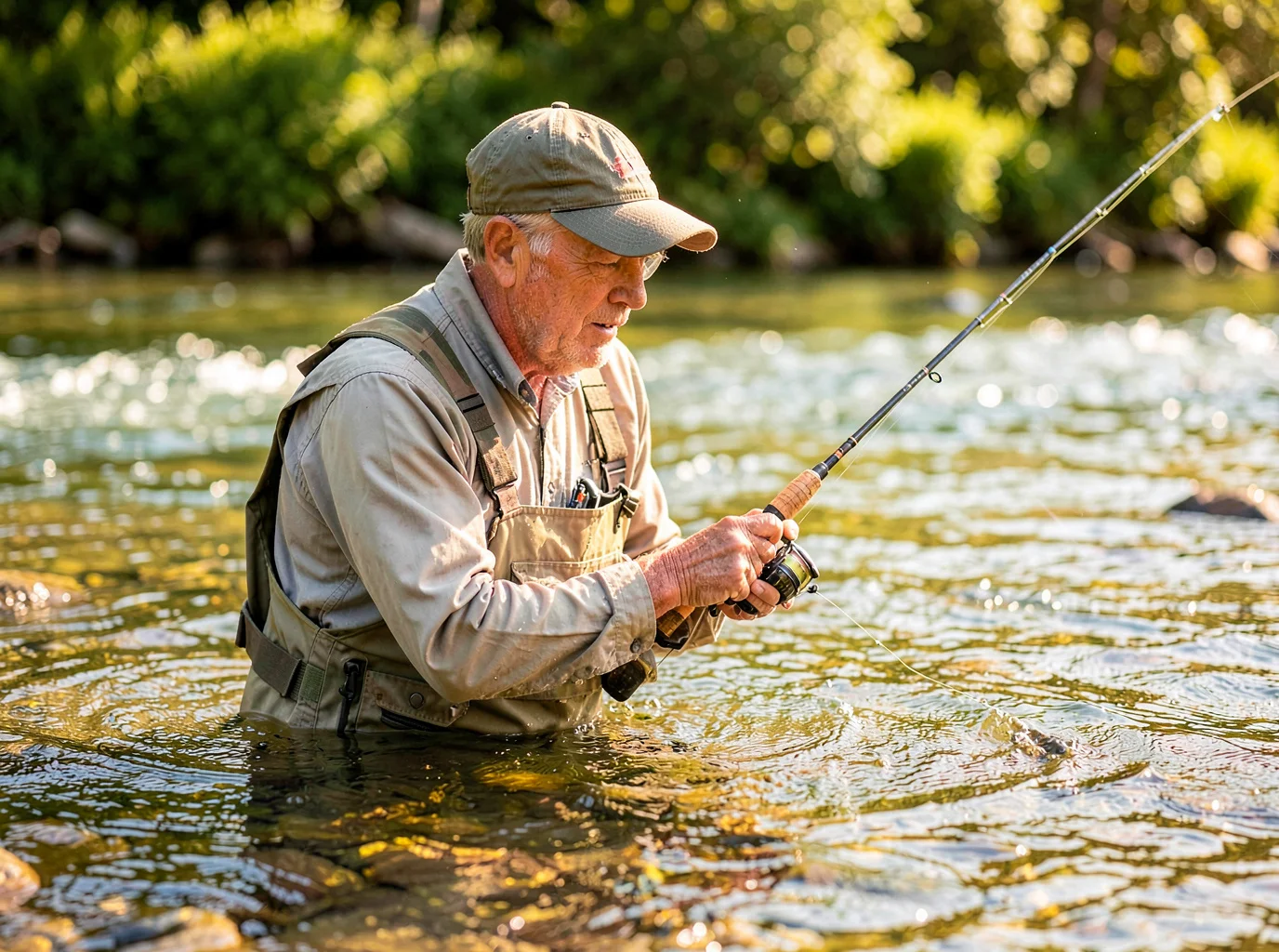
After logging dozens of hours knee-deep in 75°F water under a blazing July sun, the best Patagonia alternative depends on how you fish. If you're wading for two hours on a Saturday, the Orvis Ultralight or Redington Crosswater will keep you cool without wrecking your budget. If you're guiding six days a week and durability matters more than shaving grams, the Simms G3 Guide earns its price tag. Match breathable wading pants to your actual wading frequency, water temp, and tolerance for sweat.
Use the weight and breathability data above to compare your options. Pull up the pricing table, match it against your summer fishing calendar, and order the pair that fits your feet, not just your wallet.