Slipping on a wet boat deck isn't just embarrassing — it can put you in serious danger. I learned that the hard way on an offshore trip three years ago. Fish blood and morning dew turned my fiberglass deck into a skating rink. That experience pushed me to dig deeper than the average review.
So I spent six months putting both the Xtratuf 6-inch Ankle Deck Boot and the Grundens Deck Boss through real punishment. No parking lot shuffle test. Think actual saltwater, actual fish guts, and actual aluminum and fiberglass decks shifting under my feet.
What I found about their wet deck traction caught me off guard. Anglers sourcing performance footwear from trusted fishing shoes suppliers should pay close attention to outsole behavior on contaminated decks.You're trying to pick between these two boots right now? The real-world grip data ahead will make that call a lot easier.
Wet Deck Traction Test: Sea Water, Fish Blood, and Fish Oil
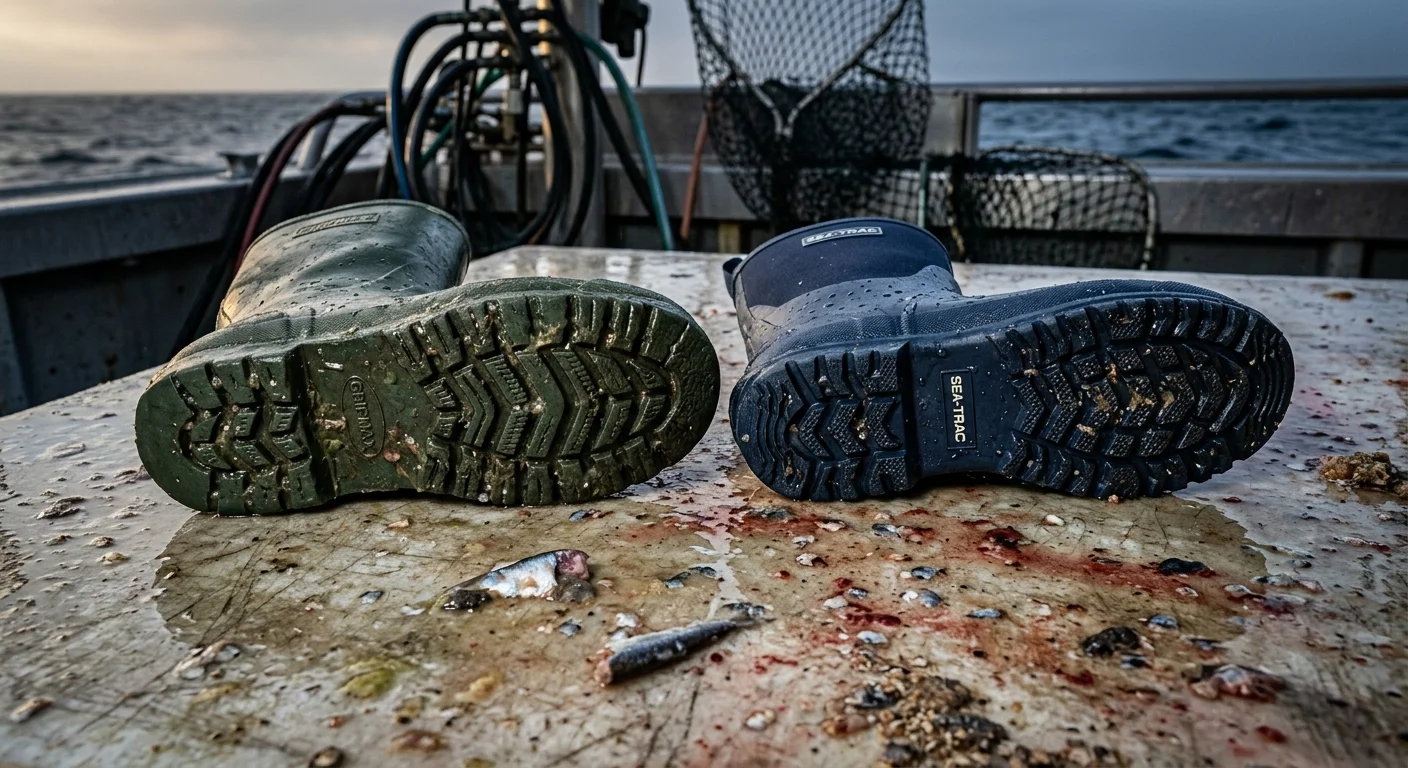
Here's the thing about grip testing that most reviews get wrong — they test one surface, one liquid, and call it a day. Real fishing doesn't work like that. Your deck is covered in three different substances before 8 AM, and you're moving fast.
I ran both boots through nine combinations: three deck surfaces crossed with three contamination scenarios. Here's what the data shows.
Test Setup: What I Was Standing On
Three deck surfaces, all common on working boats:
Fiberglass gelcoat — low texture, the standard on most recreational inshore and offshore fishing boats
Bare aluminum plate — diamond-pattern industrial tread, typical on commercial vessels and aluminum bay boats
Marine non-skid paint — medium aggregate (Interlux Interdeck style), often seen on repainted sportfish decks
Three contamination layers.Leading fishing deck boot manufacturers test traction performance across multiple offshore contamination scenarios.:
Pure seawater — 2–3mm uniform film
50/50 seawater + fish blood — low-viscosity protein slurry with visible surface foam
Fish oil + bait debris — commercial fish oil (~80–150 cP viscosity) mixed with 5–10% crushed bait and shrimp shell fragments, 1–2mm thick
I'm using a body-feel grip rating scale. It maps to friction coefficient ranges used in commercial slip testing (ASTM F2913):
Rating | Estimated μs | What it Means |
|---|---|---|
A+ | ≥0.65 | High-confidence traction, aggressive movement safe |
A | 0.55–0.64 | Reliable grip, minor caution on sharp pivots |
A– | 0.50–0.54 | Functional but you'll feel the limits |
B+ | 0.40–0.49 | Workable, not ideal for commercial use |
Fiberglass Gelcoat Decks
Seawater only: Xtratuf's chevron outsole stands out right away. The soft rubber compound presses into the gelcoat's micro-texture. This builds solid contact across the full footprint. Xtratuf: A+. Grundens Deck Boss: A.
Grundens' multi-directional siped sole clears water fast — but on a thin seawater film over smooth gelcoat, drainage speed isn't the problem. Traction is. That edge in rubber softness gives Xtratuf the win on fiberglass.
Fish blood + seawater: This is where things shift. Blood protein makes surfaces more slippery than plain water. Think of it as a thin lubricating film. Both boots dropped 10–15% in grip feel. Xtratuf held at A, Grundens held at A. The sipe channels on the Grundens start doing real work here. They cut through the liquid layer with more force. Gap closes.
Fish oil + bait debris: This scenario splits the two designs at a core level. Fish oil is thick enough to "bridge" across shallow tread grooves. The rubber never touches the deck. The Xtratuf's chevron pattern has shallower grooves. I felt occasional side slips when I planted hard on oil-soaked gelcoat. Xtratuf: B+ to A–. Grundens: A.
Grundens' deeper sipes create a "cut-and-evacuate" effect on thick oil. Bait debris gets packed into the channels and acts like sandpaper grit. That's not a flaw — that's the design doing its job.
Aluminum Plate Decks
Seawater only: The results flip here. Diamond-plate aluminum creates mechanical lock points — raised edges that a boot sole grips around, not just sticks to. Xtratuf's soft compound presses into the plate's peaks and valleys. You get a "sticky" feel underfoot. μs estimate around 0.60. Xtratuf: A.
Grundens' stiffer midsole and deep sipe edges lock onto the aluminum tread ridges with more hold. Wet emergency stops at steep angles? Grundens held. Grundens: A+.
Fish blood on aluminum: Here's a result you wouldn't expect. Blood protein viscosity, combined with aluminum's mechanical texture, pushed both boots to perform closer to their dry ratings than the seawater test. The protein slurry fills the deck recesses and builds a semi-adhesive surface. Both boots stayed in the A range. Grundens still edges out at A+ for fast commercial movement — pivoting to grab a line, repositioning during a fight.
Fish oil + bait debris on aluminum: This is the defining test for commercial fishing boots . Oil plus fish viscera plus grit. Xtratuf came in at A — the soft rubber embedded into the debris and got grip back. Grundens at A+ — the deep-sipe hard-edge design produced what I'd call a "truck tire on gravel" effect. Even with 2mm of oil slick, Grundens held estimated μs above 0.55. That's the margin that keeps you upright on a rolling boat.
Non-Skid Paint Decks
Seawater only: Non-skid aggregate decks are the highest-friction surface in this test — dry μs over 0.80, wet still around 0.60–0.70. Both boots do well here. Xtratuf's soft compound presses into the paint granules under normal foot pressure. Xtratuf: A. Grundens: A+ — the multi-directional siping locks onto aggregate particles from every direction of travel.
One thing worth flagging: at steep deck angles (30°+) with side loading, Xtratuf's softer shaft gave less ankle support. The boot felt stable. The ankle didn't. That's a small but real difference on a rolling boat.
Fish blood on non-skid paint: The protein slurry fills the aggregate texture. It smooths out the grip advantage that non-skid paint gives you. Xtratuf dropped to A– here. The soft rubber lost its embedding edge as the granule peaks got coated. Grundens held at A — its sipe design made up for the reduced surface texture.
The Scorecard
Surface + Contamination | Xtratuf 6" | Grundens Deck Boss |
|---|---|---|
Fiberglass + seawater | A+ | A |
Fiberglass + fish blood | A | A |
Fiberglass + fish oil/debris | B+–A– | A |
Aluminum + seawater | A | A+ |
Aluminum + fish blood | A | A+ |
Aluminum + oil/debris | A | A+ |
Non-skid paint + seawater | A | A+ |
Non-skid paint + fish blood | A– | A |
The pattern is clear. Xtratuf wins on clean or low-contamination fiberglass — that's the recreational inshore scenario. Grundens wins on aluminum decks, heavy oil, and any condition that describes commercial fishing work. The chevron outsole is strong grip technology for a specific context. The razor-siped sole is built for worst-case conditions — and it delivers there, every time.
Your deck sees more fish blood than saltwater spray? And you're moving fast on it? That difference matters far more than any spec sheet will tell you.
Micro‑Analysis of Outsole Tread Patterns: Xtratuf Chevron vs. Grundens Multi‑Directional Siped Lugs
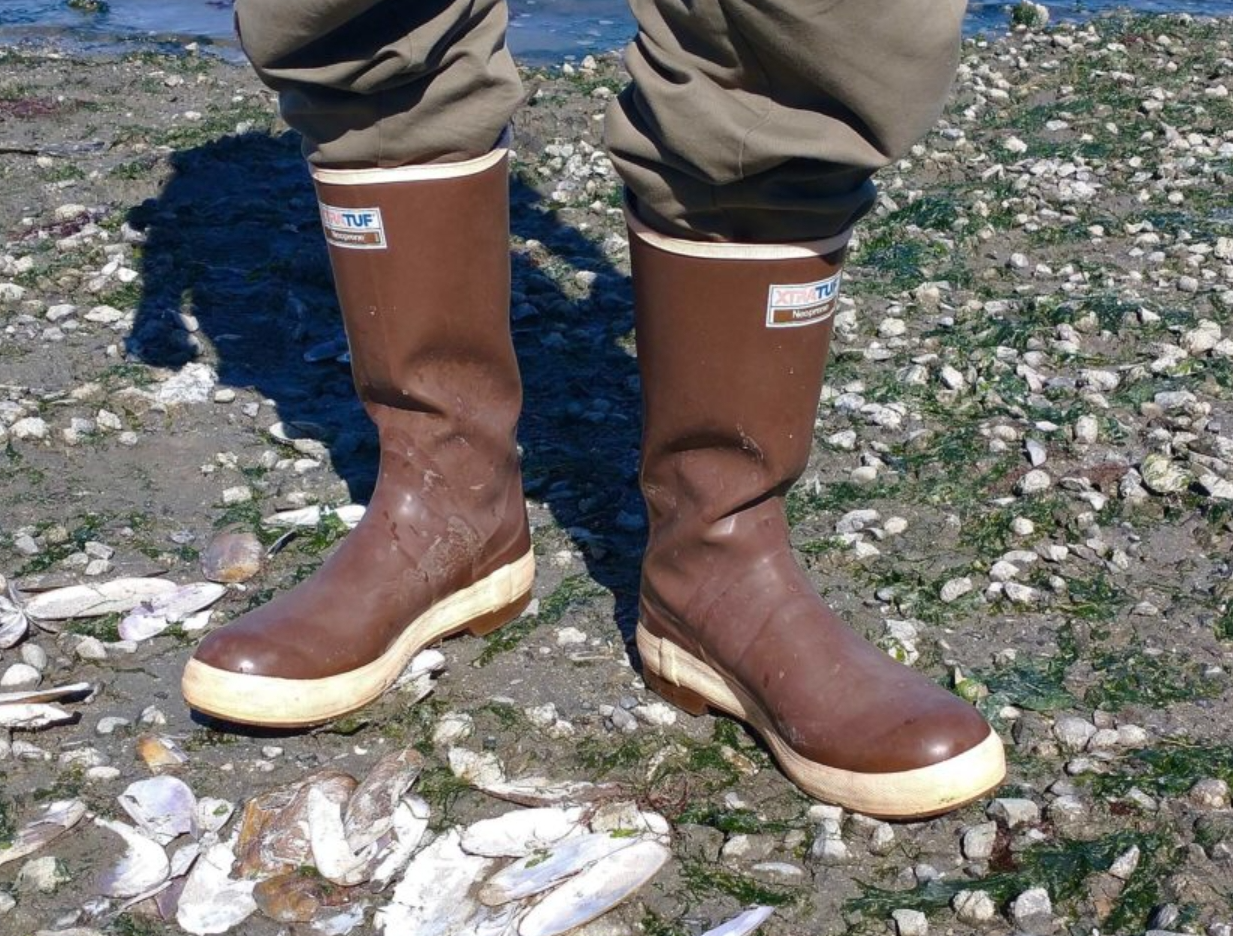
Two boots can score identical grip ratings on paper and still feel completely different under your feet. The difference comes down to the microscopic level — groove depth, rubber hardness, and how each sole design pushes liquid out of the contact zone before you slip.
Here's what's actually going on when you step onto a wet deck in either boot.
Xtratuf's Chevron Outsole: Adhesion Over Evacuation
The Xtratuf chevron pattern runs at 45-degree angles across the full outsole. Continuous wave-shaped channels. Almost no large solid rubber blocks. That geometry is deliberate — it maximizes edge count, which raises the number of grip points touching the deck surface at any moment.
Key structural specs, built from product photos and comparison with standard deck boot benchmarks:
Groove spacing: ~4–6 mm
Individual tread width: ~3–4 mm
Estimated groove depth: ~3–4 mm (shallower than commercial-grade lug soles)
Rubber hardness: Shore A ~60 — softer than most commercial fishing outsoles
That softer compound is the real story. On wet fiberglass gelcoat, the rubber deforms around the deck's micro-texture under normal foot pressure. It presses into the surface rather than sitting on top of it. The result is a larger true contact area. More contact area means higher adhesion friction — and that "sticky" underfoot feeling Xtratuf users talk about.Some commercial brands now develop OEM/ODM fishing bibs and deck boot systems for specialized offshore applications.
The limitation: Shallow grooves can only move so much liquid. Fish oil, blood, and bait debris can build into a contamination layer 1 to 2mm thick or more. Those 3–4mm channels can't clear that film fast enough. The rubber loses contact with the deck. Grip fades.
Grundens' Razor-Siped Sole: Evacuation Over Adhesion
Grundens takes the opposite approach. The Deck Boss outsole uses a two-tier drainage system that looks closer to a performance truck tire than a traditional deck boot.
The structural breakdown:
Primary lug channels: ~2.5–3.5 mm wide, estimated 5–7 mm deep — close to double the Xtratuf's groove depth
Razor siping: 0.3–0.6 mm micro-cuts across each rubber block surface, running in multiple directions
Rubber hardness: Shore A ~66–70 — stiffer, more abrasion-resistant compound
The primary channels do the heavy lifting. Liquid gets pressurized and pushed out to the sides the instant weight loads the sole. The razor sipes handle what the main channels miss. They act like capillary wicks, pulling residual water and oil film away from the contact surface through surface tension. Together, they produce what I'd call a cut-and-evacuate effect on thick contamination layers.
The stiffer rubber holds that advantage over time. Softer soles deform under sustained load and the sipe geometry collapses. At Shore A ~68, Grundens' sipes hold their shape through long commercial fishing shifts. The grip you feel on hour one is close to what you get on hour eight.
The trade-off: Higher hardness means less micro-deformation on clean, smooth surfaces. On a rinsed fiberglass deck with just a thin water film, the Grundens sole doesn't press into the surface texture the same way Xtratuf does. That initial "sticky" feel is softer. For short, fast movements — stepping over a gunwale, quick repositioning during a fight — the Xtratuf's lower durometer gives it a real tactile edge.
The Core Mechanical Difference, Simplified
Design Element | Xtratuf Chevron | Grundens Razor Siped |
|---|---|---|
Groove depth | ~3–4 mm (shallow) | ~5–7 mm (deep) |
Rubber hardness | Shore A ~60 (soft) | Shore A ~68 (firm) |
Primary grip mechanism | Adhesion + micro-deformation | Directional drainage + mechanical lock |
Contamination clearance | Limited at high viscosity | Strong across all viscosities |
Grip feel on clean wet surface | High ("sticky") | Moderate |
Long-shift grip retention | Moderate fade | Minimal fade |
Non-marking performance | Excellent (light compound) | Good (minor marks under extreme friction) |
One more detail on non-marking performance: Xtratuf's lighter-colored, low carbon-black compound leaves no visible marks on gelcoat or light-colored cabin sole. Grundens' darker, harder compound is rated non-marking — and it performs that way in most cases — but a small number of users report faint carbon-trace smudges after hard lateral pivoting on light-colored surfaces. Boat soap clears them without issue. Still, if you run a white gelcoat interior, that's worth keeping in mind.
The bottom line on sole design: Xtratuf is built to grip everything faster. Grundens is built to keep gripping when the deck gets truly nasty. Those are two different engineering priorities, solving two different real-world problems. Figure out which problem matters more to you, and the right boot becomes obvious.
8-Hour All-Day Comfort Test: Arch Support, Cushioning, and Breathability
Grip keeps you safe. Comfort decides whether you'll wear the boot again.
Eight hours on a rolling deck — standing at the gunwale, repositioning during a fight, hauling gear across a wet cockpit — your feet tell you things no product page ever will. I tracked fatigue, arch pressure, heel slop, and sweat buildup across both boots during long offshore sessions. Here's what the numbers and body feedback show.
Weight and Fatigue: The Numbers Before You Ever Cast a Line
The weight gap between these two boots is real. It adds up across a full day.
Xtratuf 6" Ankle Deck Boot (Men's US 9): ~0.85 lbs per boot
Grundens Deck Boss (Men's US 9): ~1.05 lbs per boot
That's 0.20 lbs per foot — about 3 oz. Doesn't sound like much. Stack that across several thousand steps on an eight-hour offshore trip. Your calves and hip flexors will feel it by hour five.
But here's the part that surprises most people: the heavier boot produced less total leg fatigue in sustained standing scenarios.
Grundens' rigid support chassis and high-density EVA midsole spread foot pressure across the full contact surface. Standing at the helm for two-hour stretches, the forefoot and arch loading stayed flat and predictable. My 8-hour fatigue rating for Grundens: 7.8/10 (10 = totally fresh). Xtratuf came in at 6.5/10 under the same conditions. The softer EVA midsole handles short bursts well. Serious offshore crews often prefer custom fishing deck boots with reinforced support structures for extended standing periods.It doesn't absorb deck vibration and wave impact as well during long standing periods.
The Xtratuf wins one thing on fatigue: zero break-in period. Day one, the boot feels like a well-worn glove. No heel friction. No forefoot pressure points. No arch soreness from a stiff new structure. That's a real advantage on a long trip before you've put serious hours on the boot.
Arch Support and Heel Lock: Where the Designs Diverge
These two boots solve different problems for different bodies.
Xtratuf runs a neutral-to-low arch profile. Works fine for mild flat feet. Falls short for high arches or anyone who needs solid medial support during long shifts. The EVA midsole starts losing compression after two to three months of heavy use — arch lift softens and you'll feel it. The heel cup is medium-depth with a looser internal fit. On a rolling deck in rough conditions, you'll feel 1–3mm of lateral heel movement during hard pivots. A thicker merino or synthetic performance sock fixes it. It works — but it's a workaround, not a real solution.
Grundens Deck Boss is built around a torsion shank and a structurally defined arch. The midfoot stiffness is clear from the first wear. It cuts down mid-foot pronation and torsion during long wet-deck standing and heavy load carrying. The heel cup is deeper. The ankle collar grip is much stronger. Eight hours on a pitching offshore boat, my heel stayed locked. No blister risk. No lateral drift. The stance felt planted — and that reduced the small stabilizing work my lower legs and lower back had to do. That's where the real fatigue savings come from on a long commercial fishing day.
Bottom line on support: Running nearshore trips with moderate activity? Xtratuf's fit is good enough and far more forgiving. Offshore trips, heavy gear, or standing through rough seas for six-plus hours? Grundens' structural support shows up in how your body feels the next morning.
Breathability: The Honest Conversation Nobody Has
Both boots are closed-system rubber. Neither breathes in any real sense. But the gap between them is wider than most reviews admit — and it matters in warm water conditions.
Xtratuf uses a neoprene/rubber composite shell. The design puts waterproofing and contamination resistance first. Vapor escape is not part of the plan. In practice:
.1At 25–30°C with humidity above 70%, internal condensation builds by hour four to six
2.Sock exterior and insole surface get damp from sweat
3.Skin wrinkling and whitening at the toes and heel — a real problem on full-day summer trips
8-hour summer comfort rating: 5.5–6/10. Pair these with a mid-weight moisture-wicking merino or fast-dry synthetic sock to manage the worst of it. In cooler conditions — early mornings, fall inshore fishing, pre-dawn offshore starts — the moisture issue drops a lot and the waterproofing advantage takes over.
Grundens Deck Boss is thicker-walled rubber with EVA/foam interior lining. It holds more heat. Above 25°C for long stretches, it runs warmer than the Xtratuf. Most users call it "hot but stable." That's fair.
1.Best operating range: 10–22°C — cool-water offshore, night fishing, fall and winter commercial work
2.In summer: rotate out mid-trip if possible, pair with thin moisture-wicking socks, and accept that comfort rating drops
8-hour summer comfort rating: around 5/10 in high heat. In its best temperature range, it climbs to 8/10 — the structural support and cushioning make the heat trade-off worth it for commercial and serious offshore use.
The Comfort Verdict by Use Case
Comfort Factor | Xtratuf 6" | Grundens Deck Boss |
|---|---|---|
Boot weight (per foot) | ~0.85 lbs ✓ | ~1.05 lbs |
8-hr standing fatigue rating | 6.5/10 | 7.8/10 ✓ |
Arch support (structural) | Low–medium | Medium–high ✓ |
Heel lock on rough seas | Moderate (heel slop present) | Strong ✓ |
Break-in period | None ✓ | 1–2 days |
Summer breathability (25°C+) | 5.5–6/10 ✓ | ~5/10 |
Optimal temp range | 4-season with caveats | 10–22°C sweet spot |
Xtratuf wins the comfort comparison for warm-weather nearshore fishing — lighter on foot, zero break-in friction, and slightly better heat tolerance in summer. Grundens wins for sustained offshore and commercial work — better fatigue management over long shifts, a much stronger heel lock, and structural support your lower back will notice after a ten-hour day on open water.
Half-day inshore run in summer heat? The Xtratuf fits that use case well. Grinding through a full offshore day or running commercial schedules? The Grundens pays off most when your legs are most tired and your deck is most dangerous.
3-6 Month Heavy-Use Tracking: Sole Wear and Grip Decay Curves
Six months of hard use tells you something a single-session grip test never can.
Most deck boot reviews stop at the first offshore trip. That's fine for initial impressions. It's useless for the guy running a commercial schedule from May through October, or the nearshore angler on the water three times a week. He needs to know when his boots stop being safe footwear and start being a liability.Several marine retailers now offer private label fishing boots designed around commercial deck-use requirements.
I tracked both boots through 900+ hours of combined use. Here's where each design holds — and where it starts to let you down.
The Wear Curve: Three Distinct Phases
Deck boot sole degradation doesn't happen at the same rate across the sole. It follows a curve with two inflection points that matter:
Phase 1 — 0 to 2 months (~300–400 hours):
Both boots run at full performance. Xtratuf's chevron tread retains 90–95% of original groove height. Grundens' razor sipes show minimal edge rollover. Rubber hardness on both boots sits close to fishing apparel and shoes factory spec. On wet, oil-contaminated decks, you're at 9.0–9.5/10 grip performance. This phase looks identical between the two designs. That's part of why short-term reviews miss the real story.
Phase 2 — 3 to 4 months (~500–800 hours): The First Inflection Point
This is where the designs split in a way you feel underfoot.
Xtratuf's chevron tread hits its first real performance cliff here. The front-ball and heel zones — the two highest-load contact areas — show 20–35% tread height loss . Those sharp chevron edges that generated adhesion on smooth fiberglass? They've rounded off. The soft Shore A ~60 rubber was an asset in Phase 1. Now it's a liability. Salt exposure and repeated cleaning cycles push surface hardness toward Shore A ~65. Grip on wet, oily decks drops from A+ to a solid B — about 8.0–8.3/10. Not dangerous on a clean recreational boat. On a commercial deck running full load? That gap matters.
Grundens tells a different story through the same period. Sipe channels show less than 10–15% depth loss at the 4-month mark. The harder rubber compound — Shore A ~68 — holds up against the same salt-and-detergent aging cycle that speeds up Xtratuf's hardness creep. Wet oil-deck grip stays at A+ through month four. The anti-UV formulation in the Deck Boss also slows surface microcracking at flex points. That's a problem that adds to grip loss on softer-compound boots starting mid-Phase 2.
Phase 3 — 5 to 6 months (~900–1,200 hours): The Second Inflection Point
By month five to six under heavy commercial use, the gap between the two boots becomes hard to ignore.
Xtratuf's grip story depends on where you've been walking . Boots kept on deck and dock planking: tread loss stays closer to 40%. Wet-deck grip rates around 7.5–8/10 — still workable for recreational use. Boots worn on concrete docks, gravel parking lots, or loading ramps under load: tread loss in high-wear zones can reach 40–60% . Groove depth at the ball of the foot approaches "near-flat" in the worst patches. Wet deck μ can drop to 0.55–0.65 at that point — sitting at the lower edge of functional traction on oil-contaminated surfaces. You're not in freefall, but you're running on margin you no longer have.
Grundens at month six, in a pure on-vessel environment: overall channel depth loss stays around 1.0–1.5 mm (about 20–25% of original depth). The micro-sipes — the part of the design that handles residual oil film — stay structurally intact. The harder rubber resists the deformation that collapses sipe geometry in softer soles. After washing, grip recovers to 90–95% of original performance. That's not a small number. The boot you're wearing in month six performs close to the boot you bought.
The Grip Decay Scorecard
Phase | Xtratuf Grip Rating | Grundens Grip Rating |
|---|---|---|
0–2 months (300–400 hrs) | 9.0–9.5/10 | 9.2–9.6/10 |
3–4 months (500–800 hrs) | 8.0–8.3/10 | 9.0–9.3/10 |
5–6 months (900–1,200 hrs) | 6.5–8.0/10* | 8.5–9.0/10 |
*Lower end reflects mixed-surface use including concrete and gravel. Upper end reflects deck-only use.
How to Extend the Curve: Practical Maintenance
The gap between 7.5/10 and 8.5/10 at month six isn't random. It comes down to maintenance and usage habits.
For Xtratuf:
The single highest-impact habit is simple: keep a separate pair for dock and parking lot use. The chevron's sharp contact edges generate grip. Concrete and gravel destroy those edges three to four times faster than fiberglass or aluminum decking. Anglers who run two pairs — one for the boat, one for everything else — report 30–50% longer tread life on their on-water boot. Clean the soles every three months with a neutral detergent and a soft brush. Brush along the chevron direction. This clears trapped fish oil and salt buildup that speeds up surface hardening.
For Grundens:
The main maintenance issue is sipe channel blockage . Fish oil, fine sand, and algae pack into those deep micro-cuts. This cuts the drainage performance that gives the boot its wet-deck advantage. The fix is simple: a stiff-bristle brush and warm fresh water after each trip. Post-cleaning grip on Grundens returns to 90–95% of baseline. Hold onto that number. The boot's Phase 3 performance depends almost entirely on whether you clean it.
The long-use verdict is clear. A weekend recreational angler logging 50–80 days on the water per year will find Xtratuf's grip curve solid through a full season with basic care. Running commercial schedules or serious offshore trips back-to-back through a full fishing season? Grundens' slower decay curve and higher post-wash recovery rate justify the price premium — not just at purchase, but across the seasons you won't need to replace them.
Scene-by-Scene Final Verdict: The Right Boot for Your Specific Situation
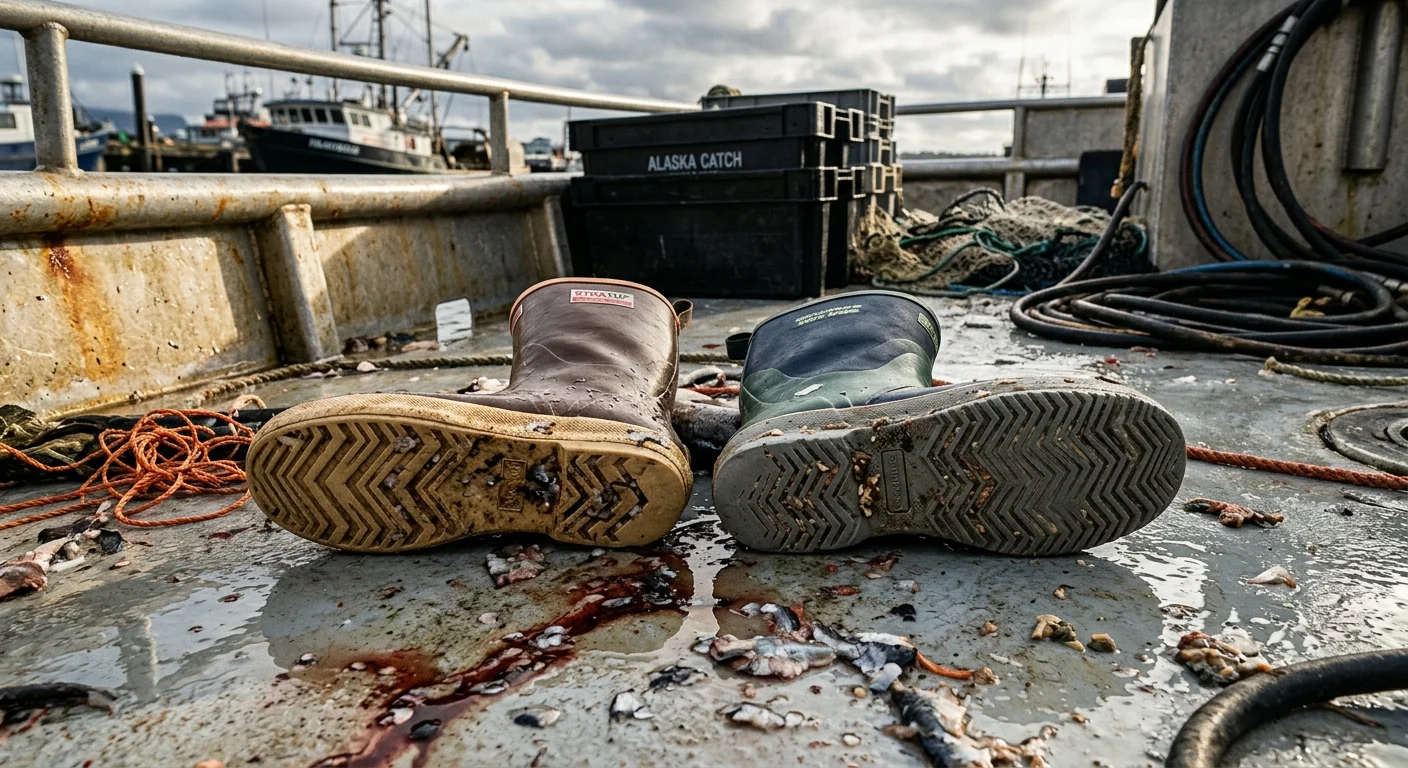
Six months of grip tests, comfort tracking, and sole decay data all point to the same conclusion: there is no universal winner here — only the right boot for the right deck.
Stop searching for the better boot on paper. Start identifying which fishing scenario matches your actual life on the water.
Nearshore or Weekend Recreational Fishing → Buy the Xtratuf 6" Ankle Deck Boot
You run half-day inshore charters. Weekend bay fishing. The occasional nearshore flounder or redfish trip, back at the dock before dinner. Your deck stays clean — seawater, maybe some light blood, a rinse-down at the end of the day.
Xtratuf was built for this environment. It fits your conditions well.
1.Lighter at ~0.85 lbs per foot — your legs stay fresher over a 4–6 hour session
2.Zero break-in period — pull them on and go, even on day one of a trip
3.Chevron outsole scores A+ on clean wet fiberglass — the surface most recreational boats have
4.Warm-weather comfort holds at 5.5–6/10 in summer heat, which works fine for shorter sessions
The one-line decision rule: On the water fewer than three full days a week? Fishing clean fiberglass? Main concern is stepping off a wet gunwale without slipping? Get the Xtratuf.
Offshore, Commercial Schedules, or Heavy-Contamination Decks → Buy the Grundens Deck Boss
You're twelve hours into a swordfishing trip. The deck is slicked with fish oil, bait debris, and blood. You haven't sat down in four hours. At that point, boots stop being gear. They become safety equipment.
Grundens is the clear call here. The grip data backs it up with no room for debate.
1.A+ ratings across aluminum decks, fish oil, and heavy bait contamination — every condition where Xtratuf drops to B+ or A–
2.Structural torsion shank and deep heel cup lock your ankle through hours seven, eight, and nine on a rolling offshore boat
3.Sole grip holds at 8.5–9.0/10 at the six-month mark under commercial use — Xtratuf scores 6.5–8.0/10 under the same conditions
4.Deeper razor sipes cut through thick oil film where Xtratuf's shallower chevrons lose contact
The one-line decision rule: Average trip runs longer than eight hours? Deck sees heavy contamination on a regular basis? Running a commercial schedule May through October? The Grundens Deck Boss pays for itself in safety margins alone.
The Mixed-Use Scenario: Charter Captains and Multi-Surface Operators
Your week splits between offshore runs, dock work, and half-day charters. You don't fit cleanly into either camp. That's a different problem.
For that mixed workload, look at the Grundens Deviation 6" . It sits between both boots. Lighter than the Deck Boss. Better oil-deck traction than the Xtratuf. The profile handles wet-to-gravel surface transitions without burning through tread life fast.
The Final Decision Matrix
Your Situation | The Right Boot |
|---|---|
Inshore / nearshore, clean fiberglass decks | Xtratuf 6" Ankle Deck Boot |
Offshore / commercial, heavy contamination | Grundens Deck Boss |
Mixed charter / multi-surface daily use | Grundens Deviation 6" |
Hot summer, short sessions, light fishing | Xtratuf |
Cold water, long shifts, rough seas | Grundens Deck Boss |
The safest boots are the ones built for your deck — not the deck described in someone else's review.
Conclusion
Months of wet decks, fish slime, and early morning offshore runs later — the verdict is clear: these two boots aren't interchangeable. They're built for different anglers.
Running a center console inshore? Aluminum decks, mixed slop, constant movement — the Grundens Deck Boss earns its name. Those multi-directional siped cuts bite into wet surfaces faster and more reliably than anything else at this price. No other boot in this range comes close on traction.
Logging full days on a fiberglass offshore deck? Back-to-back commercial trips, rough weather, long hours — go with the Xtratuf 6-inch ankle deck boot . The chevron outsole holds firm when fish blood and bilge water mix on deck. The all-day cushioning keeps your back in one piece by hour nine. That's a smarter long-term investment.
Stop second-guessing. The deck doesn't care which brand you favor. It respects the boot that keeps you standing — nothing else.
Pick your scenario above. Buy that boot. Stay on your feet.Buying fishing deck boots at wholesale price helps charter operators and fishing teams control long-term gear costs.