Every offshore angler dreads that moment three hours into a squall when you feel the first cold trickle down your back and realize your “waterproof” jacket has a problem right where the panels meet.
It’s physics. Every stitch is a needle hole, and needle holes don’t care what your jacket’s marketing copy says.
This breakdown skips the sales pitch and goes straight to what happens at the seam level, comparing fully seam sealed jackets against standard stitched construction under real hydrostatic pressure, saltwater exposure, and repeated flex. We’ll pull apart how brands like Grundens and Simms justify their price gaps of Waterproof Fishing Jackets, show you exactly what waterproof seam tape should look like up close, and tell you when you’re paying 40% more for protection you don’t need. By the end, you’ll know how to inspect a jacket’s seams yourself instead of trusting a hangtag.
How Stitching Creates a Water Path: The Physics of Unsealed Seams
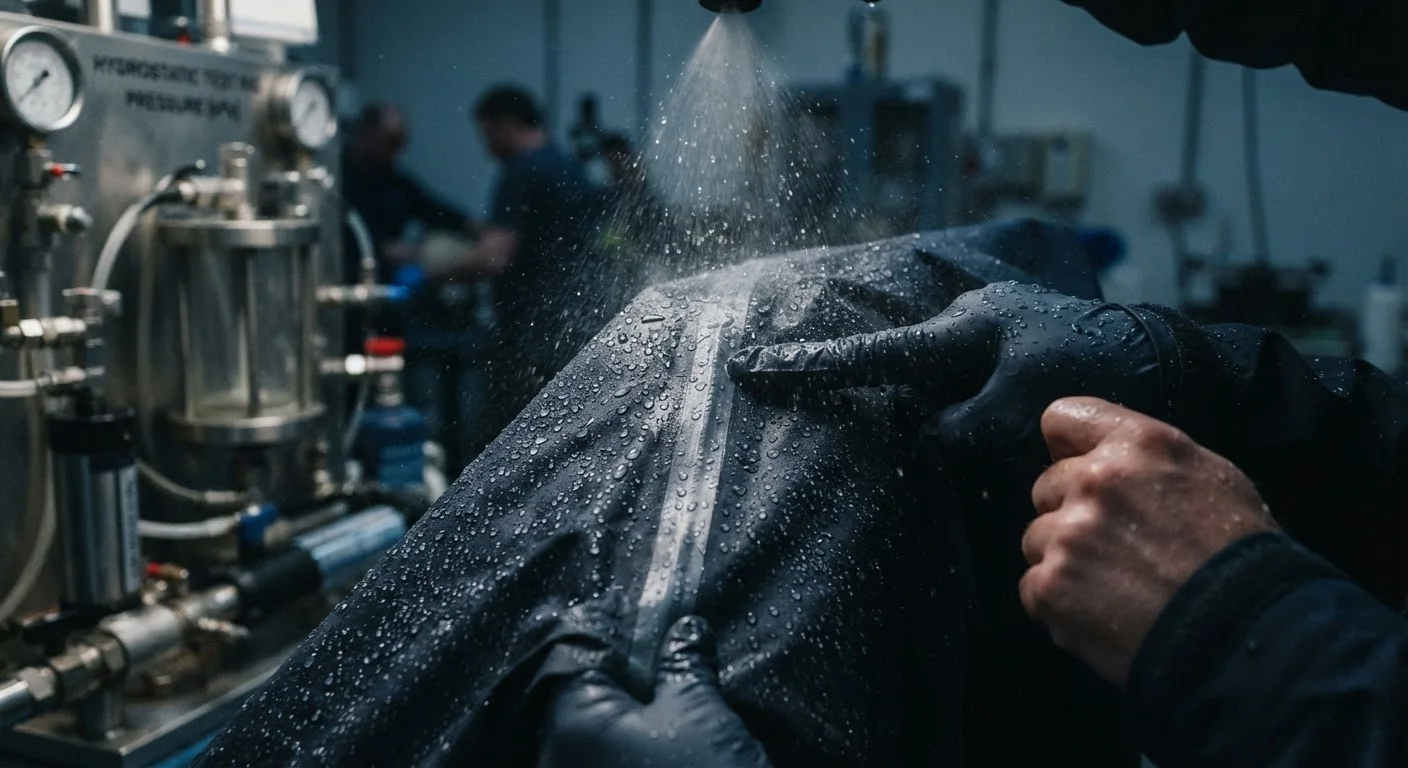
A needle punches a hole through a waterproof barrier and leaves it there.
Coated fabrics on their own are nearly waterproof — the field fabric can hold serious hydrostatic head with almost zero leakage. But the moment you introduce a stitch line, you create a network of needle holes, thread fibers, and micro-gaps that acts as a low-resistance escape route for water. Enlarged needle holes from sewing are the single greatest cause of seam leakage.
Why Tight Gaps Leak Harder
Capillary action pulls water through narrow channels regardless of gravity, and the tighter the gap, the stronger the pull. Capillary rise height increases as the gap radius shrinks. At a gap radius of 0.1mm, roughly what you get at a stitched seam, water can wick upward nearly 15cm against gravity. Shrink that gap to 0.05mm and the wicking distance doubles to 30cm. Get down to hairline gaps around 0.01mm, and water can climb over a meter through thread and fabric interfaces alone.
Facade engineers call this the “cruel paradox” — once a continuous hairline gap exists, it stops being a barrier and becomes a wick.
Pressure and Thread Make It Worse
Stitching doesn’t leak in isolation. Multiple forces stack on top of each other: gravity flow along seam lines and folds, capillary action pulling water against gravity through needle holes, surface tension tracking water along seam ridges to the interior, and wind and pressure differentials actively pumping water through open channels.
Cladding tests show that even modest pressure differences, around 200 Pa, comparable to wind-driven rain on a boat deck, push water through unsealed openings at 5–12 mL per minute. Crank that to 1000 Pa and leakage rates jump to 24 mL per minute.
Hydrophilic threads like cotton swell when wet, but that swelling doesn’t stop leakage — it wicks water directly through the hole. Poorly bonded sealants using water-soluble polyurethane performed worse than unsealed fabric, because sloppy sealing creates leaks instead of closing them.
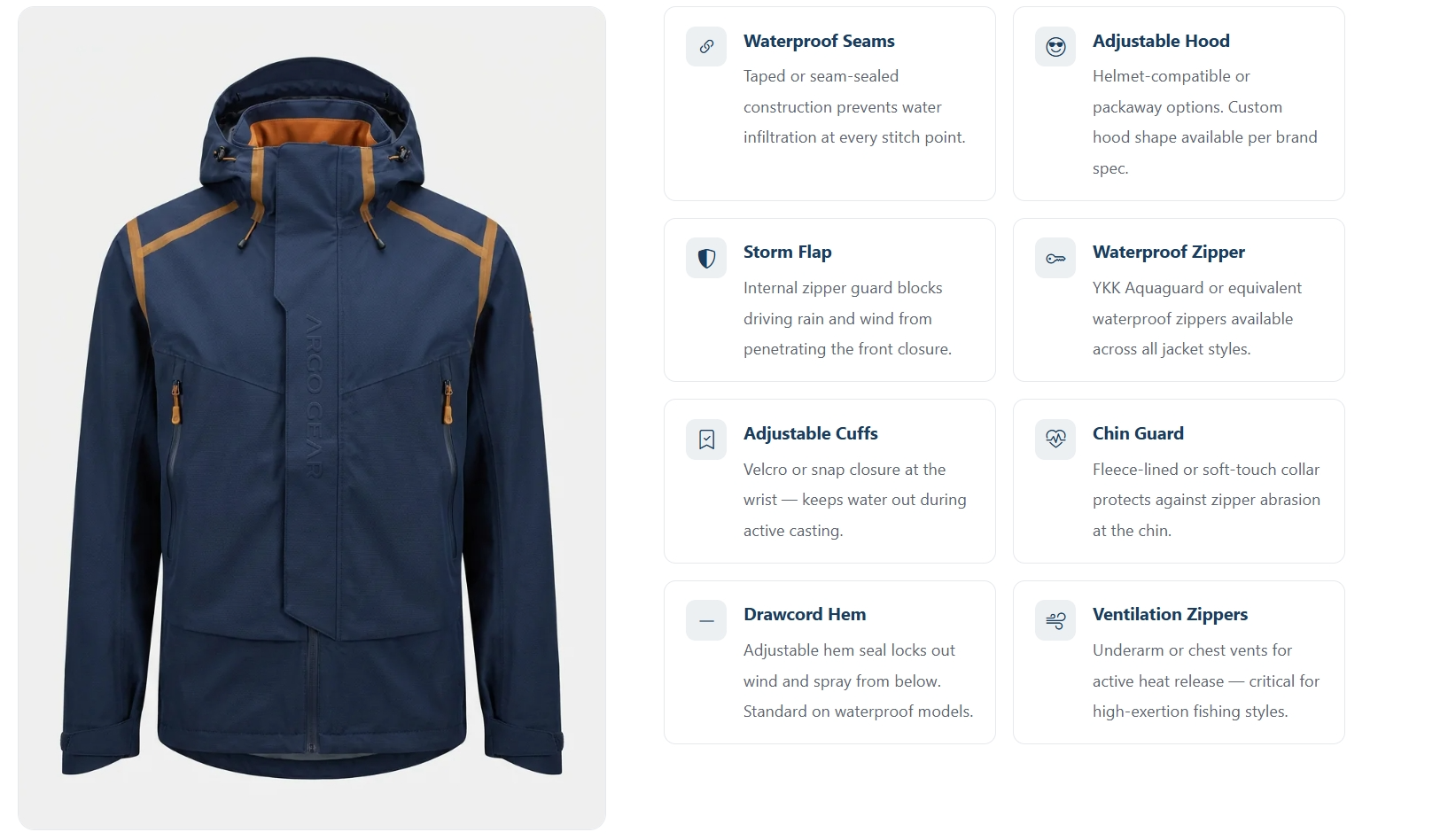
Critically taped seams and fully seam sealed jackets are a direct countermeasure to a well-documented physical failure point.Brands use custom Seam Sealing for Waterproof Fishing Jackets to improve marine performance.
Real-World Brand Comparisons: How Grundens, Simms, and Guy Cotten Handle Seams
Three brands, three different approaches to where they spend their money.
Grundéns uses curved seam construction in its Boundary, Vector, and Bedrock waders. Cheaper competitors use straight-seam layouts. Reviewers call this the defining design choice. The curved seams let the waders move like performance hiking pants. The Boundary's suspender system is fused into one piece with zero seams. That cuts out a failure point at the shoulder where load and wear concentrate hardest. The CrossCurrent line takes a different approach. It wraps the whole wader in 4-layer Gore-Tex construction, building a barrier so tough that seams matter less.
Simms goes the engineering-heavy route. Their premium waders use patented front and back leg seams that improve articulation without sacrificing durability. The G4Z, priced at $999.95 MSRP , uses a bonded, slimmed-down front zipper. This gives less bulk, less rigidity, and fewer stitch lines for water to exploit. Field & Stream's coverage notes Simms redesigned these leg seams to cut leak risk in high-wear zones. The YKK AquaSeal waterproof zippers reinforce that same leak-control logic across the whole garment.
Guy Cotten uses PVC and nylon blend construction with heavy-duty, welded seams. The gear is built for raw waterproofing at the cost of mobility. Field reports describe the fit as tighter than Grundéns, which can restrict arm and shoulder movement. There is less seam-engineering detail available for Guy Cotten compared to the other two brands. Guy Cotten's value proposition is brute-force water resistance, with less emphasis on refined articulation.
Pressure Test Data: Static Hydrostatic Head vs. Dynamic Leakage
Numbers don't lie, but marketing copy does.
Here's what happens in a lab when a seam gets pressure-tested, and why the difference between static and dynamic testing methods matters more than most product pages let on.
How Fabric Hydrostatic Head Testing Works
The hydrostatic head rating you see printed on a jacket's spec sheet comes from a specific test setup. A column of water sits on top of the fabric sample, and pressure builds until water starts pushing through. The tester records results in mbar or cmH₂O, and the industry standard defines failure as the moment three points of leakage first appear on the fabric surface – three distinct penetration points, confirmed and averaged across at least three specimens to rule out a fluke in the weave or a bad tape run.
A single high number on a hangtag doesn't tell you whether that number held across multiple samples or came from one lucky test run.
Static vs. Dynamic: Two Different Failure Modes
Static testing measures the exact pressure at which the first droplet breaks through. It's a snapshot. Pressure goes up, water gets recorded at first penetration, and the test ends. This is the number most brands print, because it's the highest number they can legally claim.
Dynamic testing works differently. Instead of holding pressure and waiting for failure, the pressure stays variable, ramping up and down to simulate real conditions – waves hitting a boat deck, body movement flexing a seam, wind gusts compressing fabric against skin. This is closer to what happens three hours into a squall, when pressure on a seam isn't constant but pulsing.
A jacket can post an impressive static hydrostatic head number and still fail dynamic conditions, because static tests don't account for repeated flex fatigue on welded seams or stitched seam waterproofing. Guy Cotten's PVC welds, for example, are built to hold under sustained static pressure. Grundéns' curved, low-stitch-count seams are built to survive the dynamic flex of a body in motion. Same hydrostatic head rating on paper, different real-world behavior once you're hauling nets in a chop.
Why the Gap Between Numbers Gets Hidden
Most consumer-facing spec sheets only publish the static number, because it's the flattering one. Nobody advertises dynamic decay rates because the numbers look worse and require more testing infrastructure to produce. If you're evaluating fully seam sealed jacket options against PU coated seams on a budget alternative, ask the brand directly whether their hydrostatic head number came from a static test or a dynamic one. A waterproof fishing jacket manufacturer can provide detailed seam testing data for buyers.If they can't answer, assume static. And assume the real-world number under flex and wave impact is lower.
When Standard Seams Are Enough: The Case for Light Freshwater Angling
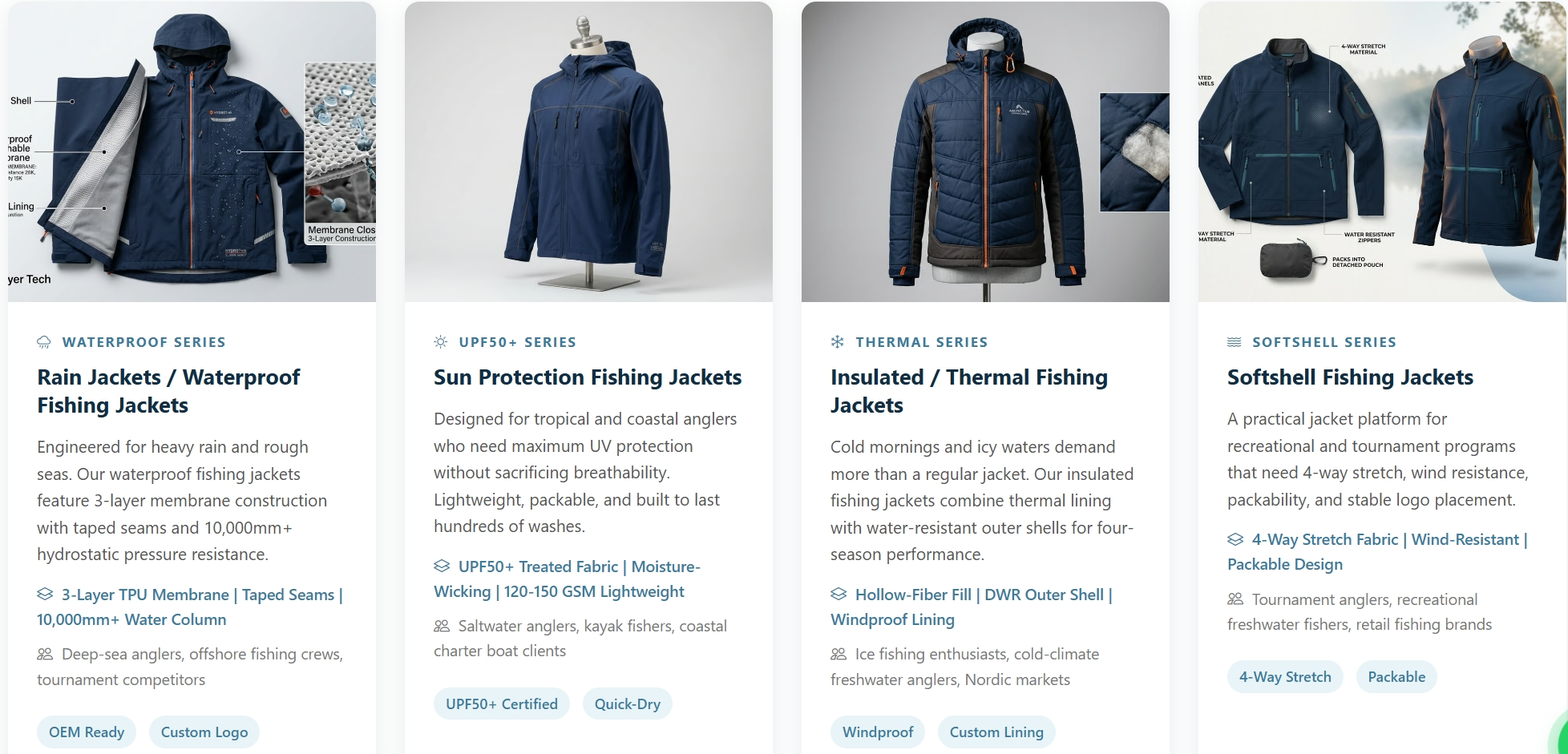
Not every angler needs a $999 wader system.
A trout angler working a riffle with a 2-lb ultralight rod faces nothing like the water load a deckhand hauling nets in open chop. That gap in exposure is exactly why standard seams still make sense for a huge chunk of freshwater fishing.
Light freshwater tackle tells you everything about exposure intensity. Ultralight rigs run 1/64–1/16 oz lures on 1–4 lb test. Light setups bump to 1/16–1/4 oz on 4–8 lb test. Both put you in ankle-to-thigh-deep water, casting across current seams — the fast/slow boundaries where trout and smallmouth stack up — not fighting sustained spray off a bow.
The casting patterns back this up. Anglers "rake" a 20–30 ft seam with casts spaced roughly a foot apart, or drift upstream-and-across along a boulder's fast/slow merger seams. Either way, you're working the surface, not absorbing the 200–1000 Pa pressure swings that hammer offshore jackets during wind-driven rain.
Wading exposure is intermittent splash, not hydrostatic load. You cover one seam, wade to the next, spend most of the session out of direct contact with moving water. A standard stitched seam handles that splash pattern fine. The pressure differential almost never approaches lab thresholds where sealed seams start earning their keep.
For this angler — bank-fishing bubble lines, working the classic five-seam boulder pattern, casting ultralight into narrow current lanes — a PU coated seam or basic stitched-seam jacket is enough. Reliable Standard Seams for Waterproof Fishing Jackets suppliers support different fishing environments.Save the premium for whoever's hauling nets in saltwater chop, not for a Tuesday evening on the river.
Which Seam Construction Fits Your Water?
Run your gear through four questions and the answer comes out the other end.
Node 1: Salinity. Under 0.5 PSU (freshwater rivers, lakes), a standard seam with basic anti-corrosion thread treatment holds up fine. Between 0.5 and 18 PSU (brackish estuaries), step up to taped seams with corrosion-resistant thread. Above 18 PSU (open ocean), you need taped and welded seams, with adhesive and tape rated for both salinity and UV exposure.
Node 2: Temperature. Below 5°C, seam tapes and welds need to survive sub-zero flex cycles without cracking — cheap tape delaminates first here. Between 5–20°C, standard spec tape works fine. Above 20°C with heavy UV, you need UV-resistant tape and thread, or the adhesive breaks down within a season.
Node 3: Use pattern. Under 50 hours per season, basic stitched seams with partial taping are enough. 50–200 hours per season pushes you into double-stitched, fully taped critical seams. Past 200 hours, or if this is commercial use, go welded or hybrid construction with reinforcement at the seat, knees, and crotch — these stress points fail first under repeated flex.
Node 4: Hazard type. Rocky riverbeds and jetty rocks demand wider seam allowances with external bindings. Trawling or pot-hauling favors smooth, low-snag internal welded seams. Ice and shore debris call for reinforced seams at the cuffs and lower legs, using tape rated for cold-flex.
Run your trip against these four questions, and the seam construction decision stops being a guess.
Conclusion
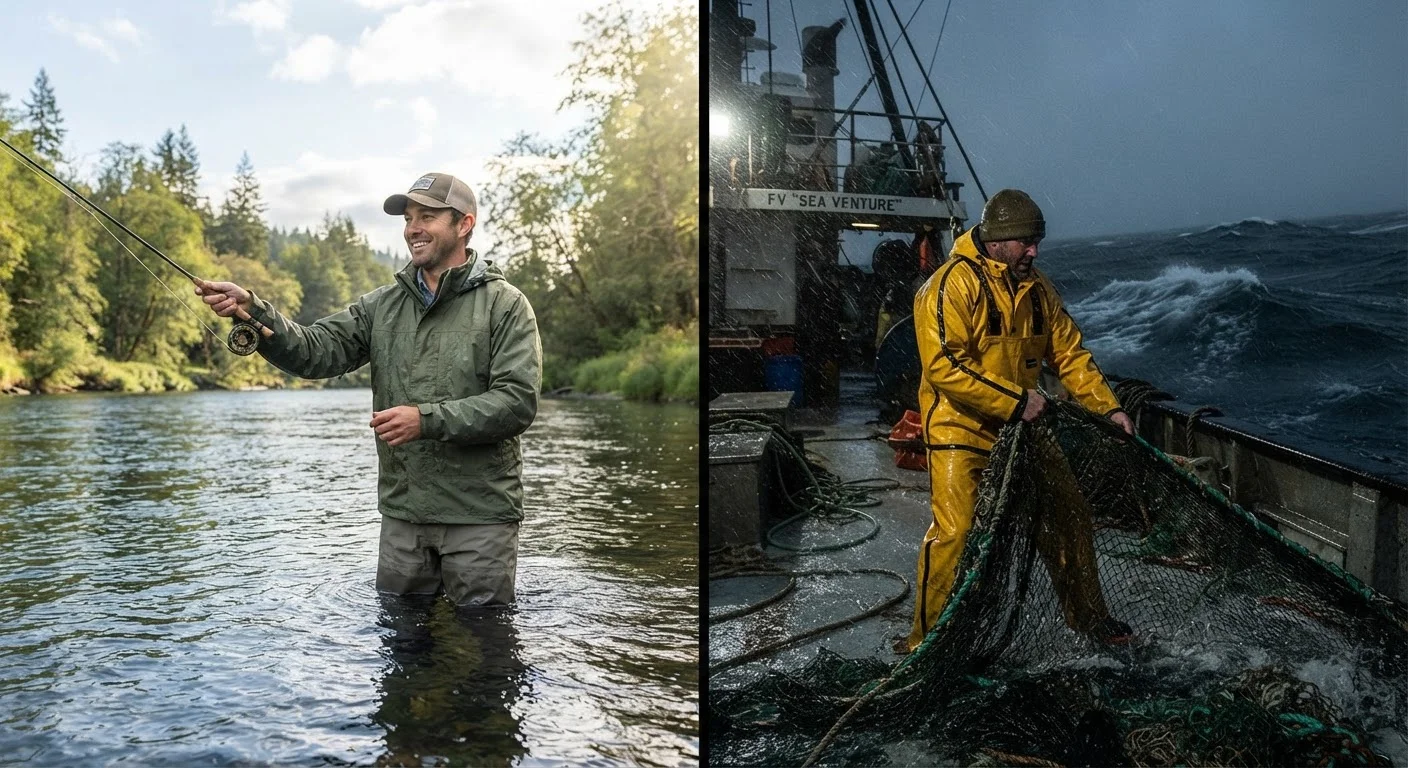
Match the seam construction to the conditions. If you're wading a quiet freshwater river twice a month, a well-stitched standard seam jacket will keep you dry enough, and you'll pocket the savings. If you're running offshore, hauling nets in sideways rain, or spending six hours soaked in saltwater spray, you need a fully seam sealed jacket with a solid hydrostatic head rating. It's the difference between a good day and a hypothermic one.
Don't take a brand's word for it. Run your fingers along the seams before you buy. Check the tape width and look for double-stitched stress points. Your hands will tell you more than any marketing page ever will.
Match the jacket to the water you actually fish, not the water you wish you fished.Brands can compare custom wholesale price options for Seam Sealing for Waterproof Fishing Jackets.