You've been there — stuck in that aisle or scrolling that product page way too long, going back and forth between rubber and neoprene. It feels like a math problem with no formula.
Here's what most gear roundups skip: neither material is the clear winner.For anglers evaluating custom fishing boots or private-label fishing gear product options, understanding the strengths and limitations of each material is far more important than following brand marketing claims. But one of them is almost certainly wrong for how you fish.
Six hours wading through a cold-water stream in the wrong boots? That's a rough day. The right footwear turns that same trip into a productive one. It really does come down to what's on your feet.
This guide skips the fluff. You get:
Real-scenario testing — not just specs on paper
Hard numbers on insulation and durability
A clear decision framework built around three variables: water temperature, time on the water, and budget
Pick the right three, and you stop second-guessing. You start fishing.
Real-World Scenario Match Quick Reference
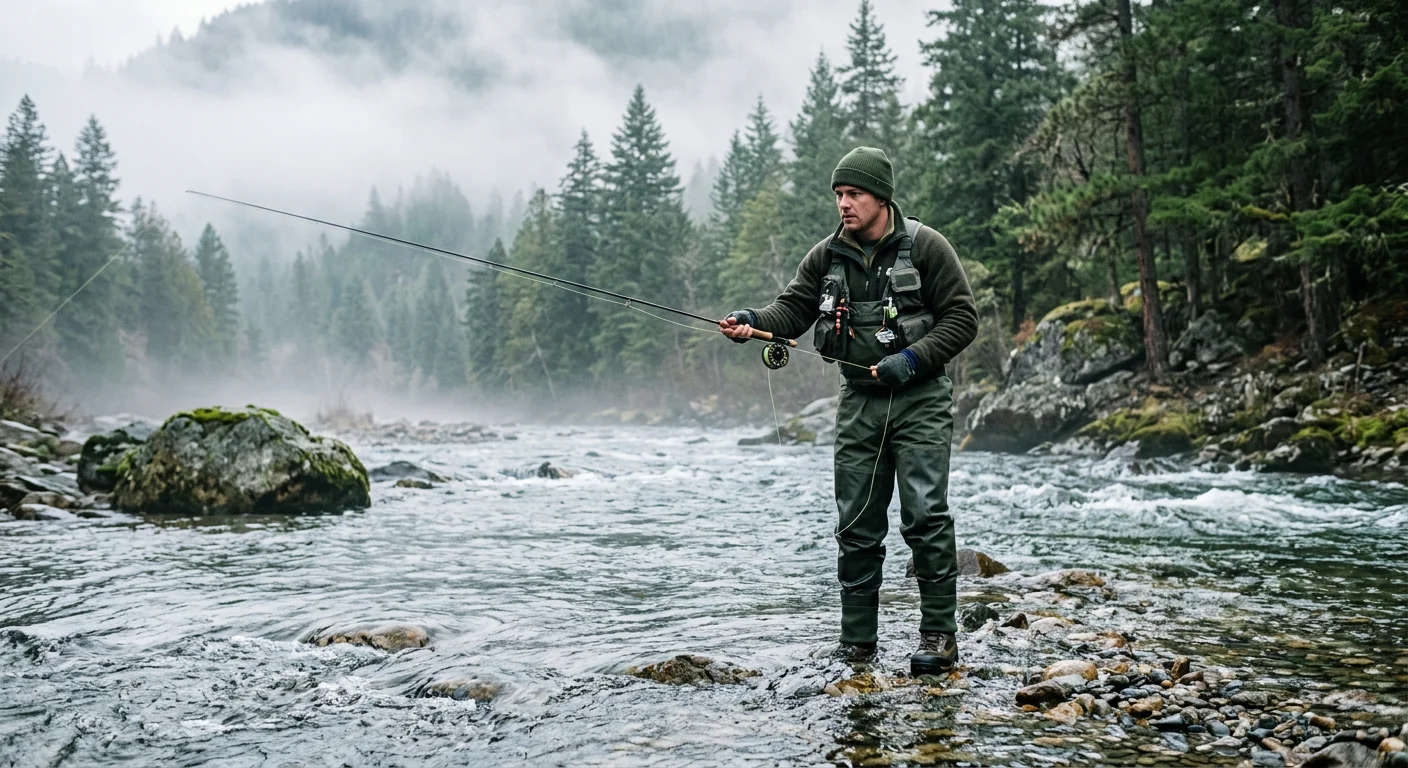
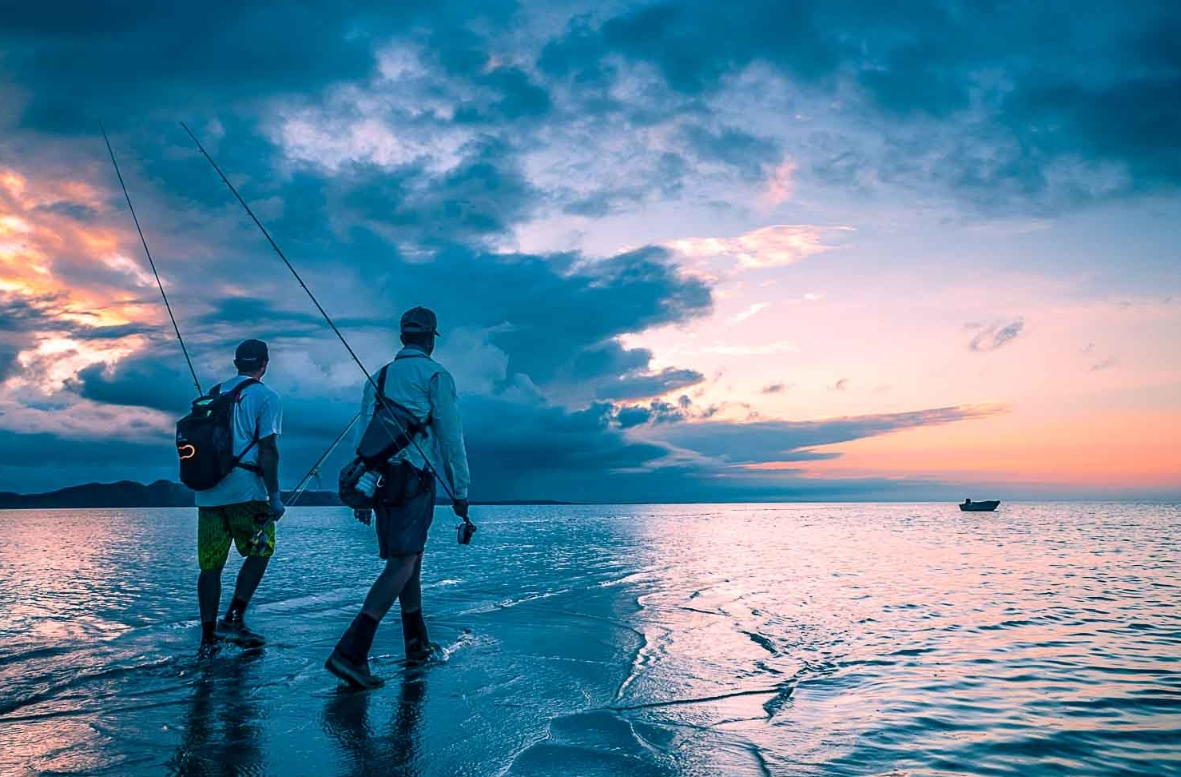
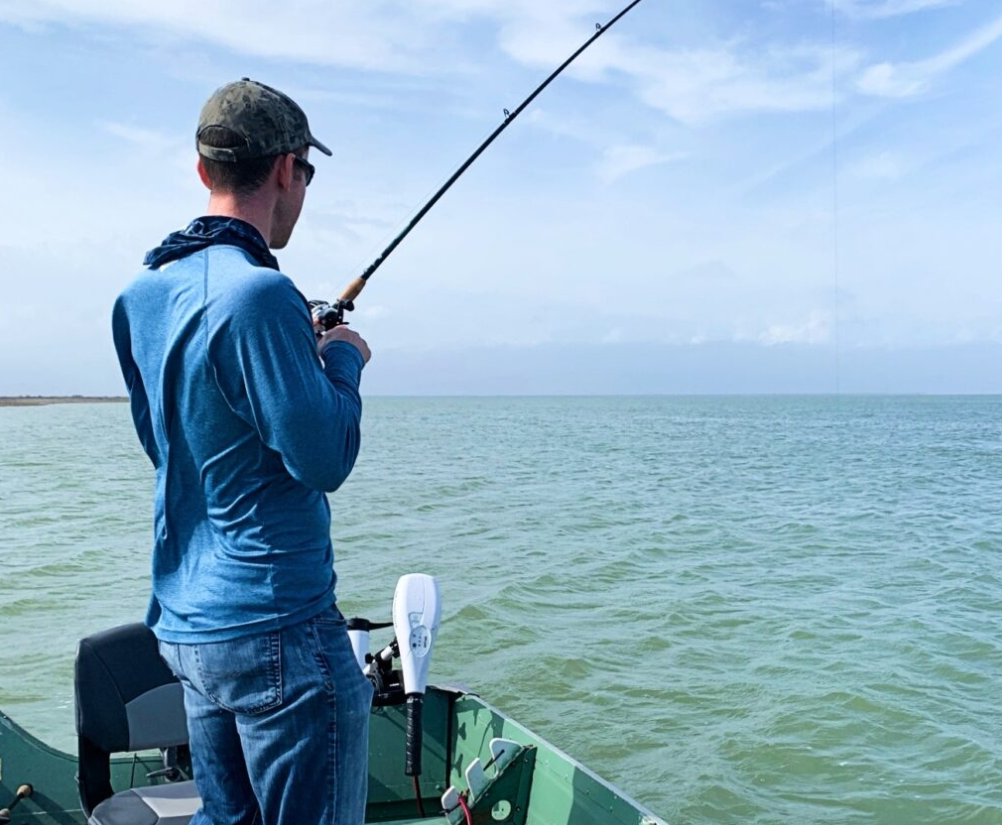
Forget the spec sheets for a minute. The most useful question before buying fishing boots isn't "what's the insulation rating?" — it's "where are you standing when you fish?"
That question cuts through everything. Material choice gets concrete fast once you picture a specific spot: frozen creek at dawn, sun-baked pond bank at noon, oyster flat with the tide rushing in. Each of those spots has a clear winner between rubber and neoprene. Not a "it depends" answer — a real winner.
Below are six real scenarios, each with a direct recommendation and the reasoning behind it.
The 6-Scenario Decision Breakdown
Scenario 1: Cold Freshwater Creek / Winter River Wading
(Water temp: 0–5°C, sessions 3–6+ hours, low activity)
→ Go Neoprene. Minimum 4.5–5 mm.
Neoprene's closed-cell foam traps micro-air pockets against your skin. This delivers 2–3× the thermal insulation of uninsulated rubber at the same thickness. Drop below 3.5 mm, and field reports show numb toes and cold feet within 60–90 minutes in near-freezing water. That's not just discomfort. That's a ruined trip. For cold creek and winter river wading, this call is non-negotiable.
Scenario 2: Warm-Weather Bank Fishing / Pond & Lake Shore
(Air temp >25°C, minimal wading, mostly dry ground)
→ Go Thin Unlined Rubber. Ankle to mid-calf height.
A 1.5–2.5 mm unlined rubber shell stops heat from building up inside the boot. Shorter shaft height cuts boot volume and weight by 15–30% versus knee-high options. That's a real difference after hours of walking the bank in summer heat. Neoprene in hot conditions turns your feet into a slow cooker. Thin rubber wins on hot-weather footwear, every time.
Scenario 3: Saltwater Flats, Tidal Shore & Oyster Beds
(Daily salt exposure, rough surfaces, frequent rinse-downs)
→ Go Reinforced Rubber with Non-Marking Lugged Outsole.
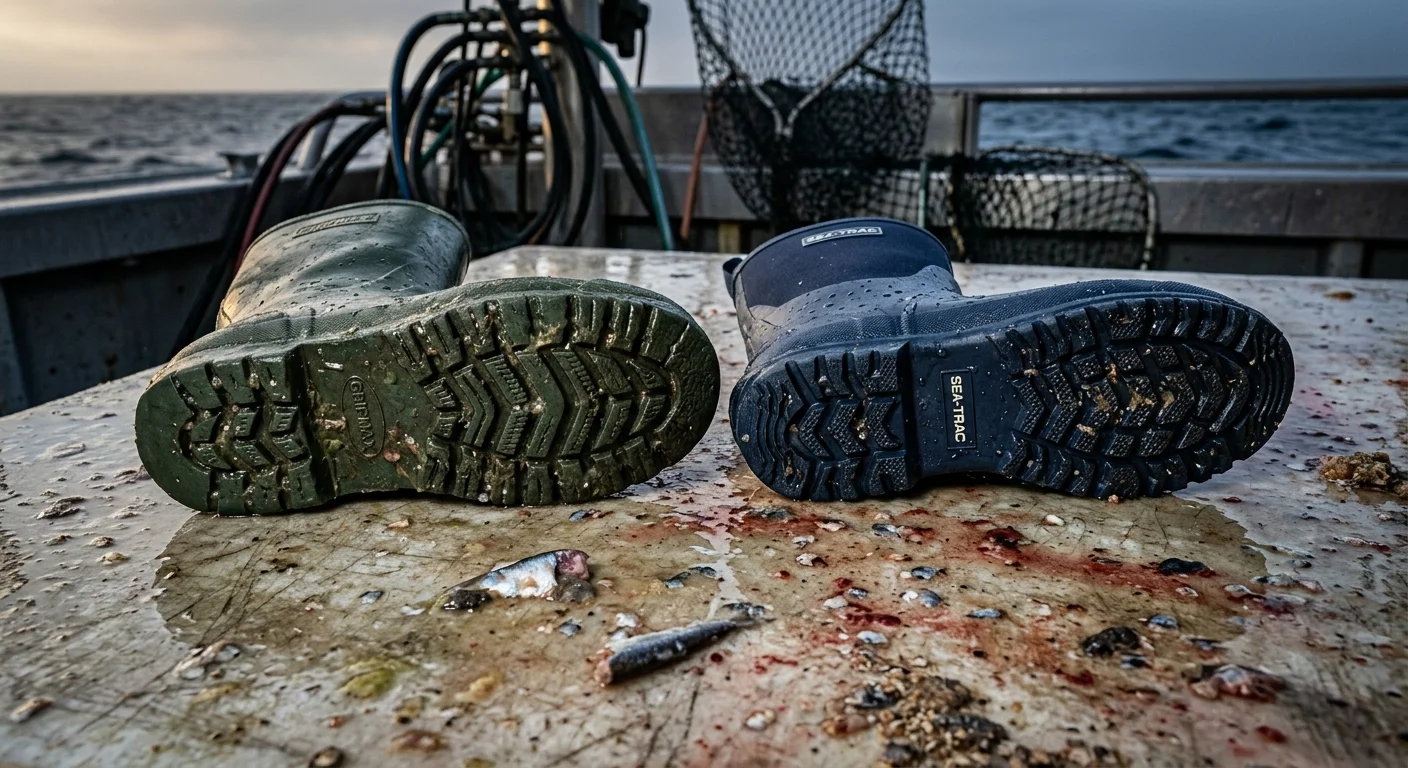
Vulcanized rubber fights off saltwater oxidation at a level most neoprene fabrics can't touch. Molded or welded seams cut out the salt-induced weak points that stitched construction develops over time. The lugged outsole grips wet fiberglass boat decks without leaving marks. The smooth outer shell rinses clean in seconds — critical for daily guide use or back-to-back tidal flat sessions. Porous neoprene traps sand and holds odor. Saltwater fishing boots need to be rubber, full stop.
Scenario 4: Ice Fishing / Extreme Cold Pier & Dock
(Sub-zero air temps, down to −15°C and below, stationary for hours)
→ Go Heavy Rubber Shell + 5 mm Neoprene Gusset Hybrid.
Pure rubber goes brittle below −15°C. Flexibility drops, and crack risk climbs fast. A neoprene inner gusset or bootie holds flex and keeps toes warm through the long, still sessions that define ice fishing. The vulcanized rubber outer gives you a 100% waterproof, slush-proof base for ice holes and pier puddles. Check for boots with rated temperature specs — many quality cold-weather fishing boots carry ratings down to −30°C or −40°C. That rating is a real purchase filter, not marketing noise.
Scenario 5: Muddy Riverbank / Marsh & Cattail Sloughs
(Deep soft mud, repeated leg extraction, long walks on saturated ground)
→ Go Neoprene-Dominant Knee-High.
Stiff rubber shafts fight you in deep muck. Every step turns into a small battle between your calf and the suction pulling your boot down. Neoprene's natural flex cuts that resistance, reducing knee and calf strain across a long marsh session. Foam-core construction also shaves overall boot weight by 10–20% versus full-rubber knee-highs — a number that starts to matter hard around kilometer four of a marsh trek. Plus, the snug calf fit keeps boots locked on when the mud grabs hard.
Scenario 6: Stream Crossings / Mixed Trail and Multi-Terrain
(Rocky riffles, gravel bars, wet grass, long distances)
→ Go Rubber-Neoprene Hybrid — or a Wader + Separate Wading Boot Combo.
On long hiking-to-fishing days, weight runs the show. Every extra 0.5 kg per boot adds an estimated 3–5% perceived fatigue on extended hikes. Hybrid boots split the difference — enough rubber structure for ankle support, enough neoprene flex to keep the upper light and mobile. For serious multi-terrain mileage, many experienced anglers switch to stockingfoot breathable waders paired with dedicated wading boots. This setup sharpens ankle movement and lets you dial in fit for long days. Also, on rocky and slippery crossings, outsole traction comes first — specialized wading soles cut slip risk by 30–40% compared to basic hard rubber, per fishing boots manufacturer field data.
The Scenario-Material Quick Reference Table
Fishing Scenario | Recommended Material | Why It Wins |
|---|---|---|
Cold freshwater creeks / winter rivers | Neoprene ≥4.5–5 mm | Closed-cell insulation prevents heat loss in near-freezing water |
Warm bank & pond fishing | Thin unlined rubber | Minimizes sweat and overheating; fast on/off for quick casts |
Saltwater flats & tidal shore | Reinforced rubber + lugged outsole | Resists salt, shell cuts, and rinses clean fast |
Ice fishing / extreme cold pier | Heavy rubber shell + 5 mm neoprene gusset | Prevents brittleness below −15°C; maximizes insulation while stationary |
Muddy riverbanks / marsh | Neoprene-dominant knee-high | Flexible shaft eases mud extraction; lighter for long marsh walks |
Stream crossings / multi-terrain | Rubber-neoprene hybrid or wader + boot combo | Prioritizes weight reduction and traction over long mixed-terrain hikes |
Find your row. That's your boot. Everything else in this guide gives you the data to feel confident about that choice.
Critical Blind Spots & Hidden Buying Pitfalls
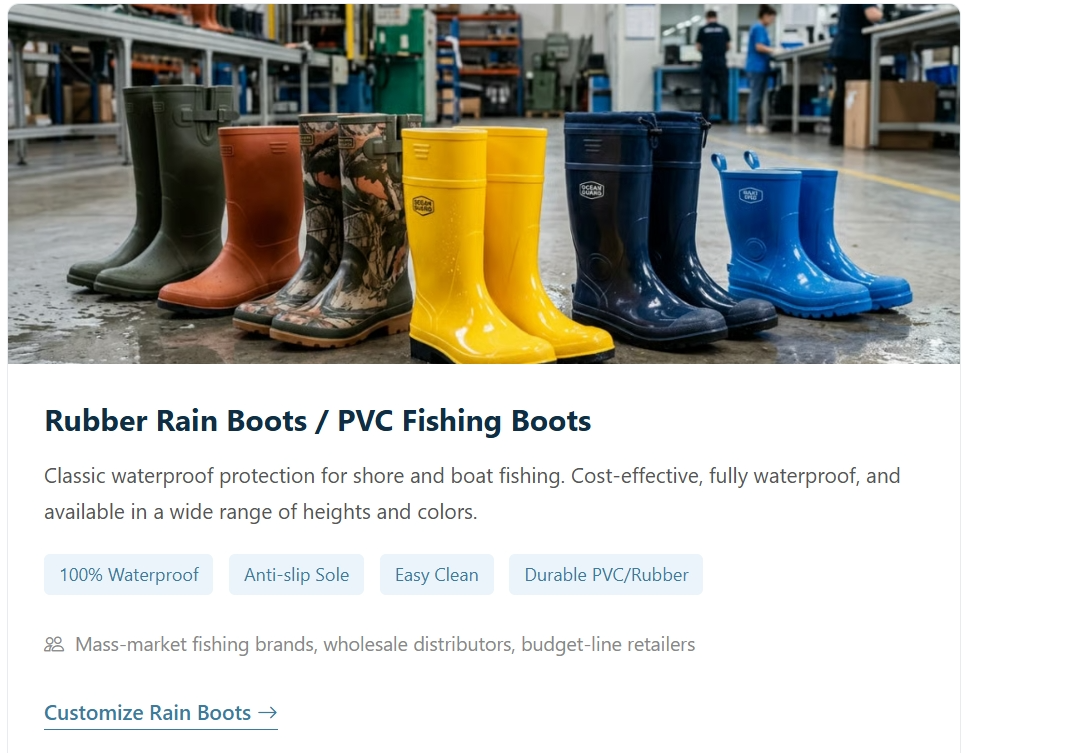
Most fishing boots don't fail because the product was bad. They fail because the buyer didn't know what to ask. The spec sheet looked fine. The fishing boots price felt right. The reviews were decent. Then three seasons in, the ankle seam leaks. Or the rubber cracks on a January morning. Or your feet are soaked in sweat by 10 a.m. every summer trip.
These aren't bad luck stories. They're predictable failures. Every single one traces back to a specific blind spot that fishing boot marketing has zero incentive to fix.
Here are the five that cost anglers the most money — and the most miserable days on the water.
Blind Spot #1: Thin Neoprene Is Still Neoprene
A lot of anglers believe thin neoprene boots are fine for warm-weather fishing. The logic makes sense: less material, less heat. It feels right. It's wrong.
The problem isn't thickness. It's the cellular structure. Closed-cell neoprene foam has an air permeability of 0–5 L/m²/s — near-zero airflow, no matter how thin the panel is. Compare that to breathable membranes like Gore-Tex, which move 100+ L/m²/s at similar pressure. Sweat has nowhere to escape.
In field conditions above 25°C air temp, internal boot temperatures often hit 32–35°C — even while you're standing in water that's just 15–20°C. On dry bank? It gets worse. No water flowing past the boot means no cooling at all. The heat just builds.
That trapped-moisture environment causes skin maceration — the whitening, softening, wrinkling you recognize from staying too long in a bathtub. Bacterial and fungal growth follow. So you're dealing with a foot health problem on top of a comfort problem. And warm, acidic sweat breaks down the adhesives holding neoprene panels together, shortening boot life from the inside out.
The fix: For hot-weather wading, use breathable wading boots paired with removable neoprene booties . Wear the neoprene in cold water. Pull it off on the trail. For shallow warm-water fishing where you're mostly on the bank, unlined rubber is the better call. Don't put neoprene on your feet for a summer pond session.
Blind Spot #2: "Waterproof Rubber" Doesn't Mean "Cold-Proof Rubber"
A boot rated waterproof to the knee will still crack at the ankle flex point if the rubber compound wasn't built for low temperatures.
Standard natural rubber starts losing flexibility at its glass transition zone between −10°C and −20°C . In that range, flexibility drops fast. The instep and ankle bend hundreds of times per hour while walking on ice. That repeated flex produces micro-cracking along the fold lines. You can't see it until you're already taking on water.
Cold-flex testing (like ISO cold bend standards) shows standard rubber compounds developing visible surface cracks after tens to hundreds of flex cycles at −20°C. Cold-resistant blends — built with NR/SBR combinations, plasticizers, and anti-ozonant additives — survive more than 10× as many cycles before cracking starts. That's not a small difference. That's a completely different product lifespan.
Ozone and UV exposure pile on top of cold stress too. Without anti-ozonant protection, brittle cracking on stretched ankle zones can show up across 1–3 winters .
What to verify before buying:
- Look for clear language: "ozone-resistant," "anti-ozone / UV stabilizers," or ISO 1431 ozone resistance compliance
- Material callouts like "cold-resistant rubber compound," "vulcanized rubber blend for extreme cold," or references to nitrile/SBR/EPDM blends
- Cold-flex test temperatures listed in product datasheets
A boot that says "good to −40°C" with no supporting material data is a marketing claim. Not an engineering specification.
Blind Spot #3: Neoprene Seams Fail Before the Foam Does
Neoprene boots are panel constructions. Multiple pieces of foam get cut, glued, taped, and sometimes stitched into shape. That's fine for comfort and fit. But every one of those seams is a weak point.
Glue lines act as stress risers — repeated flexing puts strain right where the adhesive joins two panels. Salt, detergents, and bacteria attack adhesive tapes and foam bonding faster than they attack the neoprene itself. The result follows a clear failure pattern: leaks show up first at the inside ankle seam, heel junction, and toe bend — not the main body of the boot. This happens within 1–3 seasons of regular saltwater or abrasive mud use.
One-piece vulcanized rubber shells avoid this problem entirely. No stitch holes in the waterproof barrier. The upper-to-sole bond is rubber-to-rubber, vulcanized through and through. The waterproof integrity holds until the rubber compound itself cracks — and that takes much longer with a well-formulated compound.
The trade-off is real. Solid rubber gives up ankle flexibility and close fit . It's stiffer per step, causes calf rub on steep banks, and burns more energy on a long approach. Neither construction comes free.
The practical split:
- Multi-year saltwater use, full-time guide work, serious mud terrain → go with vulcanized one-piece rubber for long-term waterproofing
- Weekend freshwater sessions where comfort and warmth matter more than a five-year lifespan → neoprene panel construction is a fair trade
Blind Spot #4: Dry Weight Is a Near-Useless Number
Catalog weight specs measure boots sitting on a warehouse shelf. They don't measure boots after an hour in a silty river bottom.
The dry weight difference between a 3–5 mm neoprene boot and a heavy vulcanized rubber boot is about 100–150 g per pair — most anglers would never notice that. But in wet field conditions, dense rubber shells with deep closed-lug tread patterns hold 30% more water and mud than neoprene designs after immersion and walking in clay or silt. That adds up to an extra 0.5–1.0 kg per leg on a long bank hike.
Across a 5–10 km walk to your fishing spot, that extra weight hits you with every step. It raises your caloric cost, speeds up fatigue, and punishes any gait problems caused by stiff soles.
Before you buy, check three things beyond the weight spec:
1. Tread pattern — Deep, closed lugs with no self-cleaning channels pack clay and hold it
2. Drainage design — Does water have any path to exit, or does the construction trap silt in folds and gussets?
3. Surface texture — Heavily detailed mold textures collect fine silt; smoother outer shells shed it
A lower catalog weight means nothing on mixed trail-and-water days if the lug design turns your boots into mud anchors by kilometer three.
Blind Spot #5: "Insulated" Is a Word, Not a Specification
This is the most expensive blind spot in fishing boot retail.
Terms like "insulated," "thermal lining," and "warm fleece interior" show up on product pages with no actual data behind them. Some of those "insulated" boots hold nothing more than 2 mm felt or thin polyester padding — materials that compress and lose their insulating ability the moment they get wet, then get worse with every wash and season.
For reference, here are the neoprene thickness benchmarks serious fishing rubber boots manufacturers use:
Neoprene Thickness | Practical Temperature Range |
|---|---|
3 mm | ~0°C to −5°C with active movement |
5 mm | ~−10°C to −20°C with proper socks |
7–8 mm | −20°C to −40°C, static ice fishing use |
A boot claiming "insulated to −30°C" with no stated neoprene thickness and no test standard isn't giving you information. It's giving you the appearance of information. Lab ratings often assume specific sock combinations, set activity levels, and short exposure windows that fall apart after four hours of standing still on ice.
Verification checklist for any insulated fishing boot:
- Get the exact neoprene thickness in mm for both the foot bed and shaft — ask for each zone separately
- Confirm whether insulation is full-length or foot-only (shaft insulation matters for stationary cold-weather fishing)
- Check for reference to EN ISO 20345 cold insulation or an equivalent footwear standard
- No neoprene thickness listed anywhere in the product docs? Assume ≤3 mm — that's not true extreme-cold insulation
For sub-zero static use — ice fishing, blind sitting, long pier sessions — require ≥5 mm neoprene with documented cold-chamber testing. A "−30°C comfort rating" with no test standard is not a buying filter. It's a marketing sentence.
All five blind spots share one thing: you can't see any of them at the point of purchase. The boot looks fine in the product photo. The spec table has the right numbers. It's only after a hard season that the seam gives out, or the ankle cracks, or your feet start boiling at 9 a.m. in July.
Know what to ask before you buy. The purchase is the easy part. The three years that follow are what matter.
30-Second Decision Matrix by Core Variables
Three variables determine your boot. Everything else is noise.
Water temperature tells you how much insulation your body needs. Time on the water tells you how much that boot needs to flex, breathe, and carry weight across hours — not minutes. Budget locks the construction tier. That tier determines how long the boot holds up under real-use punishment.
Run through all three in sequence. The right boot is waiting at the end.
Step 1: Water Temperature Sets Your Insulation Floor
This is non-negotiable. Get the insulation wrong and nothing else matters.
Below 10°C — cold freshwater creeks, glacier-fed rivers, winter wading:
You need ≥4.5–5 mm neoprene or a thick-lined rubber shell — no exceptions. Drop below that threshold and expect numb feet within 45–60 minutes of low activity. That's not discomfort you can push through. Dexterity loss follows. Then your balance suffers. Then your slip risk climbs on every wet rock underfoot. Skip unlined rubber in this range. It won't cut it.
10–25°C — cool spring banks, mild-weather wading:
3 mm neoprene or light-lined rubber handles this band well for 2–4 hour sessions. Your personal cold tolerance matters here. You chill fast? Lean toward neoprene. You run hot? Unlined or light-lined rubber keeps you from overheating. Go above 3 mm in this range and sweat builds up. The second half of your day gets worse than the first.
Above 25°C — summer ponds, warm tidal flats, bank fishing in July:
Unlined rubber or breathable mesh with thin 1–2 mm neoprene booties. Full stop. Anything over 3 mm raises blister risk through sweat, skin breakdown, and friction — the same foot problems covered in the blind spots section above. The air is warm. The water isn't cold. Put drainage and breathability first.
Step 2: Session Length Adjusts Flexibility, Weight, and Cushioning
Your insulation floor is set. Now duration shapes everything else about the build.
Under 2 hours — boat decks, piers, dock fishing:
Cushioning and slip resistance matter more than flexibility here. You're not covering ground — you're standing. Look for thick EVA or dual-density PU insoles that stop heel bruise and arch fatigue within 90–120 minutes of static standing. A stiffer, heavier boot is fine. Your ankles aren't logging miles.
2–6 hours — bank fishing, moderate wading, mixed terrain:
This is the sweet spot for rubber-neoprene hybrids . You get a rigid lower shell for durability plus a flexible neoprene shaft that cuts ankle fatigue across hours of walk-stand alternation. Target ≤1.0–1.2 kg per pair for mid-calf boots. Moderate shank support — nylon or steel — protects your arch on gravel bars and rock-hopping riffles. Your benchmark: no hot spots or ankle pinch after four hours.
Over 6 hours — long hikes in, full-day static sessions, multi-terrain days:
Friction and moisture management run the show now.
Cold, low-sweat conditions: Go with neoprene-focused construction , wicking liner socks, and planned airing breaks every 3–4 hours.
Mixed temps or higher sweat output: Use a rubber shell with an insulating sock system plus removable insoles you can swap between sessions.
Heel lock geometry becomes critical. Keep heel lift to ≤2–3 mm per stride. More than that and blistering ruins day two of any multi-day trip.
Step 3: Budget Locks Your Construction Tier
$40–$80 — entry sulfured rubber:
Works for short, infrequent use. Plan on 2–3 year replacement with moderate seasonal fishing (10–20 days per year). Heavy weekly use brings cracking or seam fatigue within 1–2 seasons. Cold performance leans on your sock strategy: synthetic liner plus mid-weight wool, and add a thin neoprene sock below 10–12°C.
$80–$150 — hybrid rubber/neoprene mid-tier:
The best cost-to-performance ratio for most anglers. Rubber lower, 3–5 mm neoprene shaft, taped or glued seams, contoured insoles. Handles the 10–25°C band very well. Thicker versions push down toward 5–8°C with proper socks. Expect 3–5 seasons of regular hobby use with proper rinsing and drying.
$150+ — technical insulated systems:
These come with removable liners, anti-UV and ozone-resistant rubber compounds, reinforced outsoles, and toe and heel caps. Built for guides, intensive seasonal work, or conditions below 0°C. Rinse them, dry the liners, and avoid solvents — many of these systems hold up for 5+ seasons of heavy use. Liner and outsole replacement is often cost-effective before the shell itself gives out.
The Fast-Lookup Grid
Water Temp | Session Length | Budget | Go With |
|---|---|---|---|
<10°C | 4–8 hr wading | $80–$150 | Hybrid rubber + 4–5 mm neoprene shaft, aggressive lug outsole |
10–20°C | <2 hr boat/pier | $40–$80 | Unlined or light-lined rubber deck boot, thick insole, siped outsole |
>25°C | 6–10 hr hike-wade mix | $150+ | Breathable wading boot + mesh panels + 1–2 mm neoprene booties, stud-compatible outsole |
<10°C | >6 hr static ice or blind | $150+ | Technical insulated rubber, removable high-gram liner, tall shaft |
10–25°C | 2–6 hr bank fishing | $80–$150 | Neoprene-dominant hybrid, flexible ankle, moderate lug outsole |
>25°C | <2 hr warm bank | $40–$80 | Thin unlined rubber, ankle to mid-calf height |
Find your row. That's your boot.
Targeted Gear Direction by Angler Profile
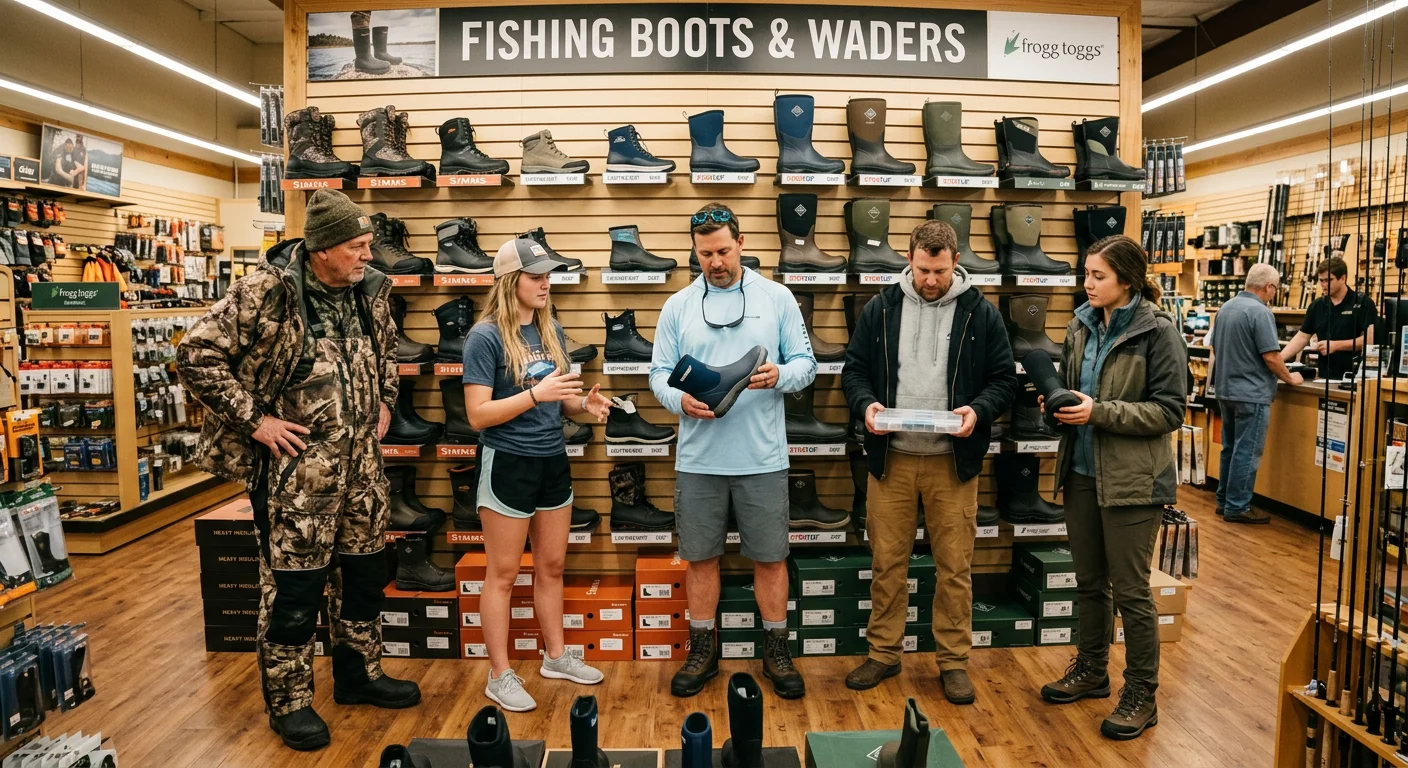
Five anglers walk into a tackle shop. Same aisle. Same wall of boots. Five different right answers.
The decision matrix above gives you the logic. This section gives you the shortcut. Spot yourself in one of the profiles below, and you already have your answer. Skip the rest, go buy the boot, and get back to fishing.
The Budget-Conscious Angler
Who you are: You fish 10–20 days a year. You want reliable gear that holds up on the water and doesn't drain your wallet before you've even bought bait.
Your boot: A mid-calf vulcanized rubber or PVC boot with a bonded outsole. Single-piece molded construction. Minimal seams at the foot. A 10–12 inch shaft covers bank mud and shallow edges. No extra weight. No extra cost.
Your fishing boots price band: $40–$70. This tier exists. It works.
The move most budget anglers miss: Don't cheap out on socks — upgrade there instead of on the boot. A quality merino wool or merino-blend sock (light to mid-weight) pushes your comfortable temperature range from around 40° f to 80°F. Your boot budget stays untouched. Merino handles moisture and odor far better than cheap synthetic liners inside a $50 boot.
What to avoid: Unbranded neoprene boots under $60. The glued seams and adhesive tape split at flex points. Heel separation starts within a season of regular pull-on, pull-off use. The neoprene foam packs down, loses density, and stops insulating — right before your second winter with them.
The Cold-Weather and Ice Fishing Specialist
Who you are: January is your month. You're on frozen lakes before sunup. You stand still for hours. Your feet are your biggest liability.
Your boot: Two options, both solid. The 5–7 mm neoprene insulated boot rated from −20°C to −40°C, or a premium rubber shell with a removable multi-layer thermal liner — the kind used in serious PAC boots and ice fishing lines. Shaft height goes 14–16 inches to handle snow drifts and ice-edge slush.
Non-negotiables for this profile:
- Thick insole with a reflective or aluminum layer — static cold from below kills your toes, not the air
- Roomy toe box; air space insulates
- Outsole compound built for cold flexibility — a stiff lug on a frozen deck is a fall waiting to happen
- Deep, sharp lugs with wide drainage channels for packed snow and wet ice
Weight is not a concern here. You walk 50 yards to a hole and stand there for four hours. Warmth and stability beat every other factor.
Add-on investments that pay: Thermal insoles, over-the-calf wool socks, and a set of strap-on microspike cleats for glare ice. That last one costs less than a single lost fish. It also stops more falls than any boot tread pattern will.
The Year-Round Angler
Who you are: You fish spring opener in snowmelt runoff and you're still out there in August heat. One pair of boots needs to cover both. You're tired of gear that earns its keep for only three months of the year.
Your boot: A rubber shell with a removable 3 mm neoprene liner bootie . This is the one profile where a modular system earns its price premium of fishing boots.
The system works like this:
- Below 50°F: liner in, mid-weight wool sock, full insulation stack
- Above 65°F: liner out, thin synthetic sock, direct rubber shell against breathable fabric
One boot. One purchase. Comfortable operating range with correct sock pairing: 30°F to 80°F .
Spec targets worth holding out for:
- 12–14 inch shaft for bank use and small boat decks
- Multi-terrain lug pattern — mud, grass, and wet wood each need different tread geometry than a pure wading outsole
- Pull-out liner bootie design (not glued in) — dry it between sessions, and you'll replace it long before the shell wears out
The ROI math: One mid-tier boot at $100–$130 versus a $60 summer boot plus a $90 winter boot. Not a hard call. The year-round system wins if you fish more than a dozen times across seasons.
The Saltwater Angler
Who you are: Tidal flats. Offshore boat decks. Oyster beds and barnacled jetties. Salt is everywhere — in the air, in the water, building up on every surface overnight.
Your boot: High-density, oxidation-resistant rubber with a non-marking, chemical-resistant outsole . No exceptions on either count.
The outsole spec matters. You need a compound soft enough to grip wet fiberglass and gelcoat without chunking, but hard enough to handle fuel and solvent exposure on working boat decks. Siped or fine-cut tread handles slick surfaces well. Deep aggressive lugs are the wrong call here — they scuff gelcoat and trap salt in every channel.
Construction priorities:
- Toe and heel overlays or thickened rubber at high-wear zones — coral, oyster shell, and barnacles chew through standard boot rubber faster than you'd expect
- Reinforced toe cap, heel kick tab, and pull loops wide enough to grab with gloved hands
- Welded or molded seams, not stitched — salt gets into thread and adhesive tape through repeated rinse-dry cycles and breaks both down fast
Your care routine: Freshwater flush after every trip. Air-dry out of direct sun. UV and ozone crack rubber surfaces, and direct sunlight speeds up both. Five minutes of care after each trip is the difference between two seasons and five.
The Occasional Angler
Who you are: Twice a month if work cooperates. Car-to-bank, an hour or two on a familiar spot, home for dinner. You don't need a technical system. You need something that's always in the truck and ready to go.
Your boot: Lightweight unlined rubber, 10–14 inch shaft. That's the whole answer.
The key feature here isn't insulation rating or outsole compound. It's weight and how fast you can deploy it . A boot that's easy to pull on, easy to kick off, and light enough to keep in the back seat without a second thought — that's a boot you'll grab and use. A technical boot that sits in the closet because it's a hassle to pack is worthless.
What matters:
- Wide opening at the top — no lacing, no buckles, no fuss
- Heel kick-off ledge on the outsole
- Basic waterproofing for wet grass, shallow wading, and pond edges
- Minimal insulation — you're fishing the warm months for the most part, and sweat causes more problems than cold does
Storage strategy: Keep them in a mesh bag in the vehicle. Hang dry after use. That's the full care routine. Nothing more complex than that for a boot doing a dozen easy trips per season.
Profile Quick-Reference
Angler Profile | Boot Type | Price Band | Top Priority |
|---|---|---|---|
Budget-conscious | Mid-calf vulcanized rubber, bonded sole | $40–$70 | Durability per dollar + sock upgrade |
Cold-weather / ice | 5–7 mm neoprene or rubber shell + removable liner | $100–$150+ | Static warmth, cold-flex outsole, tall shaft |
Year-round | Rubber shell + removable 3 mm neoprene liner | $100–$130 | Modular insulation, 30–80°F range |
Saltwater | Oxidation-resistant rubber, non-marking outsole | $80–$150 | Salt resistance, deck safety, abrasion overlays |
Occasional | Lightweight unlined rubber | $40–$70 | Low weight, fast deployment, always-in-car readiness |
One row. That's your boot. Everything else in this guide gave you the data to trust that call.
Conclusion
The right boot depends on your specific stretch of water, your time of year, and your budget.
Cold-water streams from October through March? Neoprene insulation isn't optional. It's the difference between a productive morning and packing up at 9 AM. Working warm shorelines or hitting occasional summer sessions? A quality pair of knee-high rubber boots for fishing will outlast neoprene and cost you half as much to replace.
Most anglers don't get this wrong out of carelessness.The best-performing models often come from a specialized fishing footwear factory that understands insulation, waterproof construction, and long-term durability in demanding fishing environments. They just never had a clear framework before buying. Now you do.
Use the 30-second decision matrix. Match it to your main fishing scenario. Your next pair of insulated fishing boots should be the last wrong purchase you make.
Pick your water. Pick your season. Pick the right boot for both.