A bulk order from the wrong fishing apparel factory costs you more than money. You lose months of selling season. You damage trust with your customers. And you end up with a warehouse full of shirts that fade after three washes or lack the UPF protection your brand promised. If you're evaluating a private label fishing apparel manufacturer for a large-volume order, the stakes are too high to rely on a slick sales pitch and a few product photos.
This guide covers the exact vetting process serious buyers use: defining your technical specs, screening for real bulk production capacity, negotiating MOQ and pricing, building a tech pack that keeps quality consistent across thousands of units, and locking down QC terms that protect you if something goes wrong. You'll also get a straight-up checklist of questions to ask before you wire a deposit, plus the red flags that separate a reliable OEM fishing apparel manufacturer from a costly mistake.
Step 1: Define Your Technical and Commercial Requirements Before Outreach
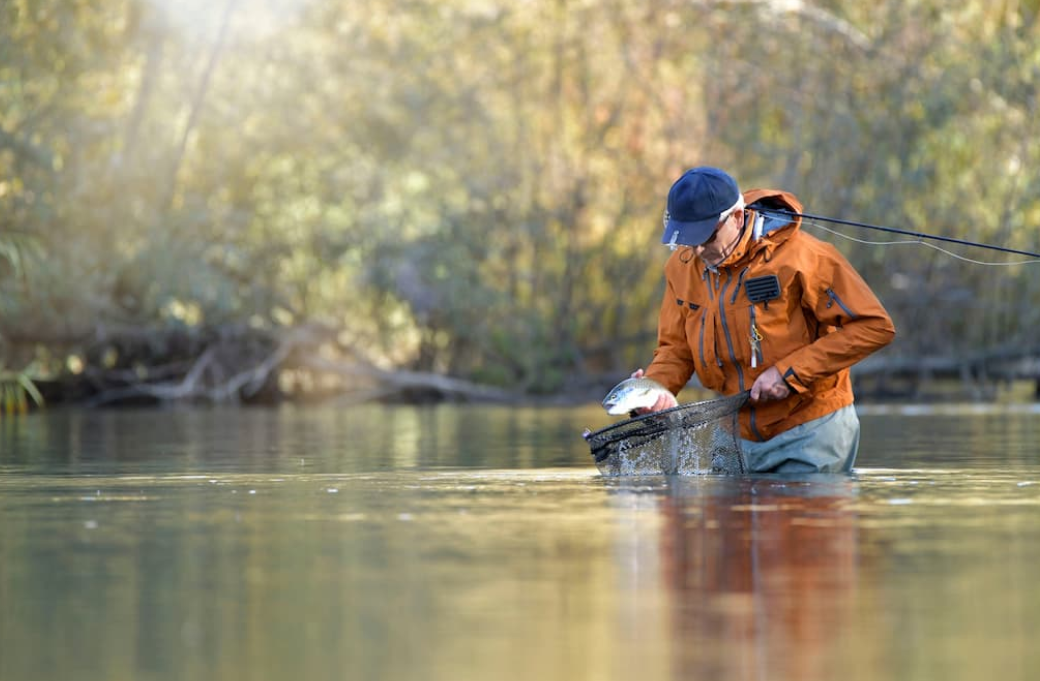
Most buyers skip this step and regret it later. They send factories a vague brief—"UPF fishing shirt, moisture-wicking, need 2,000 pieces"—and get quotes that vary by 300% because nobody is comparing the same thing. Before you contact any OEM fishing apparel manufacturer, write down your specs in numbers, not adjectives.
Lock down the technical parameters first:
UPF sun shirts : Target UPF 50+ (blocks at least 97.5% UVB), fabric weight 120–170 gsm for lightweight quick-dry styles, polyester/spandex blend at 90/10 or 88/12
Softshell jackets : 220–320 gsm shell, hydrostatic head of 8,000–10,000mm for real waterproofing, water-resistant zippers (5# or 8#) with 24–48 hour salt spray resistance for saltwater fishing
Rain suits : Seam tape width 18–22mm, near-zero pinhole leakage rate, waterproofing that survives 20–30 home washes
Then define your private label commercial baseline:
Logo method (screen print, embroidery, DTF) and its MOQ. Screen printing runs 200–500 pieces per color
Target FOB price range per category: UPF shirts $4–7 for basic, $8–10 with premium fabric or print
MOQ structure: 500–1,000 pieces per style, 150–300 per color
Size tolerance standards: chest ±1.5–2.0cm, sleeve length ±1.0–1.5cm
This document is your screening tool. Any factory that can't match these specs isn't worth a second conversation.
Step 2: Where to Source Verified Fishing Apparel Manufacturers at Scale
Not all sourcing channels work the same. B2B marketplaces, trade fairs, and vetted sourcing agents give you the best shot at a real fishing apparel factory, because you can filter by verification status, MOQ, capacity, and export readiness before you ever request a sample.
Search Smarter, Not Harder
Generic terms like "fishing apparel manufacturer" pull up garment traders, not technical factories. Use combinations like " UPF 50+ fishing shirt factory ," " OEM/ODM fishing jersey supplier ," or "technical outdoor apparel factory Vietnam" instead. Those phrases push results toward suppliers with real performance-fabric capability.
Filter Before You Trust
Run every candidate through this stack:
Verified Supplier / Trade Assurance badges on marketplace profiles
ISO 9001, BSCI, or bluesign certification
Proven performance-fishing specialization —not generic "sportswear"
MOQ range : 300–1,000 pieces per design is standard; smaller shops may take 200, larger factories often demand 500+
Know Your Geography
China (Fujian, Guangdong): the dominant hub for technical fishing/outdoor apparel
Vietnam : ideal once specs are locked and you need repeatability at scale
Bangladesh : cost-effective for basics, but tighten QC verification before committing to volume
Use Trade Shows and Agents to Fast-Track Verification
Canton Fair and MAGIC let you inspect fabric and trims live, compare samples side-by-side, and confirm MOQ and export capability in person. If speed and local access matter more, a sourcing agent in Guangzhou, Shenzhen, or Ho Chi Minh City can deliver a 5–10 factory shortlist with verified capacity, compliance audits, and factory videos—often faster than you could screen solo.
Before requesting samples, confirm export license, Incoterms (FOB/EXW), and shipping methods (FCL/LCL, DHL/FedEx). Sample cost runs $50–$80, and it's often deducted from your bulk order once you commit.
Step 3: Screen Manufacturers for Bulk Production Capability
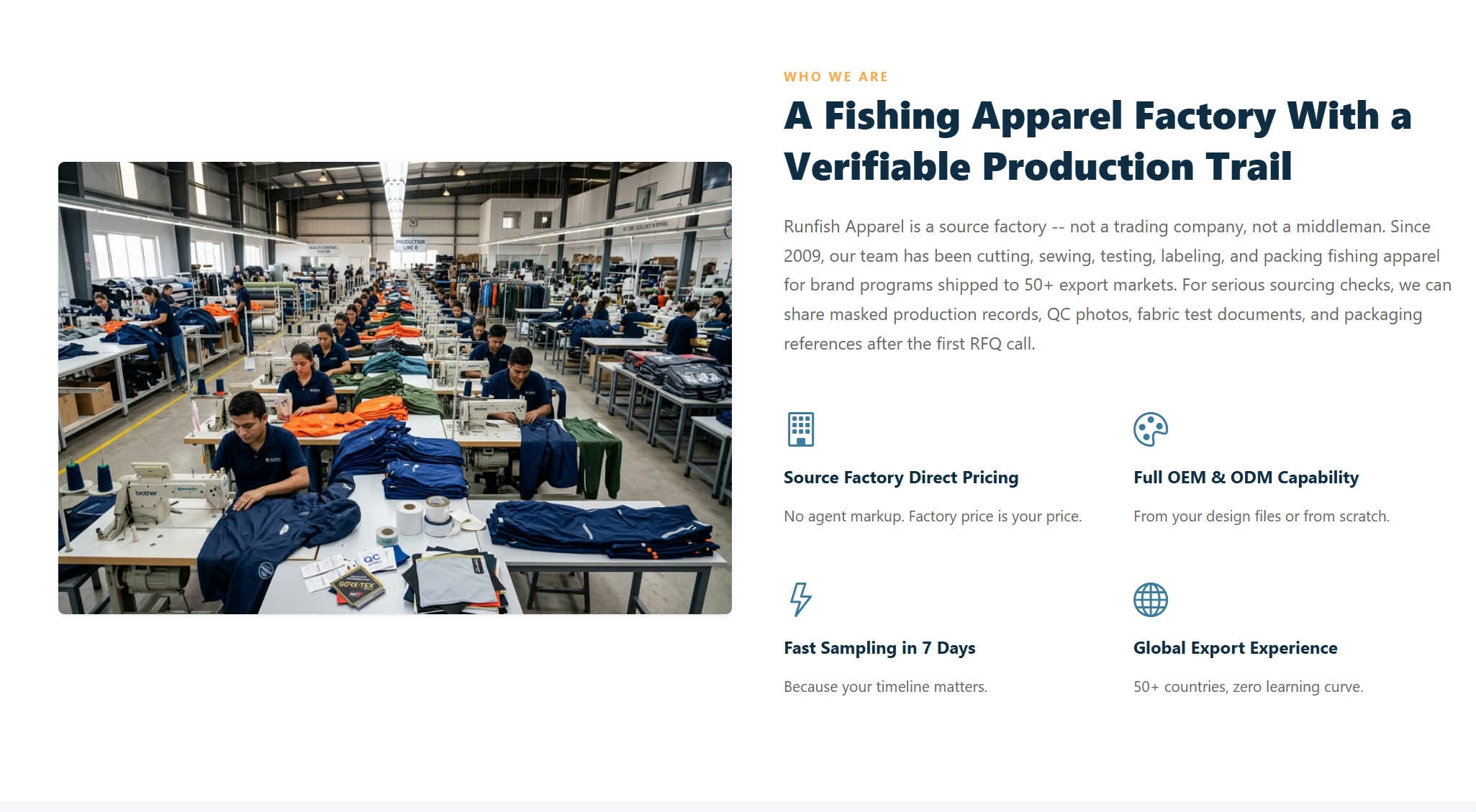
A polished sample doesn't prove a factory can deliver 20,000 units on time. Many shops that show beautiful prototypes fall apart the moment you need consistent quality across thousands of pieces. This is where most buyers get burned. You need to dig deeper before committing to any custom sportswear manufacturer.
Demand real production evidence, not sales talk:
Ask for 2 factory videos (3+ minutes each) showing actual sewing lines, taping machines, and QC stations, not staged sample-making.
Request 3 recent orders of at least 5,000 pieces each, with client names redacted, showing style type, quantity, and delivery timeline.
Verify third-party lab reports for UPF, waterproofing, or moisture-wicking claims. At least 3 different styles should be tested under AATCC or ISO standards.
Ask specific capacity questions:
"What's your monthly output for performance fishing apparel specifically, not total garment volume?"
"What's the largest single-style order you've completed, and how many production lines did it require?"
A factory running 150,000–500,000 pieces monthly, with 40% or more dedicated to technical apparel, is a strong signal. If they can only commit 2–3 lines to your order and have no history above 20,000 units on one style, your bulk timeline is at risk.
Step 4: Evaluate Technical & Quality Standards for Fishing-Specific Apparel
A real performance fishing shirt manufacturer has third-party test reports, documented process controls, and physical proof that the technical features actually work. Sample-checking a single shirt tells you almost nothing about what 5,000 units will look like.
Verify UPF Claims With Real Lab Data
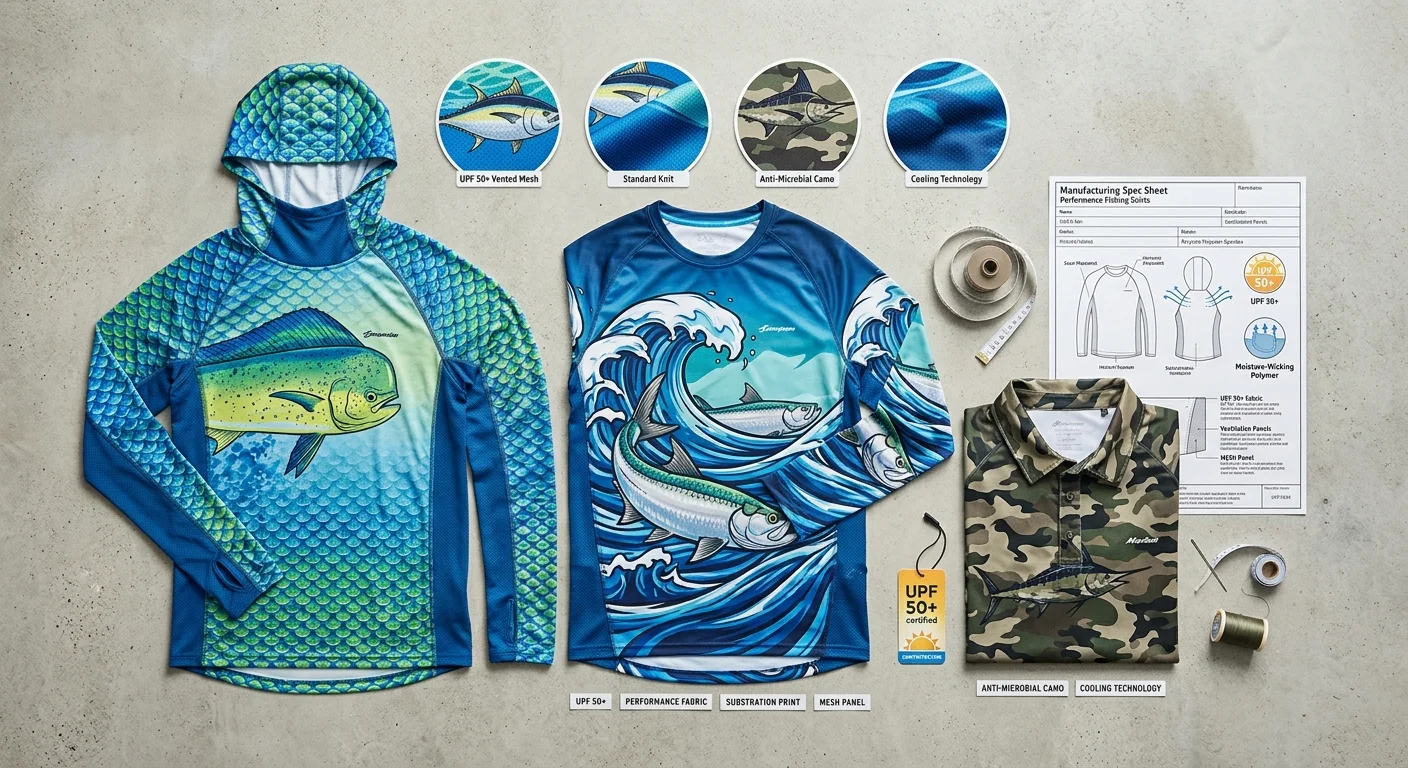
UPF 50+ means the fabric blocks about 98% of UV radiation, letting only 2% through. For fishing shirts, the standard fabric build is 92% polyester / 5% nylon / 3% spandex, running 150–170 gsm for lightweight quick-dry styles, or 170–200 gsm for higher coverage in intense sun.
Don’t accept a UPF claim without paperwork. Ask for:
ASTM D6603, ASTM D6544, or AS/NZS 4399 test reports from SGS, Intertek, or Bureau Veritas
Reports tied to the same fabric batch used in your bulk order, not a generic reference sample
Post-production retesting on 3–5 finished garments per color after dyeing and printing, since finishing processes can reduce UPF performance
A regular cotton tee lets through 20–30% UV. UPF 50+ fabric lets through roughly 2%. That gap is your entire value proposition. Verify it before it ships.
Check the Details That Make Fishing Apparel Actually Functional
Generic activewear factories miss these every time:
Anti-corrosion zippers: Nylon resin or salt-spray-tested marine-grade zippers (48–96 hour neutral salt spray, no red rust, 500–1,000 open/close cycles without sticking)
Drainage pockets: 4–8mm mesh drain holes, 2–3 per pocket, draining 200ml of water in under 60 seconds, with reinforced stitching holding 8–10kg pull strength
Vented back panels: 80–120 gsm mesh reducing back temperature by 2–4°F versus solid fabric
Roll-up sleeve tabs: Surviving 50–100 roll/unroll cycles with no button loosening or seam failure
Confirm AQL Standards for Large Orders
For bulk runs, insist on AQL 2.5 for major defects (zipper failure, mislabeled sizing, missing drain holes) and AQL 4.0 for minor ones. A 1,201–3,200 piece batch typically requires a 125-piece sample under general inspection level II, allowing roughly 7 major defects before the batch fails.
Ask your factory for ISO 9001:2015 certification, a dedicated QC-to-production-line ratio of at least 1:2, and recent AQL reports from their last 3–5 shipments. If they can’t produce that documentation, that’s your answer.
Step 5: Negotiate MOQ, Pricing & Lead Time for Large-Volume Orders
Every number in a factory quote is negotiable if you know which lever to pull. Buyers who understand the cost structure behind MOQ, pricing, and lead time consistently land 10–20% better terms than those who just accept the first PI.
MOQ: Stock Fabric vs. Custom Fabric Changes Everything
Fishing apparel MOQ depends on whether you're using stock fabric or custom fabric.
Stock fabric garments : MOQ typically runs 100–200 pieces per style/color . Some trading companies accept 50–100 pieces per color, but expect a 10–30% price premium since you're absorbing more of the production risk.
Custom fabric garments (custom dyeing, weaving, or technical treatments): MOQ jumps to 500–1,000+ pieces per color , or 500–1,000 meters per color. High-performance UPF or waterproof fabrics can require up to 2,000 meters per color .
Why the gap? Custom fishing clothing fabric carries fixed setup costs—dye vat minimums (300–600 meters per batch), loom setup, and color-matching—that only get profitable at scale. Factories protect their 15–30% gross margin by refusing to go lower.
Three ways to lower custom fabric MOQ:
Accept a 10–30% price increase to drop MOQ from 1,000 to 300–500 pieces per color
Use the factory's existing "house colors" or standard fabric stock—cuts MOQ to 100–300 meters per color
Pool orders with 2–3 other buyers on the same fabric/color; the factory still runs its original MOQ, but you each take a smaller share
Price Negotiation: Think Landed Cost, Not FOB
Your margin depends on landed cost (FOB + freight + insurance + duties + inland transport), not just the FOB price.
Request a price break table like this:
Quantity | FOB Unit Price |
|---|---|
500 pcs | $5.00 |
1,000 pcs | $4.50 |
2,000 pcs | $4.20 |
Then run the full landed cost math. Example: FOB $4.50, ocean freight $3,000 for a 40'HQ container holding 10,000 pieces ($0.30/piece), 10% duty on a declared value of $4.80 (~$0.48/piece), plus $0.15/piece for port and inland fees. Landed cost lands around $5.43/piece —not $4.50.
If your target retail margin is 60%, your landed cost needs to sit at or below 40% of retail. Use that number to push back on FOB, not the other way around.
Negotiate the whole cost package, not just unit price:
Packaging method (affects container weight/volume)
Units per carton (affects per-piece freight)
Shipping port choice
Correct HS code classification (avoids overpaying duty)
A 3–5% cut in unit price often saves less than optimizing container loading, which can shave 5–10% off total landed cost.
Payment Terms That Protect You on Large Orders
Standard terms for bulk fishing apparel orders: 30% deposit + 70% balance via T/T , with the 70% released only after third-party inspection passes or a B/L copy is issued. Never agree to 100% prepayment with a new supplier.
For orders over $100,000, split production and shipment into 2–3 batches with payment tied to each batch. Build in a delay penalty clause—typically 1–3% of order value per week late, capped at 10% —and a clear remedy for quality failures (rework, discount, or return at the supplier's cost).
Lead Time: Where You Can Compress the Timeline
Sampling takes 7–14 days (up to 21 in peak season). Bulk production runs 45–90 days , depending on fabric type and factory load.
Switching from custom fabric to stock fabric is the single biggest lever for compressing lead time. Custom fabric weaving and dyeing eats 15–30 days before cutting even starts; specialty performance fabric can take 30–45 days. Stock fabric cuts that prep window to 3–7 days—shrinking your total delivery time from roughly 75 days down to 55–60 days .
If your launch date is fixed, ask your factory upfront which fabrics are in-house stock. That single question can save you three weeks.
Step 6: Build a Precise Tech Pack for Private Label Consistency
One design gets one Tech Pack. Period. The moment you let multiple versions float around for the same style, your fabric MOQ negotiations and QC standards fall apart on the production floor.
Your Tech Pack needs a full Points of Measurement (POM) table, with 15–25 POMs for fishing shirts and 18–30 for pants. Each POM needs a base value and tolerance: chest at M size might read 116 cm with ±0.5–1.0 cm tolerance on critical points, ±1.0–1.5 cm elsewhere. Include fishing-specific measurements like tool pocket width 6–9 cm and rod-holder D-ring placement in millimeters from center-front.
Your Tech Pack also needs a Fabric BOM with composition, gsm (90–140 g/m² for shirts), UPF rating, waterproof rating in mm water column, colorfastness (≥4 grade), and test standard for every fabric used. You'll also need Pantone codes for every colorway, including main fabric, mesh panels, thread, and even YKK zipper tape, and logo placement in mm, such as "Chest logo center 65mm below neckline, 40mm right of CF line."
Add a Revision History table with version number, date, change summary, and approver. Lock old versions as obsolete. Send PDFs only, never editable source files.
Test factory competence by their response speed. Strong OEM Fishing apparel manufacturers answer Tech Pack questions within 24 hours with specific data.
Step 7: Validate Through Sample & Pre-Production (PP) Process
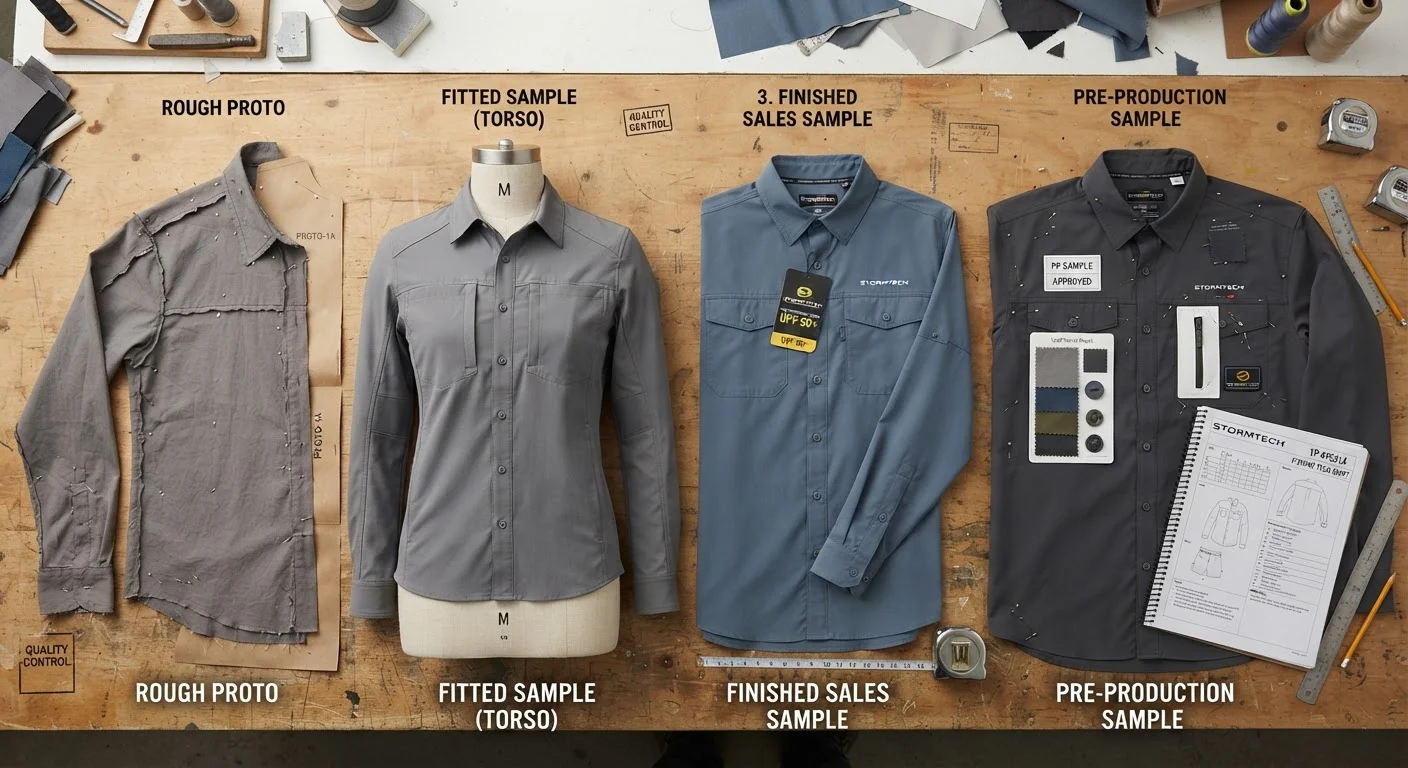
Between your approved tech pack and the cutting table sit four sample stages: Proto, Fit, Sales Sample (SMS), and Pre-Production (PP) Sample. Skip one, and you're gambling with thousands of units of fishing apparel MOQ.
What each stage actually verifies:
Proto : Structure and pattern proportions only—no final fabric required.
Fit sample : Real-body fitting. Sleeve length, ease, collar, and range of motion are marked directly on the garment.
SMS : Final fabric for buyer presentations. You check color, hand-feel, and visual finish.
PP sample : The real bulk fabric, trims, workmanship, and packaging. This is where you confirm the factory can replicate the approved sample at scale.
PP Sample Sign-Off Is Your Last Checkpoint
PP review ends in one of three outcomes: approved, conditionally approved, or rejected. Once you sign off in writing, that revised version—not the original tech pack—becomes the binding reference for bulk cutting. It becomes your gold sample, the QC benchmark for the entire order.
Test on the PP sample before cutting bulk:
UPF rating (third-party retest, not paper claims)
Quick-dry time and residual moisture
Seam quality at stress points—shoulder, armhole, crotch, side seam
Logo placement symmetry and tolerance
Size measurements against tech pack POMs
Trims, labels, hangtags, and packaging matching the BOM
Record findings at the point level—"left chest logo shifted 4mm"—not vague comments. That precision is what separates a reliable performance fishing shirt manufacturer from one that improvises on the production floor.
Step 8: Structure Contracts & QC for Risk Management on Bulk Orders
Your PP sample sign-off protects your product spec. It doesn't protect your money once production starts. That's what your contract needs to do.
Write AQL and Penalty Clauses Into the Contract, Not Just the QC Checklist
Name the standard: ANSI/ASQ Z1.4-2008, General Inspection Level II. Set defect tiers directly in the contract—Critical AQL 0.1–0.25, Major AQL 1.5–2.5, Minor AQL 4.0. For a 2,000-piece batch, that's a 125-piece sample with a major-defect accept/reject threshold around 7/8 pieces. Attach a price-discount mechanism for failed batches—typically 3–10% off the invoice—so quality failures cost the factory something real.
Add delay penalties: 0.1% of contract value per calendar day late, capped at 8%. Past 30 days, you get the right to cancel and reclaim your deposit. Tie penalties to milestones—PP sample approval, raw material arrival, first shipment—not just the final delivery date.
Lock Incoterms and Insurance Language
Specify Incoterms 2020 by name, plus the exact location: "FOB Shanghai Port, Incoterms 2020." If you're on CIF, require insurance at 110% of invoice value under Institute Cargo Clauses (C). For orders split into 2–3 shipments, write in a clause that transfers risk separately per batch.
Insert Third-Party Inspection at Two Fixed Points
Contract for SGS or Bureau Veritas at 20% production progress (DUPRO) and 80% completion (pre-shipment inspection). DUPRO catches systemic defects early—material compliance, stitching consistency, first-piece confirmation—while 80% of units are still correctable. PSI checks the finished, packed goods: 100% label accuracy, drop tests at 1.0–1.2m, 10–20 cartons opened at random. Reports arrive in 24–48 hours
Essential Vetting Questions Checklist for Bulk Private Label Orders
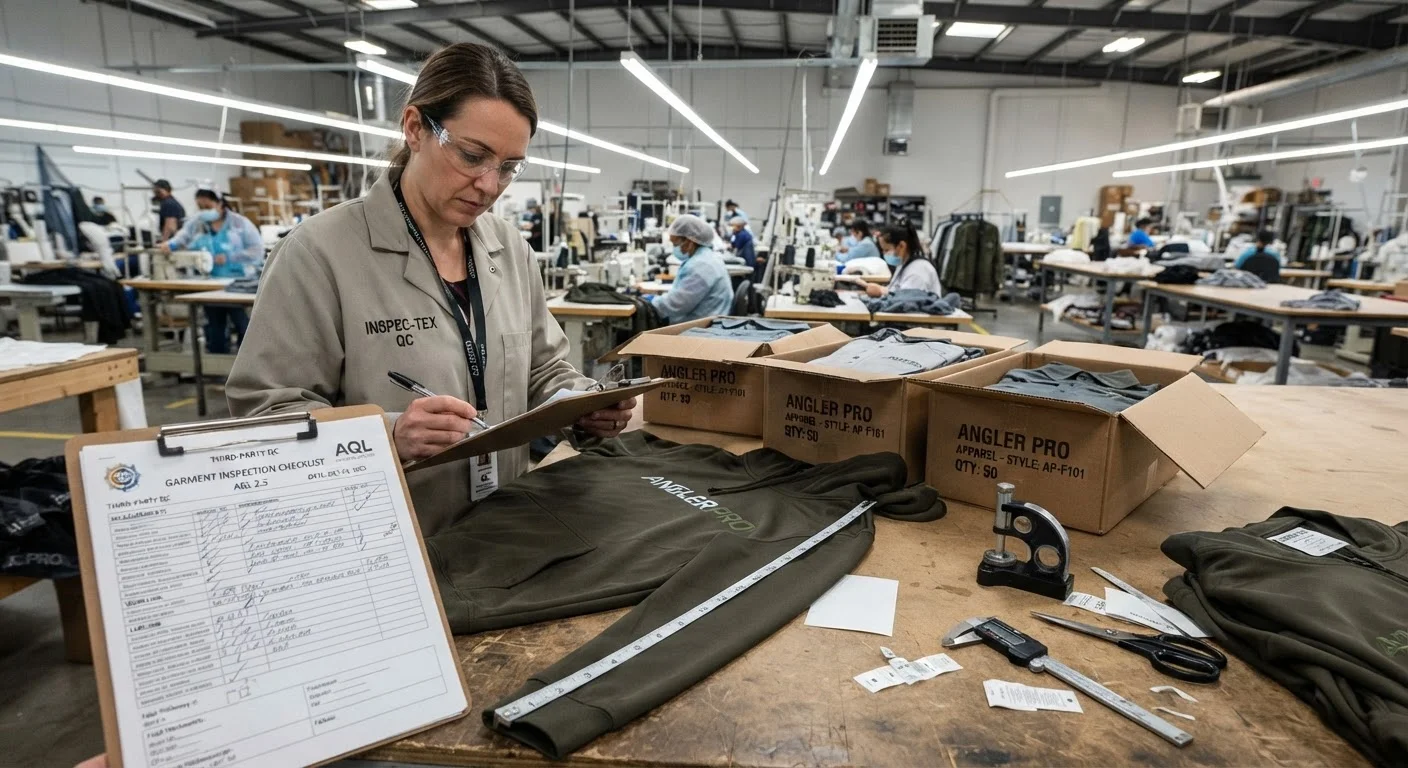
Ask these ten questions in order on your first call. They'll tell you more about a factory's reliability than any Alibaba badge or glossy catalog. Use the list before you request a single sample from any OEM fishing apparel manufacturer.
First-Contact Screening Questions
Factory or trading company? Request a business license. The name must match your contract and payment account exactly. Mismatches are a red flag.
Similar clients in the last 12–24 months? Ask for three or more references with orders of 10,000+ pieces, ideally exported to the US, EU, or Australia.
Largest single-style order completed, with on-time rate? A 50,000-piece batch at 95%+ on-time performance shows they have the infrastructure.
Batch COA or third-party test reports for every run? For fishing apparel, this means UPF, waterproofing, and colorfastness data—not a generic letter.
Defect rate target and failed-batch remedy? Get a number (1–2% is standard) and a written rework, discount, or replacement policy.
Who owns your screens, embroidery files, or custom molds? Confirm you can take them if you switch suppliers.
Can we schedule a video walkthrough or third-party audit? Hesitation here tells you everything.
Score each answer pass or fail. Three fails, move to the next candidate—no matter how good the sample photos look.
Red Flags & Final Decision Priorities for Choosing Your Manufacturer
Some warning signs only show up after you've already asked the right questions and gotten evasive answers. If a factory blocks third-party audits, restricts you to a showroom instead of the cutting floor, or quotes 15-20% below every competitor with no cost breakdown, walk away. Same goes for frequent leadership turnover or requests to wire deposits to a personal account instead of the company's registered name.
When you're down to your final two or three candidates, score them on a weighted matrix instead of gut feeling:
Technical fit (40-45%): Production history in performance fishing apparel specifically, not generic activewear
Capacity stability (25-30%): Monthly output, current line utilization, second-order consistency
Communication transparency (15-20%): Response speed, proactive documentation, version control on specs
Price (10-15%): Only compared once technical and capacity thresholds are already met
Conclusion
Choosing the right OEM fishing apparel manufacturer for a bulk order comes down to finding a partner who can hit technical specs like UPF ratings, sublimation printing quality, and consistent sizing across thousands of units, order after order. The manufacturers who pass your tech pack review, nail the PP sample, and answer your toughest questions without hesitation are the ones worth betting your inventory budget on.
Don't skip the sample and PP stage, even if a factory quotes you an attractive MOQ and price. That's where hidden quality issues surface before they become a 5,000-unit problem.
If you're still vetting private label clothing manufacturers and want a factory built for performance fishing gear at scale, that's what we do at Runfish Apparel . Reach out and let's talk specs, not just prices.