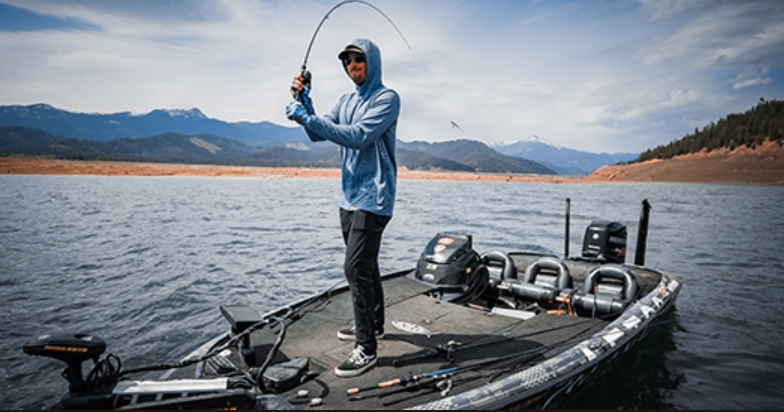
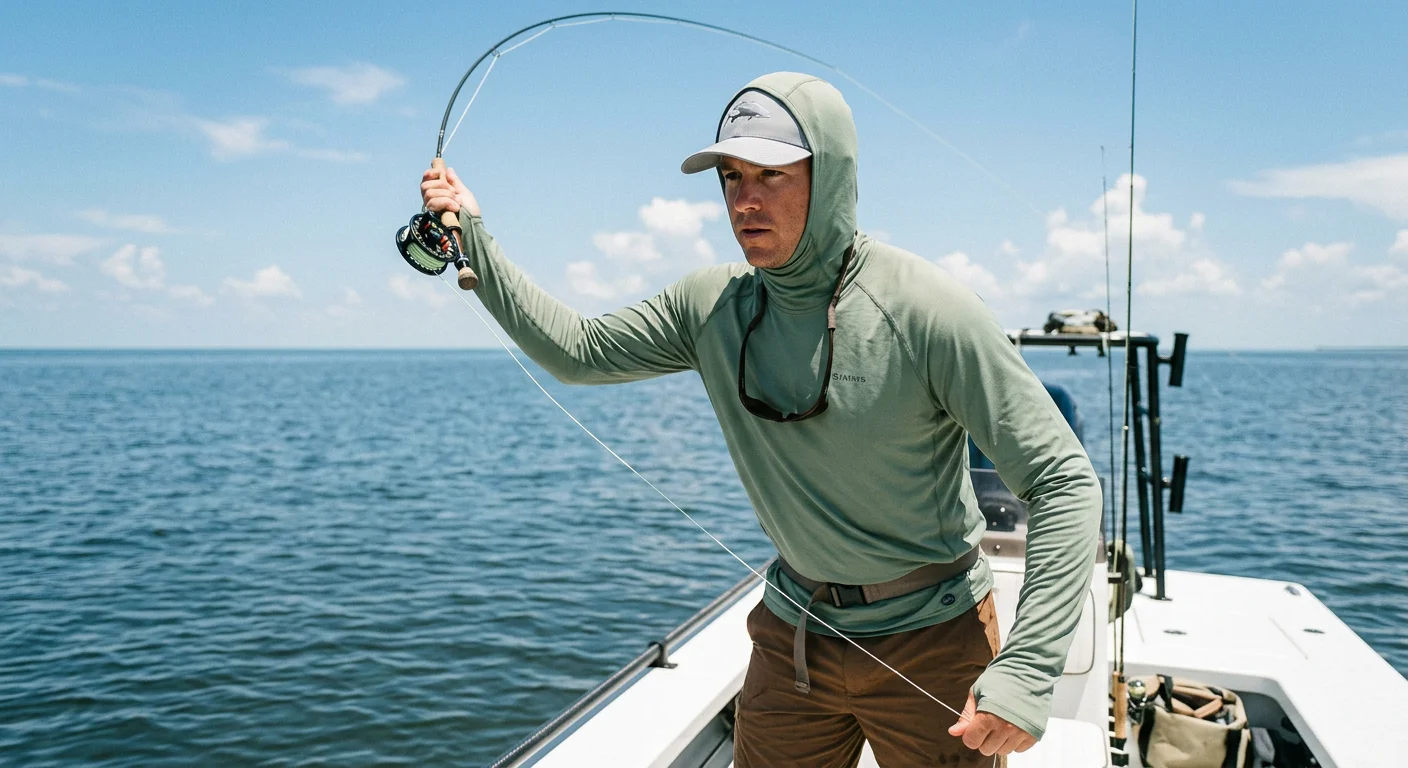
Every angler knows the ritual. Slather on sunscreen before launching the boat. Watch it sweat off by 9 AM. Reapply with fish-slimed hands. Then spend the next six hours wondering if you're protected — or just sticky.For serious offshore anglers, sourcing custom UPF fishing shirts ensures coverage and fit specific to long days on the water.
The fishing apparel industry has a different answer: a UPF 50+ long sleeve fishing shirt. But is that a science-backed solution or a $60 marketing story?
Here's what most gear reviews skip: water reflects up to 25% more UV radiation back onto your skin. That means anglers face a more dangerous UV exposure environment than your average hiker. The risk is real, and it's different.Only a reputable manufacturer of UV-protective fishing apparel integrates fiber-level UV blockers for long-term performance.
So before you write off sun protection shirts as overpriced nylon — or take a hang-tag rating at face value — you need three things:
The lab numbers behind real ultraviolet protection factor claims
The durability truth — how well that UPF rating holds up over time
A buying framework built for how fishing destroys clothing
That's what this breakdown covers.
Scientific Principles of UV Blocking in High-Reflection Angling Environments
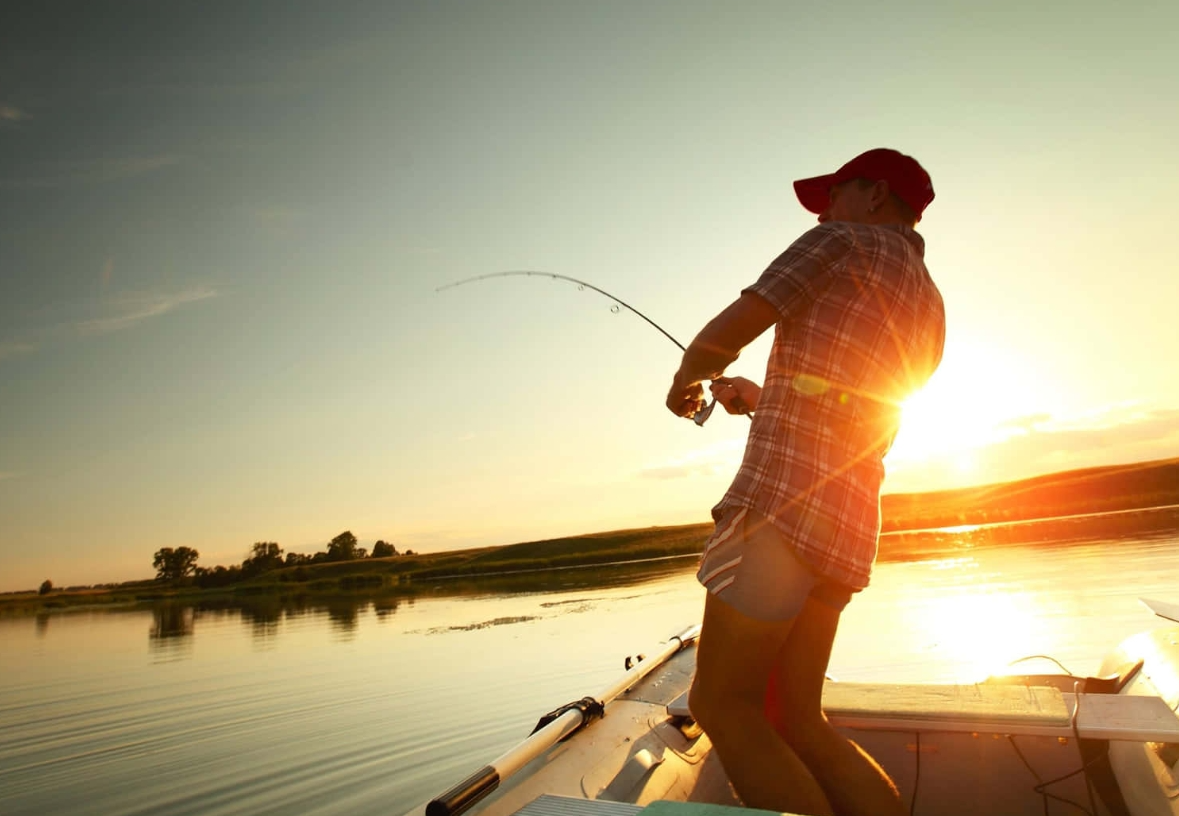
Water doesn't just surround anglers — it weaponizes the sun against them.
Here's the physics most fishing blogs never explain: a standard open-water surface reflects 10–25% of UV radiation straight back at your skin. In shallow water, your total UV load runs 25–40% higher than what a hiker on the same sunny trail gets. Ice anglers face something far more extreme. Frozen surfaces can reflect up to 90% of UV radiation , turning the entire environment into a UV amplification chamber.
This isn't marketing language. It's field-measurement data. NIWA researchers found that nearby reflective surfaces increased personal facial UV exposure by close to one-third . The effect was strongest for direct UV, not diffuse UV. That distinction matters on open water. Sunlight hits the surface at sharp angles and bounces straight back toward your face, neck, and forearms — from below .
UPF Is Not SPF — And That Difference Is Everything
Most anglers confuse these two ratings. They measure two different things entirely.
SPF measures how well a topical sunscreen protects exposed skin. UPF (Ultraviolet Protection Factor) measures how much UV radiation — weighted for skin damage — passes through a fabric. For clothing decisions, UPF is the number that matters. Full stop.
The benchmark to target:
UPF 50+ blocks more than 98% of UVA and UVB radiation , allowing ≤2% UV penetration
A standard thin white cotton T-shirt? Rated UPF 5–10 , meaning 10–20% UV passes straight through
That gap is not small. On a full day of boat fishing, it's the difference between real protection and a slow burn you won't feel until evening.
What Determines a Fabric's UPF Rating
UPF doesn't come from a label — it comes from physical structure. Five factors drive a fabric's true blocking performance:
Weave and knit tightness — denser construction leaves fewer gaps for UV to pass through
Fabric thickness and opacity — thicker materials block more UV through sheer mass
Fiber type and dye absorption — darker, UV-absorbing dyes cut transmission by a large margin
UV-scattering mineral additives — titanium dioxide (TiO₂) and zinc oxide (ZnO) built into the fiber polymer itself create UV-blocking points throughout the entire thread, not just on the surface
Coverage geometry — reflected water UV hits the underside of your chin, nose, and forearms. Collar height and sleeve length are structural protection decisions, not style choices
That last point about built-in additives is critical for durability. Surface-applied UV finishes wash off over time. Mineral additives embedded in the fiber at the manufacturing stage stay active far longer. That's a key factor on gear that gets soaked, wrung out, and laundered cycle after cycle.
The Verification Standard Behind the Rating
Not every UPF claim goes through the same testing. Three laboratory standards define credible verification:
Standard | Region | Method |
|---|---|---|
AATCC TM183 | United States | Spectrophotometric UV transmission measurement |
AS/NZS 4399:2017 | Australia / New Zealand | UV transmission weighting for label compliance |
EN 13758-1 | Europe | UV-protective textile and clothing labeling |
A fishing shirt claims UPF 50+? Ask which standard was used to test it. A brand that can't answer that question has not verified what's on their hangtag.
Laboratory Efficacy Data: UPF Fabric vs. Sunscreen Blocking Rates
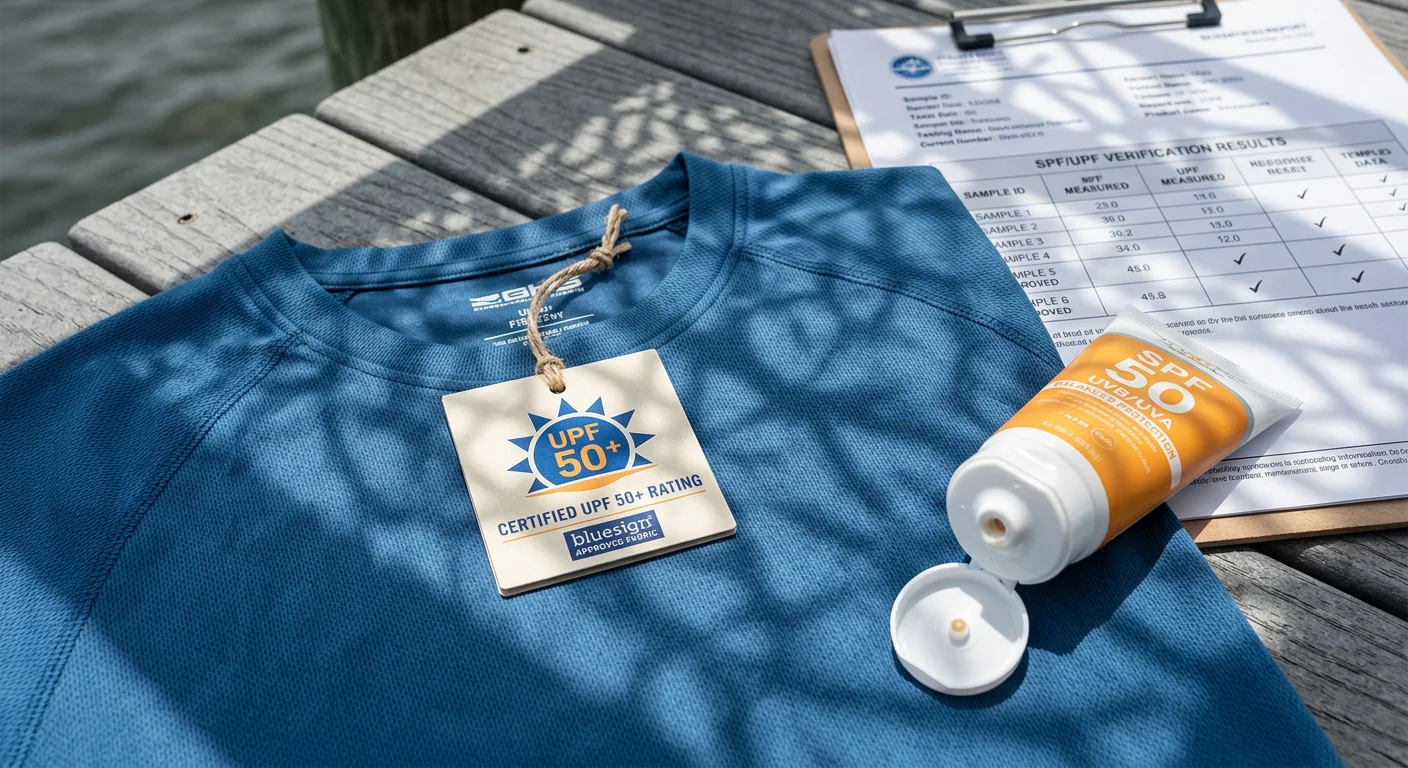
The numbers from Oregon Health & Science University (OHSU) don't leave much room for debate.
Researchers ran a controlled head-to-head comparison — four UV-protective textiles against two commercial sunscreens (SPF 30 and SPF 50). They applied sunscreen at the textbook-perfect benchmark of 2 mg/cm² . Lab conditions. No sweat, no water, no fish slime. The best possible scenario for sunscreen to perform.
The fabrics still won. On every single metric.Leading brands often rely on OEM/ODM fishing apparel services to maintain consistent UPF ratings and durability across multiple production runs.
The UVB Numbers: Not Even Close
UVB radiation is the wavelength that burns skin and causes sunburn. It's also tied to skin cancer development. Here's what the OHSU study found:
All 4 UPF fabrics blocked more than 99% of UVB — transmittance under 1%
SPF 30 sunscreen blocked about 76% of UVB
SPF 50 sunscreen blocked about 94% of UVB
That gap between 76% and 99% isn't a minor product difference. SPF 30 sunscreen — under perfect lab conditions — lets through 24 times more UVB than a UPF-rated fabric. Spend eight hours on the water as an angler, and that's 24 times more skin-damaging radiation building up on your arms.
The UVA Numbers: Where Sunscreen Falls Short
UVA goes deeper than UVB. It causes skin aging, dark spots, and lasting cell damage under the surface. This is where sunscreen falls furthest behind:
Protection Method | UVB Blocked | UVA Blocked |
|---|---|---|
UPF 50+ fabric | >99% | 96%–98% |
SPF 50 sunscreen | ~94% | ~82% |
SPF 30 sunscreen | ~76% | ~54% |
The polyester fabrics in the OHSU test edged out the nylon sample, keeping UVA transmittance below 4%. That's useful intel for anglers picking between fabric types — a detail most product pages skip entirely.
SPF 50 sunscreen, meanwhile, let through about 18% of UVA even under ideal lab conditions. SPF 30 let through close to half .
Why "Lab Perfect" Gives Sunscreen the Best Possible Shot
This is what matters most for real-world decisions.
The OHSU test used 2 mg/cm² — the standard amount that produces the SPF number on the label. Most people put on 25–50% less than that in practice. Studies show real-world application tends to be thinner, patchy, and incomplete. Less product means the SPF drops fast — and not in a straight line. A product labeled SPF 50 can end up closer to SPF 15 or 20 with light application.
The OHSU researchers weren't measuring against a rushed beach application. They tested against the ideal . The fabrics still beat sunscreens across every metric — UVB transmittance, UVA transmittance, SPF equivalent, UPF value, and full-spectrum performance.
Their conclusion: clothing should be the "cornerstone of UV protection" — not a backup to sunscreen, but the first line of defense.
What This Means for Anglers on the Water
A full day on open water isn't like being on land. Reflected UV off the surface adds 25–40% more radiation load than you'd get in a typical land setting. That gap between fabric and lotion matters even more out there.
A UPF 50+ sun protection shirt blocks more UV than a tube of SPF 50 sunscreen — even before you factor in sweat, water exposure, or missed reapplication. The Skin Cancer Foundation rates UPF 50+ as "excellent protection" , and the OHSU data backs that up clearly.
The science isn't subtle. Fabric wins on raw blocking performance. The real question is whether the specific shirt you're buying delivers that performance. That answer comes down to how the fabric is made, how it's tested, and how it holds up over time.
Fishing Scenario Durability Test: 50 Wash Cycles, Wet Fabric, and Stretch Wear
A UPF 50+ rating means nothing if it fades after a summer of laundry cycles. That's the real question serious anglers need to ask — not just "does it block UV?" but "does it still block UV after 50 washes, six hours of sweat, and a thousand casting reps?"
The data has answers. Let's work through them.
What 50 Wash Cycles Do to Your UPF Rating
Industry durability testing shows that quality UPF garments — 100% polyester or polyester/nylon microfiber constructions — hold 85–90% of their original UV protection after 40 wash cycles .Angling shops often source these shirts from a sun-protective fishing apparel wholesaler specializing in sun-protective apparel to ensure stock for peak season. A UPF 50 fabric starts at 2% UV transmission. After extended laundering, that number creeps to 2.3–2.5% . Still well within UPF 40+ territory. Still blocking 97.5% of UV radiation.
That stability isn't accidental. It comes down to how the UV protection is built into the fabric. Surface-applied chemical finishes degrade over time. High-end fishing shirts use molecularly integrated UV absorbers instead — titanium dioxide or organic UV blockers embedded into the polymer melt during fiber production. Washing removes dirt and detergent residue. It does not remove chemistry bonded at the molecular level.
That's why ASTM D6544, used alongside AATCC TM183, subjects fabrics to 40 accelerated machine wash/dry cycles plus artificial UV weathering before measuring final UPF. To carry a durable UPF 50 claim under this standard, a shirt must still register UPF ≥ 40 — meaning ≤2.5% UV transmission — after that combined stress test. Check the label for both AATCC 183 and ASTM D6544 compliance. That combination means durability across 40+ cycles is built into the certification.
Wash cycle protocol matters too. Use cold water under 40°C, run a gentle cycle, and turn the shirt inside out. Skip chlorine bleach — it breaks down UV absorbers and any elastane content. Line dry or tumble on low heat. High heat causes micro-cracking in fiber finishes and speeds up physical thinning over time.
The Wet-Fabric Problem — And Why Fabric Type Splits in Two
Cotton and technical polyester go in opposite directions here.
Cotton in wet conditions is a UV protection problem for anglers:
- Dry, light-colored cotton starts at UPF 5 — already marginal
- Saturated cotton drops a further 30–50% , as water fills air gaps and breaks down the light-scattering structure of the weave
- A soaked cotton shirt can fall to UPF 3–5 : no meaningful UV protection at all
For an angler dealing with spray, sweat, and rain over a six-hour session, cotton isn't a sun shirt — it's a liability.
Technical polyester works the opposite way:
- Dense microfiber construction integrates UV absorbers into the fiber itself. Water has no air gaps to fill
- Microfibers swell slightly upon water absorption. This closes micro-pores in the knit structure
- UV transmission can improve in the wet state — dropping from 2% to 1.5–1.8% transmission in some test protocols
- High-performance wicking finishes keep the fabric cycling between damp and dry. This stabilizes UV performance near the dry-state rating for most of a full day on the water
UV STANDARD 801 tests high-end synthetic fabrics in wet and stretched states for this reason. Quality fishing knits are expected to hold wet-state UPF — or improve it.
The Casting Problem: What Stretch Does to Your Protection
This one surprises most anglers. And it matters more than most brands admit.
Stretching a knit fabric opens the inter-yarn gaps. Research under UV STANDARD 801 protocols shows that a ~10% horizontal stretch increases UV transmission by 15–20% compared to the relaxed state.
Run the numbers on a UPF 50 fabric:
- Relaxed state : ~2% UV transmission
- Under 10% stretch : transmission rises to 2.4–2.7% , equivalent to UPF 40–42
That drop from UPF 50 to UPF 40 sounds minor. Think about where that stretch happens during a fishing day. Overhead casting pulls hard across shoulders and upper back . Rod fighting torques forearms and chest panels . Poling or rowing keeps upper arms and underarms in near-constant tension. These aren't brief moments of stretch — they're sustained 5–15% mechanical tension held for hours.
Those panels become the weakest UV zones on an otherwise UPF 50 garment. The fix isn't to avoid fishing shirts — it's to buy the right cut . A "deck cut" or fishing-specific fit with extra fabric allowance across the shoulders and back prevents the structural tension that degrades protection during active wear. A shirt designed for street wear — even one rated UPF 50 flat on a table — underperforms in the field. It simply wasn't built for cast mechanics.
Abrasion Over Multiple Seasons: The Skylight Test
After two or three heavy fishing seasons — 100–200 days of active use — specific zones show physical wear:
Elbows and forearms : gunnel contact and rod handling
Shoulders : rod butt pressure, PFD straps
Lower back : boat seat friction
Chest : lifejacket contact
Worn zones develop yarn fuzzing, fiber breakage, reduced fabric mass, and color lightening. Each of those signs points to increased UV transmission.
The field check is simple and needs no spectrophotometer: hold the suspect panel up against bright skylight . Weave gaps that look larger than on the unworn section — or an area that looks more translucent — means UV transmission has gone up. You can see skin tone or logo printing through the worn zone? That panel is no longer UPF 50 .
At that point, the choice is straightforward: layer underneath it, or replace it. No fabric treatment restores fiber protection once the physical structure breaks down.
The bottom line on durability: a well-constructed polyester fishing shirt — cared for properly — holds its UPF 50+ rating past 50 wash cycles, performs equal to or better wet than dry, and degrades in a predictable way under stretch. The weak points are mechanical, not chemical. Know where they are, buy for fit, and check your high-wear zones before each season starts.
Direct Performance Comparison: Continuous Coverage vs. Sunscreen Reapplication Failure
Sunscreen starts losing the moment you put it on.
That's not an opinion — it's what the data shows. A controlled outdoor-worker study tracked facial sunscreen coverage across a full shift. Within 2 hours , mean coverage had already dropped 18.31% . By hour 8, it was down 31.63% . An SPF 50+ application at the clinical benchmark of 2 mg/cm² dropped below SPF 30 by hour 4 . That's still mid-morning for most anglers on a full-day float.
Now add fishing conditions on top of that curve.
The Four Failure Points Sunscreen Can't Survive on the Water
Standard clinical guidance calls for reapplying every 2 hours under normal outdoor conditions. Anglers don't get normal outdoor conditions:
Sweat resets the clock — active settings can push reapplication to every 40–80 minutes
Water exposure eats through water-resistant formulas fast. The claim window is 40 or 80 minutes , then you reapply
Towel drying strips the product off — no partial credit
Gear contact — rod grip, bait handling, PFD straps — wipes treated skin clean before protection gets a chance to work
Each of these events forces a full reapplication. Miss one and your actual SPF drops to whatever thin, patchy residue remains.
On top of that, most people use 25–50% of the recommended amount to begin with. Less product means the labeled SPF was never real in the first place.
The System That Doesn't Need a Timer
A UPF 50+ long sleeve fishing shirt blocks 98% of UV radiation — from the moment you put it on to the moment you take it off. No reapplication schedule. No washoff reset. No coverage gaps from grip friction or sweat.
That's the core advantage — and dermatologists back it up. Clinical guidance places protective clothing as the first line of defense . Sunscreen stays for the zones you can't cover: face, hands, neck gaps.
For a full day on the water, here's how the two options compare:
Protection Layer | Coverage Reliability | Reapplication Required |
|---|---|---|
UPF 50+ shirt + neck gaiter + wide-brim hat | Near-constant across full shift | None |
SPF 50 sunscreen alone | Degrades to SPF <30 by hour 4 | Every 40–80 minutes |
The difference isn't small. It's structural. One system needs perfect behavior, repeated on a tight schedule, under conditions built to break it. The other just works.
Angler Buying Decision Framework: Fabric, Weave, Color, and UPF-Value Matrix
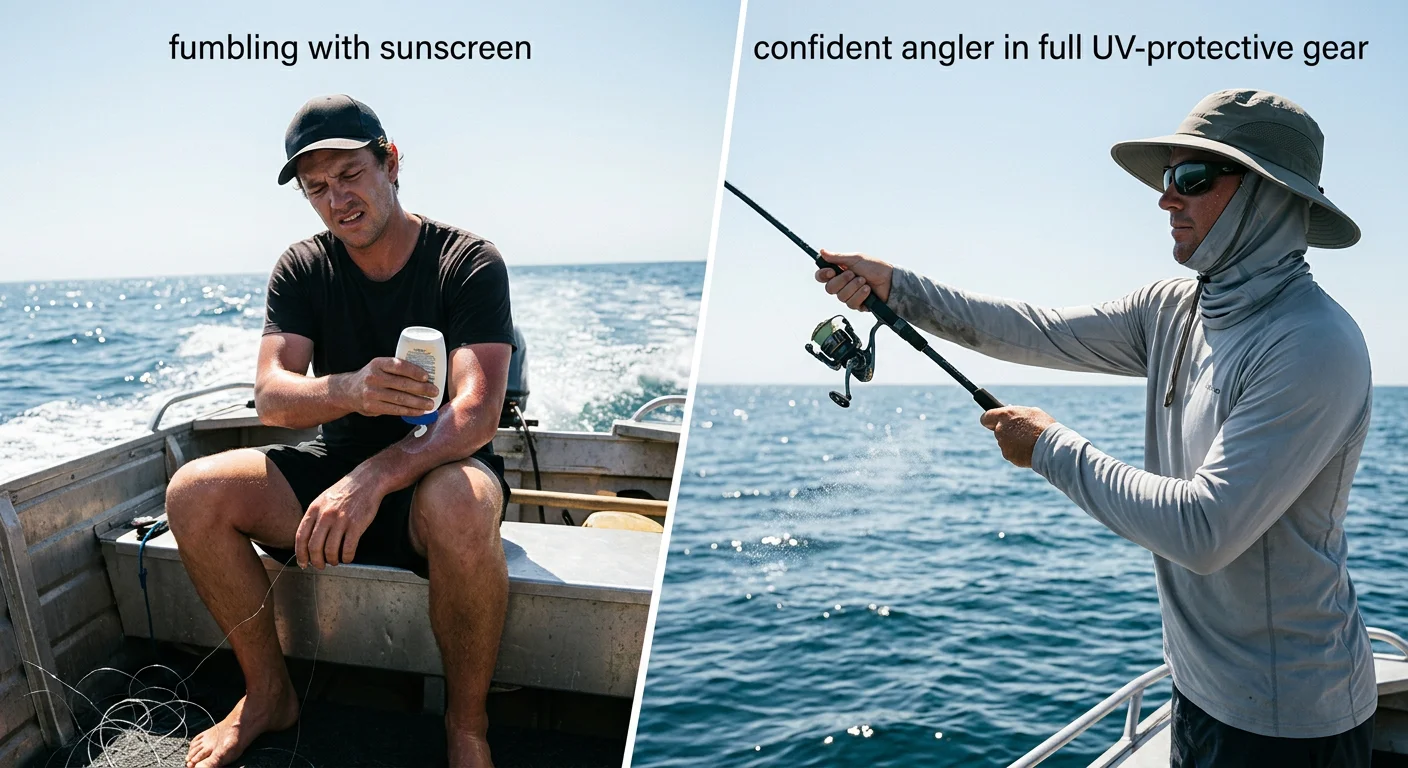
Most anglers put more research into rod action than the shirt covering their skin. That's a real mistake — one that leaves people exposed on the water.
Here's the truth: not all UPF 50+ labels are equal. The fabric under that rating decides whether you're protected or just paying for a number on a hangtag. Use this framework to make the right call in five minutes — in-store or online.
Fiber Type: The Foundation of Real Protection
Fabric is your first filter. Three categories matter for anglers:
Polyester microfiber (100% or ≥90%) — this is your go-to pick. Tight polyester knits hit UPF 50+ without leaning on surface coatings. Polyester is hydrophobic. It holds its structure wet. Your UPF rating doesn't drop the moment a wave hits. Brands like Simms SolarFlex, Columbia PFG, and HUK use 75–120 g/m² polyester knits with built-in UV absorbers. These deliver stable UPF 50+ through a full season.
Nylon/poly blends — softer feel, but nylon breaks down faster under UV exposure. It also loses protection fast under wet stretch. Check that nylon-based shirts include UV treatment at the yarn level — not just a surface finish. Blends with 15–20% elastane suit technical fly fishing where mobility is key. Still, confirm the UPF rating before you buy.
Cotton and cotton blends — skip these as your main sun armor for all-day boat fishing. A standard cotton fishing tee blocks about 5% of UV. Even dark, dense cotton blends need heavy UV finishing and serious fabric weight (≥150 g/m²) to reach UPF 40+. Soaked cotton on the water? Protection drops to near zero.
Practical buying hierarchy:
1. UPF-labeled polyester microfiber knit
2. High-stretch nylon/poly blends with yarn-level UV treatment
3. Poly-cotton blends — only if tight, opaque, dark, and certified UPF 40–50
4. Pure cotton — backup layer only
Weave Density: The Field Test That Costs Nothing
Fabric weight and knit tightness are the most underrated UPF factors. You can test both on the spot — no tools needed.
Hold the shirt about two inches from your phone flashlight . What you see tells you what the sun sees:
Visible pinholes larger than 1 mm or clear light shapes : expect sub-UPF 30 unless the fabric carries a strong chemical treatment
Near-opaque with a faint diffuse glow : puts you in UPF 30+ territory for polyester microfibers, especially at ≥110–120 g/m²
For hot open-water conditions, performance sun shirts run under 120 g/m² for breathability. Denser shirts at 140–160 g/m² block more UV but trap more heat. In tropical saltwater settings, stay under 120 g/m² and count on certified UV chemistry — not raw fabric mass — for protection.
Color: The Variable Most Buyers Ignore
Within the same fabric type, color depth drives UV absorption. Lab data on dyed fabrics is clear — more dye concentration means higher UPF. Navy fabric blocked 98.5% of UV in one comparison. White cotton blocked about 85% . That's the gap between UPF 65 and UPF 6–7.
Color tier ranking for anglers:
Tier | Colors | Best For |
|---|---|---|
A — Maximum UV absorption | Navy, charcoal, black, deep forest, indigo, burgundy | Overcast days, cooler climates, dawn launches |
B — Good with UV treatment | Medium blues, olives, bright saturated yellow or orange | Mid-season, UPF-certified shirts |
C — Avoid as primary shield | White, pale blue, light gray, pastels | Not suitable for all-day UV exposure without strong UPF certification |
In tropical heat where dark colors aren't practical, go with bright, vivid shades with certified UPF 50+ — aqua, coral, or yellow with confirmed chemical UV blockers. The UV treatment handles the protection. The lighter color keeps you cooler.
Certification Checklist: Five Things to Verify Before You Buy
A shirt that markets "sun protection" without specifics isn't sun protection — it's branding.
Specific UPF number on the tag — UPF 30, 40, 50, or 50+. Skip any vague "UV-blocking" claim with no number attached.
Named test standard — look for AATCC 183 , AS/NZS 4399 , or EN 13758-1 . No named standard means the rating was never formally tested.
Skin Cancer Foundation Seal of Recommendation — a solid third-party signal that the garment passed real UPF 30+ or 50+ testing.
Durability language — go for "UPF 50+ for life of garment" or "yarn-level UV protection." Stay skeptical of shirts where protection comes from a laundry additive alone. Those fade after 20–40 washes.
No number + no standard + no known sun-protection brand = don't trust it offshore or in midday sun.
Price-to-Protection Matrix: Match the Shirt to the Trip
Spending $110 on a guide-grade sun shirt for the occasional pier outing is overkill. Grabbing a $20 "sun shirt" for an eight-hour offshore float is a sunburn waiting to happen. Match your budget to the job:
Tier | Price | UPF Spec | Best Use |
|---|---|---|---|
Entry | $20–$35 | UPF 15–24, standard polyester or blend | Short sessions, shaded banks, dawn/dusk only |
Performance | $35–$65 | UPF 40–50+, 100% polyester microfiber, moisture-wicking | Full-day boat, kayak, offshore trolling — best value for anglers fishing weekly |
Expedition | $70–$110 | UPF 50+ guaranteed, 4-way seamless knit, 15–20% elastane, antimicrobial | Multi-day fly trips, saltwater expeditions, professional guides fishing 8+ hours a day |
The $35–$65 performance tier covers most recreational anglers fishing through peak season. Step up to the expedition tier if you're logging multi-day trips, need proven stretch durability, or guide clients on the water every day.
The framework is straightforward: start with UPF 50+, polyester microfiber, and a named test standard . Add color choice based on heat tolerance. Then match your price tier to how often and how hard you fish. That combination — not a brand name or a marketing photo — is what genuinely protects your skin on the water.
Conclusion
The science doesn't lie — and neither does your skin after a full day on the water.
UPF 50+ fabric blocks up to 98% of UV radiation. It holds up through 50+ wash cycles. It won't fail you mid-cast just because you worked up a sweat. Sunscreen can't make that promise. Water reflection alone adds 25% more UV exposure to your skin. You need protection that stays put — not something you're reapplying between every bite.
Here's what smart anglers do next:
Pull up your top two or three shirt candidates
Check each one against the fabric, weave, and color factors covered in this guide
Cut anything without third-party ASTM or AATCC-certified UPF ratings
Don't pay premium prices for marketing language.Don't pay premium prices for marketing language. Evaluate the wholesale price of certified UPF fishing shirts if outfitting a crew or buying in bulk — quality protection shouldn’t cost more than it needs to.
Your skin remembers every hour on the water. Make sure what you're wearing earns its place on your back.
Because out there, the fish aren't the only thing getting burned.