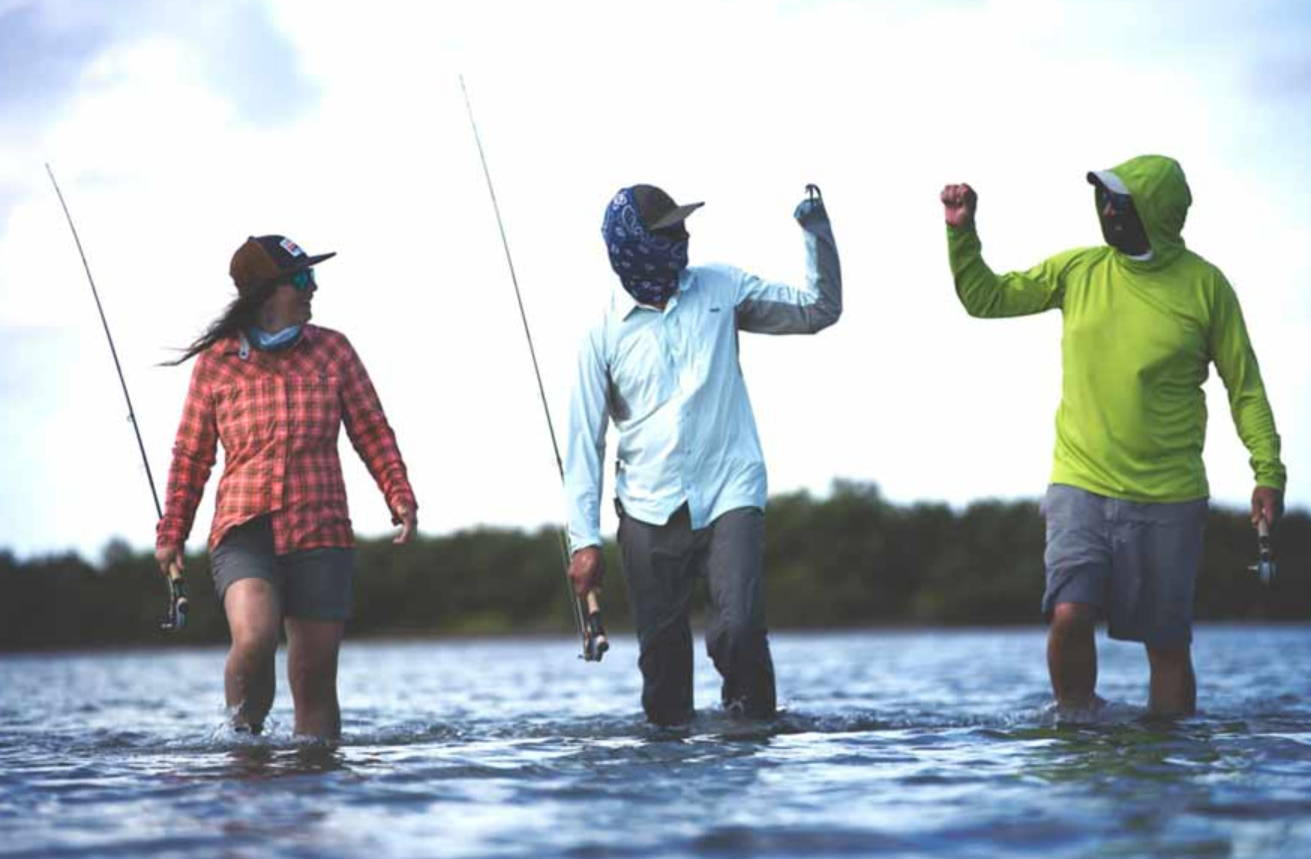
You're three hours into a morning bass session. Your shirt is soaked — sweat, splash, and sun hitting the water from every angle. Your buddy has a $40 rash guard he grabbed online. You've got a cotton tee, the same one you've taken fishing a hundred times. Feels like the same thing. It's not.
Anglers sourcing UV-protective fishing apparel from trusted suppliers should understand how dramatically fabric performance changes once cotton gets wet.A dry cotton t-shirt gives almost no UV protection to start with. Get it wet, and that thin defense drops fast — UPF values fall from a weak 5 down to near 2. That's not a sales pitch. That's just how physics works.
This guide covers the real numbers behind UV protection clothing for fishing. You'll learn what UPF ratings mean, what the difference actually looks like on the water, and get a clear budget breakdown — so you can make a solid call before your next trip out.
Dry vs. Wet UV Penetration: The Real Numbers Behind Cotton Tees
Here's the part most anglers never bother to look up — and most wish they had.
That standard white cotton tee hanging in your gear closet? Dry, off the shelf, fresh out of the dryer — it tests at somewhere between UPF 5 and UPF 7 . That means 80–86% of UV radiation gets blocked before it reaches your skin. Sounds decent enough, right? It's not. The EPA classifies anything under UPF 15 as minimal protection. Your cotton tee was already failing you before you stepped on the boat.
Then you get wet. And the numbers turn ugly — fast.Leading fishing apparel manufacturers test UV resistance under both dry and wet conditions to verify real-world protection.
What Happens to Cotton When Water Hits It
The Skin Cancer Foundation states it plainly: a wet white cotton tee drops from UPF 7 down to UPF 3 . That one shift more than doubles UV transmission through the fabric — jumping from 14% to over 33% of all incoming radiation punching straight through to your skin.
And that's the conservative figure.
Coolibar 's lab testing tells an even worse story. In their worst-case wet-fabric results, a soaked cotton tee blocks as little as 3% of UV rays. That means 97% passes through. Think about what that means on a full-day saltwater trip. You're not just underprotected. You're fishing with no real barrier between the sun and your skin.
The mechanics are straightforward. Water forces cotton fibers apart. Those microscopic gaps — which were already doing almost nothing to stop UVA and UVB — collapse open. Add four hours of casting load across your shoulders, upper back, and forearms, and those gaps widen further. The Skin Cancer Foundation spells it out: "If your clothing gets stretched or wet, it will lose some of its protective ability and become more transparent." For a cotton tee, "lose some" is doing a lot of heavy lifting in that sentence.
The Polyester Comparison That Changes the Calculation
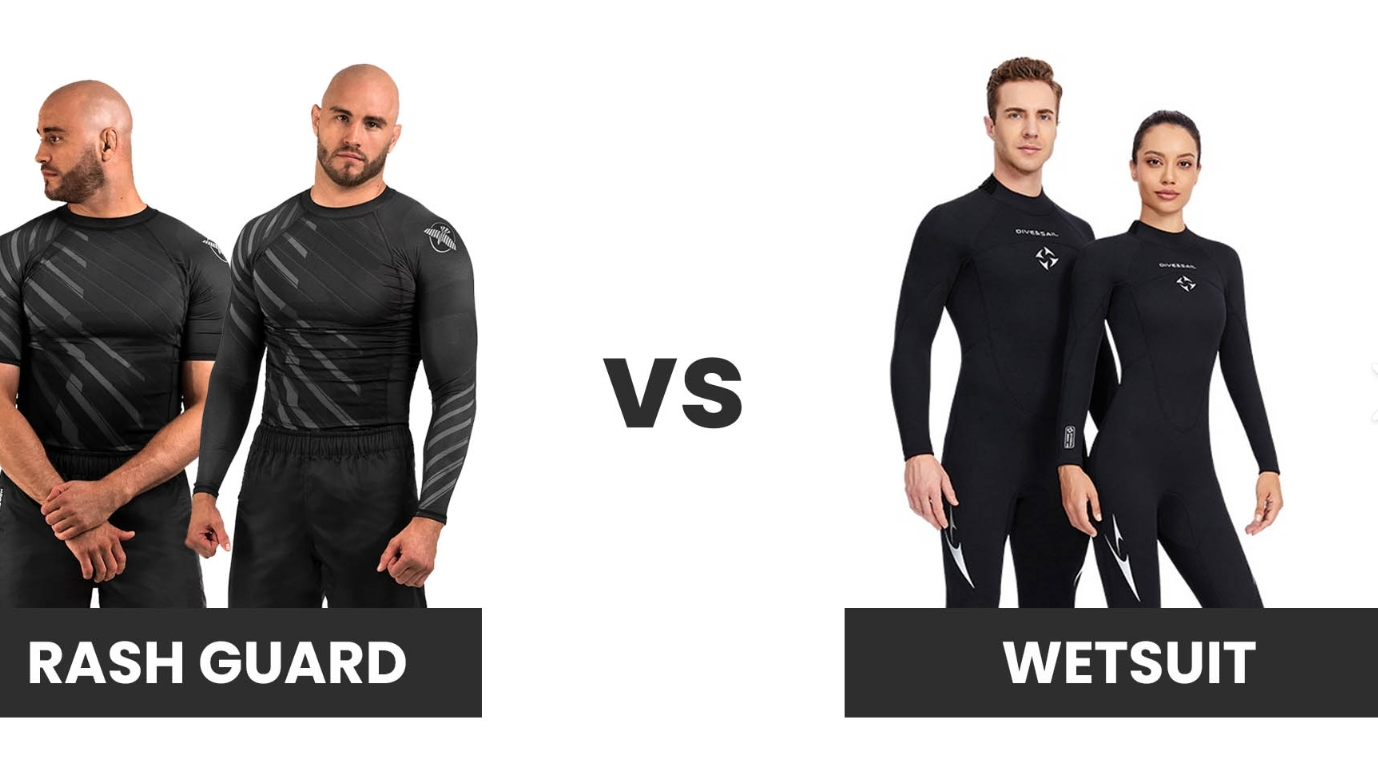
A purpose-built UPF 50+ rashguard — made from performance polyester or nylon blends around 180–200 gsm — operates by completely different rules.
Dry: UPF 50+ , blocking ≥98% of UV. That's the starting point. So here's what's worth paying attention to — soak that same garment in saltwater or sweat, and the protection holds. Coolibar tests their polyester UPF garments both dry and fully wet. The rating stays at UPF 50+ in both conditions. REI's fabric research adds another detail: polyester-based fabrics can perform slightly better wet than dry, because water does not break down synthetic fiber structure the way it destroys cotton's.Serious anglers often choose custom UPF fishing shirts designed specifically for extended offshore exposure.
The numbers side by side:
Condition | Cotton Tee | UPF 50+ Rashguard |
|---|---|---|
Dry | UPF 5–7 (80–86% blocked) | UPF 50+ (≥98% blocked) |
Fully wet | UPF 2–3 (as low as 3% blocked) | UPF 50+ (≥98% blocked) |
Stretched + wet | Near-zero effective protection | Maintains rated protection |
That gap isn't marketing language. It's physics, and it's measurable.
Why Anglers Get Hit Harder Than Other Outdoor Enthusiasts
One more factor that almost never gets discussed: water surface reflection . UV radiation doesn't just come from above on the water. It bounces off the surface and hits you from below — your exposed forearms, the underside of your chin, the back of your hands. That reflected UV adds to the exposure already punching through a wet, stretched cotton tee. You're getting hit from two directions at once.
Cotton also wears out over time. The fabric fades. The yarns loosen through repeated washing. Even that modest UPF 5–7 dry rating drops further as the shirt ages. No standardized "10-wash cliff" exists in the data, but the evidence points the same direction: worn, faded cotton offers near-zero additional UV protection over bare skin in direct sunlight.
A quality polyester rashguard with built-in UV-absorbing chemistry holds its UPF rating through the full life of the garment — through sweat, chlorine, and saltwater. Untreated cotton can't do that. The fiber structure won't allow it.
Your cotton tee was never protecting you. It was just hiding that fact while your skin kept a running tab.
UPF Rating Explained: Debunking the "Sun Shirt Marketing" Myth
Walk into any outdoor retailer and you'll find shirts tagged with phrases like "UV blocking fabric," "built for long days in the sun," and "sun-ready performance." None of those phrases mean anything. Not one is backed by a measurement. That's the game — and once you know how it works, you stop falling for it.
UPF stands for Ultraviolet Protection Factor . It's a ratio: the UV dose required to damage your skin through the fabric, divided by the dose required without it. A UPF 50 rating means 1/50th of incoming UV radiation passes through — 2% transmission, 98% blocked . That number comes from a spectrophotometer scanning the actual textile across wavelengths from 280 to 400 nm. No guesswork. No human subjects. Just measured physics.
SPF — the number you know from sunscreen bottles — measures something different. It tracks how long bare skin takes to burn with lotion applied versus without. It also focuses on UVB, not the full UV spectrum. The two systems don't work the same way. A shirt that says "SPF 50 feel" has zero UV transmission data behind it. That's marketing language dressed up as a specification.
The Scale That Counts
The UPF classification system breaks down like this:
UPF Rating | Protection Category | UV That Still Reaches Skin |
|---|---|---|
15–24 | Good | 4.1–6.7% |
25–39 | Very Good | 2.6–4.0% |
40–50 | Excellent | 2.0–2.5% |
50+ | Maximum | ≤2.0% |
The jump from UPF 30 to UPF 50 is real but not dramatic. You're moving from 3.3% transmission down to 2%. What matters more is the gap between any certified rating and no rating at all . An unlabeled shirt might perform at UPF 8 when dry. Get it wet, and it can drop below UPF 15. That's the range where protection fades to almost nothing.
Think about an eight-hour day on the water. An unlabeled thin tee (UPF 8–10) versus a certified UPF 50+ rashguard — your shoulders and forearms absorb five to six times more UV radiation through that thin fabric. Now stretch that across a full fishing season — say 60 days at eight hours each. The total UV dose hitting your most-exposed skin isn't a small difference. It's the gap between managed exposure and long-term skin damage.
Why "Just Wear Dark Colors" Doesn't Save You
The idea that heavy, dark cotton equals sun protection isn't completely wrong. It's just missing key details that matter to anglers.
Dark, tightly woven cotton does offer better dry UPF than a light-colored tee. But here's the real issue: the fabric construction that drives high UPF in technical rashguards has nothing to do with color or weight . It comes down to knit density, fiber type, and yarn engineering.
A certified UPF 50+ rashguard is built from 80–90% polyester or nylon with 10–20% elastane . At that construction density, polyester scatters and absorbs UV at the fiber level — often hitting UPF 30 or higher before any chemical finish is added. Multi-filament yarns, trilobal cross-sections, and microfiber textures extend the UV path through the fabric without adding bulk. UV-absorbing dye chemistry — benzotriazoles, benzophenones — then adds another layer of protection that holds through repeated washing.
Heavy black cotton can't do any of that. Wet it down on a boat and the fiber structure soaks up water, opening up the weave. Stretch it across your casting shoulder and coverage breaks down. Plus, after six hours in August heat, most anglers have already rolled the sleeves or unbuttoned the collar. That wipes out whatever protection advantage the cotton had to begin with.
How to Read a Tag and Spot the Fakes
Legitimate UV protection clothing for fishing shows you the data. Look for:
An explicit UPF number — 50 or 50+ is the target, printed on the tag, not buried in website copy
A test standard reference — AS/NZS 4399 (the Australia/New Zealand benchmark, the world's strictest standard for sun-protective textiles), or AATCC 183 / ASTM D6603 for US-labeled garments
Skin Cancer Foundation Seal of Recommendation — this requires UPF 50 in real-use conditions, not just controlled lab settings
Put back anything that uses phrases like "sun shirt," "UV blocking," or "built for the outdoors" without a number attached. That's not protection — it's positioning. The Skin Cancer Foundation recognizes UPF 50+ garments for its clothing seal, full stop. Brands that can't hit that bar will hide behind language instead of data.
The fishing apparel market is packed with gym compression tops and athletic tees that look the part. Many are solid garments — for the gym. A high-stretch, thin athletic tee in an unlabeled synthetic blend tells a different story once it's wet and stretched across your back in open water. It can drop to UPF 5–10. That's 10–20% UV transmission. A certified UPF 50+ rashguard in the same conditions holds at ≤2%. The protection gap is real — and it's at least 25 times wider than most anglers expect grabbing whatever's in the gear bag.
On‑The‑Water Test: Shore, Boat & Kayak Scenario Breakdown
The same shirt performs three different ways depending on where you're standing. That difference matters more than most anglers ever notice.
Shore wading, open-deck boat fishing, and kayak paddling each create their own mix of UV exposure, wetness, friction, and heat. A garment that holds up well in one environment can fall apart in another. Here's what happens across all three.
Shore Wading: Where Cotton Dies Fastest
Wade waist-deep for two or three minutes, then step back onto the bank. Watch what happens next.
A mid-weight cotton tee — around 160–180 g/m² — holds 20–27% of its own weight in water. In full sun with a light breeze, that shirt takes 60 to 120 minutes to dry out. It's not just uncomfortable. It's clingy, heavy, and failing as UV protection the entire time. A performance polyester or nylon fishing shirt in the same weight class holds less than 5–7% water by weight. It reaches surface-dry in 15 to 30 minutes .
The chafe situation is just as brutal. Cotton bunched under a wading belt stays saturated. Salt from sweat builds up in the fabric within two to four hours of walking. That's not a minor irritation — that's raw skin by early afternoon on a long wade. A moisture-wicking fishing shirt carries far less water weight. Less bulk sits under the belt. Friction stays near the seams, not across the whole soaked fabric.
Sweat adds another layer to this. Skin trapped under pack straps or a wading belt in saturated cotton can hit over 80% relative humidity . That shuts down evaporative cooling. Technical polyester knits push liquid sweat to the outer surface. Skin-side humidity drops to 30–50%. That gap alone can mean 1–3°C lower skin temperature under direct sun.
Open-Deck Boat Fishing: The Reflection Problem
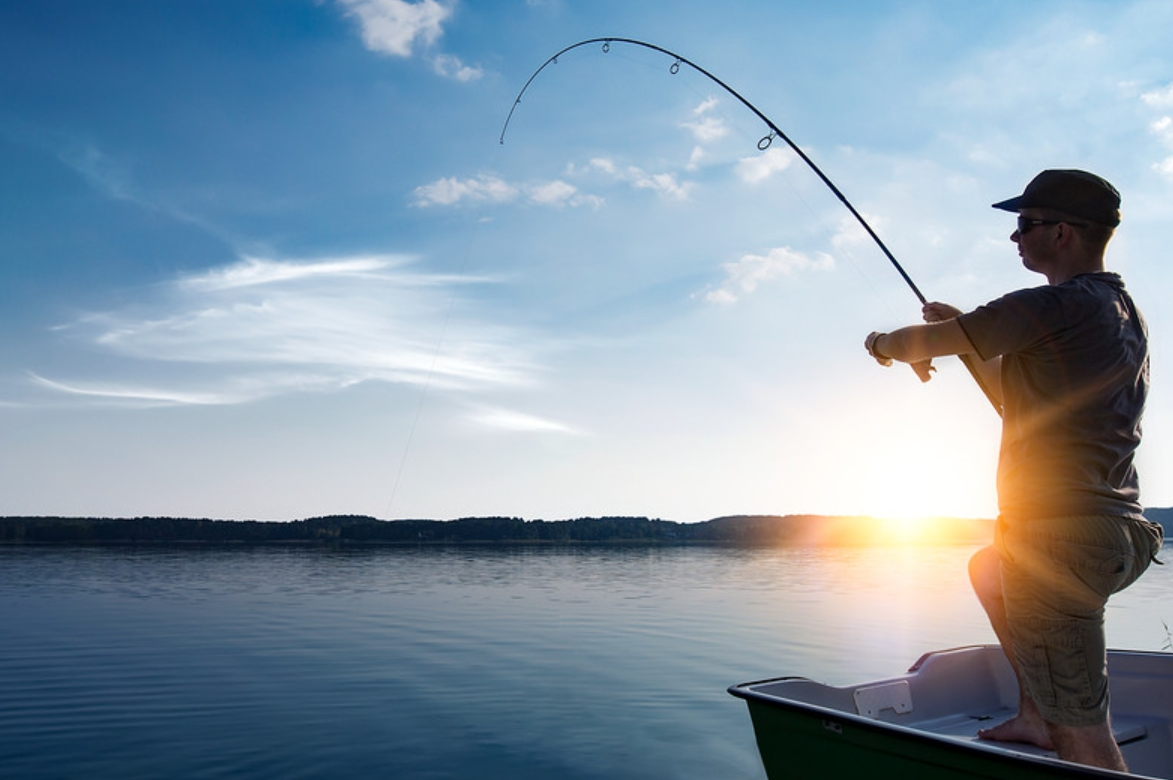
Open boat decks add a UV exposure factor that shore anglers don't face at the same intensity: reflected radiation from below .
Calm water reflects 5–10% of incident UV back upward. A white gelcoat deck reflects 30–60% of UV and visible light back toward your torso and face. An angler on an open deck absorbs up to 1.5× the UV dose of someone standing on land in the same conditions. UV hits you from above and below at the same time.
A standard long-sleeve cotton crew neck — UPF 5–10 dry, worse when stretched or wet — lets 10–20% UV pass through the fabric. Over a two- to three-hour midday session with no sunscreen on covered areas, that means visible reddening on the shoulders. You also get a consistent burn line at the lower neck and clavicle — right where a standard collar stops.
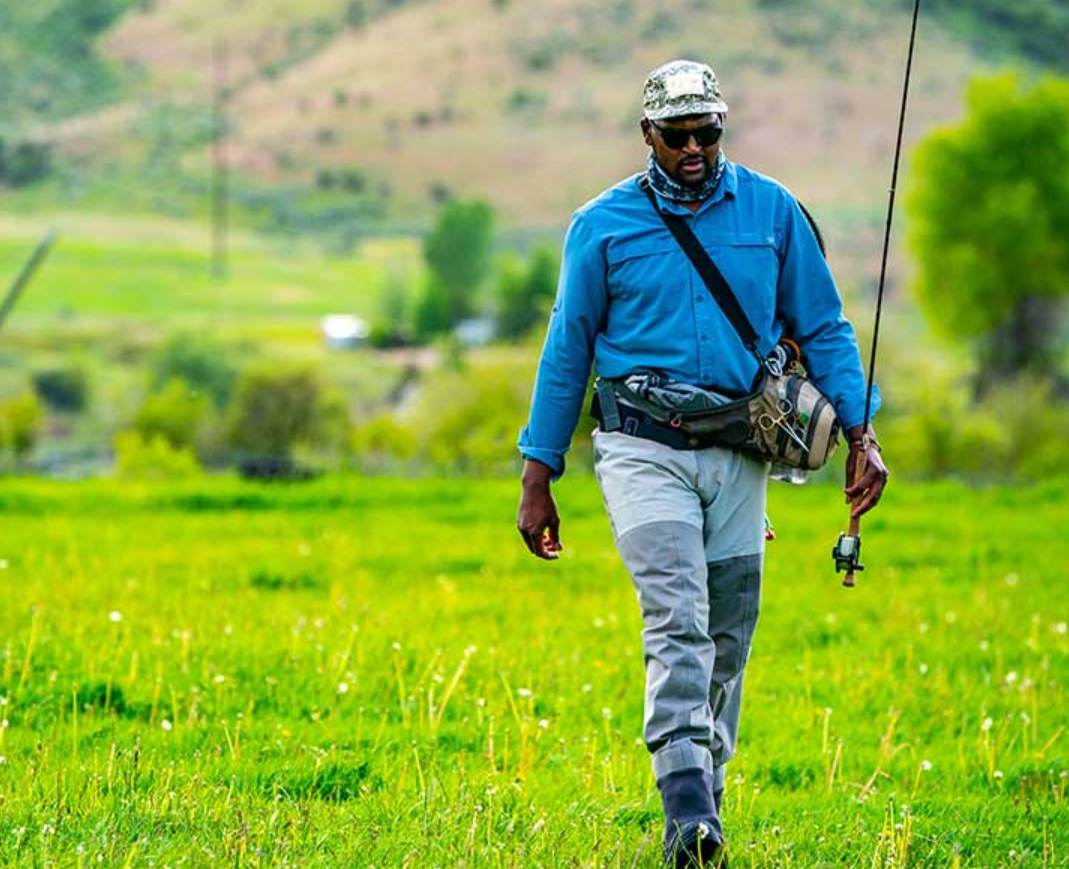
A UPF 50+ mock-neck fishing shirt with a 6–8 cm collar changes that picture. Covered zones show little to no redness after the same session. Sunscreen goes on hands and face only, which cuts down on missed spots. The back and side of the neck — one of the most burned areas in fishing — stays protected with no reapplication needed.
Kayak Paddling: The Chafe and Splash Combination
Sit-on-top kayaks are rough on shirts. Paddle drips hit your arms and shoulders on every stroke. Water pools in the seat and wicks up into your lower shirt. After two hours, a cotton tee on an SOT kayak reaches near-total saturation from the waist down — cold, heavy, and clingy for 45 to 90+ minutes after the last splash.
A rashguard or technical fishing top with a hydrophobic knit sheds that same water in 10 to 20 minutes. DWR-treated fabrics bead water on contact. This goes beyond comfort. Wet cotton in a 10–20 knot breeze at 65° f air temperature can drop your skin temperature fast enough to bring on mild hypothermia symptoms within 20 to 40 minutes. Technical shirts return to thermal neutral in 5 to 15 minutes after the same exposure.
The abrasion issue on kayaks is specific and easy to overlook. A standard T-shirt has overlock seams across the top of the shoulder — right where PFD straps sit. After 10,000+ paddle strokes, those seam ridges (1–2 mm high) dig into skin. Rashguards built for paddling use flatlock seams (ridge height ~0.5 mm) and raglan sleeve construction . That layout routes seam lines from the collarbone toward the armpit, pulling them off the PFD strap contact zone. You won't notice this detail until hour four of a long paddle — then it's all you can think about.
The takeaway across all three environments : the exposure threats change, but the performance gap between cotton and a purpose-built UPF 50+ rashguard stays consistent. Cotton breaks down faster as conditions get harder. A solid-rated fishing shirt holds its numbers — in the water, on the deck, and deep into a long paddle session.
Budget Breakdown: Entry, Mid‑Range & Pro Rash Guard Picks
Spend time with serious anglers and you'll notice something fast: nobody debates sunscreen brands. What they debate is shirts. Does spending $50 on a rash guard make sense? Or does a $20 Amazon find with the same UPF 50+ tag do the job just as well?
The answer depends on where you fish, how often you fish, and how long you expect your gear to last. Here's the honest breakdown across all three tiers — no filler, no sponsored recommendations.
Entry Level ($15–$25): Gets the Job Done, With Caveats
This tier covers most Amazon listings, Decathlon basics, and Walmart athletic wear. Generic polyester rash guards from big-box brands land here. Some are solid for occasional freshwater sessions or bank fishing days.
What to look for at this price:
Fabric construction : Target 200–240 gsm weight (about 6–7 oz/yd²). This range balances stretch and durability. It's thin enough to breathe and dense enough to hold UPF across the weave.
Fiber blend : Look for 82–90% polyester with 10–15% spandex/elastane . Higher spandex content breaks down faster under UV exposure and chlorine. The tag reads 25% spandex or more? Pass on it.
Label verification : The tag needs to say "UPF 50+" — not "sun protective," not "UV blocking," not "50 UPF." The "+" matters. It confirms tested performance beyond 98% UV blockage under AS/NZS 4399 or AATCC 183 standards. No test reference on the label? Treat the claim as unverified marketing.
Seam construction : Flatlock or flat-seam stitching cuts friction under PFD straps and wading belts. Not every brand at this price includes it — but check before you buy.
Honest expectations : Plan on one solid season of reliable UV performance with proper wash care. Color fades faster at this tier. Stretch recovery drops quicker. That's not a flaw — it's the trade-off for the price. For weekend freshwater anglers fishing 10–15 days a season, this tier makes practical sense.
Mid-Range ($30–$50): The Sweet Spot for Most Serious Anglers
Columbia PFG, HUK , and AFTCO-tier brands sit right here. So do solid mid-range rash guards from established athletic labels. Construction quality takes a real step up at this price — and this is where most dedicated weekend anglers should be shopping.
What you get for the extra money:
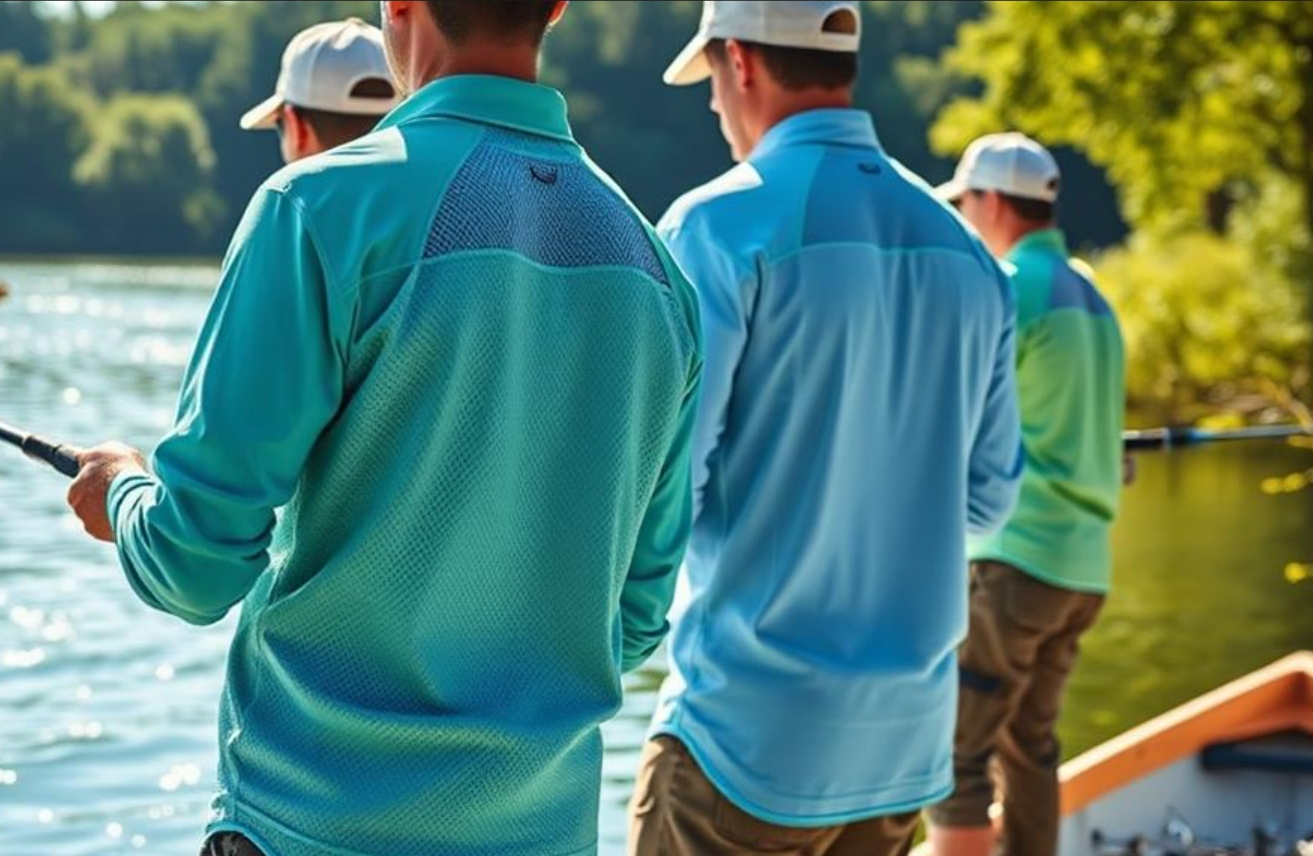
Lighter, breathable fabric : Quality mid-range fishing hoodies run 150–190 gsm , with mesh panel venting across the upper back or underarm. Less fabric weight means more airflow. That matters during August afternoon sessions on an open deck.
Raglan sleeve construction : More structural at the shoulder junction, with reinforced bar-tacking at stress points where backpack or PFD harness straps make constant contact. After four hours of casting, you feel the difference.
Anti-odor treatments : Silver-ion antimicrobial finishes or polymer-based odor control show up at this tier. Look for terms like "Polygiene," "anti-microbial finish," or "odor control technology" on the product page — not vague claims like "stays fresh."
Thumb-hole cuffs : On long-sleeve fishing hoodies, extended cuffs with thumb loops keep back-of-hand coverage in place through the full casting motion. Without them, sleeves creep up mid-cast and leave a strip of skin exposed.
Label check before buying : Still requires UPF 50+ with a test standard reference. Target 80–90% polyester, 10–20% spandex — stay under 20% spandex for UV retention across multiple seasons.
Honest expectations : One to two high-use seasons before noticeable UV or color degradation. This tier works well for saltwater kayak anglers, regular weekend boat fishers, and anyone logging 30+ days on the water each year. The price is earned through construction durability and heat management — not just a number on a hangtag.
Pro Tier ($50–$100+): Built for the Long Haul
Simms SolarFlex, AFTCO Samurai, Huk Icon X, and comparable technical fishing hoodies live in this range. Some specialized cooling and coverage designs push past $80. This is guide-grade gear — built for multi-day charters, tournament crews, and anyone on the water five or more days a week across a full season.
What separates this tier from mid-range:
Phase-change cooling yarns : Some pro-tier shirts use fabrics with PCM (phase-change material) microcapsules that absorb and release heat as your body temperature shifts. Marketed as "active cooling" or "CoolCore" technology — the effect is real under direct sun, though modest.
Hydrophobic DWR finishes : Durable water-repellent coatings make spray and light rain bead on contact instead of soaking in. This is critical for kayak paddlers and open-deck boat anglers who face constant water exposure all day.
Abrasion-resistant panels : Heavier-denier fabric overlays sit at the shoulders, lower back, and waist zones where safety harnesses and PFDs grind with constant friction. Without these panels, thin performance knits pill and wear thin right where coverage matters most.
High-neck or integrated hood coverage : Mock collars with 6–8 cm of neck coverage plus thumb-hole cuffs aren't a luxury at this price — they're the whole point. The back of the neck and the back of the hands are the two most burned zones on serious anglers. A proper hood covers both without sunscreen reapplication.
UV-stable, colorfast dyes : Charter guides and tournament crews rely on technical lines because branding and high-visibility color need to stay intact through a full season of saltwater, sun, and salt spray. Look for "100% colorfast," "saltwater resistant," or "non-fading UV" language in the product spec sheet.
Honest expectations : Pro charter crews rotate these garments each year — moving them to casual wear once stretch goes loose, seams pill, or color fades — no matter what UPF rating is still on the label. That real-world rule beats any lab test. Once the knit structure degrades enough to show sheen spots or near-transparency under stretch, protection drops. The hangtag number no longer matters.
One Quick Test Before You Buy at Any Price Point
Stretch 10 cm of fabric out to 15 cm, then release. It should spring back to at least 11.5–12 cm. Stays stretched and baggy? The knit recovery is already compromised — and so is the UV rating. Run this test on new garments to set a baseline. Run it again mid-season. Recovery drops below 85% of original length? Treat that shirt as done for serious sun protection — no matter which tier you bought it from.
The bottom line across all three tiers: UPF 50+ is the entry requirement, not the differentiator. What separates a $20 grab from an $80 fishing hoodie is build quality, fabric durability, and how many seasons it holds up. Match your pick to how many days you're on the water — and buy at that level.
Conclusion
The numbers don't lie — and your skin doesn't negotiate.
A soaked cotton tee offers UPF 2 protection. That's not sun safety. That's a sunburn waiting to happen, cast after cast, hour after hour on the water. Look at what happens at the fabric level. A regular T-shirt stops being a budget choice. It becomes a gamble you keep losing over decades.
Here's the bottom line. A quality UPF 50+ rashguard blocks UV. It holds that protection through water, sweat, and a full season of washes. That consistency is what makes it worth every dollar.Many brands now develop OEM/ODM UV protection fishing clothing focused on long-duration fishing performance. A cotton tee fails you the moment it gets wet. You deserve better than that.
The next step is simple:
Pick your budget tier
Grab a long sleeve fishing shirt with verified UPF 50+ certification
Stop letting sun exposure eat into every fishing trip you love
Your future self — with healthy skin — will thank you.