Your first offshore trip teaches you the same lesson everyone learns the hard way: the sun doesn't care about your SPF 30 sunscreen, the deck doesn't care about your grippy sneakers, and the salt spray doesn't care about your cotton tee. By hour three, you're burned, soaked, and sliding around like a newborn calf—wondering why nobody told you custom saltwater fishing gear isn't the same as your regular fishing wardrobe.
Knowing what to wear for saltwater fishing is about function. A UPF sun protection fishing shirt that blocks rays instead of just covering skin. Boots with the right tread pattern for wet fiberglass. Gloves that won't corrode after one trip. Below, we break down every piece you need, head to feet, and which specs matter before you buy.
What to Wear for Saltwater Fishing: Head and Face Protection
Skin cancer doesn't happen because you forgot sunscreen once. It happens because you spent a hundred days on the water treating a ballcap like armor. Your head and face take the brunt of offshore sun—reflected off the water, unfiltered, all day—so this is where cutting corners costs you.
The Hat: Brim Size Matters More Than Brand
A 4"+ brim works for full-day offshore trips. A 3" boonie handles bay or inshore mixed-shade situations fine. A plain snapback only cuts it on short, casual outings.
Look for UPF 50+ minimum. Anything less is decorative once you're six hours into a charter. Light colors, especially white, reflect more UV and keep your head cooler.
A chin strap isn't optional. A 25-knot wind across a center console sends an unsecured hat overboard before you notice it's gone. Vented crowns or mesh panels stop sweat from turning your hat into a swamp by noon. Bonus: a snug hat with a chin strap also protects you from flying hooks and rigs during casting.
Face and Neck: The Buff You Didn't Know You Needed
A quality UPF 50+ neck gaiter or fishing face mask blocks sun and often outperforms sunscreen alone because it's a physical barrier that doesn't sweat off.
Look for 100% moisture-wicking polyester, light-colored, with mesh panels at the mouth to cut sunglass fogging and make breathing easier. Wear it over face, ears, and neck. Some stretch designs pull up over your hat crown for scalp coverage. Avoid raw-edge fabric tubes; finished seams hold shape better over a full day.
Eyes: Polarized, Not Just Dark
Polarized sunglasses cut glare off the water so you actually see fish instead of squinting at reflections. Copper base with green mirror works for bright flats conditions. Grey base with silver mirror works for overcast days.
Choose UV-cut lenses with larger frames. You get more coverage for the skin around your eyes, plus protection from wind-blown debris or a stray hook.
Sunscreen: Your Backup, Not Your Primary
Even with a mask and hat, exposed areas like your nose, cheekbones, and lip line need SPF 30+ reef-safe sunscreen, reapplied every 3–4 hours because salt and sweat wash it off fast. One thing anglers forget: wash your hands thoroughly after applying. Sunscreen scent on your fingers transfers to lures and flies, and fish notice.
After the trip, rinse your hat and buff in cold fresh water. Skip the washing machine. Salt crystals break down fabric and stiffen brims fast if you let them dry untreated.
UPF Sun Protection Fishing Shirt (Long-Sleeve)
Your torso and arms take more direct sun than any other part of your body on an offshore trip. A cotton tee gives you about UPF 5, which blocks almost nothing. A dedicated UPF sun protection fishing shirt blocks 96–98% of UVA/UVB rays. That's the difference between a tan and a burn by lunch.
What UPF Rating to Buy
Skip anything under UPF 30. Serious anglers buy UPF 50 or 50+, now the industry standard. AFTCO's AFBLOCK fabric blocks at least 96% of UV, and DerySport's hooded shirt tests at roughly 98% blocked. The Skin Cancer Foundation uses UPF 50+ as their benchmark for "excellent" protection.
Fabric and Fit That Performs
Look for polyester-spandex blends (90/10 is common) or nylon ripstop. These wick sweat and dry in under 15 minutes, critical when you're soaked from spray one minute and baking dry the next. Top-tier fabric weighs under 4.5 oz per square yard, so it stays breathable instead of clinging like a wetsuit.
Vents, Pockets, and Details Worth Paying For
Mesh-lined back vents and underarm panels move air while you cast and retrieve. Roll-up sleeves with a button tab let you switch from long to short sleeve mid-trip. Zippered chest pockets keep your phone and license dry and accessible. Some hooded styles add an integrated face mask for full coverage, handy if you skip the separate buff.
Price and Durability
Expect to pay $20–$45. Bassdash's UPF 50+ hoodie runs $20–28. AFTCO's Samurai, with antimicrobial and stain-resistant treatment, runs $39–45. Either way, quality UPF fabric retains its protection through 100-plus washes. Rinse in cold water, skip the dryer's high heat, and it'll outlast several seasons of saltwater abuse.
Breathable Fishing Shirt Saltwater: Short-Sleeve Performance Tee (Base Layer)
Not every trip calls for long sleeves. When humidity climbs and casting demands full arm mobility, a short-sleeve performance tee earns its spot as your base layer or your only layer.
Fabric That Does the Work
Look for 100% microfiber polyester, or a stretch blend like 92% polyester/8% spandex (AFTCO's Air-O Mesh) or 97/3 polyester-spandex. The spandex percentage gives you four-way stretch when you're hauling back on a hookset. Stick to weights in the 4.0–4.5 oz/yd² range. Salinity's Wahoo tee runs 4.1 oz and stays breathable through a full day on the water.
UPF and Drying Speed
UPF 50+ should block roughly 98% of UVA/UVB. Some tees, like Salt Life's Fish N' Bones line, drop to UPF 30. Those work for short trips but not for a full offshore day. Top-tier fabric dries in 10–15 minutes; budget microfiber can take 25–35. That gap matters when spray soaks you every ten minutes.
Details Worth Checking
Tagless necklines and flatlock seams prevent chafing against bare skin. DWR stain-release coatings shed blood, bait, and sunscreen. Antimicrobial treatment keeps odor down on multi-day charters. Short sleeves cover about 45% of your upper body versus 85% for long sleeves, so higher UPF matters more here.
What to Wear for Saltwater Fishing: Bottom Half
Your legs sit closer to salt spray, hook points, and boat hardware than any other part of your body—yet most anglers grab whatever gym shorts are already in the truck. That's a mistake. Cotton shorts soak up water, get heavy, and chafe by hour two. You need quick-dry fishing pants built for saltwater, not borrowed from your closet.
Pants Over Shorts, Almost Always
Full-coverage pants beat shorts for sun protection and hook safety on all-day trips. Look at what guides actually wear: Orvis Pro Sun Skiff Pants or Simms Superlight Pant for men, Orvis Guide Pants or Simms Mataura Pants for women. All are nylon or polyester blends, UPF 30–50+, loose-fitting for airflow when wet.
Shorts still work for beach fishing or brutal heat, but only synthetic, fast-drying ones. Skip cotton board shorts entirely.
Fabric and Fit That Hold Up
Nylon and polyester dry fast and resist tearing against hooks, boat rails, and rocks. Cotton does the opposite—it holds water, gets heavy, and rubs you raw. Look for articulated knees and a gusseted crotch for stepping up on gunwales. Zip-off legs let you convert to shorts midday without changing clothes. Cargo pockets keep pliers and leaders within reach.
Adjust by Scenario
Offshore charter : quick-dry nylon pants, UPF 30–50+, paired with light waterproof bibs if spray picks up.
Beach/surf : board shorts or quick-dry pants, expect wet to the knees.
Cold coastal trips : thermal base layer under insulated or fleece-lined pants, since anything under 50°F demands extra warmth against wind and spray.
Non-Slip Fishing Deck Shoes (Footwear)
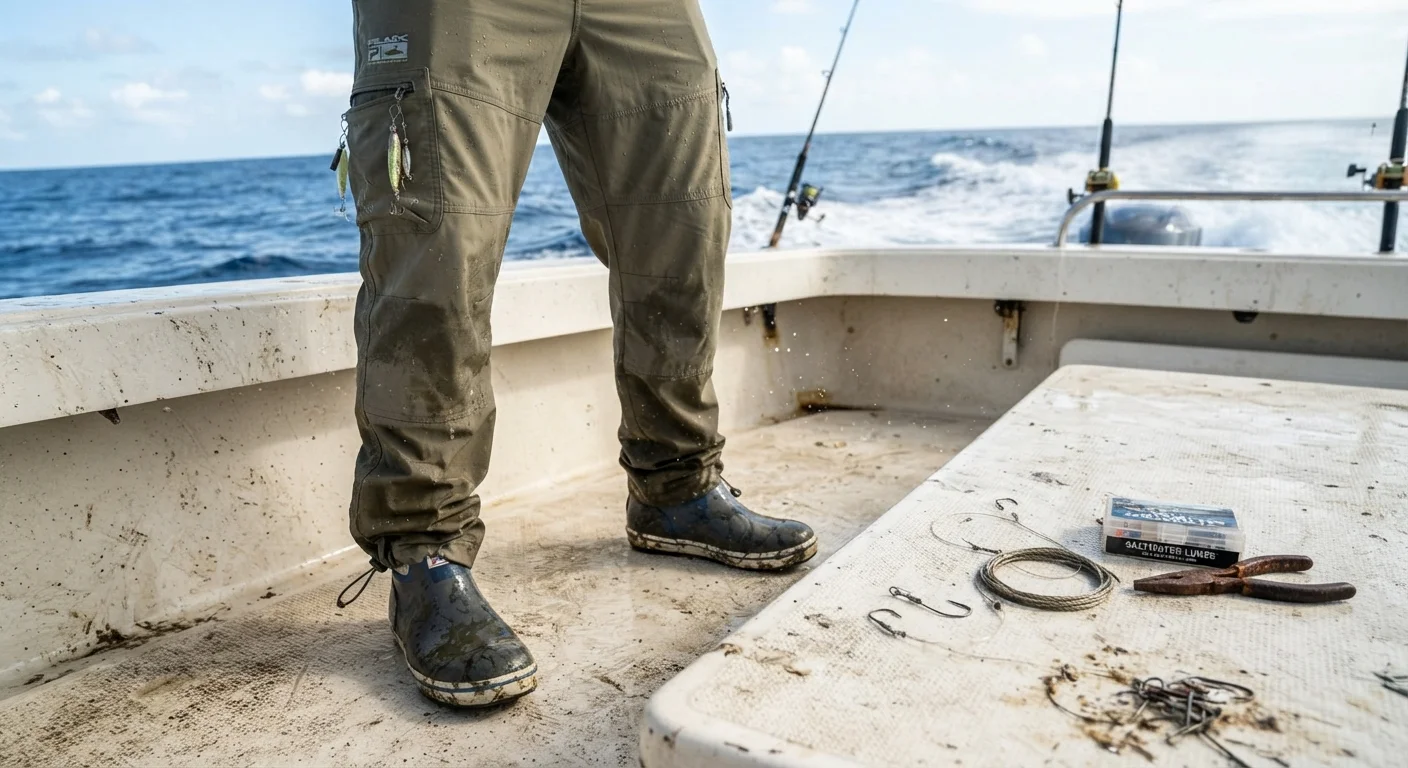
A wet fiberglass deck is basically a skating rink with hooks lying around. Regular sneaker tread can't handle it. You need saltwater fishing boots built specifically for that surface.
Look for siped rubber outsoles. Fine razor-cut grooves flex under your weight and squeeze water out from underfoot, the same trick studless winter tires use on ice. Some deck shoes have 263% more ground contact area than standard fishing sandals. That contact is concentrated at the heel and ball of the foot, right where your grip actually matters when you're fighting a fish.
Non-marking rubber is non-negotiable ; anything else scuffs the deck and gets you banned from the charter boat. For the upper, hand-laid neoprene delivers 100% waterproofing on 6" boots. Look for 4–8 drainage ports so water exits instead of pooling inside. An 8mm EVA insole with memory foam keeps your feet from wrecking after eight hours standing.
Fishing Rain Gear Offshore: Waterproof Jacket and Layering System
A squall doesn't ask permission. It shows up at 20 knots, sideways, and finds every gap in cheap rain gear within minutes. Offshore fishing rain gear is the difference between finishing your trip and calling it early.
Waterproof Rating: Don't Buy Under 15,000mm
Hydrostatic head measures how much water pressure a fabric resists before soaking through. For offshore work, 15,000mm is your floor; 20,000–30,000mm is your target if you're running heavy seas or multi-day trips. Anything under 10,000mm is inshore-grade at best—it'll wet out the first time you lean against a rail in a downpour.
Breathability Matters as Much as Waterproofing
Look for MVTR ratings of 10,000g/m²/24h or higher. This lets sweat escape while you're jigging or fighting fish, instead of trapping moisture inside your shell. A properly rated system cuts internal moisture buildup by 40–60%, keeping you comfortable and effective 20–50% longer on the water.
Construction Details That Separate Real Offshore Gear from Pretenders
Fully taped seams, a waterproof front zipper with storm flap, and double-closure cuffs (inner neoprene gasket plus outer Velcro) stop water from running up your sleeves while gaffing fish. AFTCO's Fortress hits 30,000mm/15,000g and runs around $1,099—overbuilt for most, but built for real offshore abuse. Budget options like NAVIS Marine Pro ($80–120) get you a 3-layer PTFE shell without the price tag.
Layer Underneath, Don't Just Wear a Shell
Pair a synthetic or merino base layer (150–200g/m² in moderate conditions) with a gridded fleece mid-layer, then top it with your shell, worn over bibs, never tucked under. Match bib rating to your jacket rating; your legs take as much spray as your torso does.
Fishing Gloves Saltwater Corrosion: Hand and Finger Protection
Grab a fish by the gill plate once without gloves, and you'll understand why your hands need armor too. Saltwater fishing gloves are the barrier between your skin and teeth, fins, hooks, and the corrosive bite of salt itself.
Material
Skip natural leather. It stiffens and cracks under salt exposure no matter how often you rinse it. Neoprene (1.5–5mm) resists corrosion and retains heat when wet, so it's good for cold-water trips. Rubber or latex-coated gloves handle chemical exposure better and rinse clean fast; look for polyethylene-lined, full-latex designs rated cut-resistant and puncture-resistant against acid and alkali exposure.
Hardware and Grip
Favor plastic pull tabs over metal ones; metal corrodes, plastic doesn't. Wrinkled latex palms or silicone dot texture grip slippery fish and wet rails far better than smooth surfaces.
Match Gloves to Conditions
Cold saltwater calls for insulated neoprene with gauntlet cuffs. Warm-water deck work calls for gritty rubber with thick, puncture-resistant palms. Full-finger gloves protect best when wiring fish or handling leader; fingerless styles trade some protection for knot-tying dexterity.
Rinse in fresh water after every trip, air-dry away from direct sun, and skip the dryer entirely.
Runfishapparel.com: Offshore Fishing Attire for Serious Anglers
Behind most name-brand fishing shirts you'll never see the factory that made them. Runfish Apparel is one of those Fishing apparel factories. They're a Guangzhou-based OEM/ODM fishing apparel manufacturer that's been building offshore fishing gear since 2009, supplying brands across 50+ countries from an 18,000 sqm facility with 12 dedicated production lines.
Where Their Fabric Outperforms Industry Standard
Runfish's UPF fabrics test at 52–58, well above the "excellent" UPF 50+ threshold and the industry-good UPF 40+. Quick-dry performance hits 15 minutes or under. Good competitors hit 20–30 minutes. Basic gear takes 35–45. That's roughly 3x faster. Breathability (Ret) comes in at 3.5 m²·Pa/W or lower, versus 4.5 for good-tier fabric and 6.0+ for basic.
Construction That Matters Offshore
Their offshore shirts run 100% polyester at 130–160 GSM with anti-salt spray treatment. They hold UPF50+ even after 50+ washes. Jackets add DWR coating, sealed seams, and PU laminate for full waterproofing 30 miles out. With 500+ fabric options and MOQs starting at 50 pieces, they'll build you a private-label system from sun shirts to tournament uniforms with sponsor sublimation.
Saltwater Fishing Waders and Bibs (For Surf / Shore / Pier Fishing)
Pier anglers and surf anglers need different gear. Mix them up and you'll end up soaked or overheated.
Staying dry versus stepping in. Bibs handle spray on a pier, dock, or boat deck, where you never plan to enter the water. Waders are for wading: surf casting, tidal flats, rocky shorelines, and cold water where you're walking into the surf line itself. If you're planning to step into water, waders win. If you're staying on deck, bibs are simpler and cheaper.
Chest Waders for Surf Fishing
Chest waders give the most coverage in surf conditions. stockingfoot waders paired with separate wading boots grip better and protect your feet on shell-heavy or rocky bottoms; bootfoot styles win for quick on/off at the beach.
Never wade past chest depth. A wave or unexpected current can flood waders fast. A wading belt cuts water intake dramatically if you go under. Surf anglers treat it as mandatory gear.
What to Check Before Buying
Waterproof rating : reinforced, sealed seams
Breathability : critical for long walks or hot sessions
Fit : sized by boot size plus room for thick socks (boot size 9 typically means wader size 9–11)
Price ranges : Hodgman Neoprene runs under $100. For most anglers, Freestone gives a good balance of breathability, durability, and Saltwater Fishing Essential Clothing price. Simms G3 Guide Bootfoot tops $900 for serious surf work.
Bibs for Pier and Boat Spray
AFTCO's Hydronaut bib hits 15,000mm waterproofing with 420D ripstop and runs $250–300. It's built for pier and boat-side spray, not wading. The fit should allow a full casting motion and crouching without binding at the shoulders.
Rinse everything in fresh water after each trip. Salt and sand grind down seals and seams fast if you skip it.
What to Wear for Saltwater Fishing: Complete Trip Checklist (Printable)
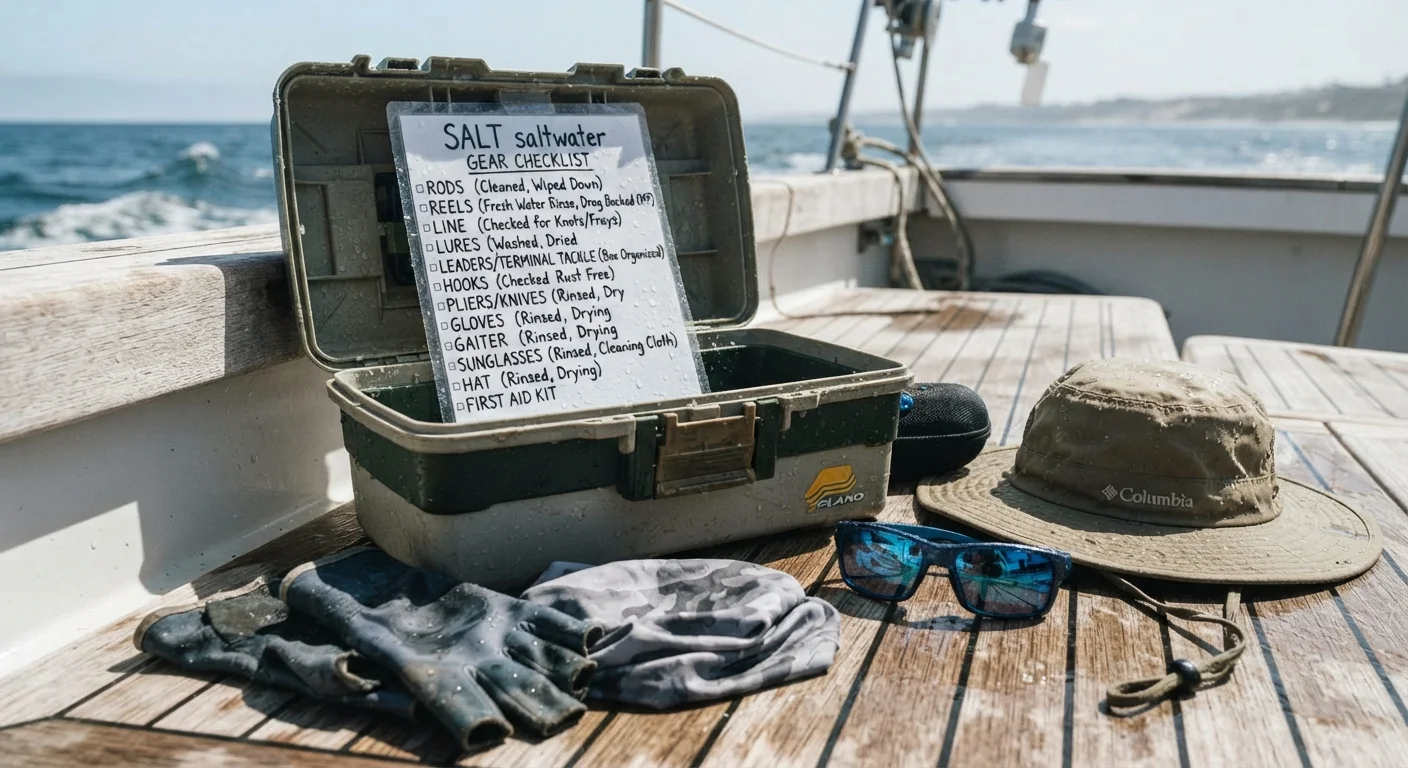
Print this page. Tape it inside your tackle box lid. Check it off the night before every trip—gear left on the counter won't help you on the water.
Wear Onto the Boat or Beach
UPF 50+ long-sleeve fishing shirt
Quick-dry pants or board shorts (no cotton)
Non-slip boat shoes or water shoes, closed-toe
Wide-brim hat with chin strap
Neck gaiter / Buff
Polarized sunglasses with retainer strap
Lightweight waterproof jacket
Pack in Your Dry Bag
Spare UPF shirt
Fleece mid-layer
Waders (cold/rocky surf trips)
Reef-safe sunscreen, SPF 30–50+
SPF lip balm
Saltwater fishing gloves
First-aid kit + seasickness meds
Life jacket, if not provided by the charter
Waterproof phone case
Fishing license, ID
One set per day, plus one spare. Always pack a rain jacket and a warm layer—even for "tropical" trips.
Conclusion
The ocean doesn't care if you're prepared. It'll burn your neck by 9 AM, soak you by noon, and send you sliding across a wet deck the moment you let your guard down. Saltwater fishing gear is about function stacked on function. A custom UPF sun protection fishing shirt that actually blocks UV, non-slip fishing deck shoes with the right sole compound, and gloves that shrug off salt corrosion are insurance against the trip going sideways.
Don't let that knowledge sit unused. Pull up the printable checklist, run through it against your closet, and order what's missing before your next trip. Gear up right once, and you'll spend less time managing discomfort and more time watching your line.