Most guys buying mens sun shirts already know UPF 50 exists. What they don't know is whether paying $30 more for it is worth it — or whether they've been sold a premium by marketing copy dressed up as science.For brands sourcing at scale, working with custom wholesale men's fishing sun shirts programs often reveals how much of that price difference is material-driven versus pure positioning.
Here's the honest number: UPF 30 blocks 96.7% of UV radiation. UPF 50 blocks 98%. That 1.3% gap is real. But whether it matters comes down to three things:
Where you're wearing the shirt
How long you're out there
Whether the fabric is soaking wet and stretched tight across your shoulders by hour three of a lake fishing trip — this part nobody talks about
This guide breaks down the numbers. You'll see exactly when that rating difference changes real skin outcomes, and when it's just a label on a tag.
UPF 30 vs UPF 50: The Actual UV Transmission Gap
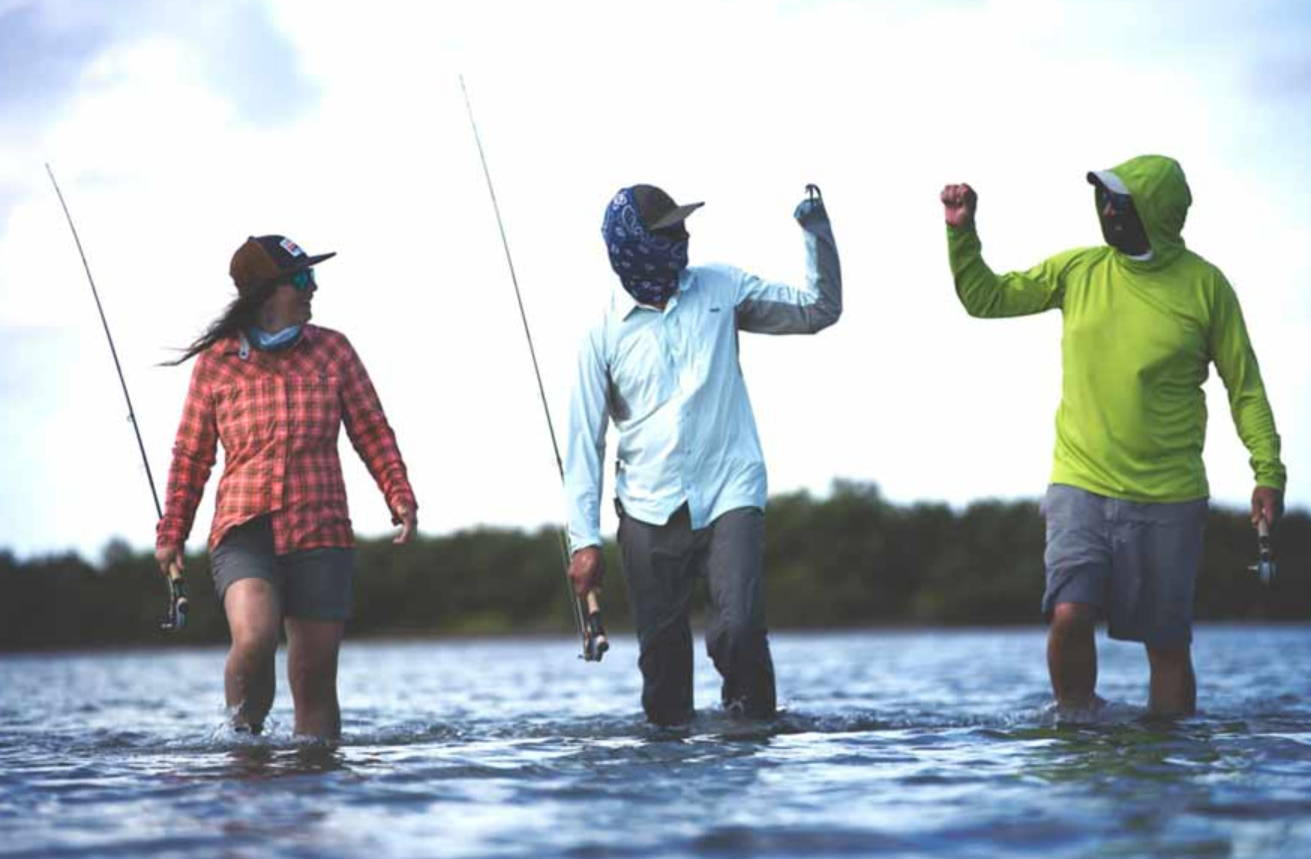
The math here is simpler than the marketing wants you to believe — something experienced buyers learn quickly when evaluating the right men's fishing sun shirts suppliers across different price tiers.
UPF 30 transmits 3.3% of UV radiation — meaning 1 out of every 30 units of UV gets through the fabric. UPF 50 transmits 2% . That's the entire gap. Not a chasm. Not a revolution in skin protection. A 1.3 percentage point difference in absolute terms.
There's a catch in how that number gets framed. It's worth understanding before you dismiss it.
In relative terms, UPF 30 allows 65% more UV penetration than UPF 50. That sounds alarming until you zoom out. 65% more of a very small number is still a small number. The real difference is between 3.3% and 2% of UV reaching your skin. That's not the difference between protected and unprotected.
UPF Rating | UV Blocked | UV Transmitted | Relative UV vs. UPF 50 |
|---|---|---|---|
UPF 25 | ~96% | ~4% | 2× more than UPF 50 |
UPF 30 | 96.7% | 3.3% | 65% more than UPF 50 |
UPF 50 | 98% | 2% | Baseline |
UPF 50+ | ≥98% | ≤2% | Marginal improvement |
For context: a standard cotton t-shirt carries a UPF of about 5, letting around 20% of UV pass through. Both UPF 30 and UPF 50 sit at a completely different protection level compared to what most men actually wear outdoors.
Why UPF Isn't SPF — And Why That Matters
A common point of confusion with lightweight sun protection clothing : men assume UPF and SPF work the same way. They don't — something product developers in custom men's fishing sun shirts manufacturers environments constantly have to educate buyers on.
SPF measures UVB protection only — unless the product carries a broad-spectrum label. It breaks down with sweat, water, and time. You end up reapplying every two hours.
UPF measures protection against both UVA and UVB , and it's built straight into the sun protective fabric technology . No reapplication needed. No forgetting. The protection lives in the fabric structure itself — and it holds as long as the fabric stays intact.
This difference matters on long days outdoors. A fishing sun shirt or hiking sun protection top rated UPF 30 that stays dry and fits well can deliver more consistent all-day protection than sunscreen that gets sweated off by noon.
One more thing the rating labels skip over: the Skin Cancer Foundation recommends UPF 50+ for people at higher risk — fair skin, prior sun damage, or a family history of skin cancer. For that group, the 1.3% gap is worth taking seriously. For everyone else, the conditions you're wearing it in matter more than the number on the tag.
How Fit, Moisture, and Fabric Stretch Alter Real-World Protection
The number on the tag is a lab measurement.That lab fabric wasn't stretched, soaked, or stress-tested the way real garments are — something any custom men's fishing sun shirts factory will confirm when discussing performance vs certification. Your shirt does all of those things at once.
That's where UPF ratings and real-world protection start to split — and why two men wearing the same rated mens sun shirt can finish the same fishing trip with very different skin outcomes.
What Happens When Fabric Stretches
UV protection in clothing comes from fabric structure. The tighter and denser the weave or knit, the fewer UV photons pass through. That's the whole mechanism. So anything that opens up the gaps between fibers cuts protection — no matter what the label says.
Stretching does that.
Pull a sun protective fabric under tension and the pores between the loops widen. Wider pores mean more UV gets through. Research on cotton/Coolmax knit blends showed a clear pattern: more stretch applied, bigger the UPF drop. At higher stretch levels, it's not a minor effect — it becomes the main factor, overriding fiber type and original build quality.
Here's what that means in practice. A well-fitted UPF 30 sun shirt sitting relaxed across your back can deliver better protection than a UPF 50 compression-style shirt stretched tight over your shoulders during a long paddle. The higher-rated garment, under load, may transmit more UV than its label claims.
One benchmark worth knowing: fabrics with 15% stretch and 95% recovery hold their structure well through repeated movement. That recovery component — elastane — matters a lot. Without it, the fabric won't spring back. Pores stay open, and protection drops with every hour of use.
The Moisture Problem Nobody Mentions
Sweat makes things worse. Moisture alone doesn't destroy UPF.
That’s why serious performance programs — especially OEM/ODM men's fishing sun shirts services — prioritize moisture-wicking polyester blends with elastane recovery instead of basic cotton builds.
But stretch and saturation together are harder on fabric structure than either one by itself.
There's a real gap between fabric types here. Cotton holds 14 times more moisture than engineered wicking fabrics like Coolmax. A soaked cotton outdoor sun shirt doesn't just feel heavier — it stretches further under that added weight, which opens pores. Then it stays wet long enough to keep those pores open for hours.
Breathable sun protection shirts built for fishing or hiking work differently. Their wicking design — measured by vertical wicking rate, back-to-front moisture transport, and water vapor transmission — pulls sweat away from your skin and spreads it across a larger surface area. The fabric dries faster. It also bounces back to its original shape instead of staying stretched and wet.
A few things that matter more than your UPF number once the shirt gets wet:
Does the fabric wick on its own , or does it just hold moisture until evaporation does the work?
Does it recover its shape after stretching, or does it stay distorted through hour four?
Is the fit balanced — enough room to move without pulling the fabric tight across your back and shoulders?
A too-tight shirt traps heat, cuts airflow, and stays wetter longer. A lightweight sun protection shirt with a relaxed athletic fit and solid moisture management will outperform a compression-fit shirt with a higher UPF rating on any full-day activity with real physical effort.
The Laundering Factor
There's one more variable that marketing skips: how the shirt holds up over time. Stretch fabrics with strong recovery — the engineered technical fabrics found in quality fishing sun shirts and hiking sun protection tops — keep their UPF performance through repeated washing better than standard wovens. Fabrics without enough recovery take on permanent structural damage after repeated wash cycles. The pores don't close back up. The protection you had on day one isn't what you have on day sixty.
The bottom line: a lower-rated shirt with high-recovery construction can protect your skin more consistently across a full season than a premium-labeled garment that loses its structural shape by midsummer.
Scenario Matrix: UPF 50 vs. UPF 30 — Which One Do You Need?
Four variables decide whether that 1.3% gap turns into real skin damage:
- UV index
- Time spent outdoors
- Surrounding surfaces
- Whether the fabric stays dry
Brands developing custom men's fishing sun shirts with UPF 50 typically target high-exposure scenarios like offshore fishing, where all four variables stack against the user.
Run those four factors against your activity. The right answer gets clear fast.
Here's the matrix.
UV Index 3–5 | Urban Commute | Under 1 Hour
UPF 30 is enough. Full stop.
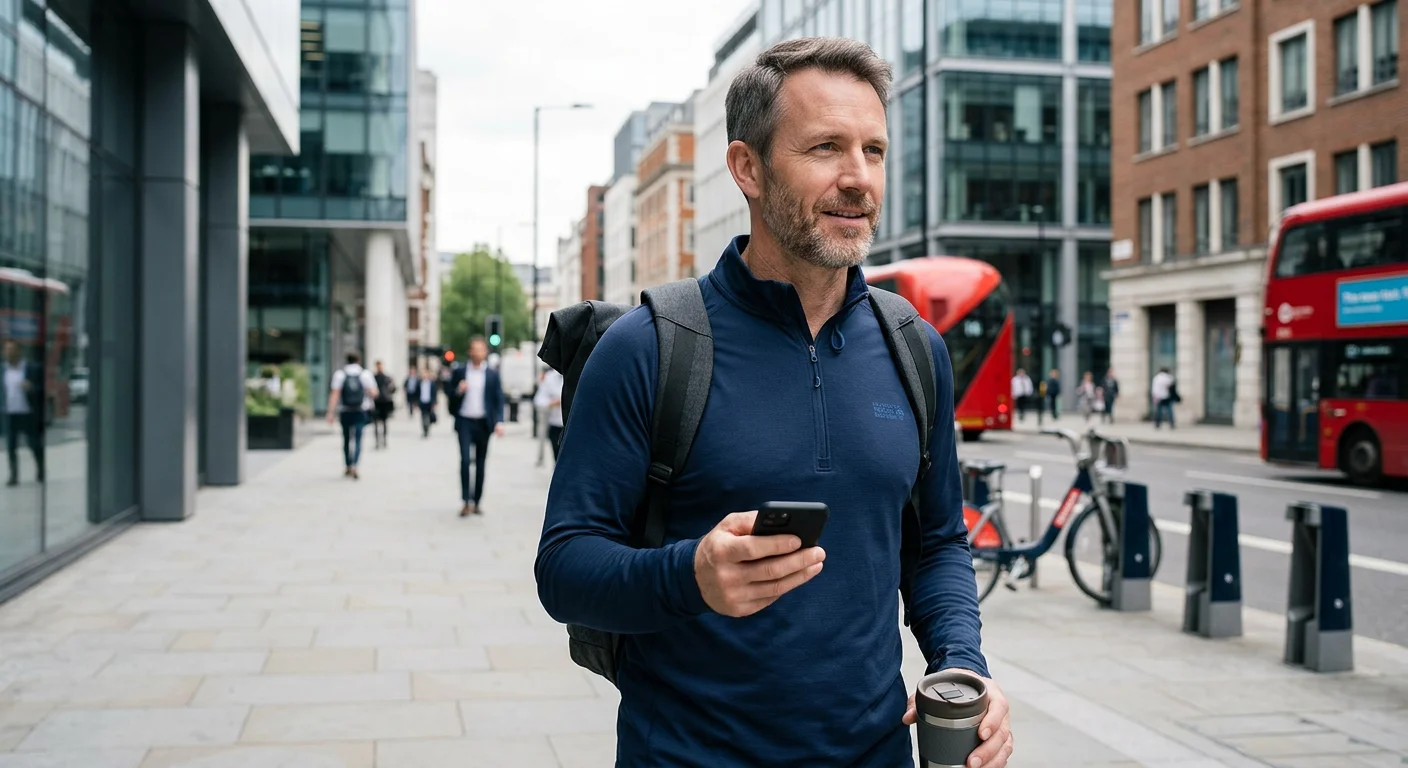
Moderate UV levels, plus shade from buildings and natural indoor breaks, keep your total exposure low. The 3.3% UV transmission through a UPF 30 mens sun shirt won't build up to a dangerous dose in that window. Add a broad-spectrum SPF 50 on your face and neck, throw on a hat, and you've got solid coverage on every exposed surface. Paying extra for UPF 50 here means buying protection against a risk that doesn't exist in this scenario.
UV Index 6–8 | Weekend Golf, Beach Day | 2–4 Hours
This is where the numbers start shifting.
UV Index 6–8 held over two to four hours pushes your total UV exposure past the burn threshold. That's the minimal erythemal dose — the point where skin damage starts. This hits hardest for men with Fitzpatrick skin types I through III. That's the fair-to-medium complexion range, and it covers a big portion of the outdoor sun shirts buying group.
At four hours on a golf course with no overhead cover, UPF 50 is the right call. The gap between UPF 30 and UPF 50 is a 65% relative difference in UV penetration. That difference compounds over time. A single-hour exposure doesn't show it. Four hours does. A fishing sun shirt or hiking sun protection top rated UPF 50+ earns its price tag here. Not because UPF 30 breaks down — but because the hours stack the numbers against it.
High-Altitude Hiking | Above 1,500 Meters | Snow or Rock Terrain
No debate. UPF 50 is mandatory.
UV intensity climbs 10–12% for every 1,000 meters of elevation gain. At altitude, the atmosphere filters less UV. You lose much of the natural buffer you get at sea level. Snow and light-colored rock make it worse. Both surfaces can double your effective UV exposure through reflection. Those combined conditions overpower any margin UPF 30 might offer.
Wearing lightweight sun protection clothing at 3,000 meters in a snowfield is a completely different situation from wearing the same shirt on a shaded forest trail. Don't treat them the same way.
Open-Water Fishing | 6–8 Hours | Direct Sun + Water Glare
This is the exact scenario where UPF 50 mens sun shirts pay for themselves.
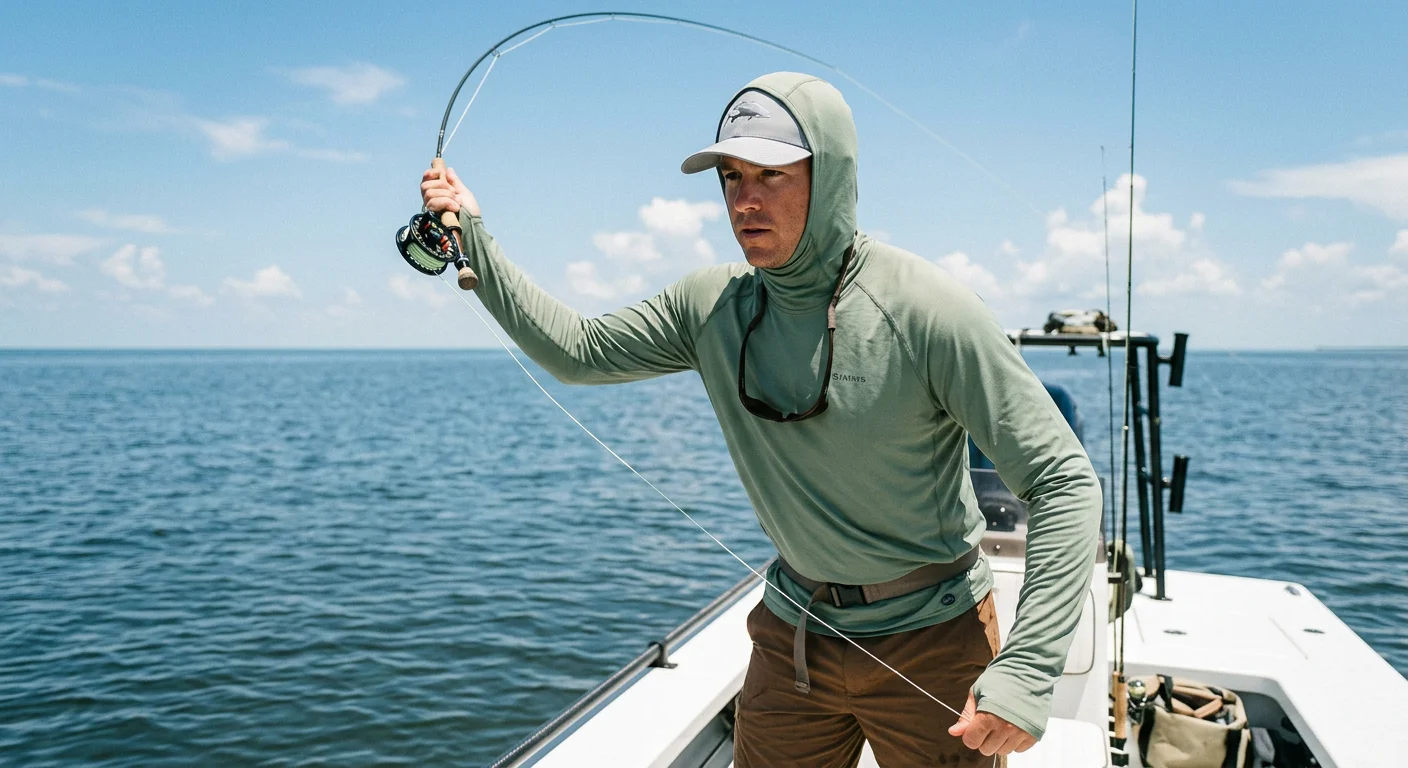
Water reflects UV back upward at you. Spray and sweat break down fabric structure across a full day — that's covered in the previous section. Eight straight hours of sun exposure turns that 65% relative UV difference between ratings into a real, cumulative hit. You feel it on your forearms, neck, and the back of your hands.
Half-day lake trip with morning shade? UPF 30 works.
Full-day offshore charter? Bring UPF 50+.
It's that straightforward.
High-Risk Overrides: UPF 50 as the Default
Some men need UPF 50+ as a starting point — not a situational upgrade.
Personal or family history of melanoma, a lupus diagnosis, or retinoid therapy that raises photosensitivity — any of those factors changes the equation. The activity matrix above doesn't apply. UPF 50+ becomes the floor, not the ceiling.
The Skin Cancer Foundation gives its Seal of Recommendation to UPF 50+ garments only. That's a clear position: for long-term, cumulative UV exposure management, UPF 30 doesn't clear the bar.
The Practical Rule
Match your ultraviolet protection factor rating to your worst-case exposure — not your average day.
UV index, time outdoors, reflective surfaces, and moisture all shape what your skin absorbs. Push any one of those variables into high-risk territory, and you need UPF 50+. Keep all four in the low range, and UPF 30 sun protective fabric technology does the job. The premium won't add real protection in that case.
The 30-Second Decision Flowchart for Daily Wear vs Extreme Exposure
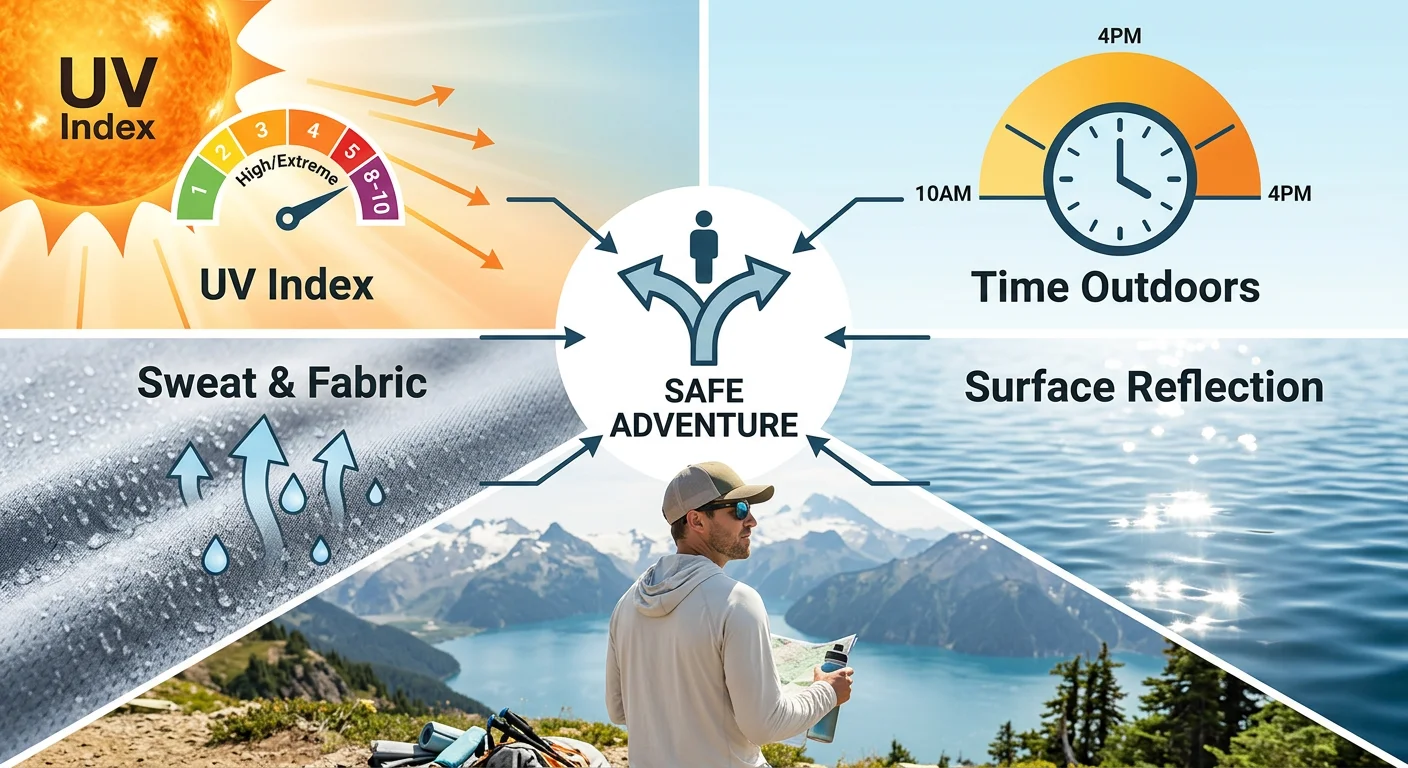
Four questions. That's all it takes. Answer them in order and you'll know which ultraviolet protection factor rating your shirt needs before you spend a cent.
Step 1: How long are you outside?
Under 1 hour → UPF 30 is enough. Move to Step 2 to confirm.
1–3 hours → UPF 30 may work. Conditions decide. Move to Step 2.
Over 3 hours of direct exposure → Stop here. Buy UPF 50+. You're done.
Step 2: What's your environment doing to the UV?
Water, elevation above 1,500 meters, snow, sand, concrete — any of these present?
Yes, and your shirt fits loose and stays dry → UPF 30 holds up. The fabric structure stays intact. 96.7% blockage is solid protection under those conditions.
Yes, and you're sweating hard or moving non-stop → UPF 50 is mandatory. Wet, stretched fabric breaks down. The rating on the tag no longer applies to the shirt on your back.
No extreme factors → UPF 30 is your best cost-to-protection pick. Certified to ASTM D6603. About 30% cheaper than comparable UPF 50 mens sun shirts .
Step 3: Does your skin history change the math?
Do you have Fitzpatrick skin type I or II? That means you burn in under 30 minutes with little natural melanin defense. Add prior UV damage or a dermatologist-directed sun protocol to that list too.
1.Yes → UPF 50+ is non-negotiable. The 1.3% transmission gap is real for you. It adds up across every hour outdoors.
2.No → Stick with what Step 2 told you.
Step 4: Is the rating certified or just marketing language?
Check the label before you buy. Look for AS/NZS 4399 or ASTM D6603 certification. A shirt tagged "UV guard" or "sun protective" without a numeric UPF rating backed by lab testing means nothing. The number without the certification is just print.
1.Valid: "UPF 50+ ASTM D6603 tested"
2.Invalid: "UV guard technology" — no number, no standard, no protection guarantee
Quick Reference
Your Situation | UPF You Need | UV Blocked |
|---|---|---|
Daily errands, under 1 hr, UV index 3–5 | UPF 30 | 96.7% |
Golf, beach, 2–4 hrs, UV index 6–8 | UPF 50+ | 98%+ |
Wet fabric, active stretch, physical effort | UPF 50+ | 98% (when dry and structured) |
Fair skin, UV damage history, medical protocol | UPF 50+ — always | 98%+ |
High altitude, snow or sand reflection | UPF 50+ | 98%+ |
One detail worth knowing: albedo — the reflective boost from nearby surfaces — pushes 15% extra UV from dry sand and up to 80% from fresh snow onto your skin. Most UPF rating charts explained online skip that number. It's the difference between a manageable afternoon hike and a serious cumulative burn.
The flowchart doesn't change your rating. It makes sure you pick the right one for the right reason.
Dermatologist Guidelines and Skin Cancer Foundation Certification Thresholds
The Skin Cancer Foundation has run its Seal of Recommendation program since 1979. That's over four decades of independent review. The standards it sets for sun protective fabric technology are stricter than most men expect.
Here's what matters for mens sun shirts : the Foundation won't award its Seal to any garment rated below UPF 50 . Not UPF 30. Not UPF 40. The minimum is UPF 50 — fabric that blocks 99% of both UVA and UVB radiation . That's the hard line. Anything below it doesn't qualify. Doesn't matter how well it performs in real-world testing. Doesn't matter how strong the ultraviolet protection factor rating looks on paper.
This isn't a marketing position. It's a medical one. The Foundation's Photobiology Committee is made up of board-certified dermatologists. They review third-party laboratory data before any Seal goes on a garment. Companies submit independent test results. The committee checks them. No brand gets to certify itself.
What the Two Seal Tiers Mean
The Foundation issues two separate certifications. Knowing the difference helps you buy smarter.
Daily Use Seal — built for routine, moderate sun exposure. For topical products, this requires:
- Minimum SPF 30
- UVA critical wavelength of at least 373 nm
- Human repeat insult patch testing on 20 subjects
For clothing, the UPF 50 minimum still applies.
Active Use Seal — this is the one that counts for fishing sun shirts mens , hiking sun protection tops , and any garment you wear during long stretches outdoors. For topical products, it requires:
- Minimum SPF 50
- Documented water resistance of either 40 or 80 minutes
The bar is higher because the exposure conditions are tougher.
What This Means for Your Purchase Decision
Got a personal or family history of melanoma? The Foundation's position cuts out the guesswork. UPF 50+ certified clothing isn't a premium upgrade for you — it's the baseline. The same medical authority that's been setting UV protection standards since the Carter administration says so.
For everyone else, the Seal still does something useful. It tells you a lab with no financial stake in the outcome tested that garment. The market is packed with "UV guard technology" labels and claims you can't verify. That independent review is real signal in a lot of noise.
Look for the Seal. Check the rating. Then match it against your actual use case using the scenario matrix in the previous section.
Conclusion
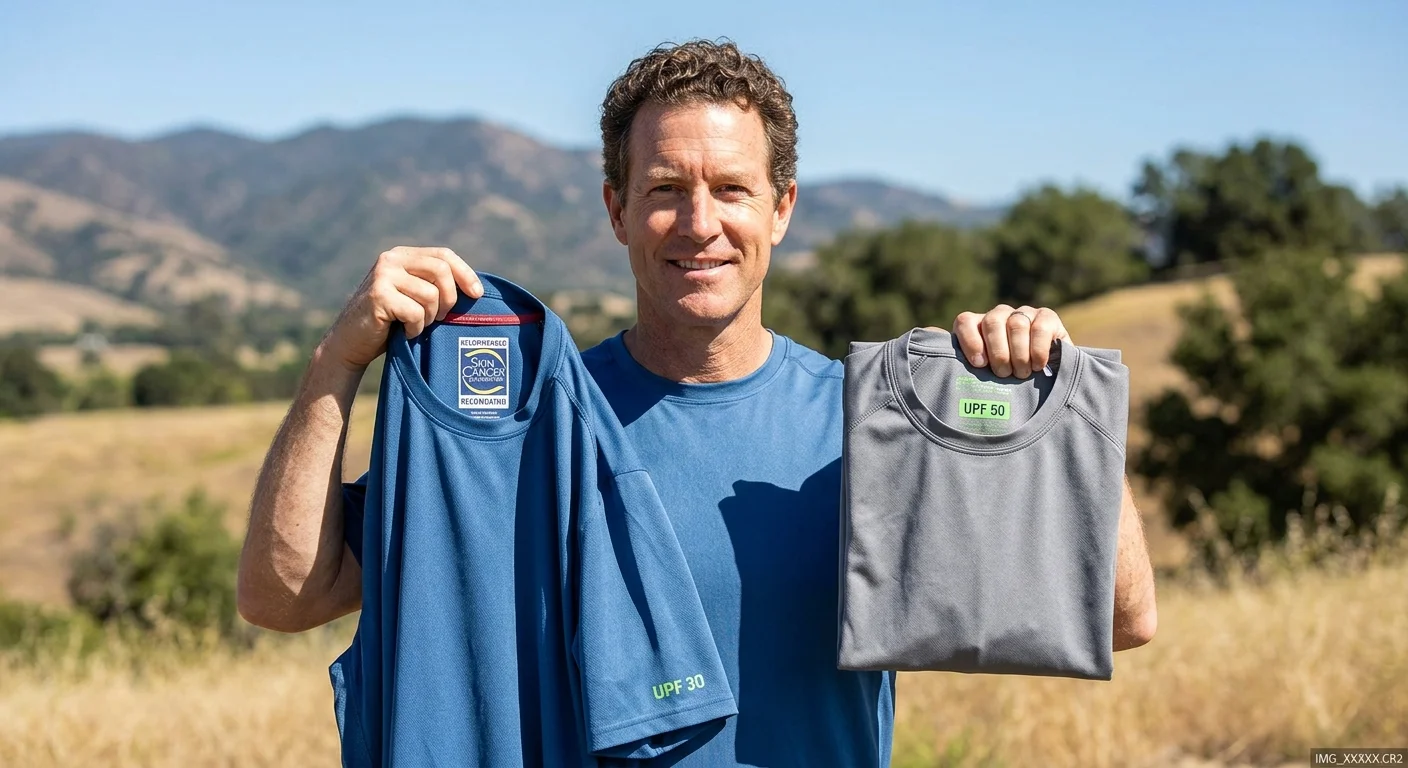
Here's the honest answer: UPF 30 is not a compromise — it's the smarter call.
The 1.3% transmission gap between UPF 30 and UPF 50 matters in specific situations. UV index above 8. Multi-hour exposure. High altitude. No shade. Outside those conditions, fit and fabric win. A well-fitting, dry UPF 30 mens sun shirt in a breathable open-weave fabric beats a sweat-soaked UPF 50 compression fit. Every time.
Stop letting marketing numbers make the decision for you.
Use the scenario matrix. Run through the flowchart. Fair skin? Family history of sun damage? Spending six hours on open water? Step up to UPF 50. No question. Everyone else? Match the ultraviolet protection factor rating to your actual exposure conditions — not your anxiety about them.
Buy the shirt that fits your life. Buy the shirt that fits your life — especially when working with custom wholesale men's fishing sun shirts programs that align fabric, fit, and real usage.Wear it on every sun-exposed outing. That habit carries more weight than chasing the highest number on the tag.