Your Gore-Tex fishing jacket used to shed water like a duck's back. Now it soaks through before you've even baited the hook. You're left cold, heavy, and ready to drop another $300 on a replacement. Don't do it yet.This guide is perfect for anglers sourcing from reliable fishing rain jackets suppliers.
The jacket's waterproof membrane is fine. The real problem is the durable water repellent coating on the outer face fabric. Seasons of saltwater spray, sunscreen residue, and fish oil have ground into every fiber — and that coating is gone.
The fix costs less than you'd expect. It's also faster. But it only works if you treat fishing rain jacket care as its own thing, not just generic outdoor gear advice.
Here's what this guide covers:
How to diagnose the damage
How to deep-clean the contamination that most guides skip
How to pick the right wash-in or spray-on DWR treatment to get those water beads rolling again
Diagnose DWR Depletion with a Controlled Water-Beading Test
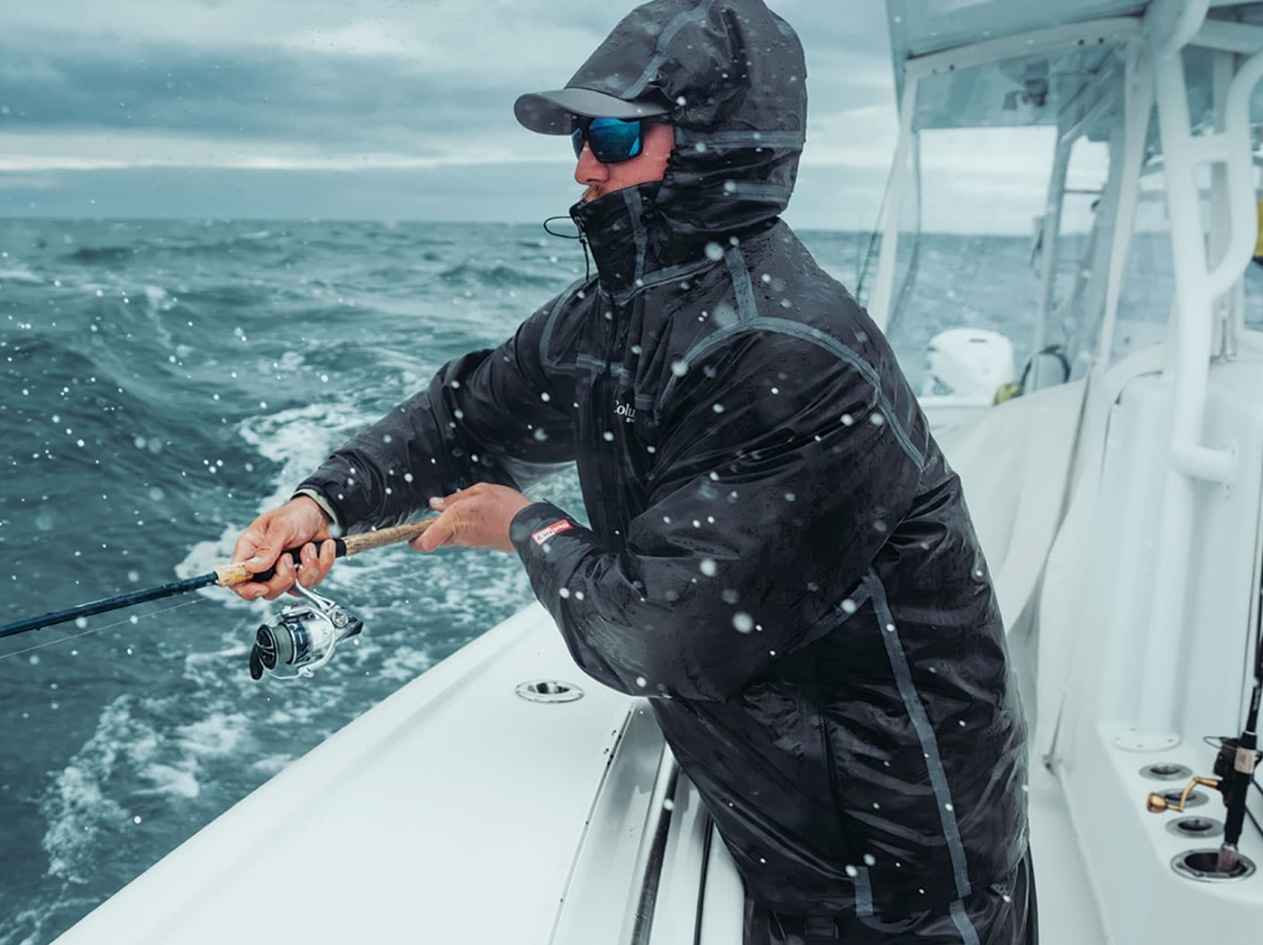
Most anglers skip this step. They feel damp after a morning on the water, assume the jacket is dead, and start browsing replacements. That assumption costs money. A two-minute bench test tells you what's failing — and whether a DWR treatment will fix it.
What you need: a spray bottle or measuring cup, ~200 mL of cool tap water, and a flat clean surface.
Run the 200 mL Zone Test
Lay your fishing rain jacket flat, zip every zipper, and close the storm flap. Then apply water across three specific zones:
70 mL on shoulders and upper back — the highest-abrasion zone on any fishing jacket. Rod holders and pack straps grind against this area on every trip.
70 mL across chest and upper arms — critical for comfort. Sunscreen and fish slime build up here more than anywhere else.
60 mL on the hood crown and zipper flap — easy to overlook, but always exposed to rain.
Hold the nozzle 20–30 cm away. You're simulating steady rain, not a pressure wash.
Watch for 60–120 seconds. Don't touch the fabric.
Read the Beading Pattern
Pass: Droplets form tight spheres. They sit elevated on the weave like ball bearings and roll off with a light tilt. No darkening. That's functional water beading on jacket — your DWR is still working.
Warning sign: Beads form, then flatten fast. Some zones darken while others still shed water. This borderline result means you should schedule a wash-plus-heat reactivation soon. The shoulders are the first place to check.
Fail: Fabric darkens across the surface within 30–60 seconds. Water spreads into continuous sheets. Run your palm across — it feels grabby, not slick. That's classic wetting out on a rain jacket. Your DWR has broken down.
Separate Contamination from Real DWR Wear
Here's what most guides miss for fishing gear: saltwater residue, fish oil, and sunscreen leave a hydrophilic film on the surface. That film mimics DWR failure. Before you write off your durable water repellent coating , check where the wet-out appears.
Wet-out on cuffs, collar, and chest — zones that touch your hands, neck, and sunscreen-covered skin — points to contamination, not coating failure.
The mid-back panel sees little contact and stays cleaner. Wet-out there while shoulders fail points to mechanical abrasion, not dirt buildup.
Quick confirmation: Run a proper tech-wash, then repeat the 200 mL test.
Beading comes back after washing? Contamination was hiding intact DWR underneath.
The same zones still fail after cleaning? That's true DWR depletion. This is the point where a wash-in waterproofing treatment or spray-on DWR repellent becomes necessary.
One last checkpoint worth running: after 10–15 minutes of sustained spray on a failing zone, press the interior lining. Feel cold moisture seeping through? The problem isn't the DWR coating — it's the Gore-Tex jacket membrane underneath. No re-proofing product fixes that.
Strip Angling Contaminants: Deep-Cleaning Protocol for Salt and Oils
Salt crystallizes. Fish oil hardens into the fibers. Sunscreen fuses to synthetic fabric at a microscopic level. These aren't distant chemistry problems — they're happening right now, inside the weave of your fishing rain jacket. No DWR product will bond until every trace of them is gone.
Most re-proofing jobs fail for one reason: anglers skip this cleaning step.
Pre-Rinse Before You Even Touch a Washing Machine
Get home from a salt flat or offshore trip? Run the jacket under cold fresh water right away. Focus on the cuffs, collar, chest panel, and any area that took direct spray. This isn't the deep clean — it's damage control. Salt left sitting on the face fabric for 48 hours starts eating into the DWR matrix and breaks it down fast.
Cold water only. Hot water pushes oil deeper into the fiber before you've had a chance to lift it.
Spot-Treat Heavy Oil Contamination First
Visible grease smears on the jacket — bait oil, engine exhaust residue, fish slime that's had time to set? Machine washing alone won't clear them. Work a small amount of dish soap straight onto the stained area with your fingertips. Dish detergent is built to break down fat and oil bonds. That's the same thing fish oil and sunscreen residue are made of.
Test a hidden area first — near a stitched seam or printed logo works well — before treating the whole panel. Some colored face fabrics can react badly to concentrated detergent.
Let the soap sit for 3–5 minutes . Don't scrub hard. Use a soft-bristle brush or fleece mitt in slow, circular passes. Harsh pressure opens the face fabric weave and damages whatever DWR coating remains.
Machine Wash with a Technical Cleaner
Standard laundry detergent is the wrong tool here. Fragrance additives and optical brighteners leave a water-attracting residue on the fabric. That residue blocks DWR from bonding later.
Go with a dedicated tech wash — Nikwax Tech Wash or Grangers Performance Wash both handle fishing gear well. They're built to strip salt, oil, and grime without leaving any surface residue behind.
Run a warm cycle (30°C / 86° f ), never hot. Add a second rinse cycle too. One rinse rarely clears all contamination after a heavy trip. The goal is zero detergent trace left in the fiber.
What to avoid, without exception:
Fabric softener — coats the fibers and kills water beading for good
Bleach — breaks down both the face fabric and the membrane
Standard powder detergent — leaves alkaline residue that blocks DWR adhesion
After the Wash: Verify Before You Re-Proof
Pull the jacket out damp and run the water-bead test again. Beading has returned in spots that used to fail? The contamination layer was hiding intact DWR underneath. When selecting DWR products, consider custom solutions for your fishing jacket type.A heat reactivation cycle may be all you need. The same zones still wet out? The surface is now clean enough for DWR treatment to bond the way it should.
That difference matters. You don't want to add re-proofing product over a jacket that didn't need it.
Compare and Apply Top DWR Products for Fishing Scenarios
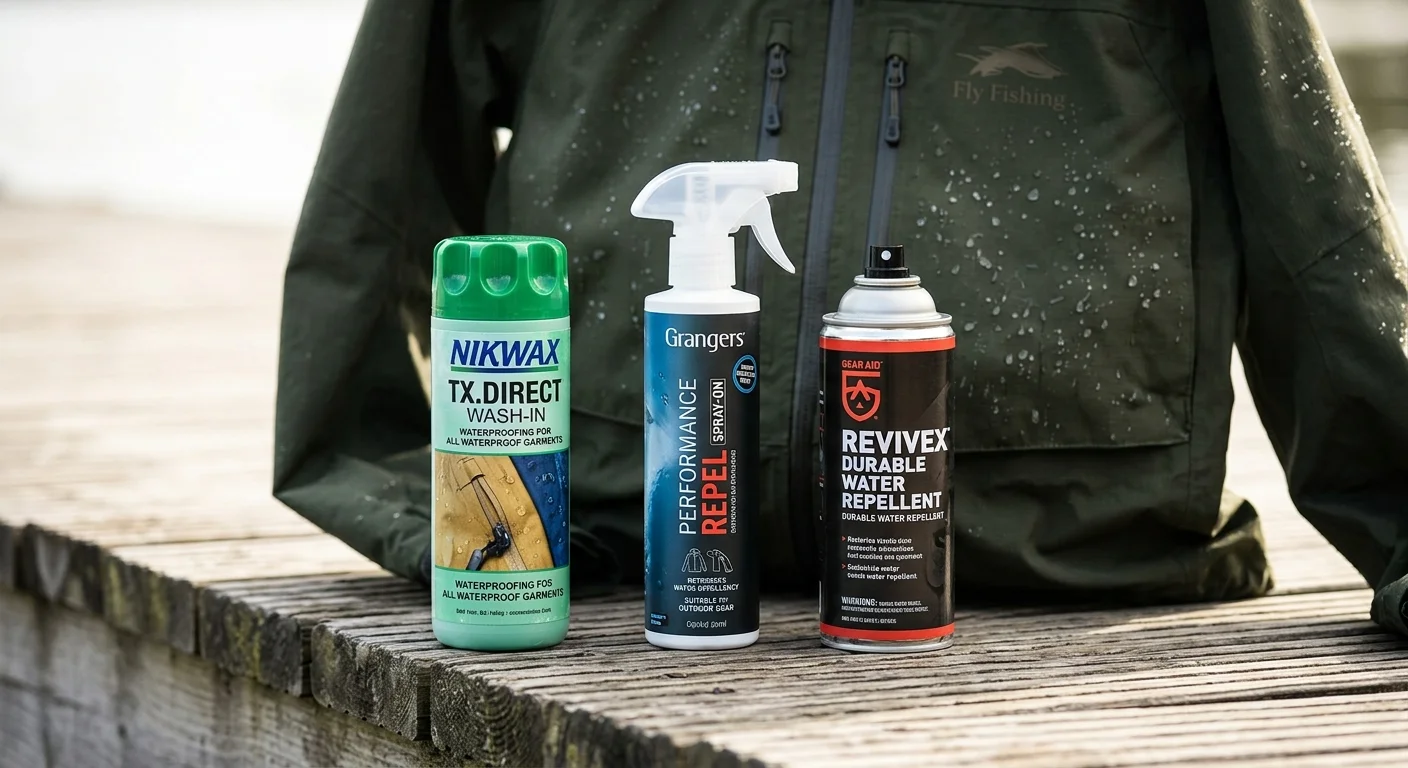
Three products lead the DWR restoration market for fishing outerwear. Each one solves a different version of the same problem. Pick the wrong one, and you waste both the product and the prep work you just did.Top brands rely on professional fishing apparel manufacturers to produce durable coatings.
Ask yourself one question before opening anything: is your jacket failing across the whole surface, or just in specific spots?
Nikwax TX.Direct Wash-In — The Full-Shell Reset
Your fishing shell is wetting out across the board — shoulders, chest, back, and hood all darkening within 30 seconds of rain contact. That's the sign TX.Direct is the right call. It's a wash-in waterproofing treatment . You put it straight into the washing machine drum with your jacket. No spray bottle, no hand application, no mess.
Here's what sets TX.Direct apart from other wash-in options: it skips heat activation entirely. Run a warm cycle (30°C), pull the jacket out, and the treatment has already bonded. A tumble dry on low does improve the result a bit, but it's not required. That's a real advantage the night before a predawn kayak session, when you'd rather not babysit the dryer.
Best fishing match: Freshwater anglers who've lost water beading across the whole jacket after a heavy season. Also a strong fit for Gore-Tex jacket care routines where you want a broad, even DWR layer with no spot-treatment guesswork.
Use it when: Water fails the 200 mL zone test across multiple panels — not just the shoulders.Some anglers prefer jackets from OEM/ODM fishing apparel factories to meet specific performance needs.
Grangers Performance Repel Wash-In — The Routine Maintenance Option
Grangers uses the same wash-in format, but it's built for high-frequency use. Tournament anglers and guides fishing two or three days a week — and washing their shells just as often — burn through DWR faster than a single reproof can keep up. Grangers is designed for that pace.
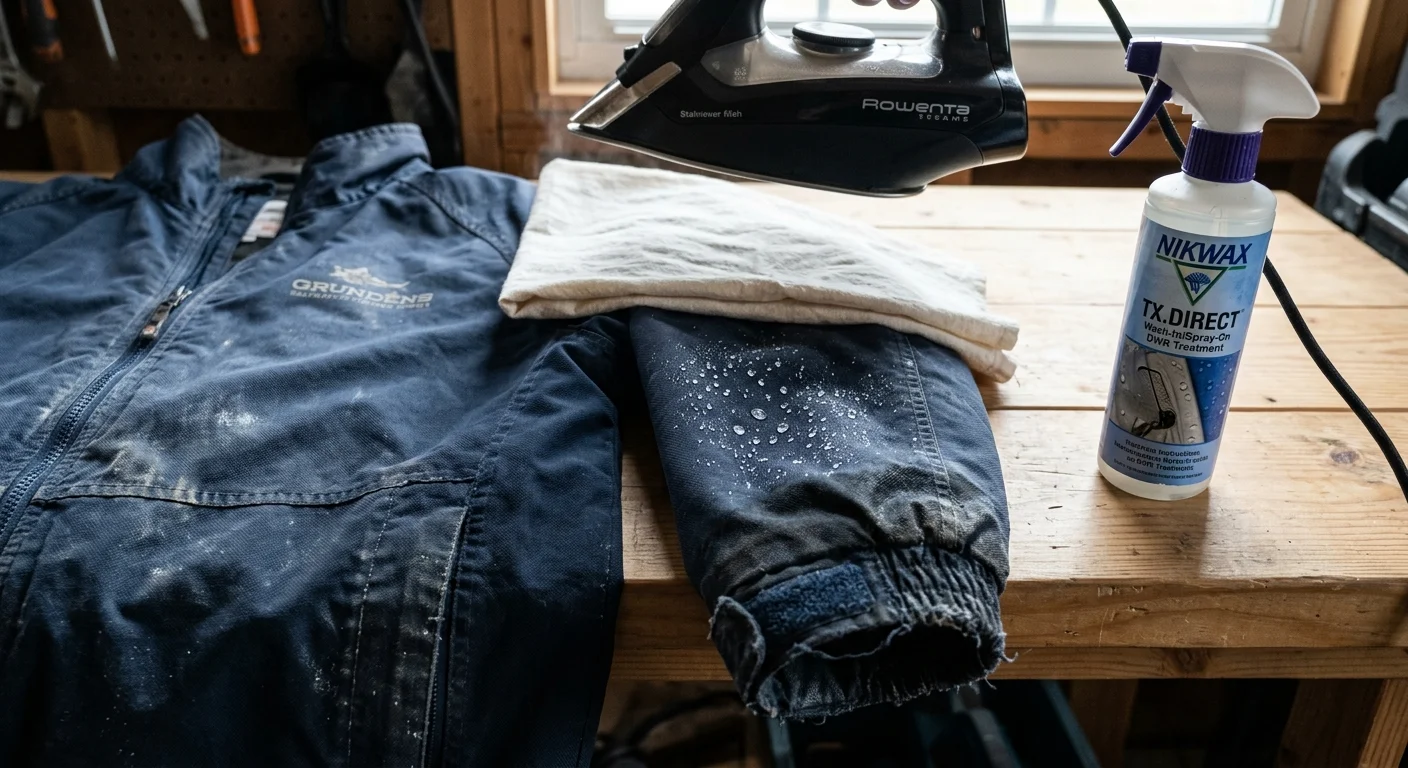
Run it through the machine, then follow up with a low-heat tumble dry or a warm iron with a cloth barrier . The heat step matters more here than with Nikwax. That activation is what locks the treatment into fabrics that get washed over and over.
GO Outdoors recommends reproofing every 4–6 months as a baseline. On an active fishing schedule — three or more outings per week in rain, spray, or saltwater — that window shrinks. Grangers holds up through that shorter cycle and leaves no buildup residue on the face fabric.
Best fishing match: Tournament crews, fishing guides, and charter boat anglers on a weekly wash schedule. You need a product that holds up under repeated application. Grangers delivers that.
Gear Aid Revivex Spray-On DWR — Surgical Precision for Salt and Abrasion Zones
Saltwater fishing concentrates damage in ways wash-in products can't target well. Cuffs fray from line contact. Shoulders break down under rod holders and pack straps. Hood edges wear against life jacket collars. The rest of the jacket? Still fine.Boutique fishing shops often offer private label fishing jackets with factory-applied DWR.
Running a full wash-in treatment on a jacket with 80% intact DWR is overkill. That's exactly where Gear Aid Revivex Spray-On earns its spot in a fishing kit.
Spray straight onto the clean outer face fabric. Zero in on the shoulders, cuffs, hood crown, and forearms — the four contact zones that take the hardest beating on any boat or shore setup. GORE-TEX recommends spray-on DWR products once the original factory coating can no longer be reactivated. But the precision application logic makes sense even before you reach that point.
After spraying, tumble dry on warm or run a low iron with a cloth barrier. The heat step is non-negotiable. It drives the DWR into the fiber surface. Skip it, and the treatment sits as a brittle film that flakes off after the first rain.
Best fishing match: Saltwater anglers, offshore boat crews, and surf casters with localized breakdown on high-abrasion zones. It's also the right tool for a mid-season touch-up between full wash-in treatments.
The Decision Framework: Which Product for Which Scenario
Failure Pattern | Fishing Context | Product to Use |
|---|---|---|
Broad wetting-out across entire jacket | Freshwater, general rain fishing | Nikwax TX.Direct Wash-In |
Full jacket, frequent wash cycles | Tournament anglers, fishing guides | Grangers Performance Repel Wash-In |
Localized zones: shoulders, cuffs, hood | Saltwater, boat fishing, surf casting | Gear Aid Revivex Spray-On DWR |
One point that applies to all three: DWR is a surface treatment, not the waterproof membrane. Restoring water beading improves how the face fabric sheds water. It does not change the hydrostatic pressure rating of the membrane underneath. Moisture seeping through the interior lining after 10 minutes of sustained spray — even on a freshly treated jacket — means the membrane itself has failed. No re-proofing product fixes that.
Heat Activation: The Step Most Anglers Skip
Every product above works better with heat. The reason is simple: DWR molecules need thermal energy to bond to synthetic face fabric fibers. Without it, the treatment stays on the surface and wears off within a few outings.
1.Tumble dryer: 20 minutes on low to medium heat handles most jackets. GORE-TEX cites this as enough to reactivate factory DWR, and it works just as well for applied treatments.
2.Iron with a cloth barrier: Use this option when the care label rules out dryer use. Set to low, keep the iron moving — never hold it still on technical fabric.
3.No heat at all: This only works with Nikwax TX.Direct, which is formulated to bond without it. For every other product, skipping heat cuts the treatment's effective lifespan by about half.
Check the jacket's care label before picking your heat method. Most Gore-Tex fishing jackets handle a low tumble dry without issues. Softshell-hybrid builds and jackets with mesh-lined pockets sometimes can't.
Heat-Reactivate Coatings: Exact Tumble Dry and Iron Parameters
Temperature is not a suggestion here. It's the mechanism.
DWR molecules are thermoplastic. Heat causes them to re-flow and re-bond to synthetic face fabric fibers. Without that thermal trigger, any treatment you've applied just sits on the surface like a brittle film. It sheds off within a few outings. Most anglers skip this step — or do it at the wrong temperature — then wonder why their jacket is soaking through again by the next morning session.
Here's the science broken down into practice.
Tumble Dryer: The Benchmark Protocol
Load the dryer right. One to three jackets max — no towels, no cotton bulk. Towels grind against the face fabric during the drum cycle and cause damage.
Set your heat to low or medium. That means an internal exhaust temperature of 130–150°F (55–65°C) . Use "Permanent Press," "Synthetics," or "Warm" if your dryer labels cycles that way.
1.130°F / 55°C — the safe floor for lighter laminates and PU-coated constructions
2.140°F / 60°C — the sweet spot for Gore-Tex-style membranes
3.Above 160°F / 71°C — risk zone. Seam tape lifts. PU layers start to delaminate. Don't go here.
Timing matters. The jacket coming out of the wash still damp? Run it until dry, then add 20 more minutes of warm tumbling. Already air-dried? Run 20–30 minutes for DWR reactivation. The polymer re-flow needs steady, sustained heat — not a quick burst.
Different brands land around the same range. Buying multiple fishing jackets at wholesale price allows for consistent maintenance cycles.Arc'teryx recommends 40–50 minutes at medium heat . GORE-TEX cites 20 minutes at warm . Patagonia calls for low to medium until dry, plus 10–15 extra minutes for DWR refresh. The shared logic across all three: sustained heat, not high heat.
Iron Activation: When the Care Label Rules Out the Dryer
Some fishing jackets — softshell-hybrid builds in particular — can't go in the dryer. The iron is your fallback. Done right, it reactivates DWR just as well.
Setup:
- Lay the jacket flat, outer face up on an ironing board
- Set the iron to warm / medium — around 250–300°F (120–150°C) at the soleplate . That's the "••" setting on most household irons — the synthetics or wool range
- Turn off steam. Steam adds moisture and kills the whole point
Buffer layer — non-negotiable: Place a clean, dry cotton tea towel or thin press cloth between the iron and the face fabric. Skip the thick terry towel — it blocks too much heat and stops the transfer from working.
Panel-by-panel technique:
Work in clear zones: hood, shoulders, chest, back, then sleeves. Keep the iron moving the whole time — never hold it in one spot. Aim for 60–90 seconds of steady gliding per 30 × 30 cm panel. On more delicate fabrics, start at 45 seconds. Check the fabric heat by touch, then go again if needed.
You want fabric that feels very warm — not scorching. See gloss on the face fabric, rippling along seam tape, or any logo distortion? Stop right away.
Cool-Down: The Overlooked Final Step
Pull the jacket off the dryer drum or ironing board the moment the heat cycle ends. Don't let it sit compressed inside a warm machine.
Hang it on a wide hanger in a well-ventilated room — away from direct sun or heaters — and leave it alone for 15–30 minutes . The DWR layer is still in a near-fluid state right after heating. Stuffing the jacket into a bag while it's still warm crushes the re-flowed polymer before it sets. That flattens the hydrophobic structure you just worked to build back up.
The cool-down window is where the coating locks in. Don't skip it.
Validate With a Targeted Bead Test
After the 15-minute cool-down, run water over the high-wear zones — shoulders, upper back, cuffs, and the front zipper flap. Tight, round droplets rolling off without any fabric darkening mean the reactivation worked.
Some zones may still wet out — cuffs failing while shoulders bead clean is common on saltwater fishing jackets. Hit those panels with a spray-on DWR booster . Then run a short second activation: 5–10 minutes in the dryer on low-medium , or around 60 seconds per panel with the iron , using the same no-steam, press-cloth setup. Run the bead test again on those zones to confirm.
Build Your Maintenance Routine Around How Often You Fish
Your fishing frequency drives everything about jacket care — not the calendar month, not a generic seasonal reminder.
A saltwater guide running charters five days a week burns through DWR at a completely different rate than a weekend reservoir angler who fishes ten times a year. Treating both the same leads to early jacket failure and wasted money. Match your maintenance schedule to how often you actually fish, and the whole system stays solid.
Heavy Saltwater Use — 8 to 12+ Trips Per Month
Salt doesn't wait. After just one to three unrinsed trips, visible salt deposits start forming inside zipper coils and along seam folds. Let that buildup sit, and slider seizure follows.
After every single trip:
- Hose the jacket down with cool freshwater within 2–4 hours of leaving the water
- Focus on cuffs, hood brim, front zip, storm flap, and chest — anywhere fish contact happened
- Skip high-pressure jets. They push salt and grit deeper into seam tape and zipper coils
- Shake off excess water and hang on a wide hanger in shade with good airflow
- Check the care label. A 10-minute low-heat tumble stops salt crystals from forming in fabric folds overnight
Every 4–6 trips (once a week for most guides):
- Wipe rod-contact and fish-contact zones — cuffs, forearms, front zipper placket — with a damp microfiber cloth
- Run the quick bead check: drizzle water on shoulders and forearms. Round beads rolling clean means you're good. Water sheeting and darkening means wash it now
Every month — or every 10–20 days fished:
- Full machine wash on gentle with a technical cleaner, warm water, extra rinse cycle
- Tumble dry on medium-low for 20 minutes to reactivate existing DWR
- Cuffs, hood brim, or shoulders still showing weak beading after the heat cycle? Hit those zones with a spray-on DWR. Run a short second warm tumble to lock it in
Freshwater Weekend Anglers — 2 to 6 Trips Per Month
Freshwater contamination is slower, but it adds up. Algae, river mud, and fish slime don't break through DWR the way salt does. But they build up across 10 to 15 uses until beading stops — and you won't know why until it's already a problem.
After each trip:
- Wipe cuffs and front thighs with a damp cloth to clear fish slime and mud
- Hang in shade to dry all the way before storing
Every quarter — around every 10–15 uses:
- Full tech wash on gentle, warm cycle, extra rinse
- Add a wash-in DWR treatment in the same machine session. This coats all fabric surfaces and restores even beading across the entire shell
- Follow with a 20-minute medium tumble dry to bond and heat-activate the treatment
- Turn the jacket inside-out for inspection. Check shoulder and hood seam tape for lifting or bubbling — abrasion from shoulder bags and rod contact hits these spots first on freshwater setups
- Clean Velcro cuff hooks with a small brush. Packed lint here causes uneven closure that lets cold water wick in along the wrist
Occasional and Seasonal Anglers — 2 to 10 Trips Per Year
Long storage gaps are what kill these jackets. Body oils, insect repellent residue, and trapped moisture break down the membrane's polyurethane components over months — not over fishing trips.
Pre-season (spring) and post-season (late fall):
- Full garment wash with technical detergent, gentle warm cycle, extra rinse — this strips stored oils and cuts any mildew risk
- Use a wash-in DWR for overall coverage, then add a spray-on DWR on high-friction zones: cuffs, inner elbows, shoulders, lower front thighs. Spray-on holds better in those spots because it doesn't dilute across inner layers the way wash-in does
- Heat-set with a 20–30-minute medium tumble dry. No dryer? Use a low iron with a towel barrier between the iron and fabric
Off-season storage — steps most guides skip:
- Store the jacket completely dry, all zippers closed, on a wide padded hanger
- Don't compress it under other gear. Sustained compression creates permanent crease lines in the membrane that turn into leak paths
- Aim for 40–60% relative humidity in the storage area
- Skip sealed plastic garment bags. They trap residual moisture and speed up breakdown in PU-laminated components. Use a breathable fabric cover instead
Before your first trip of a new season, run a quick hose test. Check beading on shoulders and upper back while moving your arms in a casting motion. Confirm zippers run clean and Velcro cuffs still seal tight.
Quick-Reference Maintenance Calendar
Fishing Frequency | Rinse/Wipe | Full Wash + Heat Reactivate | DWR Treatment |
|---|---|---|---|
Heavy saltwater (3–5×/week) | After every trip | Monthly / every 10–20 days fished | Spray-on targeted zones monthly |
Weekend freshwater (2–6×/month) | After each trip | Quarterly (~every 10–15 uses) | Wash-in DWR quarterly |
Occasional/seasonal (2–10×/year) | After each trip | Twice per year (pre + post season) | Full wash-in + spray-on zones twice/year |
The goal across every category is the same: stop salt and fish oils from getting deep enough to collapse the DWR matrix and stress the membrane underneath. Catch that contamination at the surface — at the right interval for your fishing pace — and a quality fishing rain jacket holds its water beading performance across a full season and well past it.
Conclusion
Your fishing jacket isn't done — its DWR just is.
That's the mindset shift that changes everything. Stop treating a wetting-out jacket as broken gear. Treat it as a maintenance task instead. That alone solves most of the problem.
Here's what matters: salt, fish oil, and sunscreen residue don't just dirty your jacket — they smother DWR from the outside in. So follow these steps every time:
1.Strip those contaminants first
2.Apply the right wash-in or spray-on DWR treatment for your jacket's build
3.Use heat to reactivate the coating
That order matters. Do it every time.
Anglers who get five or six solid seasons out of a Gore-Tex jacket aren't buying better gear. They run the maintenance cycle before the jacket forces them to.
Check your beading after your next trip. Water not rolling off? Now you know what to do.Trust a trusted Fishing Rain Jacket factory to maintain these treatments.