You dropped real money on a fishing shirt that fits right, blocks the sun, and dries fast, so the last thing you need is to pull it out of the wash two sizes smaller. If you're standing over the laundry basket asking "do fishing shirts shrink when washed?", you're not being paranoid. It's a fair question, and there's no simple yes-or-no answer. It comes down to what the shirt is made of, how hot the wash water gets, and whether your dryer is quietly working against you.For brands seeking custom Non-shrinking fishing shirts, fabric stability should be confirmed before bulk production.
Below we break down which fabrics (cotton-blends, we're looking at you) put your fit at risk, how Columbia PFG and HUK recommend washing their shirts, and if the damage is already done, how to stretch things back to normal.
The Actual Shrinkage Risk of Polyester, Nylon, and Cotton-Blend Fishing Shirts
Not all quick-dry fishing shirts shrink the same way, and the fabric tag tells you what to expect from each material.
100% Polyester: The Safe Bet
If your fishing shirt is 100% polyester, breathe easy. Under normal cold or warm washing, you get 0–0.5% shrinkage - nothing measurable. Crank the heat with a hot wash and high-heat dryer combo, and you can push that to 1–3%, with some extreme repeat-offender cases hitting 5%+. A polyester shirt stays near-zero to sub-1% if you wash it cool and skip the dryer heat.
Nylon: Stable, But Heat-Sensitive
Nylon plays nice too, just not as nice. Cold wash keeps it at 0–1% shrinkage. Warm water bumps that to 1–3%. Once you wash above 70°C (hot water shrink fishing shirt territory), nylon can jump to 3–7%. Nylon's shrink risk rises sharply with heat exposure, more so than polyester, but it's still way more forgiving than cotton.
Cotton-Blends: The Riskiest Pick
This is where things get dicey. A reliable fishing shirt factory can recommend fabrics with lower residual shrinkage.Cotton-poly blends shrink 1–3% overall, but a 50/50 blend often lands at 2–4%, while a 65/35 poly-cotton blend runs closer to 1–3%. Tumble-dry one on high heat, and you could see 3–6% or higher, depending on cotton content. Length and sleeve openings get tight first.
How Hot Water and Dryer Heat Cause Fishing Shirt Shrinkage
Your dryer damages fishing shirts more than your washing machine ever will. Heat plus tumbling relaxes the fibers while the fabric is still damp, which is exactly when a shirt contracts as it dries. So if you're looking for the "dryer heat fabric shrinkage" culprit, it's the machine you're not watching closely: the one spinning your shirt on repeat.
For 100% cotton , the numbers get ugly fast. A warm wash alone shrinks it 2–4%. Hot wash bumps that to 5–7%. Pair a hot wash with high-heat tumble drying, and you're staring down 7–10% shrinkage, sometimes climbing to 8–12% with the most aggressive combo. The exact setup that triggers this? A wash around 120–140°F paired with a dryer running roughly 70°C on the surface.
Polyester behaves completely differently. Medium-heat drying, around 125–135°F, causes less than 1% dimensional change. That's the moisture wicking shirt shrink threshold you want to stay under. But push past 135°F, and even polyester starts warping. Cross 155°F, and distortion becomes strongly likely. "Quick dry shirt shrinkage" isn't a myth, but it's a heat-dependent one.
Cotton-poly blends sit in the middle. A qualified Non-shrinking fishing shirt manufacturer can control heat-related dimensional changes during production.A 60/40 blend typically shrinks 2–4% on a warm-wash baseline, but hot water plus high-heat drying can push length shrinkage to 3–5%.
The safest benchmark for blends and synthetics alike: low heat around 50–60°C surface temp, or air fluff with no heat at all. That's your buffer against crossing polyester's heat threshold.
How to Identify Your Fishing Shirt's Shrinkage Risk Before Washing
Grab your shirt and flip to the tag before you even think about the wash cycle. That little label is a shrinkage crystal ball, and most people skip right past it.
Look for these three things:
- Fiber content — 100% cotton with no "pre-shrunk" or "sanforized" claim is your red flag
- Wash temperature — anything defaulting to warm/hot water bumps your risk up
- Drying method — "machine dry" listed without a heat cap means the brand isn't worried about YOUR shrinkage, just their liability
Sanforized cotton keeps residual shrinkage under 2%. Non-sanforized, untreated cotton shrinks 3–5% on the first wash, 5–10% with hot water, and up to 10–20% if it's loose-woven. Knit and jersey cotton shrink more than plain-weave, so a soft cotton fishing henley is riskier than you'd think.
Quick risk shortlist:
- Low risk : 100% polyester, moisture-wicking synthetic, cold-wash label
- Medium risk : cotton-poly blend, pre-shrunk cotton, knit construction
- High risk : 100% cotton, unsanforized, hot-dry approved
Before that first wash, measure chest width, body length, and sleeve length flat on a table. Write it down. Ask your fishing shirt supplier for pre-wash and post-wash measurements.70–90% of a shirt's lifetime shrinkage happens in the first one to three washes, so this pre-wash measurement is your only real baseline.
Columbia PFG, Huk, Simms, and Other Fishing Shirt Care Instructions Compared
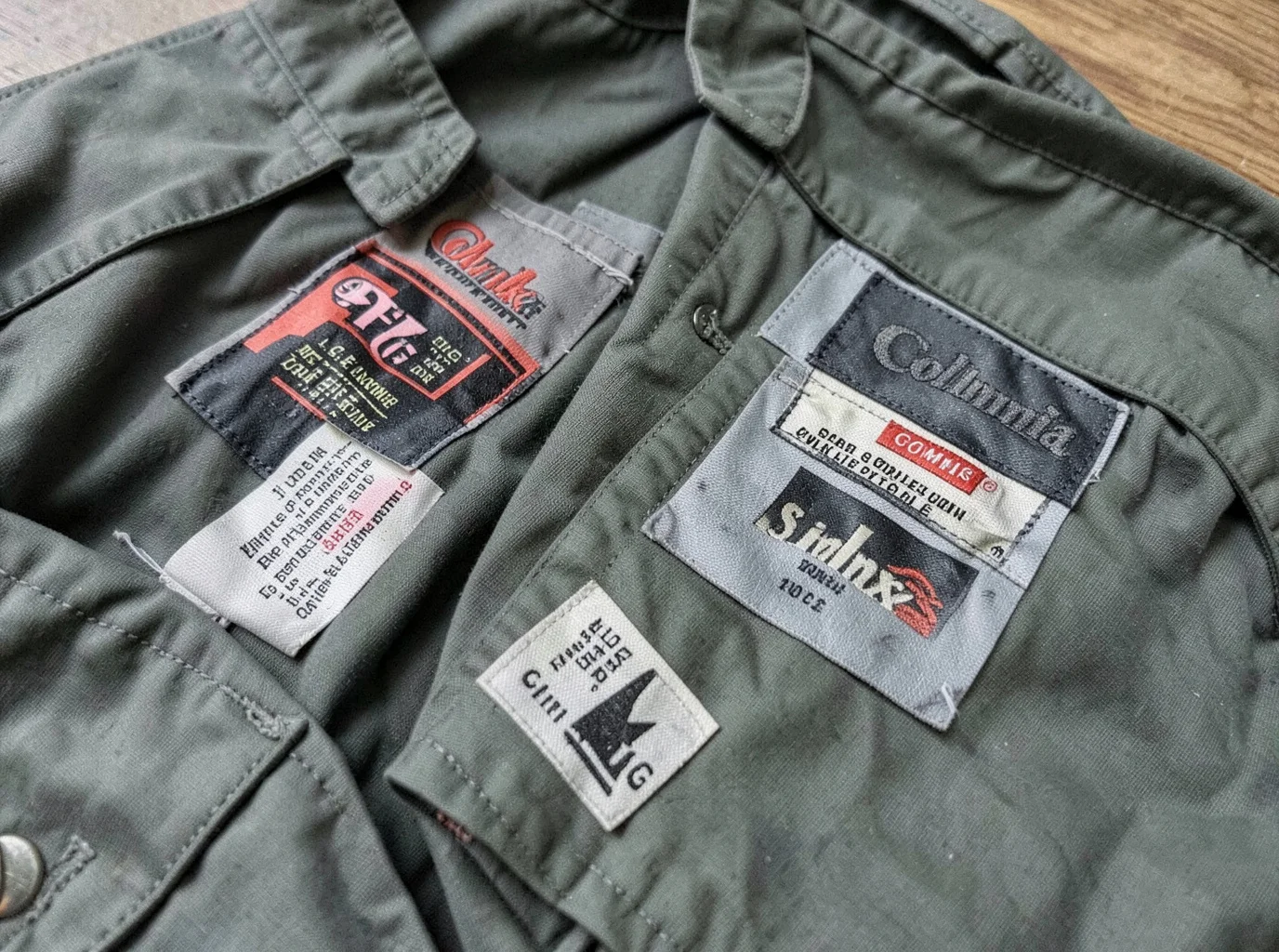
Every major fishing brand agrees on one thing: heat is the enemy. Pull up the care tags on Columbia PFG, Huk , and Simms shirts side by side, and the overlap is almost suspicious.
Columbia PFG keeps it simple on most tags: Machine Wash Cold Gentle , Wash Separately , Do Not Bleach , Tumble Dry Low , and Remove Promptly . The Wild Cast shirt specifically adds Do Not Use Fabric Softener and Do Not Dryclean , plus Iron Low if you're feeling fancy. Columbia's general fabric-care advice pushes cold water, gentle cycle, and hang-drying whenever possible—lowest heat setting if you're stuck using a dryer.
Huk leans into "keep it cold." Their guidance says cold water , gentle cycle , no fabric softener ever , and air dry when possible . If you must tumble dry, low heat only. Huk specifically calls out rinsing with fresh water after saltwater exposure . Salt residue can break down the sun-protection coating over time, so this matters more for UV shirt care than most people realize.
Simms focuses more on drying discipline than wash temperature. Their aftercare notes say to let the shirt dry fully before storing it , avoid harsh chemicals or bleach , and hang it to air-dry away from direct sunlight and heat sources . Simms also recommends a soft brush for stubborn dirt rather than scrubbing.
Where They All Line Up
Brand | Cold Wash | No Bleach | Heat Drying | Saltwater Rinse |
|---|---|---|---|---|
Columbia | Yes | Yes | Tumble dry low | Implied |
Huk | Yes | Yes | Air dry preferred | Explicit |
Simms | Yes | Yes | Air dry, no heat | Explicit |
Cold water, mild detergent, skip the softener and bleach, and dry on low or no heat. That keeps your UPF rating intact.
How to Wash Fishing Shirts Without Shrinking Them
Here's the formula, and it's shorter than you'd think: rinse after your trip, turn the shirt inside out, wash it cold and gentle, use mild detergent only, add an extra rinse, then hang it dry or run the dryer on low. That's the whole system. Memorize it and you never have to Google "fishing shirt fabric care" again.
The temperature guardrail matters most. Keep your wash water cold to lukewarm, never hot. Heat is the number one shrinking risk for polyester performance shirts, full stop. If you want a specific number, one fishing-apparel guide recommends cold water at or below 30°C , a low spin around 400 rpm , and an extra rinse cycle for UPF garments specifically. Write that on a sticky note and slap it on your washer.
Drying is where people mess up. Air drying is always the safer bet. If you're using a dryer anyway, pick the lowest heat setting or tumble dry low. High heat shrinks the fabric, distorts elastic fibers in polyester-spandex blends, and weakens the UPF finish that's doing your sun protection work.
Skip bleach and fabric softener entirely. Both damage technical fibers and quietly reduce your shirt's wicking and UPF performance over time, even if the fit stays fine.
A few handling habits that help more than people realize:
Rinse in fresh water right after fishing, especially post-saltwater or sunscreen exposure, so salt crystals don't sit there abrading the fabric
Close zippers, snaps, and Velcro before washing
Use a mesh laundry bag, or at minimum, keep your fishing shirt away from denim and towels to cut down on pilling
Got a stain? Spot-treat with mild liquid detergent for about 15 minutes before the full wash, no aggressive scrubbing needed
No ironing, no dry cleaning, no high-heat drying. That's the trifecta to avoid across nearly every technical fishing shirt on the market.
The Fishing Shirt Wash-and-Dry Reference Card
Screenshot this and save it to your camera roll next to your favorite recipe. Follow these rules and your fishing shirt keeps looking like day one.
Wash:
- Cold water, 30°C/86°F or lower
- Gentle cycle, mild detergent only
- Turn inside out first
- Rinse ASAP after saltwater or sunscreen
Never:
- Bleach
- Fabric softener
- Hot water
- High heat anywhere
- Iron
- Dry clean
Dry:
- Hang dry in shade when you can
- Low heat only if you're stuck using a dryer
- Pull it out slightly damp, not bone-dry
Six rules, no guesswork. Follow them and your UPF coating stays intact, your polyester-spandex knit keeps its shape, and shrinkage stays a non-issue.
How to Restore a Fishing Shirt That Already Feels Smaller
Already too late for prevention? Fine, let's fix it. Shrinkage isn't always permanent, and the rescue method costs you pennies and 30 minutes.
Here's the fix:
- Fill a basin with lukewarm water , add 1 tbsp baby shampoo or hair conditioner per quart (2 tbsp for a full sink)
- Soak the shirt for 20–30 minutes
- Don't rinse — that conditioner is softening the fibers on purpose
- Press water out gently with a towel; no wringing, no twisting
- Lay it flat and stretch it by hand in small sections , shoulders first, working down
- Use a measuring tape or an unshrunk shirt of the same style as your guide
- Pin the edges down if it keeps snapping back
- Air dry flat , away from heat and direct sun — hanging it wet will just distort the shape all over again
Cotton-heavy shirts respond best here since the fibers relax easily when damp. Polyester and performance blends need a lighter touch: shorter soak, gentler stretching, lower expectations.
Stubborn spot won't budge? A garment steamer held 1–2 inches away, paired with a gentle pull-and-hold while damp, works as a targeted backup.
Conclusion
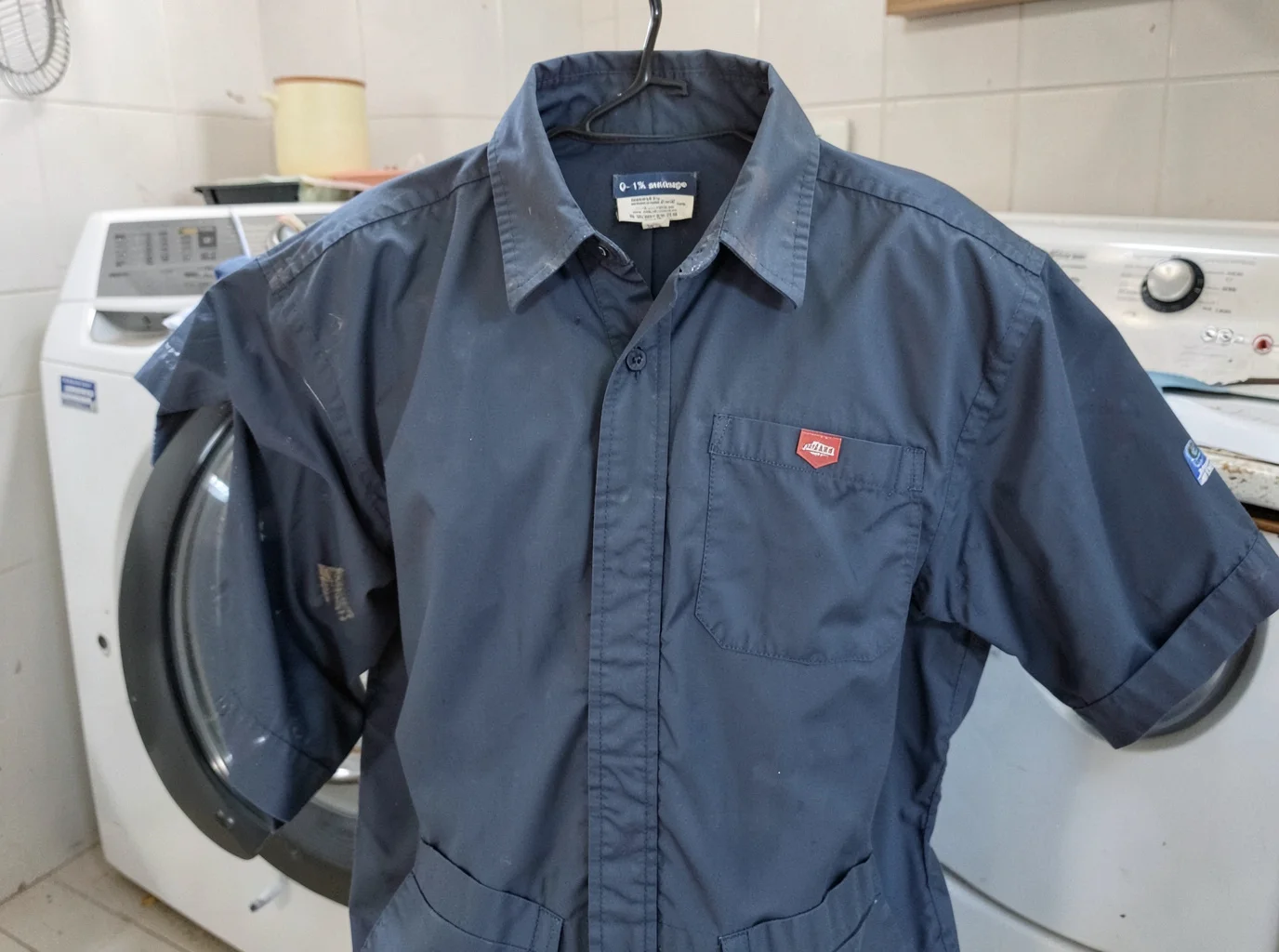
If your fishing shirt is 100% polyester or nylon, you're pretty much in the clear. That "do fishing shirts shrink when washed" panic is mostly unfounded. Heat is the real culprit, not the wash itself. Once you know your fabric's shrink-risk level, you've basically SOP-proofed your wardrobe. Cold water, gentle cycle, air dry (or low heat, max) — that's the whole formula. Screenshot that reference card and keep it in your laundry room.Request a custom wholesale price for Non-shrinking fishing shirts when planning larger orders.
If you already tossed it in the dryer on high and it came out feeling like a toddler shirt, don't panic. Try the cool water soak-and-stretch method before you write it off. That $80 Columbia PFG deserves a second chance. Protect the investment, wash it right, and get back out on the water knowing your gear's got your back.